


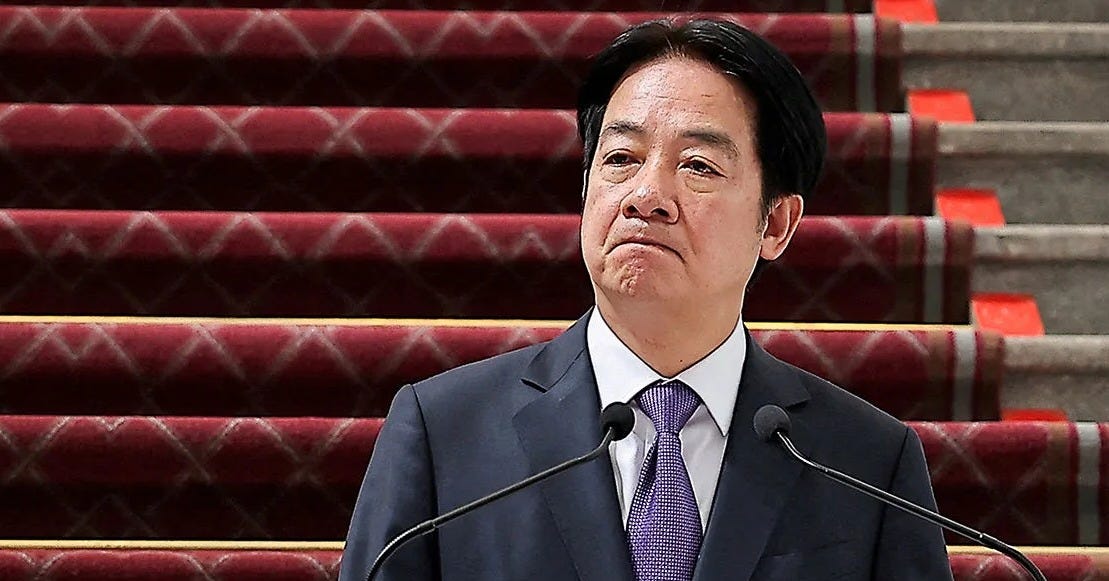
Taipei — Taiwanese President Lai Ching-te pledged Thursday to defend the island’s sovereignty as tensions with China intensify after Beijing conducted live-fire military drills around the democratically governed island. The commitment, made in a televised New Year’s address, signals a firm stance in the face of sustained military pressure from China.
Beijing’s recent war games, dubbed “Justice Mission 2025,” included controlled missile launches, fighter jets and naval deployments encircling Taiwan, moves Taipei described as provocative and destabilising. These drills come amid broader regional concern over China’s growing assertiveness and follow a U.S. announcement of a significant arms package for Taiwan.
According to Reuters, Lai told listeners that defending national sovereignty and strengthening Taiwan’s defence capabilities is paramount and urged lawmakers to approve a $40 billion defence budget increase to bolster deterrence.
Yet a new complication looms: China’s leadership has dismissed Lai’s remarks as hostile and has doubled down on its long-term goal of reunification, with President Xi Jinping calling that objective “unstoppable.” The U.S. State Department also weighed in, stating that China’s military actions “increase tensions unnecessarily.”
Follow The Coffman Chronicle on NewsBreak for daily breaking political coverage.
“As president, my stance has always been clear: to resolutely defend national sovereignty and strengthen national defence,” Lai said.
The matters raised have implications not just for cross-strait relations but also for U.S. and regional security policy, as allies monitor whether Beijing’s military pressure will escalate.
Analysts expect continued diplomatic exchanges and a push in Taiwan’s legislature on defence funding this month.
Diplomats and defence officials worldwide are watching how China and Taiwan navigate this volatile start to the new year.
Follow The Coffman Chronicle on NewsBreak for daily breaking political coverage.