


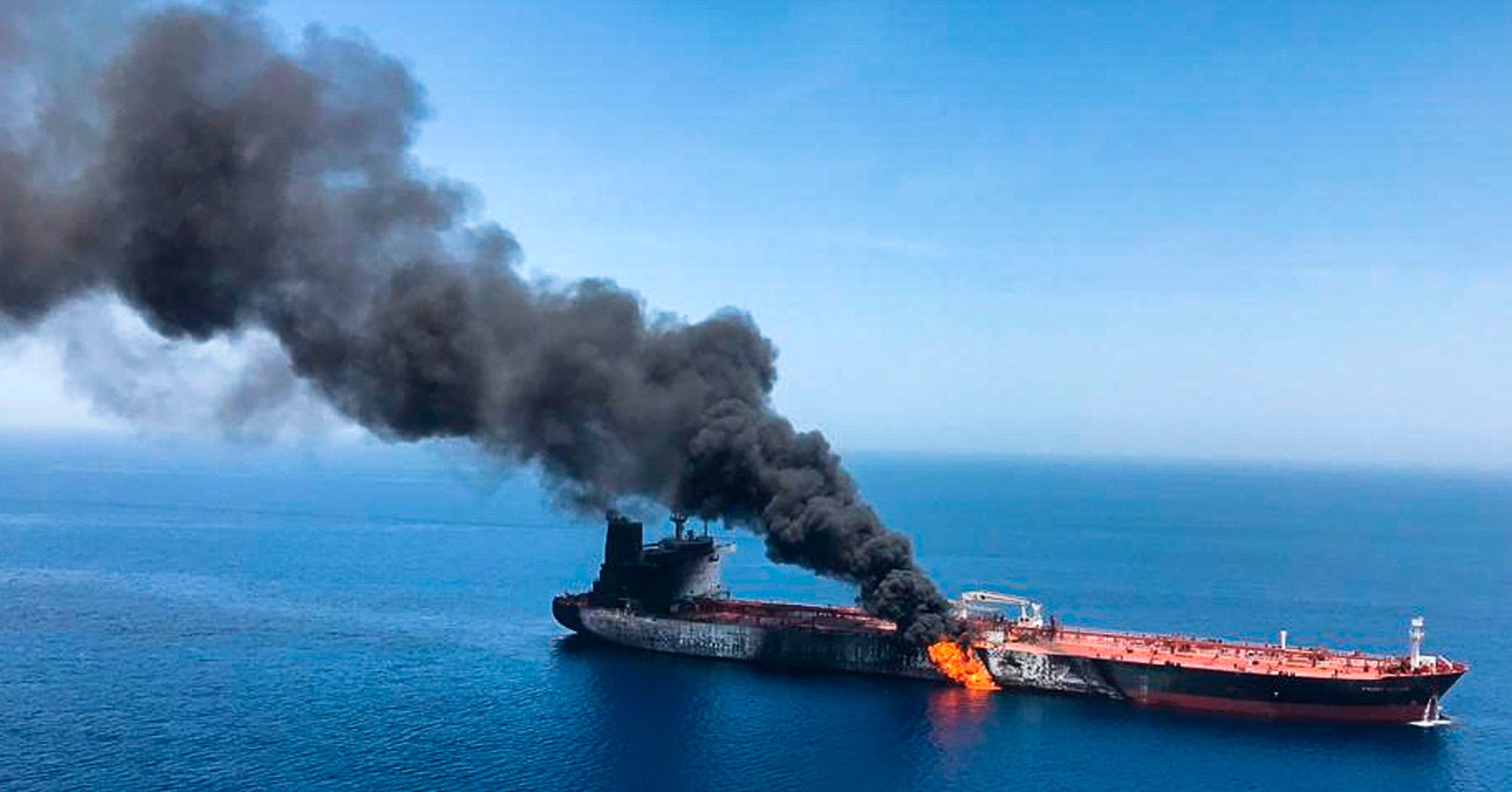
At least three commercial tankers were damaged in Gulf waters Sunday, officials and maritime sources said, after U.S. and Israeli strikes on Iran triggered renewed retaliation by Tehran that is threatening maritime security in a vital oil transit corridor.
The attacks raise the stakes for global energy shipping as tensions spill beyond military targets and into critical commercial waterways, prompting safety alerts and major routing changes.
Confirmed incidents include a Palau-flagged oil tanker under U.S. sanctions struck off Oman’s Musandam peninsula, injuring four crew members who were evacuated, the Oman Maritime Security Centre reported. The Marshall Islands-flagged crude tanker MKD VYOM was hit by a projectile about 44 nautical miles northwest of Muscat, according to maritime security sources, while a third oil-bunkering vessel was damaged off the UAE coast and another barely avoided harm from falling debris in Jebel Ali.
Download a FREE Copy of the Pocket Constitution NOW
Shipping data shows more than 150 tankers have dropped anchor across the Gulf and outside the Strait of Hormuz, a chokepoint that handles roughly one-fifth of global oil flows, as owners pause transit amid rising danger. Iran has said it has closed navigation through the strait, but international authorities have not confirmed an official closure.
“The U.S.-Israeli attack on Iran dramatically increases the security risk to ships operating in the Persian Gulf and adjacent waters,” said Jakob Larsen, chief safety and security officer at BIMCO.
The developments add to supply chain strains, with major shipping firms halting Hormuz transits and insurers warning of skyrocketing war-risk premiums.
In response, maritime authorities have strongly urged vessels to steer clear of the Strait of Hormuz and Gulf of Oman until the security situation stabilizes.
What happens next: Traders will watch regional military moves, insurance repricing and any formal blockade declarations, all of which could ripple through global fuel prices and supply routes.
Follow The Coffman Chronicle on NewsBreak for daily breaking political coverage.