


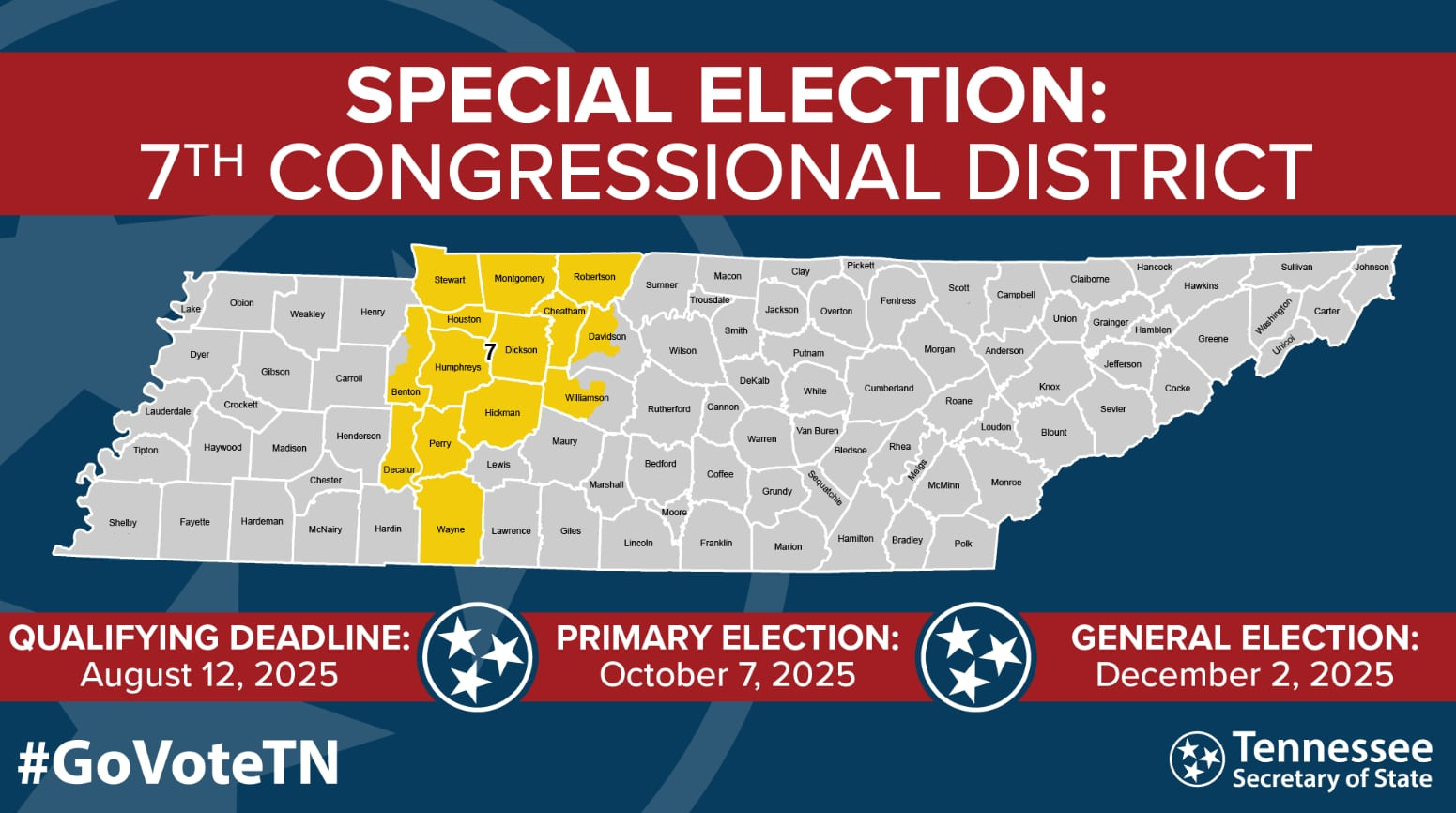
A closer-than-expected special election in Tennessee is prompting new questions about Republican stability heading into the 2026 midterm cycle, as political analysts warn the results could signal deeper vulnerabilities for the party even in areas long considered reliably conservative. Reporting from The Washington Post confirms that Republican Matt Van Epps secured Tennessee’s 7th Congressional District by roughly nine points, a stark contrast to the district’s previous performance when Donald Trump carried it by 22 points in 2024. The unexpectedly narrow outcome amounts to a 13-point Democratic overperformance, a shift that GOP strategists cited by the Post describe as a “danger sign” for the party’s broader national prospects.
Follow The Coffman Chronicle on NewsBreak for daily breaking political coverage.
The Post reports that Republicans were forced to deploy substantial financial resources and outside assistance to protect the seat, raising concerns about how the party will manage similar pressures in more competitive regions next year. GOP insiders told the outlet that the close finish reflects ongoing voter frustration with national leadership, economic management, and intraparty division that has complicated the Republican message heading into a critical election cycle. As the party attempts to defend a narrow House majority, the Tennessee results have intensified worries that districts once viewed as safe may require far more attention and investment than anticipated.
Political analysts say the implications extend well beyond Tennessee’s borders. According to experts cited in the Post’s reporting, the outcome may foreshadow difficulty for Republicans in states such as Pennsylvania, where closely divided suburban districts have repeatedly played a decisive role in determining control of the House. If Democrats can replicate the level of overperformance displayed in Tennessee, strategists warn that the GOP could be forced to redirect resources from swing seats to defend areas previously assumed to be secure. Such a scenario would significantly complicate the party’s midterm map and could offer Democrats unexpected opportunities.
The Washington Post also notes that Democrats have seized on the Tennessee outcome as evidence of shifting voter sentiment, pointing to a combination of economic concerns, turnout dynamics, and dissatisfaction with federal leadership as factors that may be reshaping electoral behavior. Democratic strategists told the outlet they view the race as a proof point that traditionally red districts may be more competitive than topline national numbers suggest.
As the 2026 campaign season accelerates, observers say the Tennessee special election will likely serve as an early indicator of broader trends. Analysts will be monitoring upcoming special elections and early primaries to assess whether similar patterns emerge. If additional races show comparable movement toward Democrats, Tennessee’s unexpectedly close contest could be remembered as the first clear sign of a challenging political environment for Republicans in the midterm year.