


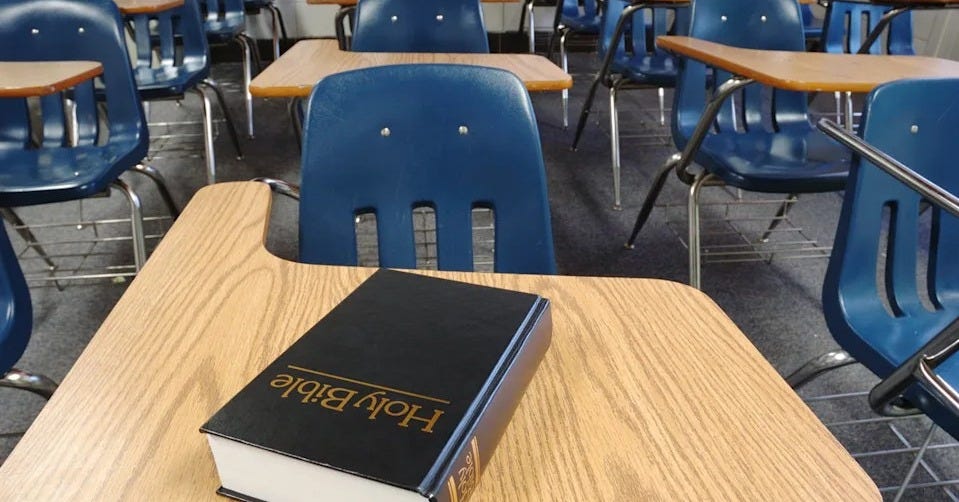
Texas education officials are moving closer to requiring Bible-related readings and expanding Christian-history instruction in public schools, a proposal that could reshape classroom lessons for more than 5 million students and intensify legal fights over religion in public education.
The Republican-led State Board of Education has given preliminary approval to a K-12 reading list and social studies standards overhaul that would place more emphasis on Christianity, Texas history, Western civilization and biblical content. If finalized, the changes are expected to begin reaching classrooms around 2030 or the 2030-31 school year.
The reading-list proposal includes Bible stories and direct biblical excerpts across grade levels. The social studies rewrite would also require students to learn more about Christian historical influence while reducing or changing some instruction on world history, race, slavery and civil rights, according to Texas policy reporting on the board’s proposal.
Supporters say the changes would give students a stronger grounding in American history, literature, patriotism and the role of religion in the country’s development. They argue that biblical references can be taught academically rather than devotionally.
Subscribe free for daily political analysis they won’t broadcast. Join 110K+ readers →
Critics say the proposal goes further than teaching about religion. Religious scholars and civil liberties advocates have warned that the reading list and standards appear to favor Christian texts and Protestant translations while giving less attention to other faiths. Some opponents argue that could invite legal challenges under the First Amendment’s limits on government-sponsored religion.
The decision also comes after Texas approved Bluebonnet Learning, state-developed instructional materials that include biblical references and have already drawn criticism from groups concerned about church-state separation.
The next step is the final board vote and the release of the final adopted language. Until then, the central question remains whether Texas can frame the Bible as required academic content without turning public-school instruction into religious preference.
Subscribe free for daily political analysis they won’t broadcast. Join 110K+ readers →