


Christmas 2025 will be different from the ones we remember. There will be fewer toys under the tree, fewer decorations, and strained family budgets.
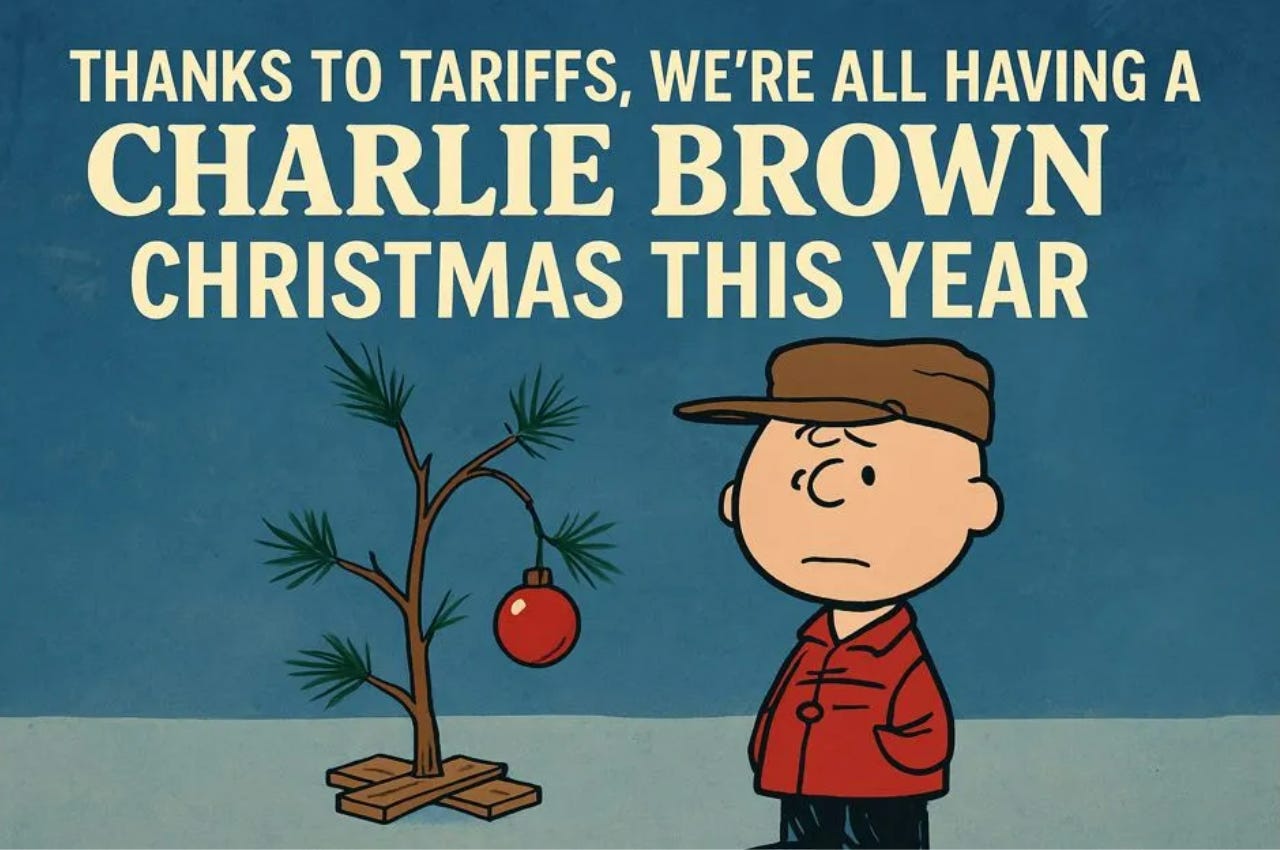
Instead of a season of abundance, America is about to experience something much closer to a Charlie Brown Christmas—stripped down, somber, and fragile. But this time, it’s not just a cartoon. It’s real, and it’s happening because of decisions made in Washington.
At the heart of it all are massive, sweeping tariffs unleashed by Donald Trump, targeting everything from toys and decorations to clothing, electronics, and food.
They were sold to the public as a way to "protect American jobs." Instead, they are gutting American wallets and hollowing out the most important season of the year for millions of families.
And here’s the harshest truth of all: Even if every tariff were lifted today, it wouldn’t be enough to save Christmas 2025. The damage is already baked in. Supply chains have been broken. Manufacturing orders have been canceled. Shipping timelines have been wrecked.
The empty shelves and skyrocketing prices aren’t coming; they’re already here.
We just haven't fully felt it yet. But we will — right when it matters most.
Independent News. Just $1/Week.
We just hit 12,000 subscribers—thank you! We’re offering full access to The Coffman Chronicle for just $1 a week ($52/year) to celebrate.
Get exclusive analysis and fearless reporting you won’t find in corporate media.
Support truth. Stay informed.
II. What’s Happening: A Tariff Bomb Dropped on Consumers
At a time when American families should be planning for joy, tariffs are quietly turning the holiday season into a financial crisis.
Here’s the breakdown of what Trump’s tariffs have triggered:
Toys: The toy industry, which imports 77% of its products from China, has been hammered with tariffs reaching 145%. Companies like Mattel and Basic Fun! have already slashed their holiday orders, warning that beloved toys like Care Bears and Tonka Trucks could see their prices double, from $30 to $70, if they’re available at all.
Christmas Decorations: About 87% of U.S. holiday decorations come from China. Tariffs as high as 104% have scared off importers, leaving shelves bare and prices surging for basics like artificial trees, lights, and ornaments.
Clothing and Apparel: Tariffs of 46% on imports from Bangladesh, Vietnam, and other low-cost suppliers are pushing up the price of essentials: Coats, jackets, hats, and scarves are all climbing by 15% to 30%. Pajamas and children's clothing—staples for Christmas gifting—are becoming a major burden for already stretched families.
Electronics: Gaming consoles, smartwatches, tablets, and computers — the big-ticket Christmas gifts — are caught in the crossfire. With tariffs on critical components and finished products, electronics are expected to cost hundreds of dollars more than last year.
Food and Treats: Even comfort food isn't safe. Chocolate prices have surged because of both global cocoa shortages and new import tariffs, and coffee, a holiday staple in many homes, is quietly becoming a luxury.
Retailers warn that unless consumers shop early and expect to pay more, Christmas shopping will be marked by sticker shock, frustration, and disappointment.
But these aren’t just numbers or market trends. They’re about the things that make Christmas feel like Christmas — the gifts, lights, food, and memories.
See our previous reporting on how tarriffs will be impacting everyday items here:


III. Where It Hurts the Most: Christmas Essentials Hit Hard
It’s not just luxury goods or specialty items getting slammed.
It’s the basic building blocks of a family Christmas, the everyday things that used to be affordable.
Toys: Childhood Dreams, Priced Out
Toys aren’t just gifts; they’re the heart of a child's Christmas morning.
But thanks to tariffs, even simple toys are being priced out of reach.
Retailers report that classic brands like Care Bears, Tonka Trucks, and Barbie dolls could see price spikes of 50% to 130%.
Small toy shops that depend on affordable imports are struggling to stock anything at all, knowing that parents might be unable to afford what’s on their shelves.
For millions of kids, the magic under the tree will be a little smaller this year, or missing altogether.
Decorations: A Hollow Holiday
It won’t just be about fewer presents; homes themselves will feel different.
From twinkling lights to the centerpiece tree, Christmas decorations are caught in the same economic trap.
With 87% of decorations sourced from China and facing tariffs over 100%, artificial trees, light strands, and wreaths have become luxury goods overnight.
Many retailers have canceled large portions of their holiday inventory, expecting shortages and furious price competition for what little stock remains.
The visible symbols of the season — the joy, the warmth, the celebration — are being stripped away.
Clothing: Basic Needs, Unaffordable
Winter clothing has been hit just as hard.
Tariffs as high as 46% on imports from low-cost producers like Bangladesh and Vietnam are pushing up the price of essentials.
Coats, jackets, hats, and scarves are all climbing by 15% to 30%.
Pajamas and children's clothing — essentials for winter warmth — are becoming luxury purchases.
For many households, it’s not just about giving fewer presents; it's about choosing between warmth and celebration.
Electronics: The Big Gifts That Won’t Come
Electronics are often the "big gift" under the tree.
Not this year.
Tariffs on key components, from semiconductors to batteries, are sending the cost of gaming consoles, laptops, smartwatches, and tablets soaring.
Retail analysts project that average electronics prices this Christmas could be 20% to 40% higher than last year, if consumers can even find them.
Food and Treats: Even Comfort Comes at a Price
Even the small joys of the season — a warm mug of coffee, a tray of cookies, a holiday box of chocolates — are under threat.
Chocolate prices have soared due to tariff-fueled cocoa shortages, with luxury brands projecting 15–25% price hikes.
Already stressed by climate impacts, coffee carries the burden of new trade penalties.
Holiday baked goods and candies are quietly becoming more expensive, making even simple indulgences harder to afford.
This year, even simple traditions will cost more and deliver less.
IV. How Much Money Americans Are Losing
Trump’s tariffs are draining between $46 billion and $78 billion from American consumers annually. On a household level, that translates to an average loss of $2,500 to $4,700 per year, and Christmas is when families feel it the hardest.
It’s not inflation caused by market forces. It’s a government-imposed penalty on American families.
Every parent who can’t find a toy under $50.
Every family that has to cut back on gifts, food, or heating bills.
Every child facing a quieter Christmas morning.
They’re all paying the price, and they never got a say.
V. Why It’s Too Late to Save This Christmas
Even if the tariffs were lifted today, Christmas 2025 would still be lost.
Manufacturing orders were canceled months ago. Supply chains are locked into higher-cost contracts. Shipping deadlines have long passed. Retail prices are already set. Corporations plan months in advance, and though the holidays feel far away for most consumers, the true planning began just days after the previous season ended.
Even if every tariff vanished tomorrow, it would take 12 to 24 months for supply chains, pricing, and inventories to normalize.
There is no saving Christmas 2025. There is only damage control and preparation for a long, difficult recovery.
As always, it won’t be the powerful who pay the price; it will be the families left picking up the pieces.
VI. Who Pays the Price
Working-class and middle-class families, small businesses, and children pay the highest price for reckless tariff policies.
Once those moments are gone, they can’t be bought back—no matter what politicians promise later.
Sadly, we’ve seen this story before. And history shows how devastating it can be when bad trade policy goes unchecked.
VII. Echoes of Economic Mistakes Past
This isn’t the first time reckless tariffs have crushed everyday Americans.
In the 1930s, the Smoot-Hawley Tariff Act was passed under the guise of protecting American workers. Instead, it triggered global trade wars, deepened the Great Depression, and prolonged the suffering of millions.
History is clear: When politicians gamble with trade wars, it’s working families who lose first and recover last.
And now, nearly a century later, we're repeating the same catastrophic mistakes.

VIII. Final Warning and Call to Action
This Christmas won’t just be harder. A warning will be written in empty shelves, higher bills, and tighter living rooms.
The tariffs were never about protecting families. They were about protecting political egos.
You can't patch a broken Christmas with slogans. You can't rebuild trust with empty promises. You can only fix this by choosing leaders who care more about families than headlines.
This year, millions of families will gather around smaller trees, fewer gifts, and tighter smiles, doing their best to keep the spirit of the season alive.
This year, we’re all living a Charlie Brown Christmas.
But unlike the cartoon, this isn’t a warm, simple story with a happy ending. It’s real. It’s devastating. And if we don't demand better, it won’t end on December 25th; it will only get worse.
We just hit 12,000 subscribers—thank you! We’re offering full access to The Coffman Chronicle for just $1 a week ($52/year) to celebrate.
Get exclusive analysis and fearless reporting you won’t find in corporate media.
Bibliography:
American Progress. "Trump’s Tariff Pause Doesn’t Pause Economic Pain and Will Cost Families $4,600 Per Year." April 2025.
CNET. "Buy or Wait Guide: How Tariffs Will Change Tech Prices and What to Do Now, According to Experts." 2025.
FreightAmigo. "Global Shipping Peak Seasons and Tariff Effects." April 2025.
Irwin, Douglas A. "What We Can Learn from Smoot-Hawley." Peterson Institute for International Economics, June 2011.
McKinsey Global Institute. "Risk, Resilience, and Rebalancing in Global Value Chains." August 2020.
National Retail Federation. "Trump Tariff Proposals Could Cost Americans $78 Billion in Annual Spending." April 2025.
People Magazine. "Major Toy Company CEO Says 80% of Toys Will Be 'Twice as Expensive' by Christmas Due to Tariffs." April 2025.
Reuters. "Has Trump Cancelled Christmas? China's Decorations Makers Report No U.S. Orders." April 2025.
Washington Post. "Trump Tariff Price Hikes Could Start with Clothing, Cars and Coffee." April 2025.
Being able to say, “I told you so,“ is not that gratifying. My youngest grandchild is two. Sadly, she will have no firsthand memories of the United States of America being the leader of the free world and the most prosperous, most respected nation on the planet.
I hope Europe and China keep our white hat clean.
We should not question our great leader's "master plan." He is a genius and the creator of the "art of the deal" or did you just forget that? Be a patriot. God has eluminated him with powers the rest of us do not have and will never have. We must not forget he is the greatest financial guru in the world. Our loving leader deserves our unquestionable backing because he is the master creator. Don't question his super powers or you will be sorry you did.