


At eleven weeks pregnant, Katie Hill stood barefoot on the cold kitchen tile, sipping peppermint tea that had already gone bitter.

Rain ticked against the window. The refrigerator hummed behind her, filling the room with the faint smell of last night’s onions.
She had not bought a crib, chosen a name, or told anyone outside the family. She had, however, placed the baby on six daycare waiting lists.
The first reply arrived while Katie was trying to swallow a dry piece of toast. “Congratulations! BABY HILL is currently number 214 on our infant enrollment waiting list. Placement is not guaranteed. Please do not reply to this email.”
Marcus leaned over her shoulder. “That must be a very large daycare.”
“That isn’t how waiting lists work.”
“Then I don’t like how waiting lists work.”
The word congratulations seemed to be doing work it had not been trained for.
This Community Is Powered by You
What started as a small circle has grown into something much bigger, and it’s all because of readers like you.
Every time you forward this email, post it on socials, or bring someone new into the fold, you’re helping build one of the most passionate, independent communities out there.
Want to keep the momentum going?
Share this newsletter with someone who should be part of this conversation.
Thank you for being here. It means everything.
The Standings
Bright Beginnings sent updates every other Friday. At fourteen weeks, the baby was the size of a lemon and number 211. At eighteen weeks, a bell pepper and number 207. At twenty-four weeks, an ear of corn and number 201.
Katie printed each update. The warm pages curled as they came out of the printer, carrying that dusty smell printers produced when asked to participate in family life. Marcus taped them to the refrigerator and drew arrows between the numbers.
They began following the list like baseball standings.
“Any movement?” he asked one evening, kicking off his damp work boots.
“Three places.”
“Playoffs are still possible.”
“These are babies, Marcus.”
“Babies are unpredictable.”
The People Behind the List
They toured Bright Beginnings during Katie’s seventh month. The front door opened with a soft pull, releasing warm air scented with disinfectant, applesauce, and something unmistakably diaper-related. A plastic xylophone clattered in one room while a toddler shouted “MINE” with the authority of a small property lawyer.
The infant room had pale yellow walls covered with painted handprints. A bottle warmer clicked on the counter. Rocking chairs creaked while eight babies produced a mixture of hiccups, squeaks, and open rebellion. One baby dropped a plastic ring and screamed as though betrayed by gravity.
“That’s Owen,” said Nina, one of the caregivers. She returned the ring to his damp fist. “He isn’t hurt. He’s disappointed in the laws of nature.”
Owen immediately forgave the universe.
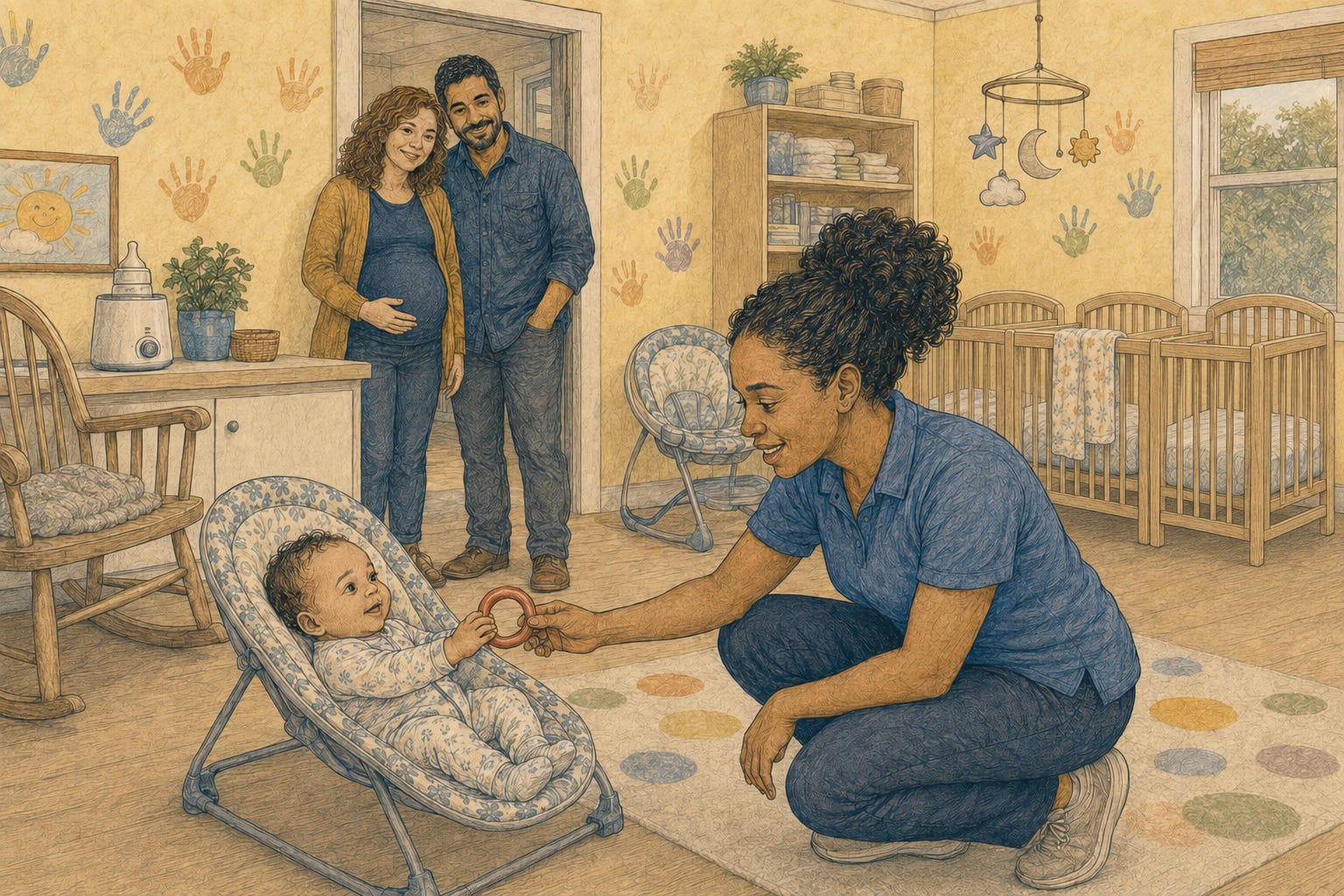
Nina moved through the room without hurrying. She tested a bottle against her wrist, tucked a blanket beneath one baby’s feet and lifted another against her shoulder.
“You’re very good at this,” Katie said.
“I’ve had practice.”
Nina’s phone buzzed. Her smile disappeared. “My mother has to leave for work,” she told the director.
“Go,” Mrs. Mercer said. “We’ll cover.”
As Nina hurried out, the room changed. Mrs. Mercer lifted one baby while watching three others, her rubber-soled shoes squeaking across the floor.
Katie assumed Nina’s daughter attended another classroom.
“She can’t afford to enroll her here,” Mrs. Mercer said.
“But she works here.”
“I know.”
Even with the employee discount, Nina’s three-year-old spent Mondays with her grandmother, Tuesdays with an aunt, Wednesdays and Thursdays with a neighbor, and Fridays wherever the family could find an open door. Nina spent every day providing dependable care she could not secure for her own child.
Baby Hill arrived on a rainy Thursday morning after nineteen hours of labor and one sharp disagreement over whether Marcus was breathing too loudly. They named her Lucy.
Three days later, Bright Beginnings sent another update. “Congratulations! BABY HILL is now number 186.”
“That’s Lucy,” Katie said, holding the warm, milk-scented bundle against her chest.
“The list doesn’t know that,” Marcus said.
Back Where They Started
Two weeks before Katie’s maternity leave ended, another message arrived. “Due to an unexpected staffing change, infant enrollment capacity will be reduced. Waiting-list positions are being recalculated.”
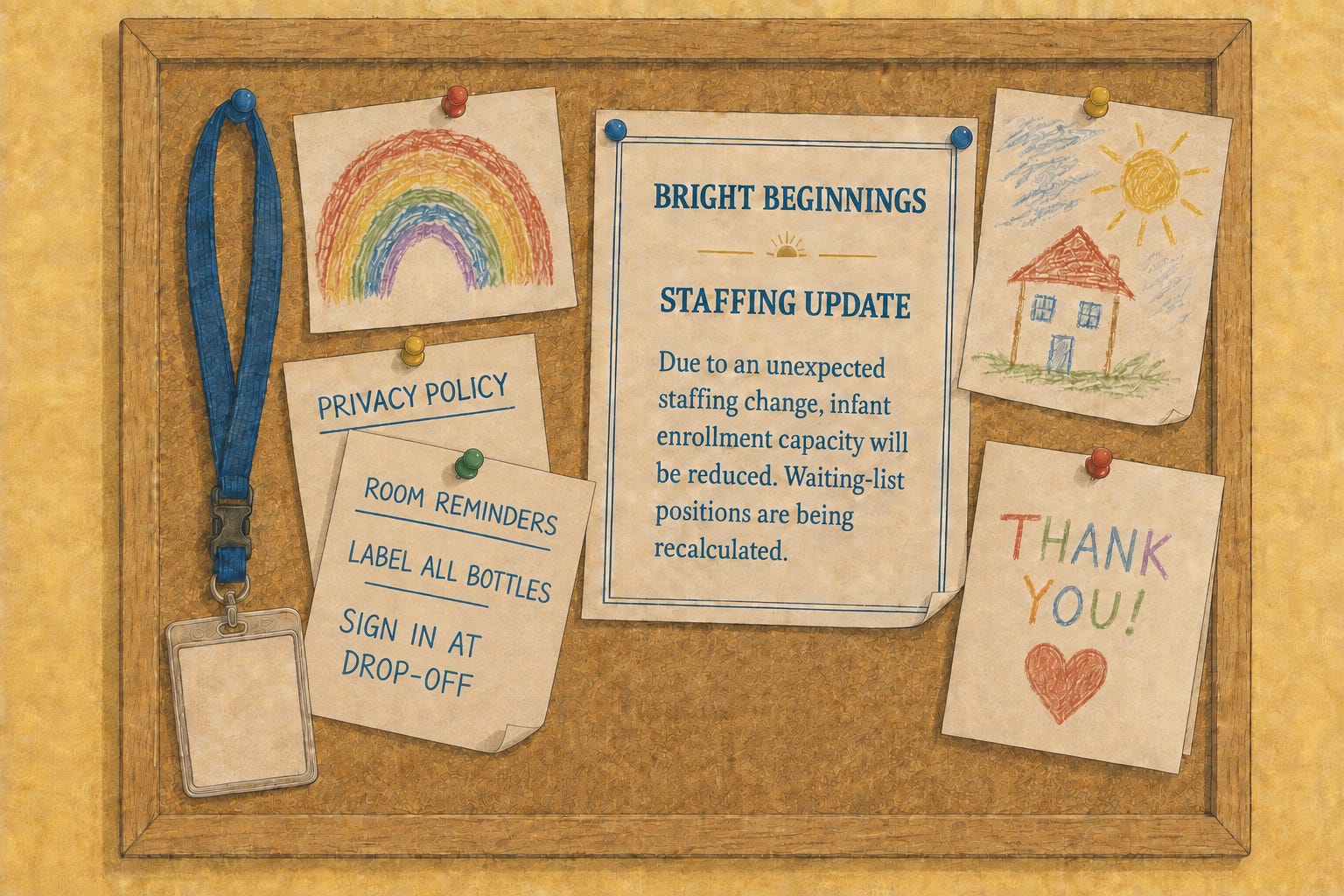
Nina had taken a job at a distribution center. It paid nearly four dollars more per hour and included health insurance. Without her, Bright Beginnings had to close half the infant room.
When the calculations were finished, Lucy was number 214 again.
“She went all the way around,” Marcus said.
A Different Question
The daycare called a meeting. Parents crowded into the multipurpose room in wet coats, carrying diaper bags, paper cups of burnt coffee, and the sour smell of a long workday. A box of cold pizza sat unopened on a folding table. The cheese had hardened into a shiny yellow sheet.
Mrs. Mercer placed the budget beside it. “I know what you pay is too much,” she said. “I also know that what we pay our staff is too little.”
“Then where does the money go?” someone asked.
“Rent. Insurance. Food. Utilities. Payroll taxes. Training. Cleaning. Licensing. Substitute coverage.” She paused. “An astonishing amount of applesauce.”
The parents searched the numbers for waste. There was none.
Bright Beginnings had no executive salaries or luxury offices. Mrs. Mercer’s desk chair had stuffing coming through one arm, and the copier sounded as though each page might be its last.
Katie looked around the room. There were nurses, mechanics, teachers, cashiers, restaurant managers, and warehouse workers. Every one of them needed childcare so someone else could depend on them.
“What would it take to reopen the infant room?” Katie asked.
Mrs. Mercer gave her a number. It was impossible for one family and surprisingly manageable when divided among the businesses represented in the room.
The meeting did not solve childcare that night. It did something smaller. It changed the question. Instead of asking which family deserved the next opening, the parents began asking how to create more openings.
A church three blocks away offered two classrooms that sat empty during the week. Several employers agreed to fund a one-year pilot after calculating what missed shifts, overtime, and employee turnover were already costing them. Parents painted walls and assembled shelves. Marcus replaced electrical outlets so old he claimed they remembered Eisenhower.
Then the county joined, not to run the daycare, or to choose which children got in. The county created a matching grant for licensed providers that added infant capacity, met staffing standards, and raised caregiver pay above a minimum threshold. The money came with inspections, public accounting, and a simple rule: public dollars had to create actual seats. Bright Beginnings applied.
The church provided space. Employers provided money. Parents provided labor. The county provided enough stable funding to turn a temporary rescue into something that could survive the next resignation, rent increase, or broken furnace.
The money raised wages and helped daycare employees enroll their own children. Nina returned. She did not return because caring for children was her calling or because love mattered more than money. She returned because the job finally allowed her to live.
Katie began to understand what had been wrong with the waiting list. There had never been too many babies. There had been too few places able to care for them, too few workers who could afford to stay, and too many people treating childcare as a private inconvenience instead of part of the machinery that allowed the whole town to go to work.
Families had responsibilities. Employers did too. So did the community. And when none of them could build enough capacity alone, government had a job as well: not to replace them, but to make sure the system could do what everyone depended on it to do.
Down the Hall
Seven months later, Katie received another email. “Congratulations! A placement is available for BABY HILL.”
On Lucy’s first morning, the air outside was cool enough to sting Katie’s nose. Inside, the daycare smelled of oatmeal, baby shampoo, and fresh paint.
Nina met them at the door. Her own daughter was down the hall, arguing passionately with another three-year-old about ownership of a purple cup.
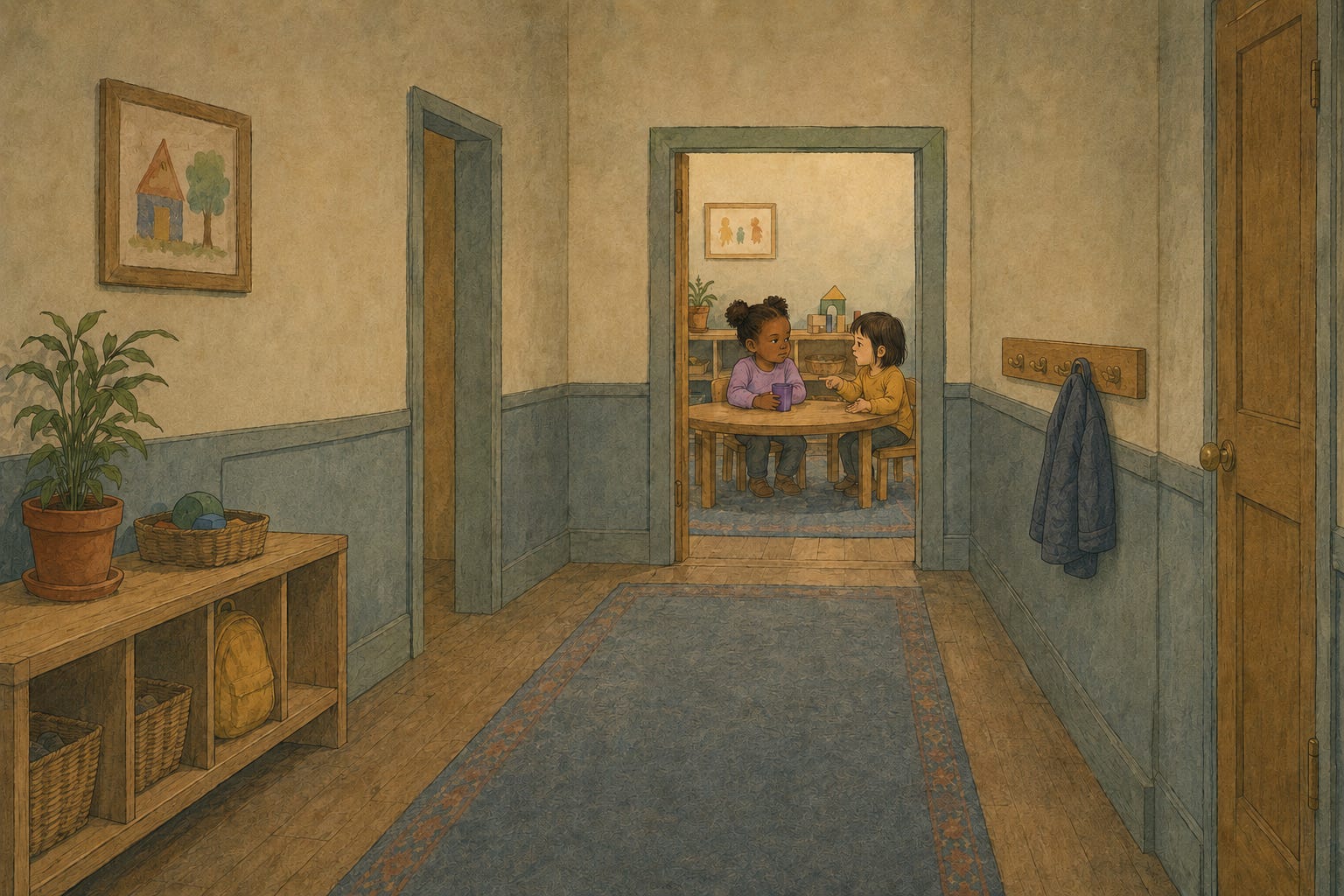
“Diplomatic talks have stalled,” Nina said.
Lucy grabbed Nina’s necklace with one warm, determined hand.
At the check-in kiosk, Marcus typed Lucy’s name. The screen glowed green. BABY HILL — APPLICANT 214. Below it appeared one word. ARRIVED
For most of Lucy’s life, 214 had been the number of children standing between her family and help. It turned out they had never been standing between her and help at all. They had all been waiting for the same thing.