


On October 28, 2025, the Department of Homeland Security quietly announced one of the most significant internal shifts in immigration enforcement in recent memory. More than half of Immigration and Customs Enforcement’s field office directors are being reassigned. In their place: officials with deep roots in the U.S. Border Patrol and Customs and Border Protection.
It’s not just a bureaucratic reshuffle. It’s a reprogramming.
ICE, once tasked with interior enforcement shaped by investigative discretion and due process, is being re-engineered in the image of its more militarized sibling. Border Patrol brass are being dropped into cities like Los Angeles, Philadelphia, Denver, and beyond, with orders to escalate operations and meet an internal target of 3,000 arrests per day.
But this isn’t a new strategy. The model was already tested. It started in Chicago.
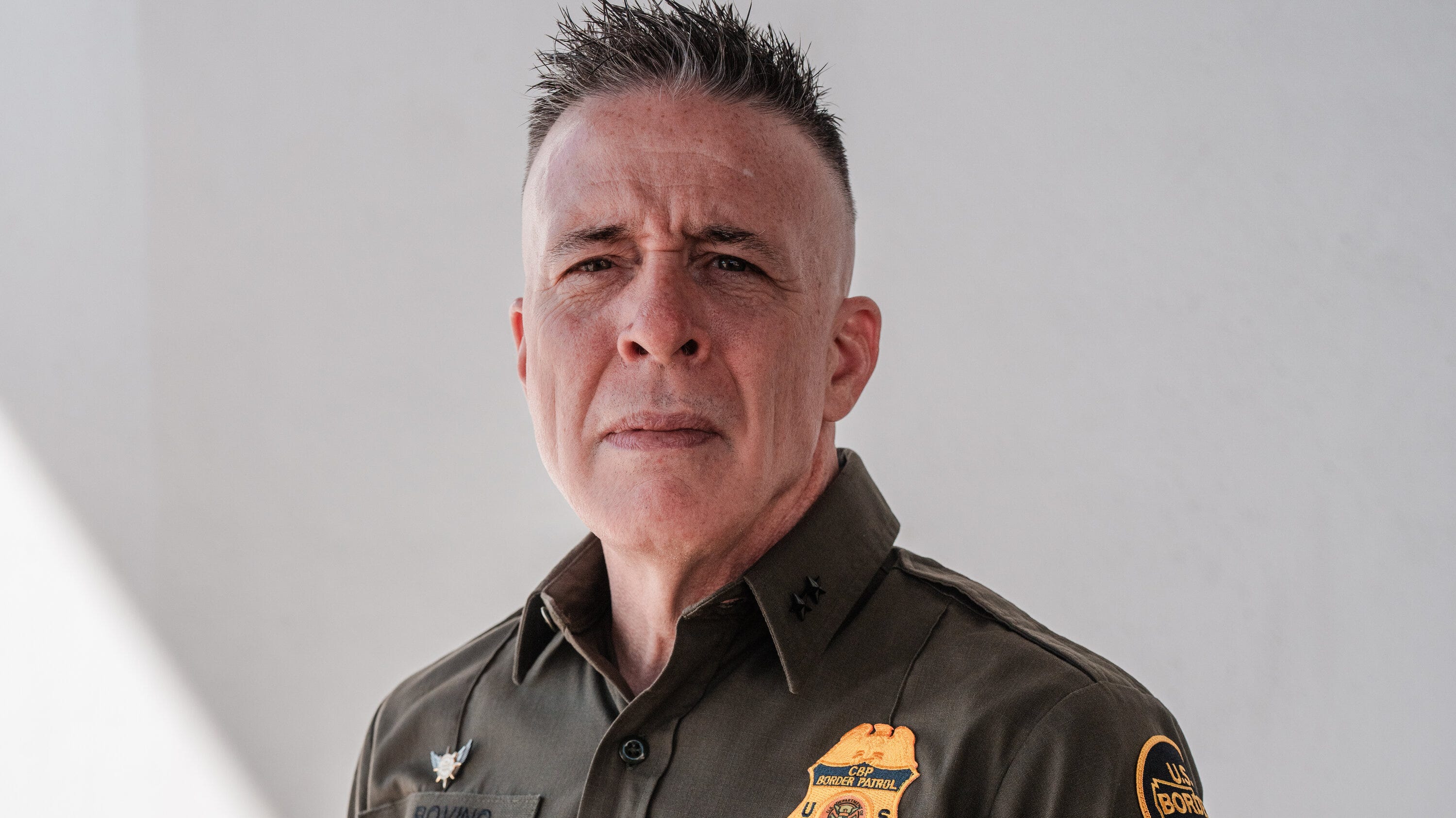
Image from the New York Times
Because democracy doesn’t defend itself, and neither does your sanity. Subscribe here to keep your eyes open and your sarcasm sharp.
The Bovino Prototype
Gregory Bovino, a senior Border Patrol official, arrived in Chicago in mid-September 2025. Though there was no formal announcement, word spread quickly in activist circles and immigrant communities. This wasn’t just another ICE operation. Something had shifted.
Three days later, on September 19th, a pastor was shot in the head.
Rev. David Black, a young Presbyterian minister, had joined a peaceful prayer protest outside the ICE processing center in Broadview, Illinois. Eyewitnesses say he was kneeling in silent prayer when a federal agent fired a pepper ball at his forehead. The impact dropped him instantly. As medics rushed to his side, other protesters were pepper-sprayed, and some were tackled to the ground.

And that was only the beginning.
Over the next two weeks, the enforcement posture in and around Chicago became unrecognizable. Tear gas was deployed in populated neighborhoods. Journalists were detained — including Debbie Brockman, a WGN-TV producer, who was filmed identifying herself before being tackled and taken into custody. Legal observers reported that agents wore no visible identification, ignored body-camera mandates, and operated with a posture of unchecked aggression.
For many, it felt like a military occupation under federal branding.
And it was all happening in American neighborhoods.
When the Courts Blinked
By early October, the violence had become impossible to ignore. Lawsuits were filed. Protests escalated. In an unusual move, U.S. District Judge Sara Ellis stepped in.
Her initial order limited ICE and Border Patrol’s use of tear gas, required agents to wear identification, and mandated the use of body cameras. By October 28, she went further, ordering Bovino himself to submit daily reports detailing the use of force in the city.
In federal legal terms, this was swift action. Judges don’t often intervene in federal enforcement strategy. That Ellis felt compelled to act so quickly says everything about how extreme the conduct had become.
But despite the speed, her response stopped short of confrontation.
No agents were pulled. No operations were suspended. Bovino remained in charge. The strategy remained intact.
And the violence didn’t stop.
The Cost of Silence
While the courts responded quickly, the national media did not. There was coverage — scattered pieces in The Guardian, NBC Chicago, and human rights outlets — but no surge of national attention. There has been no primetime exposé. No viral moment that broke through.
Chicago absorbed the impact, and the rest of the country moved on.
That lack of public exposure is what makes this moment so dangerous. Without national outrage, without pressure, without accountability, the administration took its lesson: They could get away with it.
And so they are expanding it.
Twelve cities and counting, Border Patrol leadership is moving into ICE field offices across the country. The Bovino model is being replicated, not reviewed, strengthened, not suspended.
A Green Light Disguised as Restraint
What happened in Chicago wasn’t an outlier. It was a test. And despite a federal judge’s swift involvement, the outcome speaks for itself.
A pastor was shot. Journalists were detained. Civil rights were openly violated. The courts responded, but didn’t stop it. The media mostly looked away. The public never truly saw it.
That silence was interpreted not as caution, but as consent.
And now, what started in one city is going national.
The Next City, The Next Shot
The next pastor may be in Philadelphia. The next journalist in Los Angeles. The agents arriving in these cities have seen what happened in Chicago —and, more importantly, what didn’t.
No resignations. No congressional hearings. No televised outrage.
This is how dangerous policy spreads: not with a bang, but with a blank stare. A shot to the head, unseen.
What remains invisible, remains unchallenged.
And they are counting on that.
Don’t let the bastards sneak anything past you. Subscribe and get your daily dose of rage and receipts delivered fresh, before the spin doctors can scrub it.
Sources:
“Trump administration shakes up ICE leadership across the country in major overhaul, AP sources say,” Oct 28, 2025. AP News
“Judge warns Border Patrol leader that tear gas use appears to violate court order,”
Oct 28, 2025. The Washington Post“Judge intensifies oversight of agents in Trump’s Chicago immigration crackdown,” Oct 28, 2025. Reuters
“Judge orders federal immigration officers in Chicago area to wear body cameras,”
Oct 16, 2025. The Guardian“Body slamming, teargas and pepper balls: viral videos show ICE using extreme force in Chicago,” Oct 04, 2025. The Guardian
“Pastor Claims He Was Praying When ‘Laughing’ ICE Agents Shot Him in the Head with Pepper Ball During Protest,” Oct 10, 2025. People.com
“The Chicago Pastor Who Confronted ICE in a Viral Photo,” Oct 23, 2025. Sojourners

This idiot Bovino needs to go to jail.
These are the Brown shirts, led by the group soon to become the Black shirts. Fascism is in your house right now. I’m fearful for you all, good luck, from 🇨🇦.