


The Bridge Is Already Built
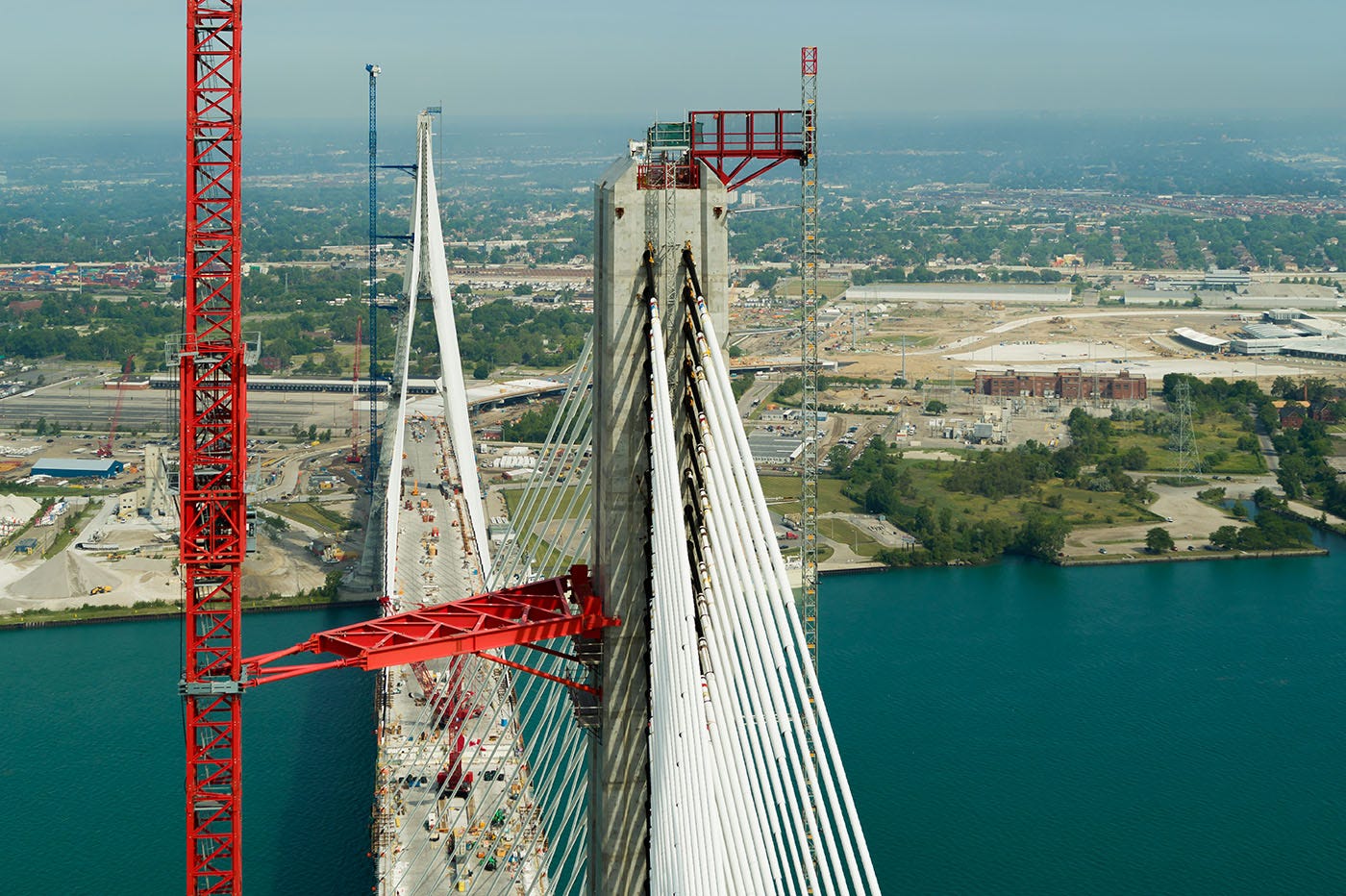
Construction began on July 18, 2018, during Trump’s first term, just over seventeen months after Trump and Trudeau’s joint statement of support for the project. The concrete has been poured, towers raised, and cables strung. Border facilities are completed on both sides of the river. After more than two decades of planning, negotiation, environmental review, and construction, the Gordie Howe International Bridge is nearly ready to open. This new international artery between Michigan and Ontario is meant to relieve congestion, stabilize supply chains, and modernize one of the busiest trade corridors in North America.
Now, at the final moment, the United States president is threatening to stop it.
It is not because of safety concerns, unfinished construction, or a failed treaty obligation, but because the bridge, largely financed by Canada under a binational agreement, is suddenly being reframed as leverage in a broader trade dispute, with demands for retroactive compensation and partial ownership floated after the fact.
This is not how infrastructure is supposed to work.
The quiet question raised by this threat is larger than a bridge or a border crossing. If a completed, treaty-backed public works project can be held hostage at the point of opening — not over compliance, but over bargaining power — then the issue is no longer Canada, or trade, or even this administration. The issue is whether physical infrastructure itself has become a negotiable weapon of executive pressure.
And once that line is crossed, it doesn’t end at a river in Detroit.
This Community Is Powered by You
What started as a small circle has grown into something much bigger, and it’s all because of readers like you.
Every time you forward this email, post it on socials, or bring someone new into the fold, you’re helping build one of the most passionate, independent political communities out there.
Want to keep the momentum going?
Share this newsletter with someone who should be part of this conversation.
Thank you for being here. It means everything.
What the Bridge Is and What It Isn’t
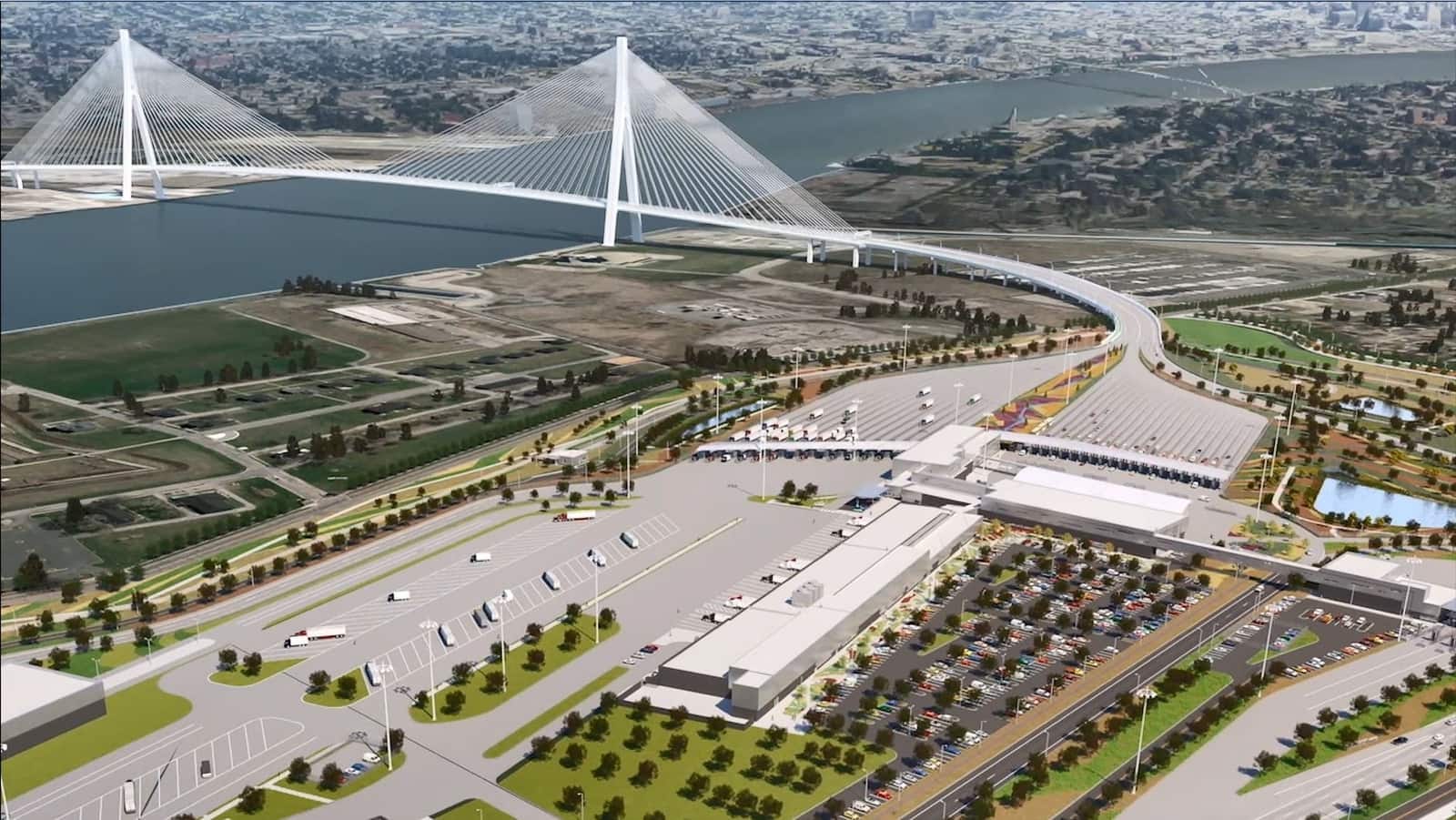
At its most basic level, the Gordie Howe International Bridge is a piece of transportation infrastructure, a six-lane, cable-stayed crossing over the Detroit River designed to connect Highway 401 in Ontario to Interstate 75 in Michigan. It adds capacity to a corridor that already carries roughly a quarter of all U.S.–Canada trade by value, and includes modern customs facilities, dedicated commercial lanes, and a pedestrian and cycling path — rare for an international crossing in this region.
A Bridge, Not a Bargaining Chip
That is what the bridge is.
What it is not is a private asset up for renegotiation at the moment of opening.
The bridge exists because of a long, formal process that began in the early 2000s, survived multiple administrations in both countries, cleared environmental reviews on both sides of the border, and was codified through binding bilateral agreements. Canada agreed to finance the bulk of construction after private proposals failed and after years of delays tied to ownership disputes around the existing Ambassador Bridge. In return, toll revenues were structured to reimburse Canada over time, a model explicitly accepted by U.S. and Michigan authorities.
This matters because the current threat reframes that settled arrangement as provisional, as if ownership, compensation, and control were still open questions rather than resolved ones.
This Deal Was Already Settled
They are not.
The bridge is governed by a binational authority, operates under treaty obligations, and sits atop layers of permitting, regulatory approval, and international coordination that do not disappear because a president is dissatisfied with unrelated trade balances. Its opening is not a discretionary favor. It is the final step of a process already agreed to by both governments.
Why Renegotiation After Completion Matters
Treating the bridge as leverage requires pretending otherwise.
That pretense collapses the distinction between policy negotiation and infrastructure compliance. Trade disputes are normally addressed through tariffs, panels, retaliatory measures, or renegotiated agreements. Infrastructure projects, once approved and built, are supposed to be insulated from that volatility precisely because economies depend on their predictability.
When that insulation fails, the consequences are not theoretical.
How an Opening Could Be Delayed and Where Executive Power Actually Stops
On paper, the power to stop a completed international bridge from opening is limited.
The Gordie Howe International Bridge does not belong to a president. It is governed by a binational framework that includes treaty commitments, federal and state approvals, and a jointly managed operational authority. Once construction and safety certifications are complete, the expectation, built into years of planning, is that the crossing opens as scheduled.
Authority on Paper vs. Leverage in Practice
That’s the formal structure.
The problem is that formal authority and practical leverage are not the same thing.
A U.S. president cannot unilaterally void a treaty or seize control of an international asset without triggering immediate legal and diplomatic consequences. However, an administration can slow, stall, or complicate an opening through indirect means, including delaying final operational sign-offs, stretching security reviews, withholding coordination between agencies, or signaling uncertainty that forces caution at the border.
How Delay Happens Without Saying “No”
None of those actions requires announcing a blockade. They operate in the gray space where process becomes pressure.
This is where the threat matters, not because it is cleanly lawful — it likely isn’t — but because it advertises a willingness to test how much friction can be introduced without formally breaking the rules. A delayed opening framed as “ongoing discussions,” “additional reviews,” or “unresolved issues” appears bureaucratic on the surface while serving as leverage beneath.
The Norm This Threat Quietly Breaks
Historically, international crossings are insulated from exactly this kind of maneuver because they serve as shared economic lifelines. Even during trade wars, bridges and ports remain operational while disputes play out elsewhere. The separation is intentional. Economies can survive tariffs. They struggle when physical chokepoints become political tools.
The current threat blurs that separation.
When Infrastructure Becomes a Hostage
What makes this moment unusual is not the dispute itself. Trade disagreements between the United States and Canada are routine. They move through familiar channels while commerce continues. Under normal administrations, most of this remains largely invisible to the public.
What is different here is the object being used as leverage.
Why Infrastructure Has Always Been Off-Limits
Infrastructure has traditionally been treated as off-limits in these fights. Once a bridge, port, tunnel, or rail crossing is approved, built, and certified, it is expected to operate independently of political friction. That separation exists because physical chokepoints are too central and too system-critical to be renegotiated every time relations sour.
The threat to delay or block the opening of the Gordie Howe International Bridge breaks that norm.
From Neutral Backbone to Political Throttle
It reframes a finished public asset as conditional, usable only if unrelated demands are met. Completion no longer guarantees operation.
Once that tactic is normalized, it doesn’t stay isolated.
A bridge delayed for leverage invites the same logic elsewhere—ports slowed by tariff disputes, rail crossings entangled in regulatory fights, energy transmission lines paused pending unrelated concessions. Each move can be framed as temporary. Together, they redefine infrastructure from neutral backbone to political throttle.
Who Pays When Infrastructure Becomes Leverage
Unlike tariffs, infrastructure pressure is asymmetric. The pain concentrates locally and immediately on regions, industries, and workers with no seat at the negotiating table.
The Kitchen-Table Consequences of a Delayed Opening
For most people, an international bridge feels abstract until it isn’t.
Where the Costs Actually Show Up
The Detroit–Windsor corridor is one of the most tightly integrated manufacturing regions in the world. Auto parts routinely cross the border multiple times before a vehicle is finished. A delayed opening doesn’t just preserve congestion. It amplifies risk in a system already operating on thin margins.
When trucks idle longer, costs rise. When schedules become unpredictable, inventories grow. When inventories grow, prices follow.
The Slow Bleed Readers Never See Coming
That pressure doesn’t arrive as a headline. It arrives quietly through higher logistics costs, delayed deliveries, overtime, temporary shutdowns, and eventually higher prices. By the time it reaches the kitchen table, the cause is invisible.
What Uncertainty Does to Local Planning
Communities on both sides of the border planned around this bridge. Road projects, logistics hubs, hiring decisions, and investment timelines assumed new capacity. A politically induced delay doesn’t just pause traffic. It destabilizes planning.
Once businesses begin planning around instability rather than capacity, the damage compounds. Supply chains reroute. Investments shift. Inefficiencies harden.
Bridges are supposed to reduce uncertainty. A delayed opening does the opposite.
Canada Today, Something Else Tomorrow
It would be easy to dismiss this as a one-off, a loud dispute that will resolve itself quietly.
The Leverage Is the Point
However, what matters here is not who the leverage targets. It’s the leverage itself.
If a completed, treaty-backed infrastructure project can be questioned at the point of activation, approval ceases to be final. Completion becomes provisional, and investment decisions begin factoring in political temperament, not just engineering and demand.
That changes behavior.
How Systems Quietly Recalibrate
Governments become cautious partners. Businesses hedge. Regions absorb risk they didn’t create. Over time, trust erodes, not dramatically, but measurably.
This is why treaties exist— not to prevent conflict, but to keep it from destabilizing the foundations on which everything else rests.
Threatening to block a bridge at the moment of opening doesn’t just test Canada’s response. It tests whether those foundations still hold when they’re inconvenient.
The Line That Once Crossed Doesn’t Reappear
This episode fits a broader pattern that has defined Donald Trump’s approach to power: treating settled arrangements as provisional, reframing completed agreements as leverage, and testing whether norms hold when they become inconvenient.
A Method, Not an Ideology
The consistency is not ideological. It is procedural. The method depends on uncertainty.
If a bridge can be delayed after it is built, then approval is no longer final. If treaties function only when politically useful, predictability becomes conditional. Institutions still exist, but trust in their durability weakens.
This is how governance shifts without announcing itself.
Why This Doesn’t Stay Isolated
This is not a story about Canada. It is not even primarily a story about a bridge. It is a story about whether the rules we assume still govern public infrastructure actually do, or whether completion now marks the beginning of a new phase of negotiation rather than the end of one.
If the latter becomes normal, the cost won’t arrive all at once. It will arrive quietly, unevenly, and downstream, felt most by those who never had a voice in the leverage being applied.
That is the line being tested here, and once crossed, it does not simply reappear.
Coffman Chronicle: Support Independent Media
Independent journalism exists to explain how power actually moves, not just who’s arguing about it.
This piece didn’t happen because it was trending. It happened because understanding how infrastructure, treaties, and executive pressure intersect matters long after the headlines move on.
The Coffman Chronicle is fully reader-supported, so it can follow those patterns without permission, advertisers, or political loyalty tests, and publish work built to hold up over time, not just over a news cycle.
If this reporting helped you see something you wouldn’t have otherwise, consider becoming a paid subscriber.
Sources:
“Trump threatens to bar the new US-Canada bridge from opening, demands talks with Ottawa.” Reuters, February 10, 2026.
“Trump is threatening to block a new bridge between Detroit and Canada from opening.” AP News, February 10, 2026.
“Trump threatens to block the opening of a bridge between Ontario and Michigan in ongoing spat with Canada.” Business Insider, February 2026.
“Howe bridge highlighted during Trudeau-Trump meeting.” Windsor Star, February 13, 2017.
“Trump makes $137bn list of ‘emergency’ infrastructure schemes, all needing private finance.” Global Construction Review, January 30, 2017.
“Gordie Howe International Bridge.” Wikipedia.
Gordie Howe International Bridge Project. Official Website.
Gordie Howe International Bridge Project. “Our Story.”
U.S. Federal Highway Administration. “Project Profile: Gordie Howe International Bridge.” FHWA IPD.
“The Gordie Howe International Bridge Project.” Government of Canada.
“Gordie Howe bridge aiming for ’early 2026’ opening.” Construction News, November 14, 2025.
“Gordie Howe Bridge — Detroit, Michigan & Windsor, Ontario.” Parsons.com.
“By building a bridge to Detroit, Canada eyes a future less dependent on US.” CSMonitor.com, February 2, 2026.
…because if Trump can benefit from or leverage something so that there is something in it for him, he will.
Because it doesn’t have his name on it….