


In recent weeks, the deportation of Kilmar Abrego Garcia has ignited a firestorm of legal and moral outrage.
Despite a Supreme Court order mandating his return to the United States, the Trump administration has repeatedly labeled Abrego Garcia an MS-13 gang member—a claim that remains completely unsubstantiated. The accusations rely on dubious sources: a 2019 police report authored by an officer later dismissed for misconduct, and a gang registry program disbanded for its racial profiling and lack of evidence standards.
Still, high-ranking officials—including Press Secretary Karoline Leavitt and Deputy Chief of Staff Stephen Miller—have publicly insisted that Abrego Garcia is a dangerous criminal. When pressed for proof, the administration has offered vague assertions about sealed records, confidential intelligence, or "pending transcripts" that never materialize.
No court has accepted the claims, and no evidence has been presented. Yet, the accusations persist, amplified by partisan media, weaponized by political figures, and now etched into public perception.
It’s a lie that has real-world consequences. And legally? They don’t have to prove a thing.
What if federal legislation would compel the administration to support their claims?
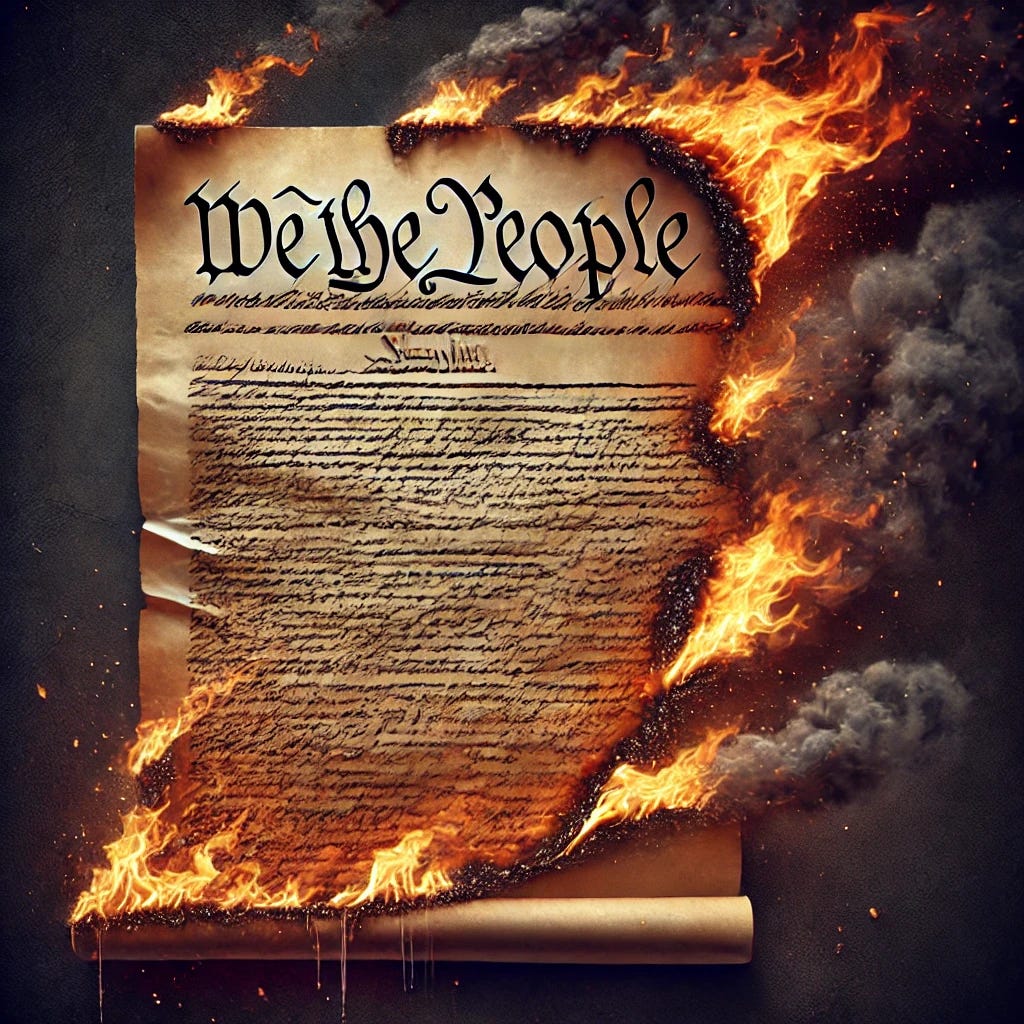
Note: see postscript
Independent News. Just $1/Week.
We just hit 12,000 subscribers—thank you! We’re offering full access to The Coffman Chronicle for just $1 a week ($52/year) to celebrate.
Get exclusive analysis and fearless reporting you won’t find in corporate media.
Support truth. Stay informed.
The Radical Simplicity of Wales’ Proposal
In Wales, lawmakers are considering a bold legislative move: requiring elected officials to tell the truth.
Under the proposed bill, if a politician makes a factual claim and someone challenges it, that politician would have seven days to either:
Clarify or correct it,
Retract it,
Or defend it in court with evidence.
Fail to do any of those things? And the legal system steps in.
It doesn’t criminalize speech. It doesn’t ban opinions or criticism.
It doesn’t criminalize lying. It criminalizes impunity.
If passed, Wales would become the first Western democracy to enact a legal standard requiring politicians to defend the truth of their public statements. That’s not just notable; it’s historic.
Other countries—including Australia, the U.K., and several EU states—have debated similar proposals. But none have become enforceable law. Most rely on soft accountability: transparency measures, advisory panels, or public backlash.
Wales is going further.
It’s putting the burden of truth on the speaker, not the public.
If this law were in place and a politician claimed, “Kilmar Abrego Garcia is a gang member,” they would have seven days to show the proof, or formally walk it back.
No hiding behind unnamed sources. No endless deflections.
Just facts. Or consequences.
Why This Could Never Happen in the United States
The truth is, a law like Wales’ would be dead on arrival in the United States. Not because it’s too harsh or even partisan, but because of the First Amendment and how it’s been interpreted by the U.S. Supreme Court.
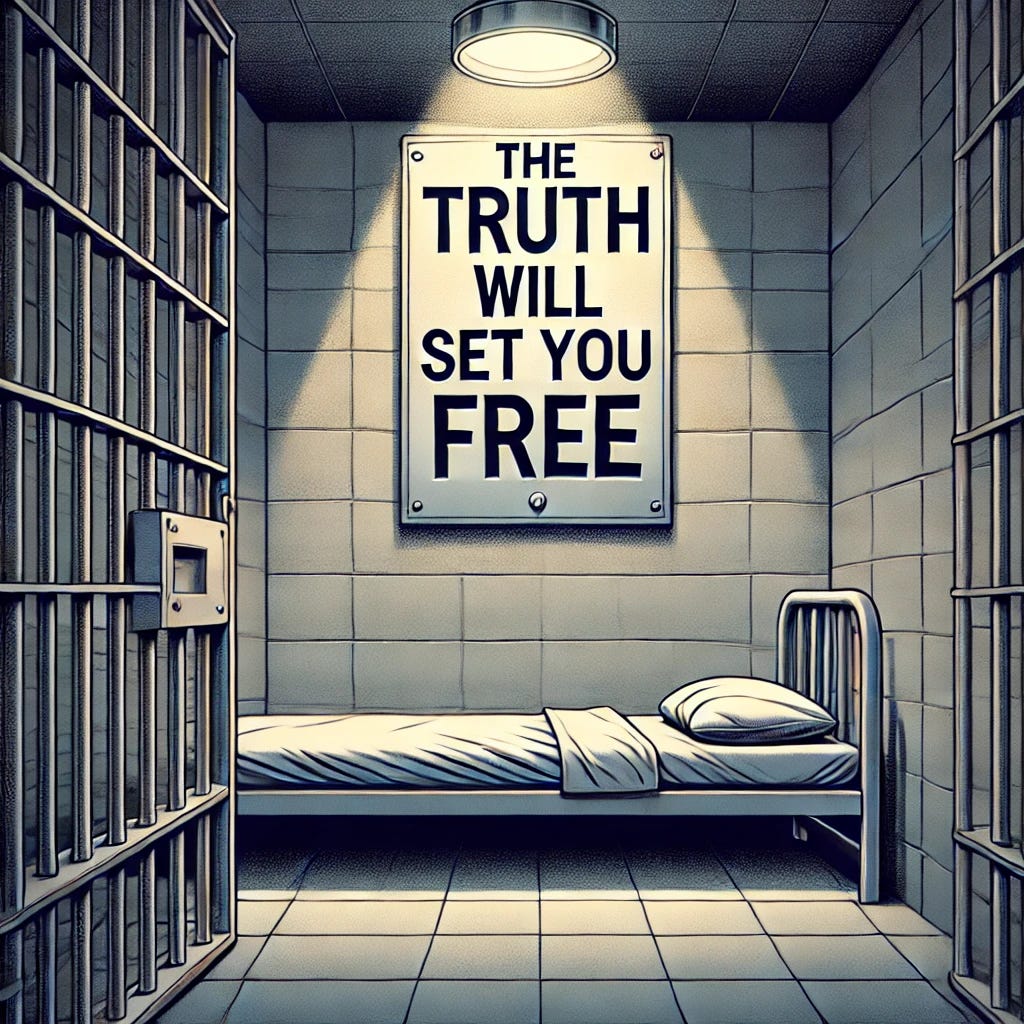
Sadly, despite what you have been told, the First Amendment isn’t as clear-cut as you might think. In fact, truth has fewer legal protections than lies in U.S. political life. The truth might set you free, but it won’t save you from a lawsuit.
In United States v. Alvarez (2012), the Court ruled that even a deliberate, calculated lie about receiving the Medal of Honor was protected under the First Amendment. It cannot be criminalized unless the lie causes tangible harm, like fraud or defamation.
In the majority opinion, Justice Kennedy famously wrote:
“The remedy for speech that is false is speech that is true.”
That sounds noble. But in today’s political and media ecosystem, it’s a fantasy.
No federal statute forces politicians to correct a falsehood, there is no requirement to provide evidence, and there are no real consequences, outside of public backlash, for inventing facts and weaponizing them.
And in many cases, truth-tellers are the ones who pay the price.
The First Amendment Double Standard: Lies Are Protected, Truth Is Punished
Imagine a politician stands at a podium and declares:
“My opponent is a criminal. A fraud. Possibly even a national threat.”
If it’s false? It’s protected political speech.
Imagine a journalist publishes a thoroughly researched article debunking that claim, citing public records, legal documents, and expert analysis.
Guess who can be sued for defamation?
Not the liar. The journalist.
In 1964, the Supreme Court’s ruling in New York Times v. Sullivan required public figures to prove “actual malice” in defamation suits. The goal was to protect journalists from retaliatory lawsuits, especially during the civil rights era.
But today, that protection has become a trap. Even accurate reporting can trigger lawsuits if a plaintiff claims the reporter acted “recklessly.” Journalists may have to reveal confidential sources, turn over notes, and defend their intentions, not just their facts.
Meanwhile, the politician who lied? Still protected.
This is the First Amendment’s double standard:
Truth is a liability. Lies are a strategy.
Weaponized Law: How Trump Turned Defamation into a Political Strategy
Donald Trump didn’t just inherit this double standard; he mastered it.
From lawsuits against The New York Times, CNN, The Washington Post, and 60 Minutes, to attacks on authors and former staffers, Trump has weaponized defamation law to punish those who publish the truth.
And it’s worked.
Some media outlets have settled out of court, not because they were wrong, but because the cost of defending the truth was too high. One major outlet even agreed to donate to Trump’s presidential library and cover legal fees to make a lawsuit disappear.
The message is clear: If you expose me, I will make you pay.
He’s even extended this strategy beyond the press:
Issued executive orders targeting law firms representing clients he disagrees with.
Barred journalists from White House events.
Defied court orders, as in the Kilmar Abrego Garcia case.
This isn’t just propaganda. It’s institutional warfare. And it’s all happening within the boundaries of the U.S. legal system.
We’ve covered Trump’s attack on the free press extensively. For more background, you may like these articles from our archive.
Note: The next two articles are more than 45 days old and have been moved behind the paywall. Please consider becoming a paid subscriber to enjoy the full 450+ article archive, exclusive reporting, and occassional early access.


Silenced in the Feed: When Truth Can’t Compete with Lies
As stated previously, Justice Kennedy wrote: “The remedy for speech that is false is speech that is true.”
But what happens when the “truth” is buried by the algorithm?
Social media platforms, where most public discourse now lives, reward outrage, not accuracy. Corrections are throttled. Disclaimers are buried. Factual posts get flagged as misinformation while falsehoods fly unchallenged at viral speed.
Platforms:
Flag accurate posts as “disputed.”
Remove content that contradicts official narratives, even when verified.
Shadowban users who challenge popular or influential voices.
The public can’t fight lies when the distribution systems are rigged against truth. And thanks to Section 230, platforms don’t have to explain or even be consistent.
What was once a digital commons is now a corporate echo chamber, and truth can’t go viral when the gatekeepers profit from chaos.
Independent, Exposed, and Alone: The Most Vulnerable Truth-Tellers
If legacy media is under siege, independent journalists are in freefall.
They’re the ones digging through court records, exposing corruption, verifying footage, and all without a legal team, corporate shield, or guaranteed income.
Defamation law treats them no differently. They’re just easier to break.
Even one lawsuit—frivolous or not—can:
Bankrupt a newsletter.
Expose sources.
Kill a reporting project before it’s born.
Truth becomes a financial risk. And for independent journalists, that risk is constant.
These are the people doing the most vital work with the least protection. And they are being punished for their courage.
A Future-Proof Defense: What Finland Can Teach Us About Resisting Lies
Meanwhile, in Finland, truth has defenders.
Their media literacy curriculum begins in early childhood and extends across every subject in every grade. Students learn to:
Trace information back to its source.
Recognize propaganda and emotional manipulation.
Ask why someone wants them to believe something.
It’s not about memorizing facts. It’s about learning how power works and how to see through it.
Finland’s model is the gold standard, and it works. The population consistently ranks as one of the least misinformed in the world.
The U.S. could do the same. But instead, we’re:
Defunding libraries.
Firing teachers.
Banning books.
So if media literacy happens here, it won’t come from the top. It will come from resistance.
Where Truth Is Taught, Resistance Lives
If the courts won’t protect the truth…
If the platforms won’t prioritize it…
If politicians are free to lie, and journalists are punished for challenging them…
Then the defense of truth falls to the people who have always stood at the front lines of knowledge and democracy:
Teachers. Librarians. Independent journalists. Community educators. Youth workers.
We live in an era when telling the truth can ruin your career, and teaching others to recognize truth can get you fired.
So yes, teaching media literacy is now an act of subversion. And in some places, it will have to happen quietly, after hours, underground.
But that’s how truth survives. That’s how it always has.
Where truth is taught, resistance lives.
To every teacher still giving students the tools to think critically...
To every librarian protecting access to banned books...
To every journalist risking everything to report what others won’t...
We see you. We stand with you. And we’re fighting beside you.
What You Can Do Right Now
1. Share This Story
Forward it. Post it. Text it. Help the truth cut through the noise.
2. Support the Defenders of Truth
Back independent journalists.
Fund your local library.
Defend educators under attack.
Support these organizations:
3. Learn and Teach
Information literacy isn’t optional anymore. It’s survival.
4. Find More Voices on Substack
These voices are building the infrastructure of democracy. Amplify them.
P.S. We should mention that we attempted to generate a visual metaphor: a generic silhouette with a growing nose, symbolizing political lying. (Yo, we’re begging you for crumbs to survive. We certainly can’t afford to pay an artist.) The request was blocked. The system flagged it as too close to depicting a political figure. However, when we asked to set the First Amendment on fire? That image was approved without hesitation. Apparently, burning the Constitution is acceptable, implying that someone lied is not. Make of that what you will.
We just hit 12,000 subscribers—thank you! We’re offering full access to The Coffman Chronicle for just $1 a week ($52/year) to celebrate.
Get exclusive analysis and fearless reporting you won’t find in corporate media.
Bibliography:
Associated Press. “Trump Admin Faces Backlash After Deporting Kilmar Abrego Garcia in Defiance of Supreme Court Ruling.” AP News, April 18, 2025.
Axios. “Trump’s Defamation and Media Litigation Spikes.” Axios, February 8, 2025.
Business Committee, Senedd Cymru. A Model for Political Honesty. Welsh Parliament, 2023.
Collins, Ronald K. L. “Executive Watch: Trump’s Weaponization of the Civil Courts.” Foundation for Individual Rights and Expression (FIRE), 2025.
Freedom of the Press Foundation. “Defending Journalism.” Accessed April 20, 2025.
Legal Network for Journalists at Risk. “About the Network.” Accessed April 20, 2025.
Media Defence. “Legal Support for Independent Journalism.” Accessed April 20, 2025.
Media Literacy Now. “About.” Accessed April 20, 2025.
National Association for Media Literacy Education. “Home.” Accessed April 20, 2025.
News Literacy Project. “Resources for Educators.” Accessed April 20, 2025.
Reporters Committee for Freedom of the Press. “Legal Resources.” Accessed April 20, 2025.
United States Supreme Court. New York Times Co. v. Sullivan, 376 U.S. 254 (1964).
United States Supreme Court. United States v. Alvarez, 567 U.S. 709 (2012).
“Kilmar Abrego Garcia Deportation Draws Legal Fury.” The Washington Post, April 19, 2025.
This would fix so much by making people accountable!!
Thanks for the article, encouragement, recommendations and reminders. Integrity is a major component of good leadership. Integrity requires honesty and ethics. Unfortunately, we have chosen “leaders” who lack good leadership skills. Some of our “leaders” have never shown strong leadership skills, yet we continue to choose them to follow. It feels like a symptom of our collective moral decay. The task at hand feels daunting.