


A Campaign at the Kitchen Table
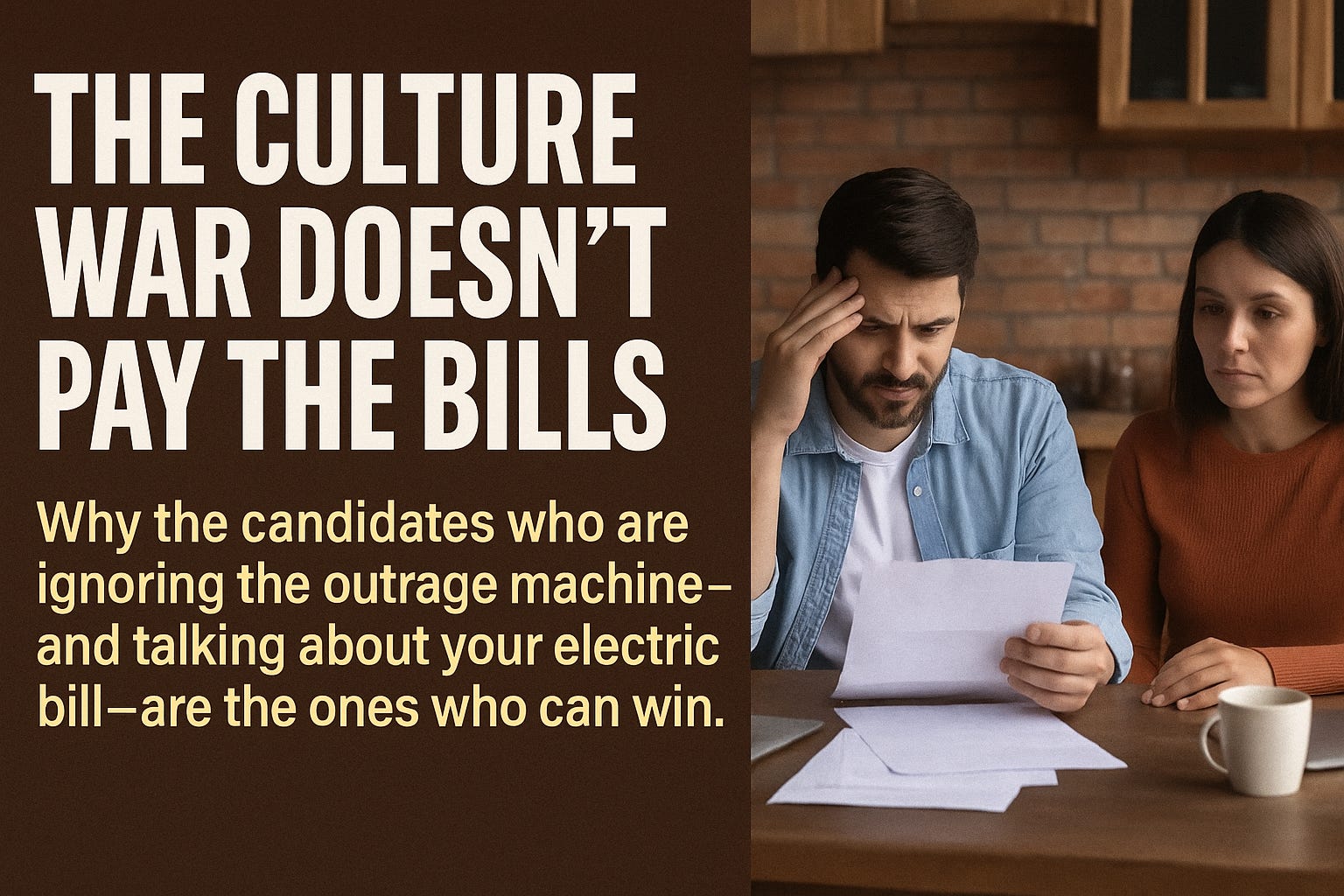
Josh Turek doesn’t launch his U.S. Senate bid from a marble podium or a slick, donor-filled ballroom. Instead, he’s sitting in a modest kitchen in Council Bluffs, the smell of coffee drifting in from a pot on the counter, nodding as a young mother explains how her grocery bill has nearly doubled in two years. A stack of unopened envelopes, including utility bills and mortgage payments, sits between them on the table.
“This is where politics has to happen again.” — Josh Turek, announcing his U.S. Senate campaign at a kitchen table in Council Bluffs.
It’s a scene that wouldn’t have looked out of place in the retail-politics heyday of the 1990s, but in 2025, it feels almost revolutionary. For years, campaigns have chased viral moments, leaned on poll-tested talking points, and obsessed over the microsecond soundbite that will survive the next 24-hour news cycle. The average voter’s kitchen table, where the real discussions about rent hikes, medical bills, and grocery prices happen, was left behind.
Now, a new breed of candidates is dragging politics back into America’s living rooms, union halls, and backyards. They’re talking about wages instead of wedge issues, rent instead of ratings, and healthcare costs instead of hollow culture-war jabs. They aren’t just invoking “kitchen table issues” as a campaign cliché. They’re structuring their entire strategies around them.
Turek, a Paralympic gold medalist and Iowa state representative, is one of them. So is Dan Osborn, the former Kellogg’s mechanic and Navy veteran who nearly toppled an incumbent in Nebraska running as an independent. And they’re not alone. Candidates across the country, from rural statehouses to high-profile Senate races, are finding that the shortest route to a voter’s trust isn’t through a social media ad buy, but through a cup of coffee and an honest conversation about why the rent is late.
This isn’t nostalgia. It’s a counteroffensive, a rejection of campaigns run like corporate marketing departments, and a return to campaigns run like block parties, potlucks, and kitchen-table summits. The stakes are enormous: if these candidates can win, they could redraw not just the map of American politics, but the way we talk about politics altogether.
And judging by the momentum, the revival of kitchen table politics isn’t just a trend. It might be the only thing that can still cut through the noise.
Stay Informed. Stay Loud.
Subscribe to The Coffman Chronicle for no-BS political analysis, action guides, and daily truth bombs you won’t get from corporate media.
What “Kitchen Table Politics” Means Now
But before we can see why it’s making a comeback, we need to remember what “kitchen table politics” was meant to be, and how far it’s drifted from its original power.
The phrase has been around for decades. Politicians have long claimed to “fight for the kitchen table,” but too often it’s been a hollow slogan tacked onto an otherwise disconnected campaign. Bill Clinton made it famous in 1992, talking about the economy “where it hits home.” Barack Obama tapped it in 2008 to connect the Wall Street collapse to everyday struggles. But somewhere along the way, the phrase was stripped for parts and sold as just another line in a stump speech.
In its truest form, kitchen table politics isn’t a metaphor. It’s literal. It’s the act of walking into a voter’s home or meeting them where they already gather, listening to what’s keeping them up at night, and building a platform around that, not the other way around. It’s not just knowing people’s problems; it’s showing up enough that they believe you care about fixing them.
And here’s the thing: if more candidates actually ran this way, they’d win.
Not because the style is warm and fuzzy, but because it’s brutally effective. While campaigns dump millions into consultants, mailers, and TV ads, voters are tuning out. The polling is clear: most Americans feel politicians don’t understand their lives, and they’re starved for candidates who will talk about real costs, real wages, and real solutions. The candidates who break through that wall, who sit down and talk about why the electric bill doubled or why childcare costs more than rent, aren’t just connecting emotionally, they’re outmaneuvering opponents who are still stuck in the cable news spin cycle.
Look at Josh Turek in Iowa, Dan Osborn in Nebraska, and J.D. Scholten in rural districts. Each has defied the odds in deeply entrenched political terrain by doing the simplest, most old-fashioned thing imaginable: meeting voters face-to-face and focusing relentlessly on the things they actually control in their daily lives.
This approach also neutralizes one of the most toxic dynamics in modern politics: the endless churn of culture-war outrage. When you walk into someone’s living room, they’re not asking about the latest viral insult on Twitter. They’re asking if you can help stop the pharmacy from gouging them or if you’ll fight for a wage that keeps up with inflation. Those conversations are not just persuasive; they’re transformational.
The candidates who understand that aren’t just running for office. They’re running to win.
The New Breed: Profiles & Strategies
Across the country, a small but growing roster of candidates is proving exactly how this looks in practice and why it works. Here are four of them.
Josh Turek (Iowa) — Senate run rooted in the programs that sustained him growing up with spina bifida—free lunch, Medicaid, VA benefits. Focuses on healthcare, housing, and prescription costs, funded by small donors.
“The programs that helped me as a kid — free lunches, Medicaid, my dad’s VA benefits — are the same ones I’m fighting to protect today.” — Josh Turek
Zach Wahls (Iowa) — Leading with economic fairness and healthcare access. Turns campaign stops into potluck forums where voters set the agenda.
J.D. Scholten (Iowa) — Populist barnstormer fighting corporate consolidation. Known for his “retail politics on wheels” RV tours of rural towns.
Dan Osborn (Nebraska) — Navy vet, mechanic, union leader. Nearly beat an incumbent in deep-red Nebraska by running on “paycheck populism.” Founded the Working Class Heroes Fund to support similar candidates.
“I’m not here to win the culture war. I’m here to win better paychecks.” — Dan Osborn
They all share three principles: show up where people actually live, lead with economic reality, and fund campaigns through grassroots networks, not corporate PACs.
And it’s not just anecdote. The numbers back them up.
See our recent reporting on Dan Osborn here:

Why It’s Working Now
Polling after polling shows cost-of-living issues dominate voter priorities. Pew: 81% say the economy is very important to their vote. Gallup: Economic confidence remains negative. AP-NORC: voters list inflation and healthcare costs above nearly every cultural issue.
“When you’re at somebody’s kitchen table, they’re not asking about Twitter. They’re asking why their grocery bill doubled.” — Dan Osborn
Field experiments (Gerber & Green) prove personal contact—door-to-door, living-room-to-living-room—is the most reliable way to mobilize turnout. Grassroots funding models, like New York’s small-donor match, show how to compete without billionaire donors.
And the case studies? Dan Osborn pulled 46.7% in Nebraska as an independent. Josh Turek won his House seat by just six votes after a recount. Both outcomes hinged on relentless, personal voter contact centered on economic realities.
But there’s a catch: the second you fake it, you lose it.
The Risks: How to Avoid the “Photo-Op Trap”
Kitchen table politics works when it’s real. The minute it turns into a staged backdrop for a press release, voters tune out. Avoid the staged visit problem. Don’t ignore structural causes. Keep culture wars from creeping back in. Resist consultant co-optation. And accept that it’s slower, harder, and more exhausting than running a purely media-driven campaign.
Those who do it right earn trust. The ones who fake it win memes, and then they lose elections.
The Future Sits at the Kitchen Table
Kitchen table politics is not nostalgia. It’s rebellion. It’s ripping politics out of boardrooms and bringing it back to the cracked laminate table, the union hall, the church basement. Candidates who choose it win because they’re not selling an image. They’re showing up with a listening ear and a plan that works in the real world.
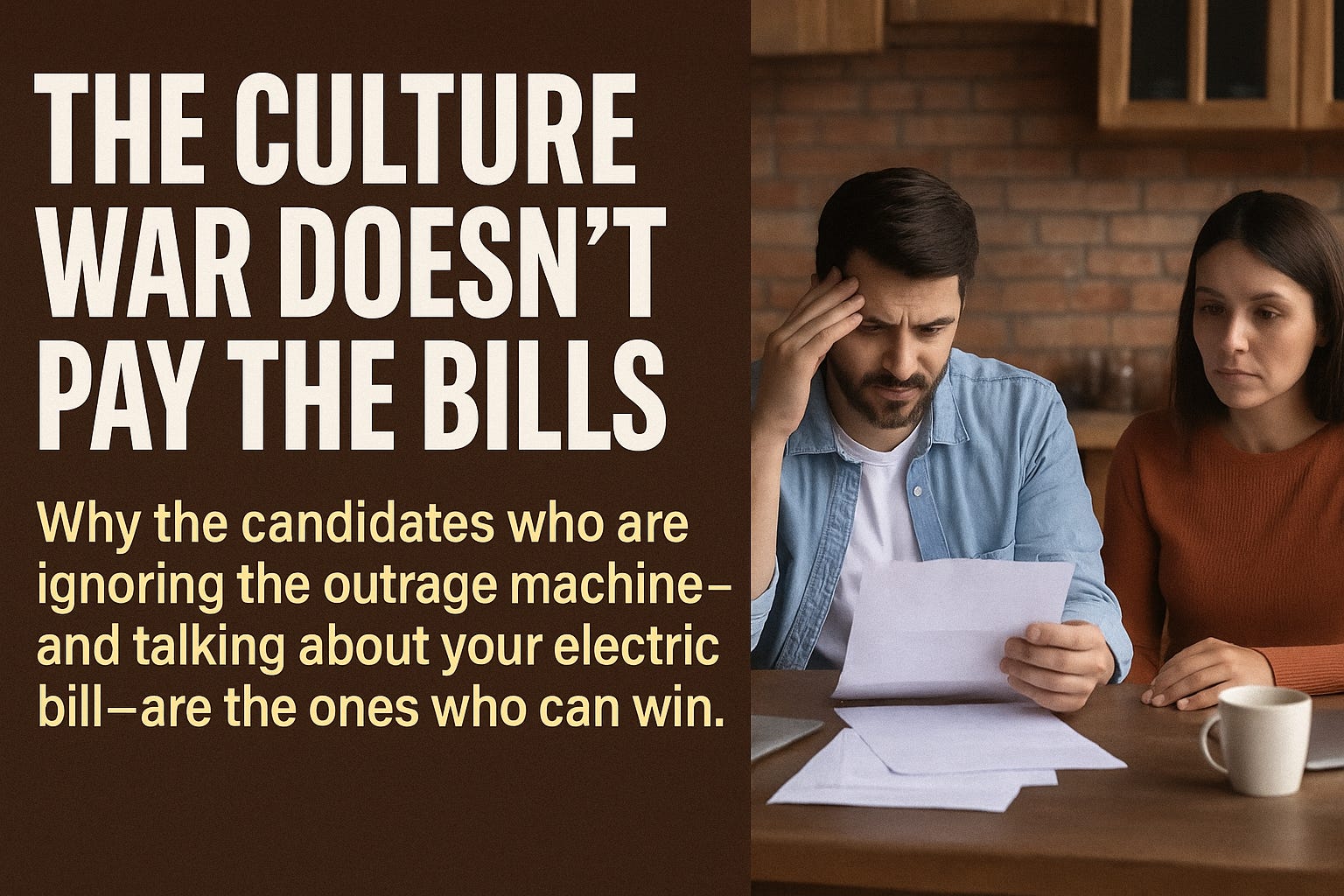
“The culture war doesn’t pay the bills. That’s why I’m staying at the kitchen table.” — Josh Turek
The future of American politics doesn’t sit in a corporate boardroom or a cable news studio. It’s at the kitchen table, and whoever shows up there first is going to own it.
Call to Action — How You Can Pull Up a Chair
You don’t have to be running for office to fuel this movement — but you do have to move.
Show up: Town halls, potlucks, VFW meetings — bring your real story.
Give small, give often: Fund the candidates talking about your life, not party slogans.
Amplify the real ones: Share their events, plans, and receipts.
Push your politicians: Demand they talk about the cost of living and wages.
Organize your own table: Gather your neighbors, make the conversation local.
Kitchen table politics is the sharpest weapon left in the democratic arsenal — and it’s sitting right there in your home. All that’s missing is someone willing to use it.
So pull up a chair. The fight starts here.
Stay Informed. Stay Loud.
Subscribe to The Coffman Chronicle for no-BS political analysis, action guides, and daily truth bombs you won’t get from corporate media.
Bibliography
“2. Issues and the 2024 Election.” Pew Research Center, September 9, 2024.
“Economy Most Important Issue to 2024 Presidential Vote.” Gallup, October 9, 2024.
“Nebraska Independent Dan Osborn Could Be Poised to Shake Up US Senate.” Reuters, October 21, 2024.
“Nebraska Senate Election Results 2024: Live Map.” Politico, updated April 9, 2025.
“After Recount, Democrat Hangs Onto Lead in Council Bluffs.” Iowa Starting Line, November 18, 2022.
“Behind Trump’s 2024 Victory, a More Racially and Ethnically Diverse Voter Coalition.” Pew Research Center, June 26, 2025.
“Nebraska’s Dan Osborn Statistically Tied with U.S. Sen. Pete Ricketts in Poll.” Nebraska Examiner, April 10, 2025.
“2026 United States Senate Election in Nebraska.” Wikipedia.
“Dan Osborn.” Wikipedia.
I live in New York. I belong to MTP, a grassroots organization. I belong to ACLU. We work on immigration and food.
Fear, hate, pain and suffering of the masses doesn't make America a better place.