


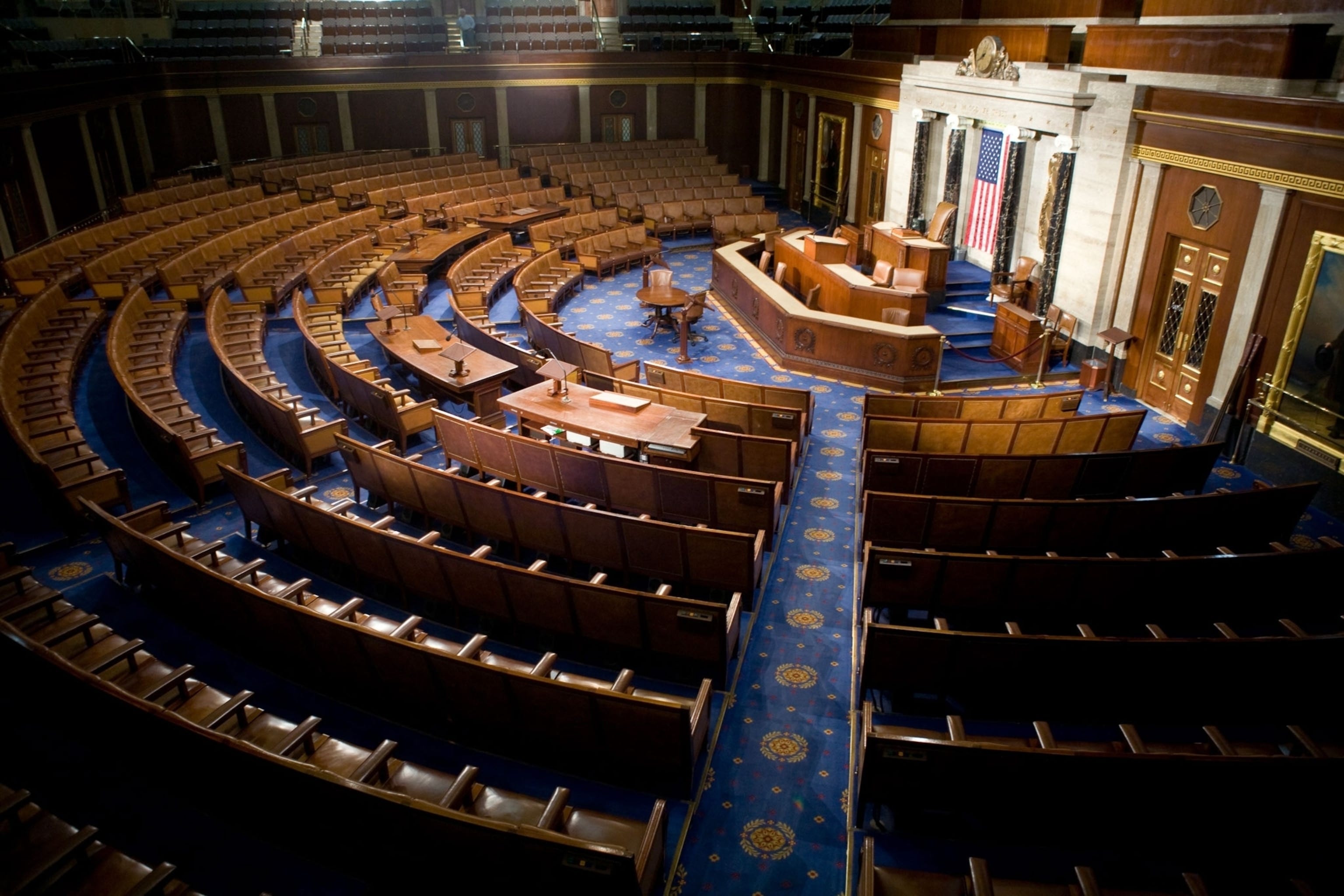
There’s a particular kind of silence in Washington that doesn’t make headlines.
It’s not the silence after a vote fails, not the silence of a filibuster, not even the silence of a government shutdown.
It’s the silence of an empty chair, a congressional seat left vacant for months, sometimes nearly a year, while the people who are supposed to be represented by that seat are expected to wait.
They are represented in no floor votes, have no committee presence, and no advocate when disaster strikes, or benefits stall, or budgets get carved up behind closed doors.
Increasingly, that silence isn’t accidental.
Across the country, governors are discovering they don’t have to cancel elections to weaken representation. They can simply delay them quietly, legally, and procedurally, leaving entire districts voiceless while the machinery of government keeps moving without them.
This is the empty chair strategy, and it’s spreading.
Want to Know Your Rights?
Download a free digital copy of the U.S. Constitution, the same document Trump is trying to bulldoze. Learn exactly what he’s breaking, and how to fight back.
80,000+ strong — and counting.
This holiday, become a paid subscriber for just $1 a week and help us keep the truth alive.
Join The Coffman Chronicle — $1/Week
The Constitutional Loophole Everyone Pretends Not to See
On paper, the Constitution is unambiguous about one thing. Members of the U.S. House are supposed to be chosen by the people.
When a seat becomes vacant, an election is required. There is no room for appointments, substitutions, or long-term placeholders.
But here’s the problem, and it’s a big one.
The Constitution is almost completely silent on when that election must happen.
That timing gap has become a pressure point, and governors know it.
Article I, Section 2 requires that vacancies in the House be filled by election. But it leaves the mechanics — including scheduling — largely to the states. Over time, that authority has been embedded in state election codes, many of which give governors broad discretion to set special election dates.
That discretion was supposed to solve logistical problems. Instead, it’s being used to create political ones.
There is no federal deadline for how quickly a special election must be held. No hard outer limit. No automatic trigger. No penalty for delay.
So governors can argue, often without challenge, that they’re simply following state law when they postpone a vote for months on end. Technically, they are.
Here’s why this tactic is so effective:
• It doesn’t require legislative approval
• It doesn’t require canceling an election
• It doesn’t trigger immediate judicial review
• It can be framed as “administrative efficiency”
By the time anyone challenges the delay, the election is often already scheduled just far enough in the future to render legal action moot.
The damage is done, and no precedent is set to stop the next delay.
This isn’t emergency governance. It’s discretion
Historically, long delays made sense in rare cases, such as during wars, natural disasters, or logistical impossibilities.
What’s different now is that the delay itself is becoming the tactic, even when elections could be held sooner.
Governors justify it with familiar language like “cost savings,” “election consolidation,” “voter clarity,” and “administrative readiness.”
Each explanation sounds reasonable in isolation. Together, they form a pattern because none of these explanations answer the core democratic question: Why should voters lose representation for months when a quicker election is possible?
An empty House seat doesn’t exist in a vacuum.
Every vacancy alters vote margins, changes committee math, affects quorum calculations, and weakens constituent leverage.
In a narrowly divided Congress, even one missing vote matters, and when a seat stays vacant long enough, absence itself becomes a form of influence.
No vote is still a vote, just not one cast by the people.
This isn’t a glitch. It’s a structural vulnerability that’s always existed. What’s new is the willingness to exploit it.
Delaying a special election doesn’t look like authoritarianism. It looks like bureaucracy. It doesn’t spark protests. It doesn’t trip alarms. It rarely even makes the news.
But democracy doesn’t only erode when elections are canceled. Sometimes it erodes when elections are postponed just long enough that the silence feels normal.
What an Empty Seat Really Costs Real People
When a congressional seat is vacant, pundits treat it like a scheduling inconvenience. For constituents, it’s something else entirely.
A House member doesn’t just cast votes. They are the front door to the federal government for the people they represent. When that door is closed, the system doesn’t pause. It just stops responding.
This is where the empty chair stops being abstract and starts hitting the kitchen table.
One of the least-covered but most important jobs of a House office is constituent services.
Veterans are trying to untangle delayed VA disability payments. Seniors are fighting incorrect Social Security denials. Families are navigating immigration backlogs. Workers are stuck between federal agencies passing the buck.
When a district loses its representative, that entire operation disappears.
There is no substitute, no backup office, and no shared queue.
Staffers from neighboring districts cannot legally intervene on behalf of constituents they don’t represent. Federal agencies won’t process casework without a member’s office attached.
So people wait. And wait. And wait some more.
Disaster doesn’t wait for election calendars
Now put that delay inside a crisis: a wildfire, a flood, a hurricane, or a factory closure.
When disaster strikes, House members play a critical role in securing emergency declarations, pressuring agencies to release funds, and ensuring their district isn’t forgotten once the cameras leave.
A vacant seat means no one is pounding the table when aid slows down or gets redirected.
Federal relief becomes quieter, slower, and easier to overlook.
The district doesn’t just lose a vote. It loses visibility.
While a seat sits empty, Congress doesn’t stop legislating.
Budgets pass. Defense bills move. Healthcare funding gets cut or expanded. Disaster aid gets negotiated behind closed doors.
And when there’s no one representing a district, those negotiations happen without that district at the table.
That matters most for communities already struggling.
Representation isn’t symbolic. It’s functional
There’s a dangerous assumption baked into these delays, that representation is mostly symbolic.
It isn’t.
Representation is operational. It’s the difference between a stalled file and a resolved one, between a delayed payment and a paid bill, between being seen and being invisible.
When a seat is empty, phone calls go unanswered, emails hit dead ends, agency errors go unresolved, and communities lose leverage.
Silence compounds inequality.
Why Delay Has Become a Strategy, Not an Exception
If this were rare, it would be noise.
If it were accidental, it would correct itself.
However, delays in special elections are becoming more common for one simple reason: they work.
In an era of razor-thin congressional margins, every seat matters, even the ones no one occupies.
A vacant seat lowers the vote threshold needed to pass bills, alters committee ratios, and reduces the risk of internal defections.
Silence is not neutral. It tilts the field.
Elections are unpredictable. Delaying them avoids campaigns, debates, turnout surges, and the risk of surprise outcomes.
For governors, postponement is politically safer than participation, and that should alarm anyone who believes representation is a right, not a convenience.
Courts aren’t built to stop this
Legal challenges face standing hurdles, deference to state authority, and slow timelines. By the time a court acts, the election date is often already on the calendar.
The case dies quietly. The tactic survives.
The media covers events, not absences. An election that doesn’t happen has no footage. No rally. No countdown.
So the story slips through, and silence wins again.
Legal on Paper, Illegitimate in Practice
Most governors delaying elections can say they’re following the law.
That’s the problem.
Courts look for violations. Voters experience harm, including lost casework, no voice in budget decisions, and no advocate during emergencies.
That harm is real but diffuse. And because it’s hard to litigate, it’s easy to ignore.
Being unrepresented often isn’t considered “concrete” enough harm to establish standing.
Challenges fail. Precedents don’t form. Delays continue.
By the time a judge speaks, the damage is already over.
The Pattern We Ignore Until It’s Everywhere
This isn’t just about special elections. It’s about how power now prefers procedure to confrontation.
Canceling elections would spark outrage. Suppressing votes draws lawsuits. But procedural delay?
That slides through. Absence becomes the new veto.
Democracy doesn’t collapse. It thins.
Thinner representation. Thinner accountability. Thinner urgency.
What remains technically exists but barely functions.
Silence Is Still a Choice
Every time a governor delays a special election without necessity, a choice is being made, not to cancel democracy, but to pause it.
An empty chair doesn’t object. It doesn’t demand answers. It just sits there, quietly doing exactly what it’s meant to do.
You don’t have to cancel elections to weaken democracy. You just have to delay them long enough that silence feels normal.
Support Independent Media. Support the Work That Fills the Silence
Stories like this don’t break because they don’t explode. They live in the gaps — exactly where accountability goes to die.
The Coffman Chronicle exists to cover what gets ignored.
If this reporting matters to you:
Become a paid subscriber
Share this piece
Support independent media doing the work legacy outlets won’t
Democracy doesn’t defend itself.
It depends on people who are willing to notice when something important goes missing and refuse to stay quiet about it.
Sources:
House of Representatives Vacancies: How Are They Filled? CRS Report IF11722, January 8, 2018. EveryCRSReport
U.S. House of Representatives, Office of the Historian. “Vacancies & Successors.” History, Art & Archives
Title 2, Section 8 — Vacancies. U.S. Code
ArtI.S2.C4.1 House Vacancies Clause — Constitution Annotated. Congress.gov
Elections: Observations on State Laws and Perspectives for Filling Vacancies in the U.S. House of Representatives. December 16, 2024. GAO
Short of a Full House: The Increasing Length of Vacancies in the U.S. House of Representatives, 1997–2021. April 2023. Columbia Law Journal
Reforms for Filling Vacancies in the U.S. Senate and House of Representatives. Fordham Urban Law Journal 3, no. 1 (2024). FLASH Archive
Vacancies in the U.S. House of Representatives. NCSL
How Vacancies Are Filled in State Legislatures. Ballotpedia
Texas Governor Calls November Election for Vacant U.S. House Seat as Democrats Criticize Timing. August 2025. AP News
Arizona Sues U.S. House Over Delay in Swearing in Democrat Grijalva. October 2025. reuters.com
Why Some House Districts Won’t Have a Representative for Almost a Year. May 25, 2021. fivethirtyeight.com
Expect most people were no more aware of this than I...what a great gift to sleazy political groups. Thanks for the heads up.
Thanks to the corrupt 6 of 9 on the SCOTUS gutting the VRA several conservative states have enacted voter suppression laws. Rule of law be damned. It's about control.