


The first box of pineapple arrived on a Tuesday.
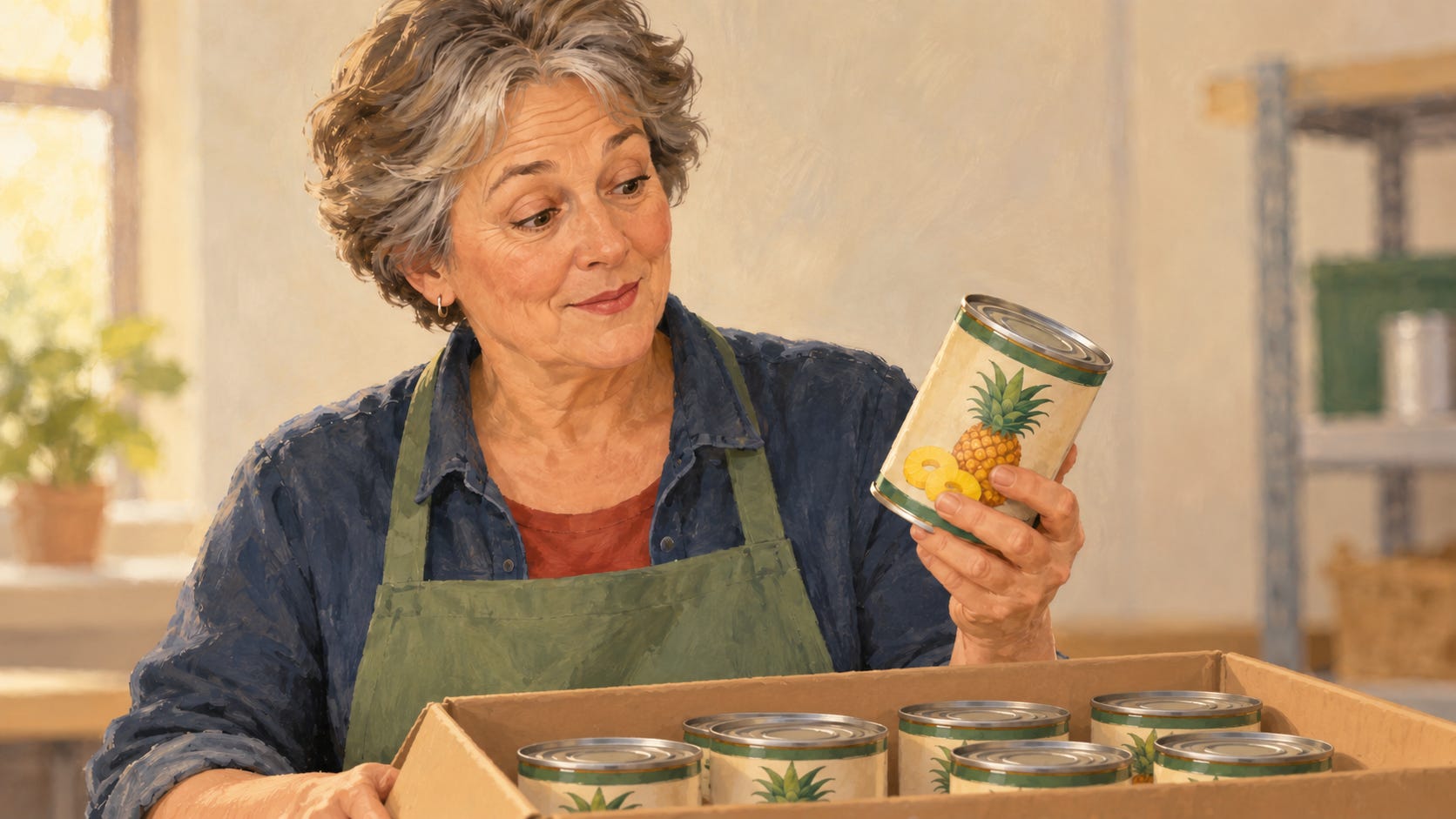
June opened it in the Mercy County Community Pantry's receiving room, expecting canned vegetables. Instead, she found twelve cans of pineapple rings stacked neatly inside.
Carl leaned over her shoulder. “That’s nice.”
“It is,” June said. “We can use fruit.” She wrote CANNED PINEAPPLE on the inventory sheet and carried the cans to the shelf.
By Thursday, another box had arrived. By Friday morning, the fruit shelf looked as though a Caribbean tourism board had sponsored it. June counted the cans: rings, chunks, crushed. She made three columns on the inventory sheet.
“Do we need a fourth for juice?” Carl asked.
“Let’s not encourage the pineapple.”
The food drive had asked people to bring shelf-stable food. That was exactly what the pantry needed, along with rice, oatmeal, canned vegetables, peanut butter, cooking oil, pasta, and other things families could combine into meals.
The flyer had said, “BRING WHAT YOU CAN.” Pineapple was on sale. One person bought a few cans. Someone else bought a case. Then a group text started. Dozens of kind people reached the same reasonable conclusion: pineapple was affordable, pineapple was food, and hungry people needed food.
Nobody had done anything wrong. That was the problem.
This Community Is Powered by You
What started as a small circle has grown into something much bigger, and it’s all because of readers like you.
Every time you forward this email, post it on socials, or bring someone new into the fold, you’re helping build one of the most passionate, independent communities out there.
Want to keep the momentum going?
Share this newsletter with someone who should be part of this conversation.
Thank you for being here. It means everything.
When Good Intentions Miss the Mark
On Saturday, another batch of donations arrived. June watched volunteers unload green beans, pasta, four jars of peanut butter, and another box of pineapple.
“I have nothing against pineapple,” June said.
“I know,” Carl replied.
“I would like that entered into the official record.”
Denise Harper, the pantry coordinator, walked the storage room with a clipboard. The pantry had 112 cans of pineapple, nine cans of chicken, two bags of rice, almost no cooking oil, and very little cereal.
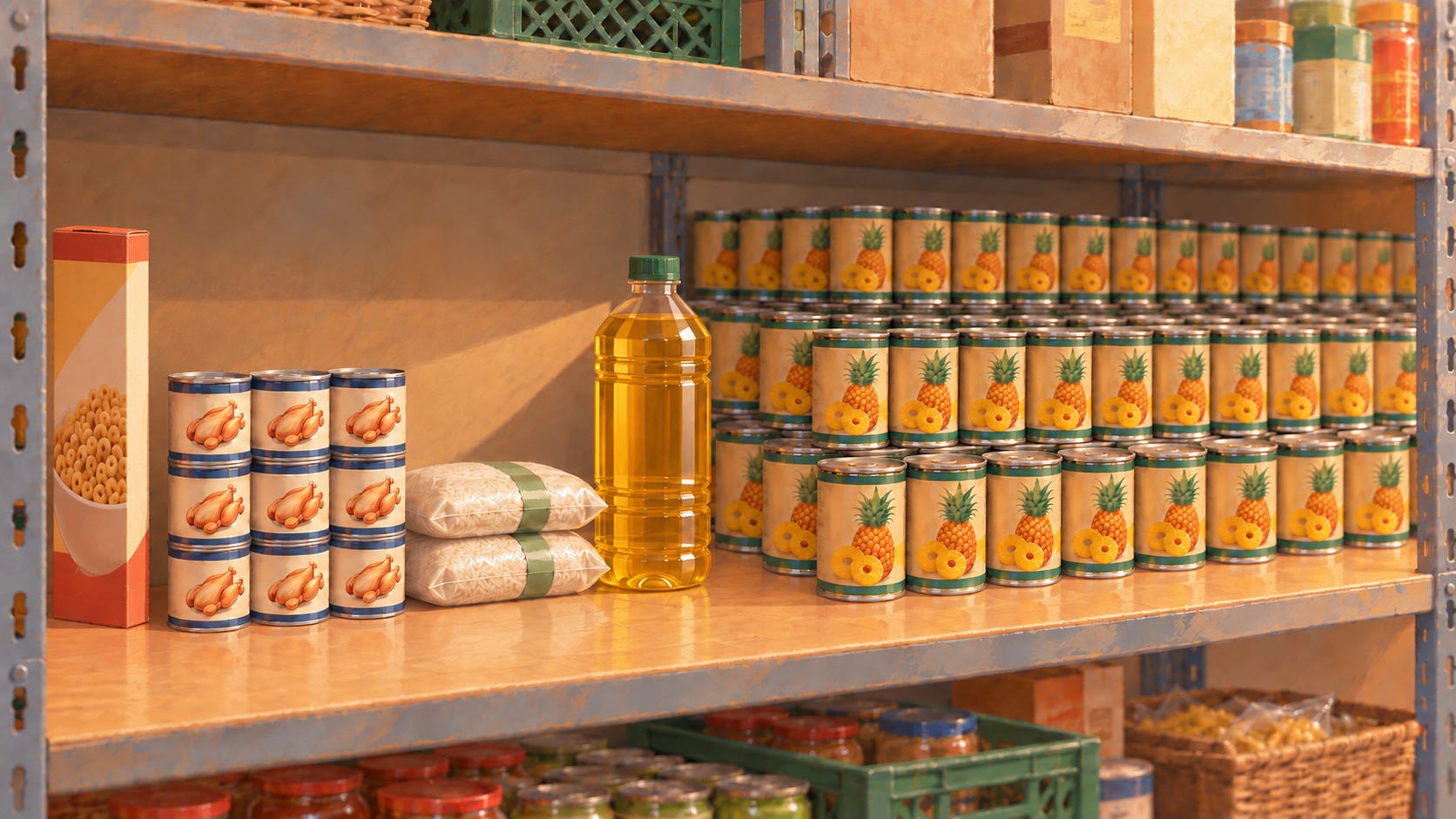
“People are giving us food,” Carl said. “So why does it feel like we’re short?”
“Because generosity and usefulness aren’t automatically the same thing,” Denise said.
“The fruit lobby will be furious,” June said.
Denise asked families who used the pantry what would help. She listened to older residents who rode the bus home with groceries, parents working second shift, and people in motel rooms without ovens. She also talked with the volunteers who packed the boxes.
Then she made a one-page list: rice, oatmeal, canned vegetables, peanut butter, cooking oil, canned chicken or tuna, shelf-stable milk, and low-sugar cereal. Canned fruit appeared near the bottom. Beside it Denise wrote: “We have plenty of pineapple. Seriously. We mean it.”
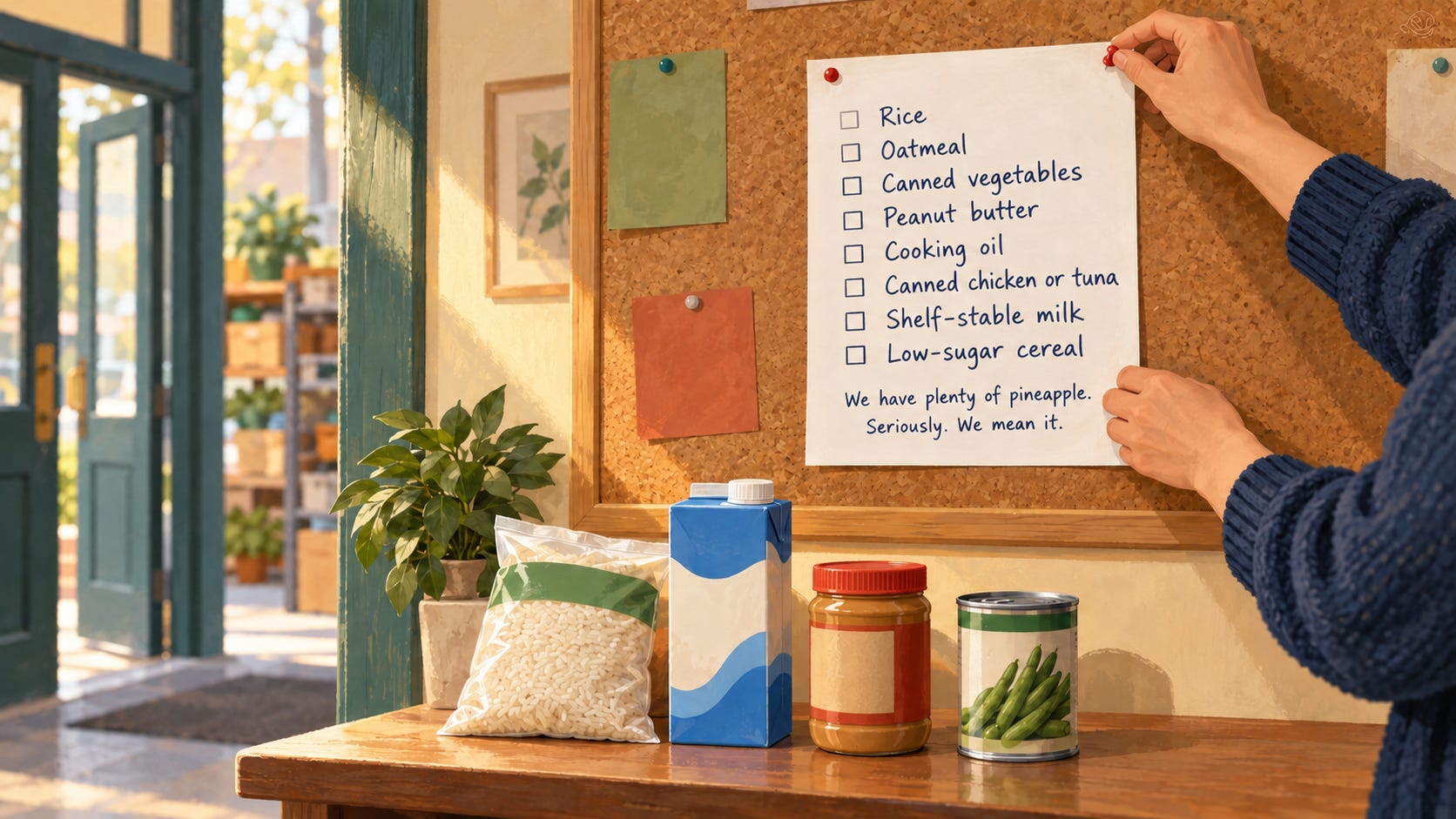
Carl read the note. “That seems unnecessarily personal.”
“It knows what it did.”
Denise sent the list to churches, schools, civic groups, and the neighborhood organizers who had run the drive. The next week, three boxes arrived with the requested staples. On top was a note: “We checked the list. Thank you for telling us what actually helps.”
Carl found one can of pineapple at the bottom. “Balanced,” he said.
“Let’s not get carried away.”
One Size Doesn’t Fit Every Pantry
Mercy County received a state food-security grant. At a meeting to decide how to use it, a commissioner proposed buying food centrally and sending identical shipments to all six pantries.
“It would be efficient,” Commissioner Wallace said.
“Efficient for whom?” Denise asked.
The pantries served different neighbors. One mostly served older residents. Another reached rural communities with limited transportation. Identical boxes would be easy to order, but they wouldn't be equally useful everywhere.
The county could still help in ways the pantries could not. It negotiated bulk prices, funded refrigerated storage, and paid for a delivery van shared by the six pantries. A common ordering system helped the county spot shortages across the region.
Each pantry chose the food that fit its clients.
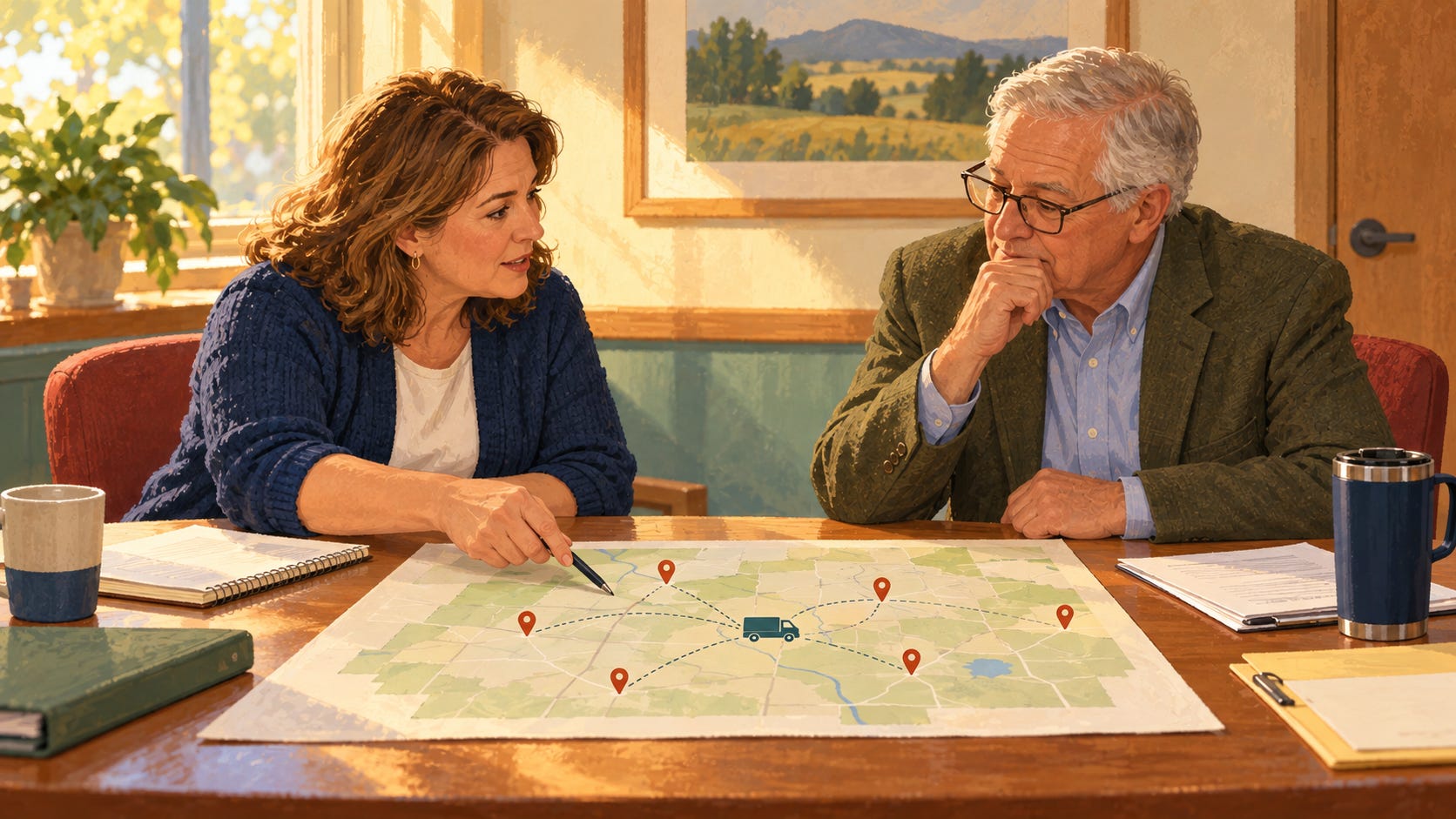
“The county should use its purchasing power,” Denise said. “But purchasing power isn’t the same as knowing what every neighborhood needs.”
Wallace asked whether the county should give every pantry money and hope for the best.
“No,” Denise said. “The county should do what the county is good at, and let the pantry do what the pantry is good at.”
At the next meeting, Wallace said the pantries still had standards and reports.
“Of course,” Denise said.
“But they no longer have to order identical inventory.”
“That is called learning.”
“I was going to call it administrative flexibility.”
“That’s learning wearing a tie.”
Small Changes Add Up
A grocery chain also donated surplus food. Some weeks the pantry received useful staples. Other weeks, they got forty containers of gourmet mustard, or what Carl called “the couscous incident.”
Denise sent the manager the needs list. After that, the store checked before assembling donations. Sometimes the pantry accepted the food. Sometimes another group needed it more. The store still reduced waste, and the pantry no longer had to absorb whatever was left.
Then June noticed Mrs. Whitaker, a regular pantry visitor, had stopped coming. She was seventy-eight and lived seven miles away. The bus got her to the pantry, but it left before food distribution ended. “We have food she can’t get home,” June said.
Denise asked the transit office to move the Tuesday bus by thirty minutes. After a review, two forms, and one spreadsheet, the schedule changed. Mrs. Whitaker came back the next week, as did six others.
Denise also started a monthly community table. Clients, volunteers, donors, businesses, and county officials were invited. A mother named Tasha said cereal was little help when the pantry ran out of milk. Frank said some older clients struggled with cans without pull tabs. A father in temporary housing explained that dry beans were hard to use without a stove. June wrote it all down.

The pantry began posting an updated needs list and letting clients choose more of their groceries. Churches checked the list before organizing drives. The county used shared data to spot regional shortages. Local farmers joined a seasonal produce program. People who needed the pantry had become part of the decisions about it.
The Pineapple Was Never the Problem
Several months later, June checked the shelves. Rice was steady. Peanut butter and shelf-stable milk were well supplied. The refrigerator held eggs and fresh vegetables. Twelve cans of pineapple sat on the fruit shelf.
Carl looked at the inventory sheet. He crossed out the old columns—rings, chunks, crushed—and wrote one line: “Pineapple: under control.”
“The pineapple was never really the problem,” June said.
“I feel like we invested a lot of time establishing that it was,” Carl replied.
The problem was that everyone had been acting on their own. Donors wanted to help but lacked a clear list. The pantry knew what families needed but didn't always say so. The county had resources but first reached for identical shipments. Businesses had surplus but didn't know whether it met a real need. Families had useful knowledge but rarely had anyone ask for it.
No single group could do everything. The county could build capacity and coordinate purchasing. Pantries could use local knowledge to choose what to buy. Businesses could make donations that helped rather than shifted a burden. Citizens could give, listen, and stay involved. Each had a part to play. The question was: Who is best positioned to do this job well, and what support do they need?
A week later, another donation box arrived. June opened it: rice, oatmeal, cooking oil, canned chicken, peanut butter, and one can of pineapple rings.
“Should I send it back?” Carl asked.
June placed it on the fruit shelf. “No.”
“Pineapple is useful.”
“In moderation?”
“In context.”
“That sounds suspiciously like something politicians should learn.”
June handed him the inventory sheet. “Start with the pineapple.”
P.S. Ryan Seacrest’s Top Host competition and this Ozark storyteller is still in it! 🙌 You helped Tony reach the Top 5 in his group. Now let’s keep going!
Cast your next free vote here:
https://tophost.org/2026/tony-michaels
Want a daily nudge? Join our private supporter group for voting reminders, updates, and a little cheering each other on:
https://www.facebook.com/groups/tonytophost/
