


The trouble on Sycamore Street began when Pete Harmon handed out full-size candy bars.
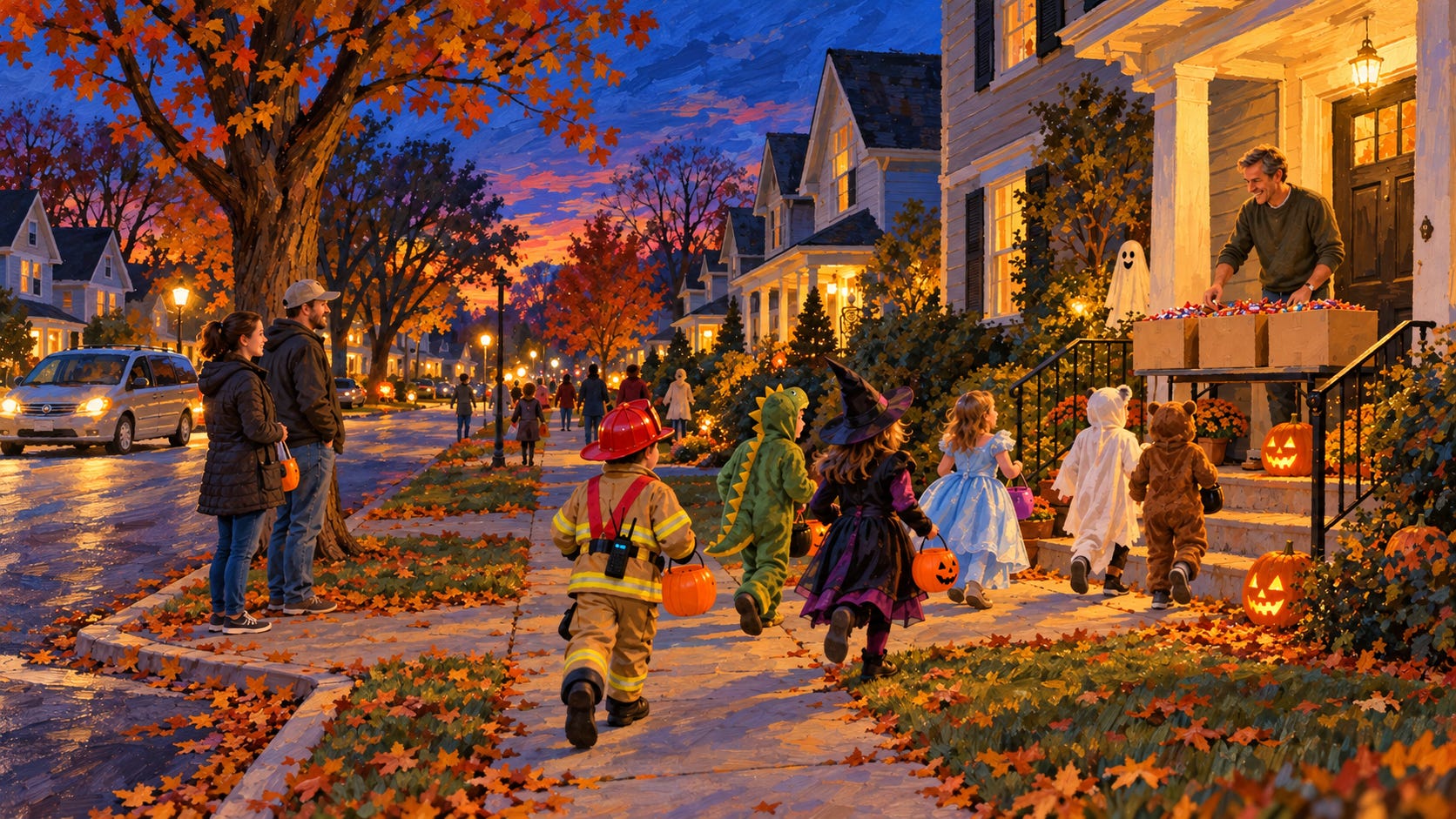
He did not announce it. He did not issue a challenge. He simply placed three cardboard boxes beside his front door on Halloween and allowed children to choose among chocolate, peanut butter, and “the one nobody picks until everything else is gone.”
By eight o’clock, children were running down the sidewalk shouting, “FULL SIZE AT NUMBER TWELVE!”
Parents altered their routes. Minivans slowed at the corner. One child dressed as a firefighter radioed the discovery to his older brother using a walkie-talkie clipped to his plastic suspenders.
Pete ran out of candy at 8:17.
By morning, Sycamore Street had changed.
The first message appeared in the neighborhood group before the recycling trucks arrived.
Great Halloween, everyone! Special thanks to Pete for raising the bar.
Pete read it twice.
“I didn’t raise anything,” he told his wife. “I bought the wrong box at the warehouse store.”
But the phrase raising the bar remained in circulation.
This Community Is Powered by You
What started as a small circle has grown into something much bigger, and it’s all because of readers like you.
Every time you forward this email, post it on socials, or bring someone new into the fold, you’re helping build one of the most passionate, independent communities out there.
Want to keep the momentum going?
Share this newsletter with someone who should be part of this conversation.
Thank you for being here. It means everything.
Raising the Bar
The following October, Carol Whitmore announced that her family would also be offering full-size candy bars, along with bottled water for parents.
The Singhs added hot chocolate.
The Doyles rented a popcorn machine.
Pete, who had spent the year hoping everyone would forget, purchased four boxes of full-size candy and a folding table strong enough to show he still cared about children.
By the third year, Halloween on Sycamore Street required a planning meeting.
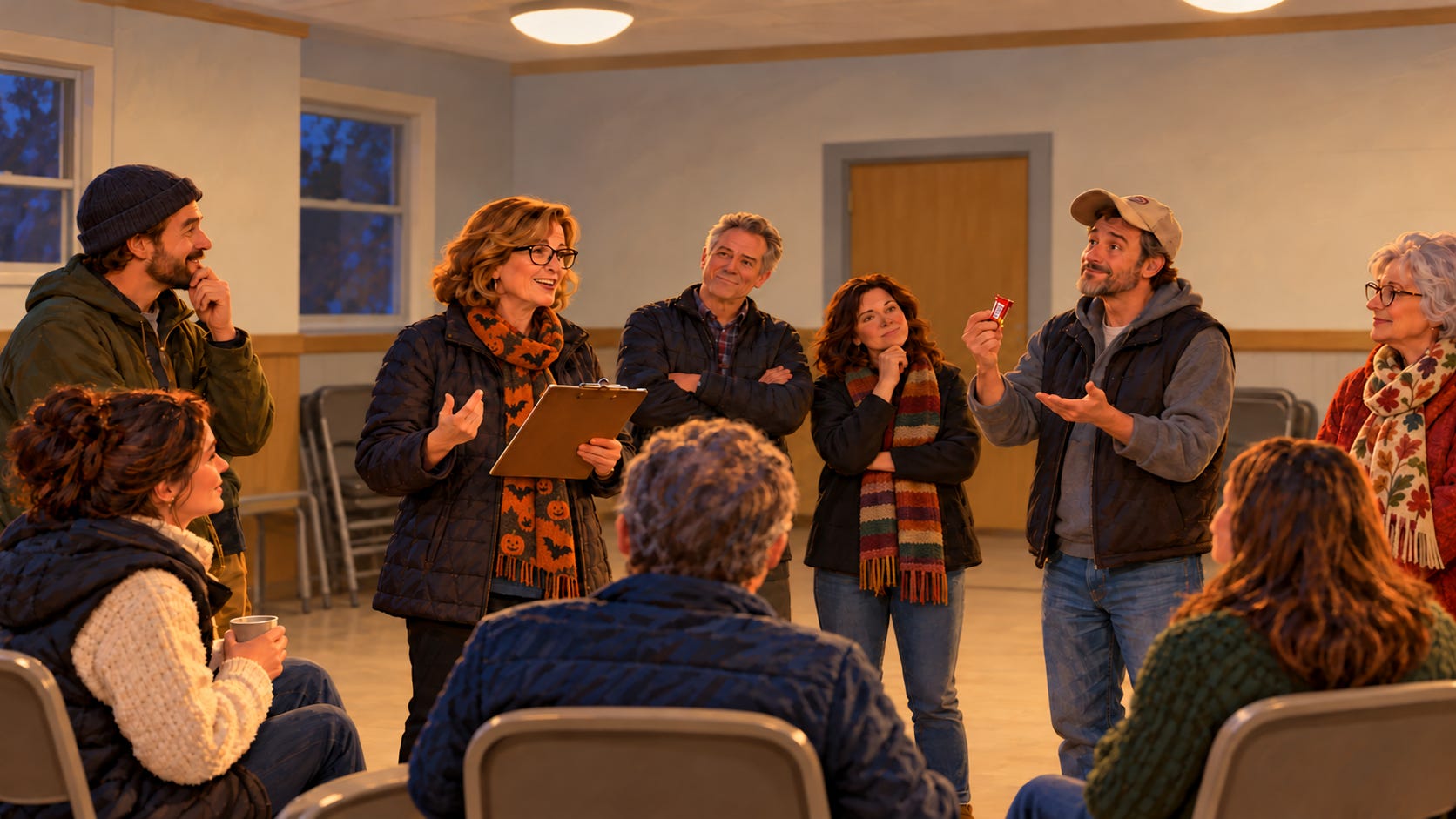
Carol arrived with a clipboard.
“We need to coordinate,” she said. “Last year, three houses gave out the same kind of chocolate.”
Several people nodded as though this had caused measurable harm.
The Singhs volunteered to provide hot chocolate again, but only if someone else handled lids. The Doyles planned to add caramel apples until someone reminded them that caramel apples were heavy, sticky, and likely to get thrown into the back seat of a moving vehicle.
Pete suggested fun-size candy.
Nobody wrote that down.
The competition continued.
One family ordered custom treat bags printed with their address. Another built a twelve-foot pirate ship across the front porch. The Hendersons purchased an inflatable dragon whose head moved from side to side and whose electrical requirements were described in a separate section of the instruction manual.
Then Carol unveiled a neighborhood map.
Each participating house received a number, a theme, and a suggested candy category. A photo station would be near the stop sign, and a “premium treat corridor” would run between Maple Avenue and the Hendersons’ dragon.
“What makes it premium?” Pete asked.
Carol looked at him over her glasses. “Consistency.”
Elena’s Porch
At the far end of the street lived Elena Alvarez.
Elena had not attended the meeting because Wednesday was the night she helped her sister close the bakery. She had also missed the online poll about whether gummy candy counted as a premium treat.
Her Halloween decorations consisted of two pumpkins, one folding chair, and a paper ghost taped inside the storm door. She bought several bags of ordinary candy at the grocery store and placed them in a plastic bowl she had owned since 1998.
What Elena did have was a sewing basket.
She kept it beside the door every Halloween because children’s costumes had never been designed for walking, weather, or children.
The first repair arrived at 5:42. A little girl dressed as a butterfly had lost one wing while getting out of the car. Her father was trying to reattach it with a bandage from his wallet.
Elena found two safety pins and reinforced both wings.
“Now they match,” she said.
At 6:05, a pirate’s eye patch snapped.
At 6:18, the elastic on a superhero mask broke.
At 6:31, a cardboard robot lost his left arm while attempting to reach into the Doyles’ popcorn machine.
Elena repaired each one beneath the yellow porch light.
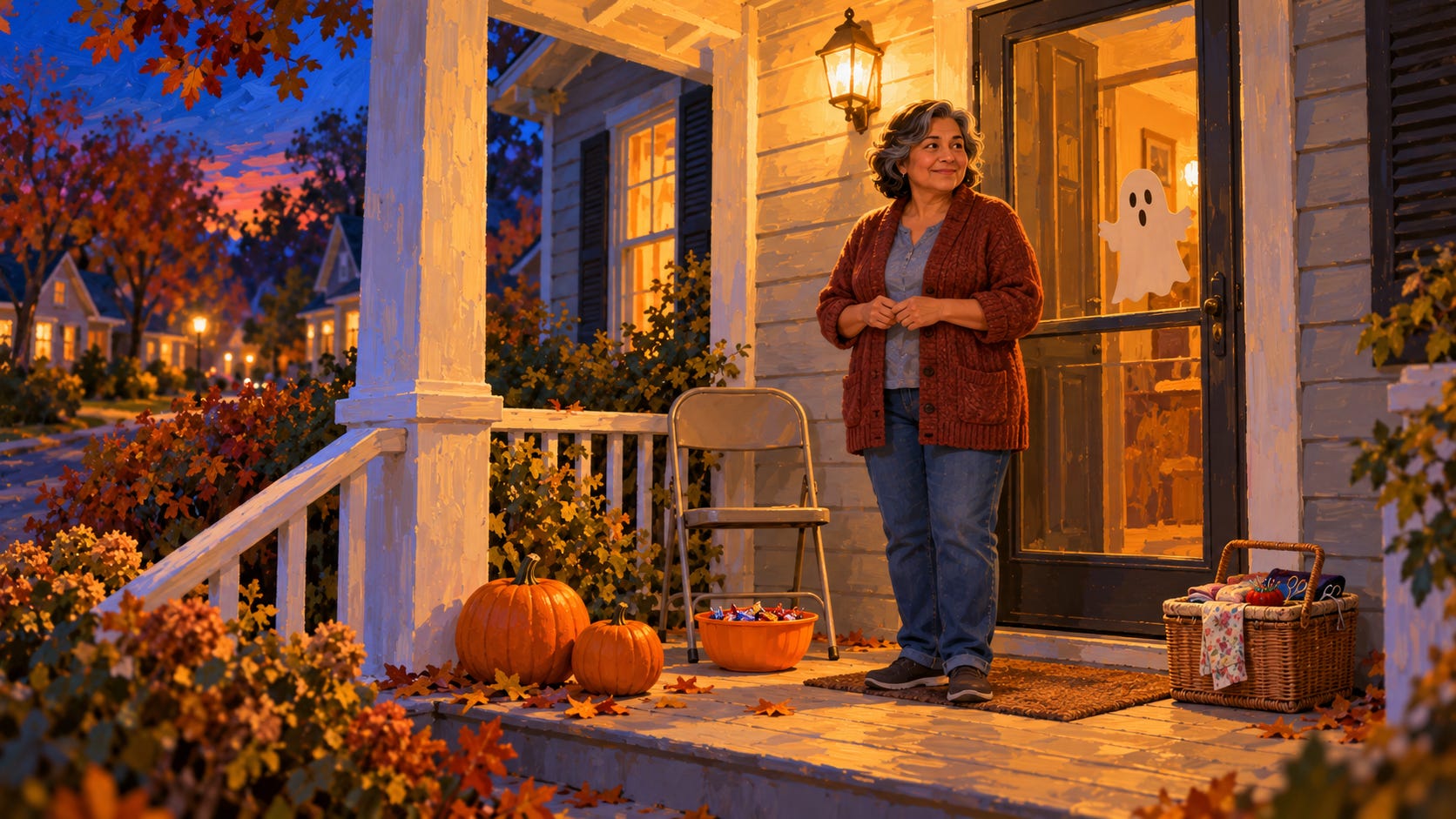
She had safety pins, tape, scissors, string, batteries, and the calm manner of someone who had once hemmed three bridesmaid dresses forty minutes before a wedding.
Meanwhile, the full-size candy operation was encountering difficulties.
The hot chocolate line blocked the sidewalk. The popcorn machine blew a fuse. A gust of wind lifted several custom treat bags and scattered them across Carol’s yard.
The Hendersons’ dragon developed a slow leak and lowered its head toward passing children with increasing sadness.
A Different Kind of Welcome
Then a preschooler dressed as a ladybug reached the premium treat corridor.
She had been cheerful until the dragon moved.
The dragon hissed. Its red eyes flashed. The ladybug screamed, turned around, and ran directly into her mother’s legs.
Her mother carried her past the pirate ship, the fog machine, and a skeleton that shouted when anyone approached the mailbox. By the time they reached Elena’s house, the little girl had buried her face in her mother’s coat.

Elena turned off her porch speaker.
“You don’t have to come up,” she called gently. “I can bring the candy to you.”
The ladybug peeked over her mother’s shoulder.
Elena held up the bowl.
The child considered it, then noticed the butterfly sitting on Elena’s steps, its two wings firmly attached.
“Did you fix those?” she asked.
“I did.”
The ladybug cautiously approached.
One of the black paper dots had fallen from her costume. Elena replaced it with a circle cut from an old sheet of craft foam. Then she let the girl choose two pieces of candy because, Elena explained, costume repairs came with a service guarantee.
For the rest of the evening, children began arriving at Elena’s porch for reasons unrelated to candy.
A knight needed his shield handle tightened. A witch had lost the battery cover from her glowing wand. One boy simply wanted to sit somewhere that did not shriek, flash, hiss, or release artificial fog.
Parents waited on the sidewalk, grateful for the chair, the porch light, and the chance to stop carrying three masks, two plastic swords, and a toddler who had decided shoes were no longer part of her costume.
Pete arrived shortly after eight with the remains of his candy supply.
“I have fourteen coconut bars,” he said. “Apparently, children have organized opinions about coconut.”
Elena poured them into her bowl. “They’ll get eaten.”
“By whom?”
“Someone’s father.”
Pete unfolded another chair.
Soon the premium treat corridor was nearly empty while Elena’s small porch was full. Children compared repaired costumes. Parents drank the last of the hot chocolate. The cardboard robot regained his arm but left it off because he liked the story better that way.
Carol eventually walked down the street, clipboard in hand. “We had lower traffic in zones three and four,” she said.
Then she looked at Elena’s porch.
The little ladybug was sitting on the steps, explaining to another child that this was the house where broken things got fixed.
Carol lowered the clipboard.
What Sycamore Street Changed
For the first time that evening, she stopped counting traffic and looked at what the children were actually doing.
The next year, Sycamore Street still handed out candy.
Pete bought full-size bars again, although he claimed it was only because they were on sale. The Singhs made hot chocolate. The Hendersons brought back the dragon after installing a switch that turned off the hissing.
But the neighborhood map was no longer organized around who could offer the most. It was organized around what people might need.
It marked Elena’s house as Costume Repair and Quiet Porch. The Doyles offered allergy-friendly treats. Pete placed chairs near the sidewalk for grandparents. The older children volunteered to escort younger ones past the moving decorations.
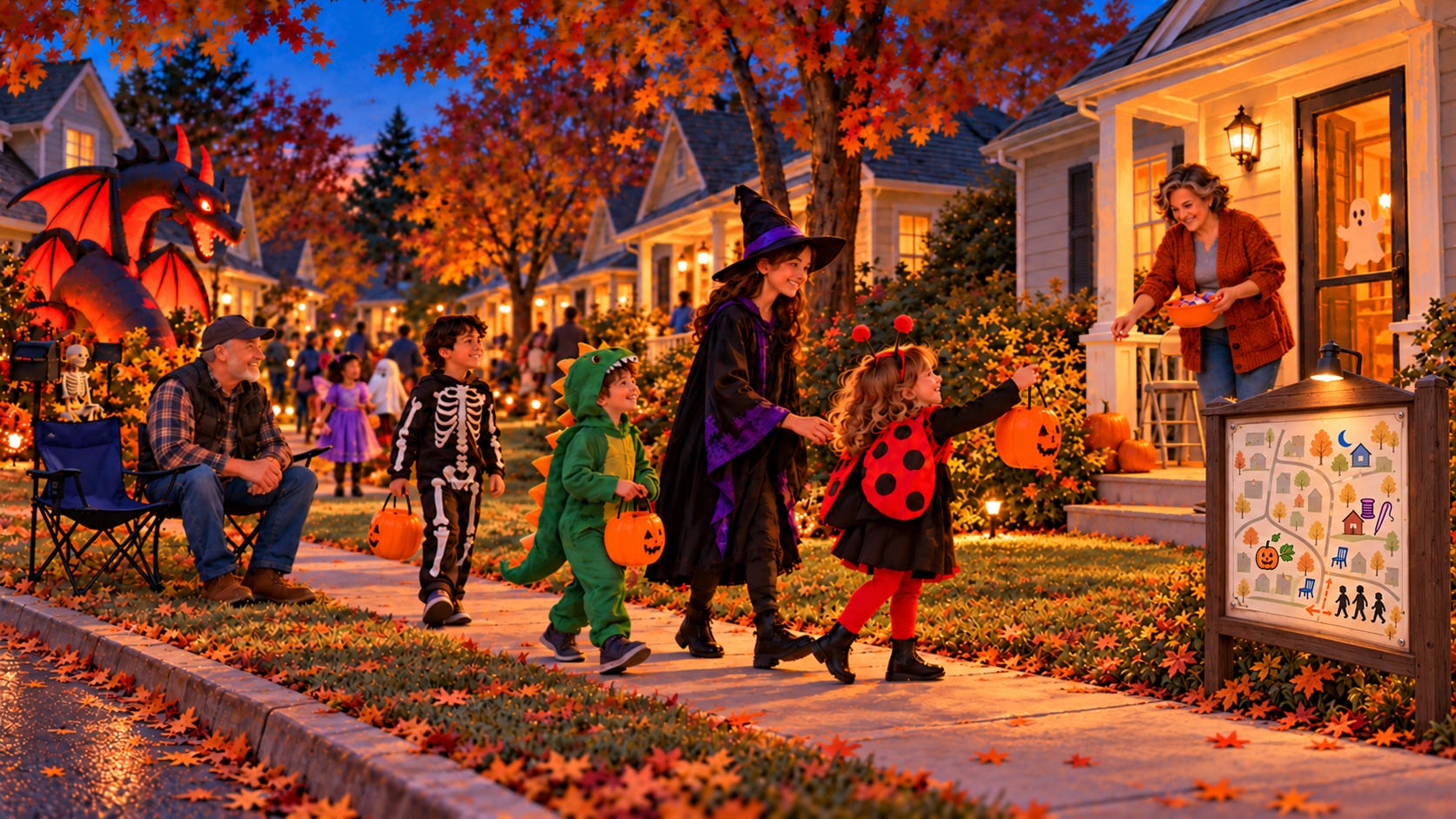
There was no premium treat corridor.
By the end of the night, plenty of children still remembered which houses gave out the biggest candy bars.
But the house they talked about most was the one with two pumpkins, a paper ghost, and a porch light left on for anyone who needed a little help.
Sycamore Street had spent three years trying to give children more.
Elena reminded them to give children what they actually needed.