


By the time the last pie was cut, the folding table was covered in crumbs and empty plates, as if Thanksgiving had arrived early and left Denise with the cleanup.
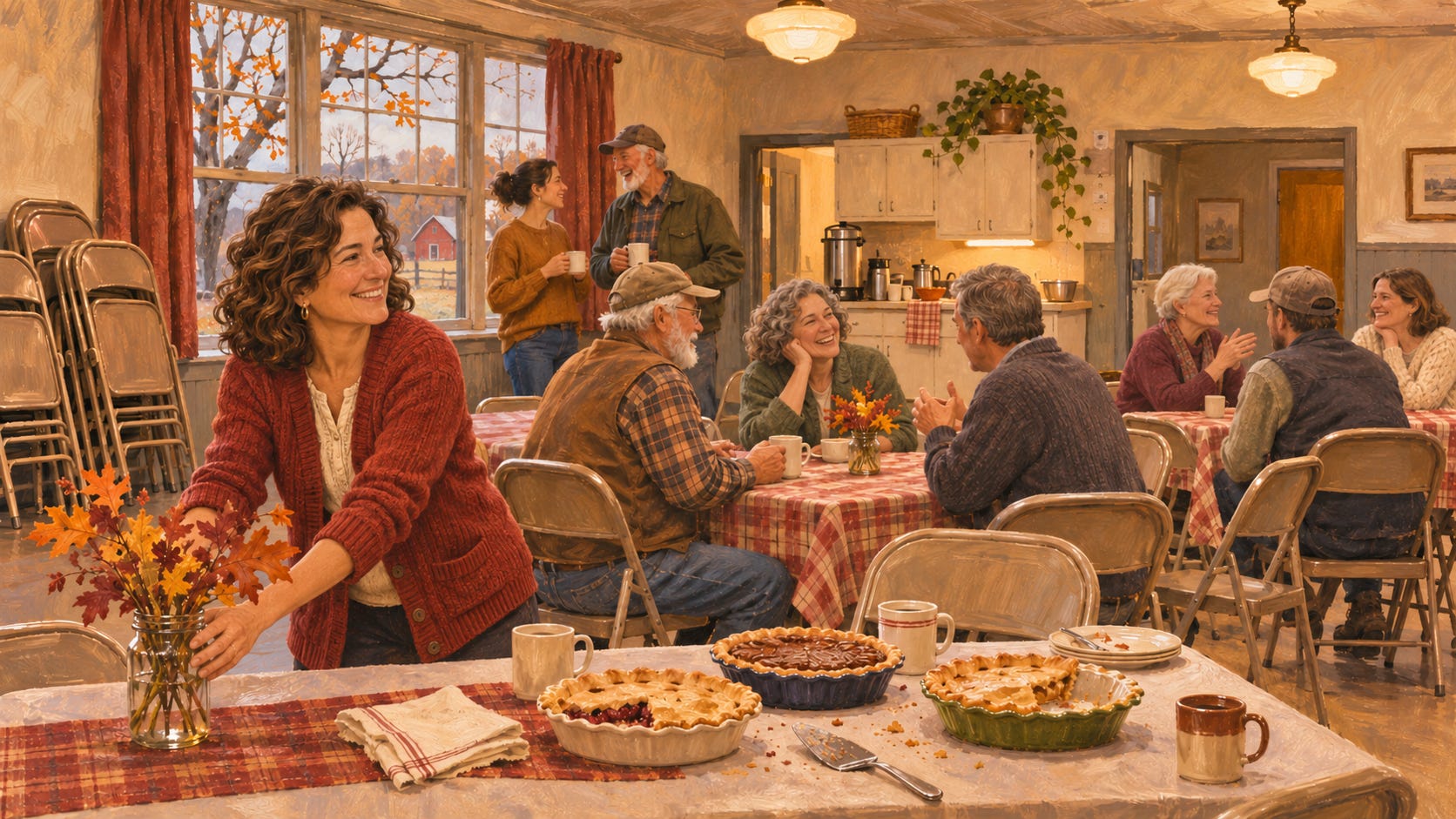
Denise Harper organized the neighborhood pie night in the community room the same way she organized the monthly table at the pantry: by asking people what would make it easier to come. Bring a pie if you have one. Bring yourself if you don’t.
This Community Is Powered by You
What started as a small circle has grown into something much bigger, and it’s all because of readers like you.
Every time you forward this email, post it on socials, or bring someone new into the fold, you’re helping build one of the most passionate, independent communities out there.
Want to keep the momentum going?
Share this newsletter with someone who should be part of this conversation.
Thank you for being here. It means everything.
The community room belonged to everybody in the peculiar way public things often did. Nobody owned the folding tables, but everybody complained when one wobbled. Nobody took the coffee maker home, but several people had strong opinions about how much coffee should go in it. The county paid for the lights, volunteers stacked the chairs, and somewhere along the way the room had become one of those places people assumed would simply continue existing because it always had.
Denise set out coffee, napkins, and a stack of paper plates, but most people arrived with desserts in their own dishes.
By six o’clock, the room smelled like cinnamon, toasted pecans, and coffee that had been sitting on the warmer long enough to develop an opinion.
A pumpkin pie cooled beside an apple pie with a glossy, uneven crust. Someone brought a lemon meringue pie, its pale peaks browned at the tips. Mr. Bell arrived carrying a chess pie beneath a dish towel.
He said it was his wife’s recipe. His wife said it was her mother’s. Mr. Bell nodded as if these were two separate legal claims.
People filled their plates and found seats. Forks tapped against ceramic. Chairs scraped the floor. The lemon pie was tart enough to make a few people blink, then reach for another bite.
For a while, conversation stayed safely at the table: the sudden cold snap, the neighbor’s inflatable ghost that had been face-down on the lawn for three days, and whether the apple pie needed more cinnamon.
Denise answered that it needed more people willing to bring pie.
The Plate Problem
Then the plates began to stack up. Some were clear glass. Some had scalloped edges. Several were white ceramic with blue or green flowers. One had a small chip near the rim. Another was heavier than it looked.
Denise glanced at the crowd and made the same suggestion she had heard at every potluck she had ever attended. “Everyone, take your own plate home.”
People looked at the stacks. “Does anyone remember which one they brought?” Greg asked.
A pause followed. It was the kind of pause that happens when a room full of people simultaneously realizes they have been confidently identifying the wrong dish.
Mark picked up a plate. “I brought apple pie. This has a little pumpkin on it.”
“Maybe you ate pumpkin pie first,” Laura said.
“I would remember that.”
“You also said you’d remember your plate.”
Mark set it back down. The cleanup started anyway.
People rinsed forks, wiped crumbs into the trash, and carried chairs toward the storage closet. Denise found a piece of masking tape, wrote PLATES? on it, and stuck it to the side of the counter.
It did not make the dishes any easier to identify, but it made the problem look official.
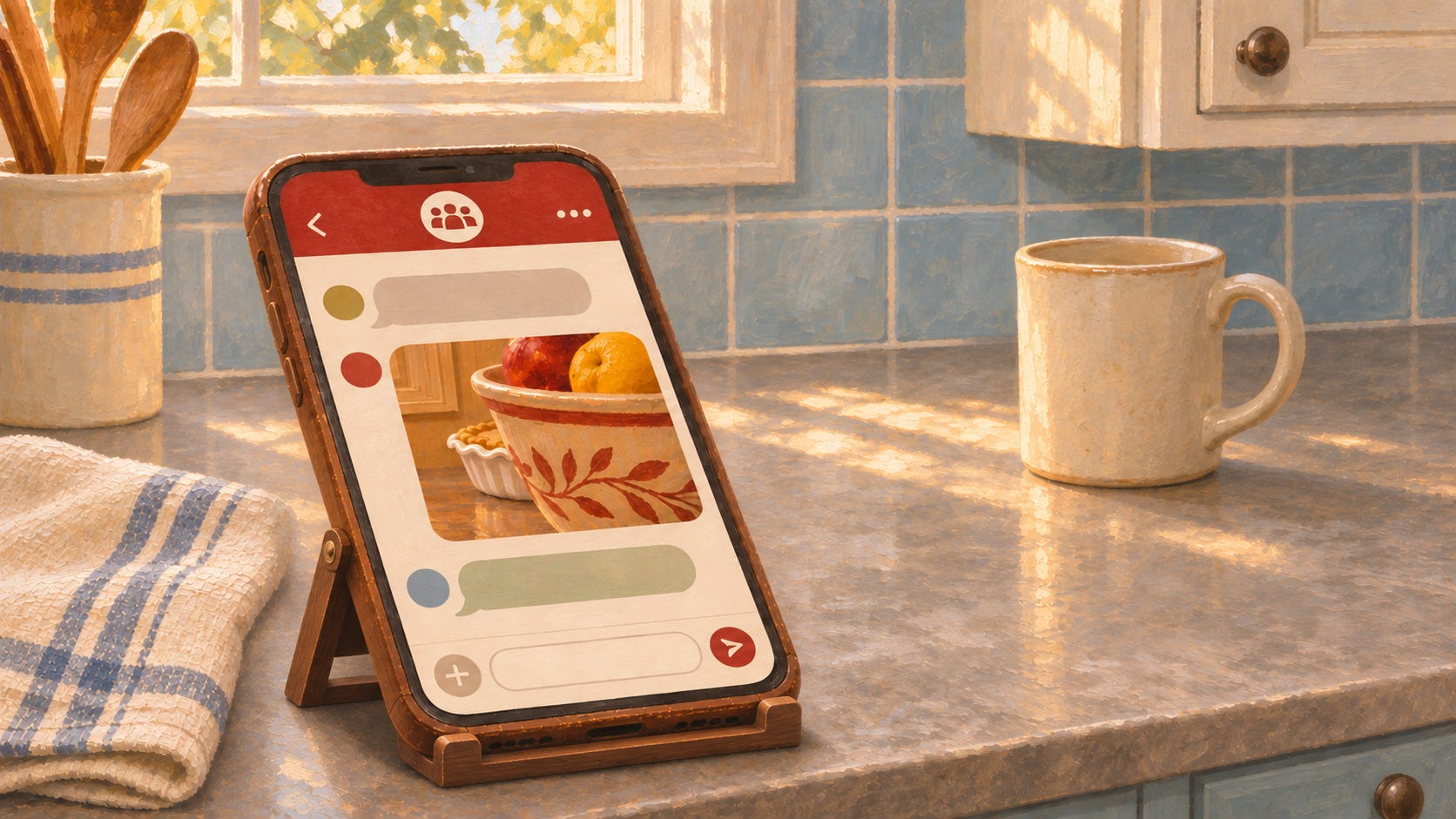
By Monday morning, the neighborhood group chat had become an informal lost-and-found. I have a glass pie plate with a blue flower, Laura wrote. I brought apple. I think. Mine has a blue flower, but no pie, said Mark.
A photograph appeared. It showed a white plate on a kitchen counter, mostly hidden behind a fruit bowl. Beneath it, Greg wrote: This one is in my house. It arrived with no explanation.
Denise opened a document on her laptop and started a list. She knew from pantry work that a clear list could save people time. Communities rarely treated information as a resource until they didn't have enough.
However, her usual categories — name, item, date — were no help with pie plates.
She tried: glass, medium, scalloped edge. There were three.
Then: blue flowers. There were four.
She added: small chip, lower left. Then she stared at the screen. The plate could not confirm its own chip.
She briefly considered asking everyone to send photographs, but the first photograph had already contained a plate, a fruit bowl, a dish towel, and most of the photographer’s thumb. A second picture might have included the entire kitchen.
A Return Visit
On Wednesday, Denise invited everyone back to the community room for a plate exchange. This time she put a roll of masking tape and a marker beside the door.
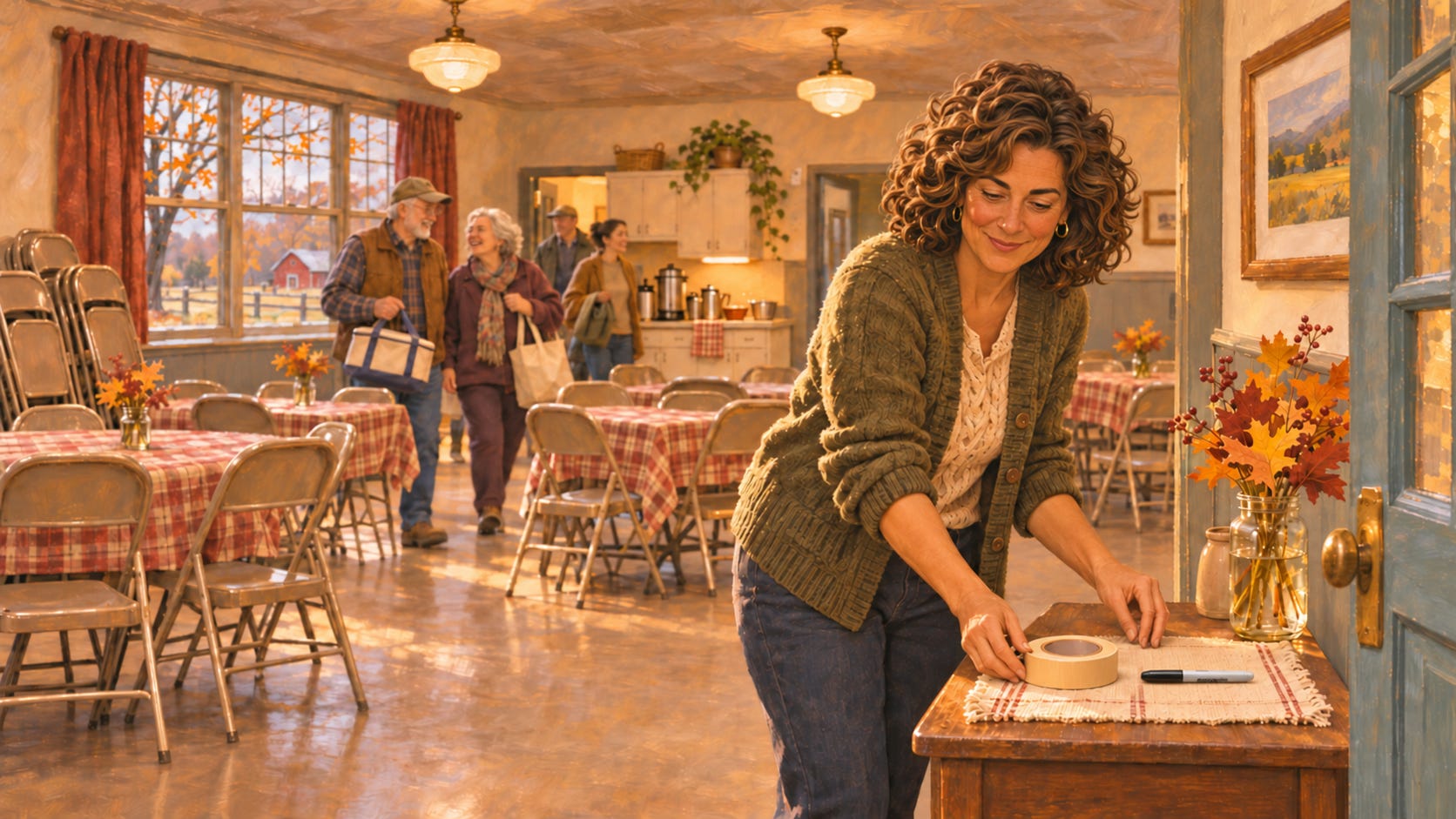
“Write your name on the tape,” she instructed. “The tape goes on the bottom of the plate.”
“Will the tape survive the dishwasher?” Greg asked.
“No,” Denise said. “But neither will your handwriting if you put it through the dishwasher.”
Mark arrived with a glass dish tucked beneath one arm. Laura came with two plates, though she insisted one had been in her house before the potluck and had “probably just been waiting for a chance to leave.” Greg brought a white ceramic dish inside a grocery bag.
“I’m returning this,” he announced. “I can’t keep living with a plate whose family I don’t know.”
Mr. Bell came in last carrying a blue-rimmed dish. Denise immediately recognized the small chip near the edge. “That’s mine,” she said. “My mother gave it to me.”
Mr. Bell looked down at the plate. “I was told this one belonged to a woman with a pie.”
“That narrows it to the entire room.” Then Mr. Bell placed his wife’s chess-pie dish on the table. It was a sturdy glass plate with a faint yellow tint. On the underside was a worn department-store sticker from a store that had disappeared years earlier.
He ran his thumb across it. “My wife says her mother used this at every family dinner,” he said. “I used to think that meant she had a very large supply of pie plates. Turns out she had one, and the rest of us were expected to wash it quickly.”
“Washed it quickly?” Greg asked.
“She had a way of looking at you while holding the dish towel.” Everyone laughed.
Mr. Bell placed the plate down carefully, as though the memory might still be warm.
That was when Denise began to understand they hadn't misplaced a pile of interchangeable dishes. Most of them had brought something older than the pie.
he plates had passed through kitchens, marriages, moves, holidays, arguments, church suppers, children growing up, and relatives who were no longer sitting at the table.
Their dollar value was probably insignificant. Their value was not. Then Mrs. Whitaker arrived.
What the Plates Carried
Denise had arranged a ride for her, and she carried a round glass plate covered with a folded tea towel. She set it on the table and unfolded the cloth.
Inside was a shallow ceramic plate with faded green leaves around the rim. “This isn’t the one I brought,” she said. “But I know whose this is.”
She turned it over. A strip of yellowing tape clung to the bottom with a name written in blue ink. E. WHITAKER
“My sister’s,” she said. “She bought it before I was married. I used to borrow it for church suppers. I thought it disappeared years ago.”
Nobody made a joke. The room grew quiet for a moment except for the soft hum of the refrigerator in the kitchenette.
“Do you want it back?” Denise asked. Mrs. Whitaker smiled and shook her head.
“I’d rather give it to someone who’ll use it. My sister would have liked that.”
She turned to Laura, who held a glass plate with a faint blue flower. “You brought the one with the crust?”
“I brought apple,” Laura said. “I think.”
“That was hers. She always used that one for apple pie.”
Laura’s expression changed. “My aunt had a plate just like this. She taught me to make apple pie.”
Soon Mrs. Whitaker was showing Laura the little groove near the edge where her sister used to press the dough with her thumb. Laura showed her the faint flour still caught there. They began talking about the recipe, then the church suppers, then the women who had worked in the kitchen together, then who might still have the original recipe card.
The plate exchange gradually became something else. People stopped asking only, “Which one belongs to me?” They started asking, “Where did this come from?”
Across the table, Denise and Mark sorted the remaining dishes. The blue-rimmed plate belonged to Denise. The heavy white one belonged to Greg’s neighbor, who had not come that evening but had sent a message asking whether anyone had seen it. The plate with the little chip belonged to Laura’s aunt, not Laura, which explained why she had been reluctant to claim it.
“Are we sure this one is yours?” Denise asked Greg, pointing toward the grocery bag.
Greg looked at the plain white dish. “No.”
“Then why are you taking it?”
“I’m willing to take responsibility for it until its people come forward.”
Denise smiled. “That’s not ownership. That’s temporary foster care.”
“I’m prepared to provide a stable kitchen environment.” Greg wrote his name on a strip of tape and stuck it to the bottom.
It solved nothing legally, but it gave the plate someone responsible for keeping it safe. That was a small kind of stewardship: caring for something because it had been entrusted to you, not because it was yours.
The plate exchange ended with everyone taking home at least one dish and leaving with several new stories. Mark found the plate he had brought behind a stack of napkins in the community room. He announced that he had known it was there all along. Nobody asked why he hadn't looked behind the napkins before Wednesday.
Denise carried her mother’s blue-rimmed plate home in both hands. The chipped edge caught the hallway light. She ran her finger over it and remembered the plate on her mother’s kitchen counter—usually holding a pie, sometimes rolls, and once a stack of mail her mother had been meaning to sort.
Her mother had never called it stewardship. She simply returned what she borrowed, shared what she had, and stayed to clean the church basement even after her own plate was washed. Nobody had written those rules. For most of Denise’s childhood, nobody needed to.
The Room Stays Open
The next month she held another community table. People brought soup, bread, and a plate of cookies that arrived on a borrowed dish.
This time everyone wrote names on masking tape before the food was served. The system worked for approximately twenty minutes.
Then someone peeled off a label to inspect the maker’s mark beneath it. Later, while clearing the table, two neighbors each picked up the other’s pie dish by mistake.
Denise watched the migration begin again. She decided not to intervene immediately. Something had changed since the first pie night. No one hurried out when the meal ended. People stayed to clean the tables. Someone swept.
Greg carried the trash outside without being asked. Mark stacked chairs. Mrs. Whitaker sat with Laura while they compared two versions of the apple-pie recipe.
Mr. Bell told the story about his mother-in-law’s dish-towel look for the third time and somehow made it longer. Laura finally produced a handwritten copy of her aunt’s apple pie recipe and read it aloud.
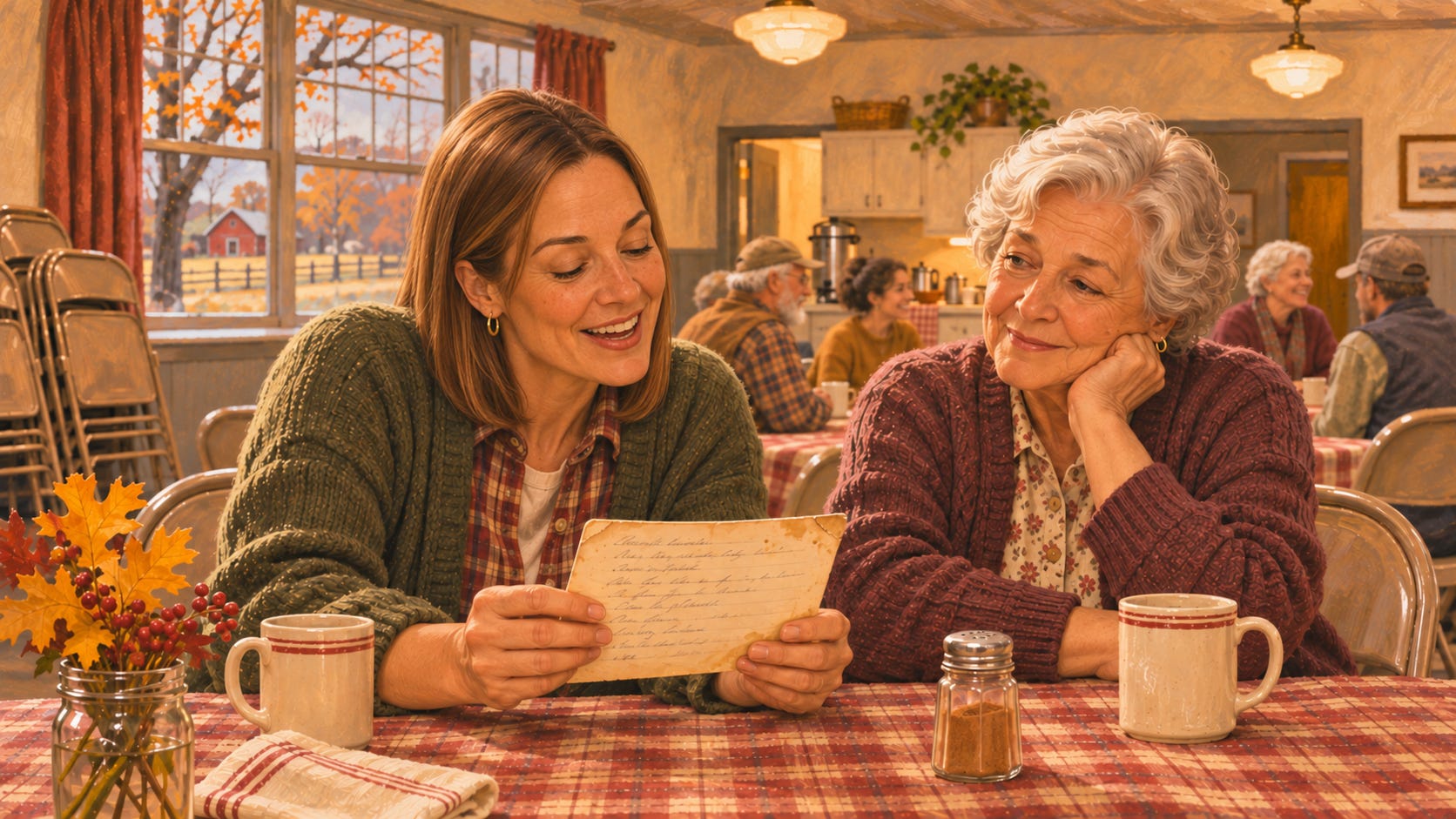
Near the bottom was an instruction: Add cinnamon until it smells right.
Greg objected. “That is not a measurement.”
Mrs. Whitaker shook her head. “It is if you know what pie smells like.”
Greg considered this. “I withdraw the objection.”
He had brought the plain white plate he had been fostering. Its family had still not come forward. “It has shown excellent manners,” he reported. The group agreed that after another month he could apply for permanent custody.
Mrs. Whitaker took a slice of pie home. Denise packed it into a plastic container with a lid that did not quite match, then wrote MRS. WHITAKER on a strip of tape.
“The container can come back later,” Denise said.
“Good,” Mrs. Whitaker replied. “I’m not ready to give up the pie. She tucked it carefully into her bag.
Around her, the community room slowly returned to order. Tables were wiped. Chairs were stacked. Dishes found temporary homes. Some people had brought more than they took. Others had brought nothing and helped clean.
Nobody kept score.
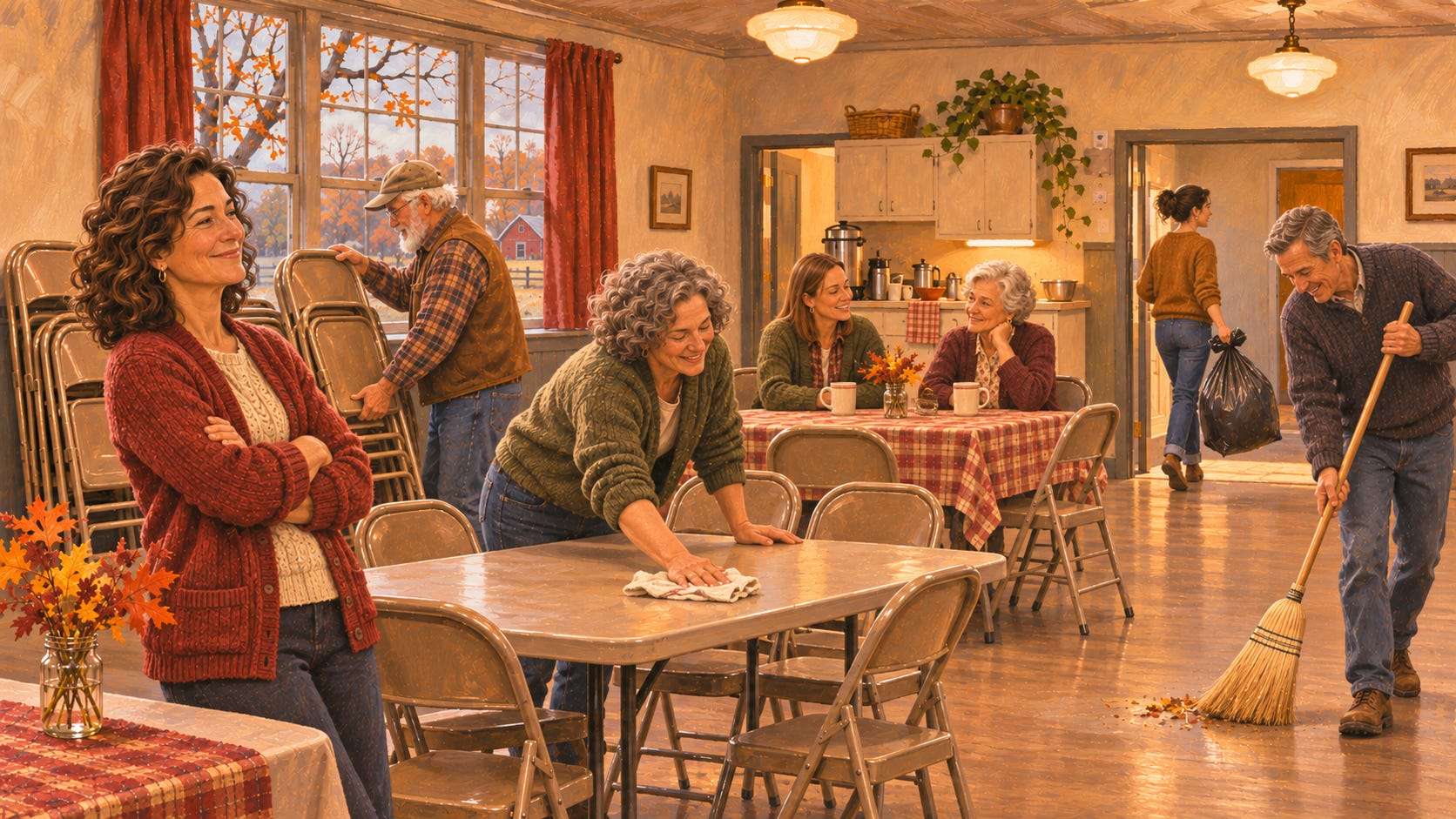
The room did not belong to Denise, and the plates belonged to individual neighbors, but for a few hours, the people gathered there had been trusted with a shared place, a meal, memories, and one another.
Stewardship meant caring for what they had been entrusted with, especially what no one person could claim alone. Citizenship asks for the same care: voting, expecting public institutions to use power responsibly, standing up for other people’s rights, and taking responsibility for what will be passed on.
Denise looked around the community room. “Does everyone have their plate?”
Nobody answered. Greg looked beneath the table. Mr. Bell inspected the counter. Laura began checking the stack beside the sink.
Denise sighed. “Okay. Nobody leave.”
Mr. Bell smiled. “Community meeting?”
“Plate inventory.”
“Same thing, apparently.”
This time, everyone stayed.