


Earlier this month, we examined the Trump administration’s unveiling of the Genesis Mission, a sweeping executive initiative intended to accelerate the use of artificial intelligence for scientific discovery. Framed as a bold leap into a technologically driven future, the order positioned AI as the new engine of American progress, one that would operate primarily outside traditional scientific infrastructure, centralized in the executive branch, and insulated from meaningful public oversight.
That deep dive explored the structural, ethical, and procedural risks of launching such a large-scale project without a clearly defined regulatory framework or a functioning system of democratic accountability. Critics warned that Genesis was less a science policy and more a power grab, one that redefined who leads discovery, who owns it, and how it’s governed.
This piece, Part Two, follows the physical trail left behind. AI is not just digital. It is material and infrastructure. And the scale of that infrastructure is staggering.
To support the growth imagined in Genesis, and already underway in dozens of projects across the country, the United States and much of the world are quietly constructing an entirely new layer of industrial activity, powered by electricity, cooled by water, and built on materials pulled from increasingly strained supply chains.
These physical demands come with consequences.
In this installment, we examine the environmental cost of AI infrastructure, including the electricity and water it consumes, the emissions it produces, the health and ecological risks emerging in communities like Memphis and Richland Parish, and the political decisions enabling these harms to accelerate with minimal constraint.
What we find is not just a failure of foresight. It’s a pattern, one we’ve seen before in American science and industry. Where speed and scale are prioritized above caution, communities bear the burden, and the infrastructure of progress becomes a vessel for harm.
This is the world Genesis builds. We need to understand it before it’s too late.
Want to Know Your Rights?
Download a free digital copy of the U.S. Constitution, the same document Trump is trying to bulldoze. Learn exactly what he’s breaking, and how to fight back.
80,000+ strong — and counting.
This holiday, become a paid subscriber for just $1 a week and help us keep the truth alive.
Join The Coffman Chronicle — $1/Week
See the first installment here:

Powering the Machine
In 2025, at the peak of the global AI boom, researchers estimated that AI systems consumed nearly as much electricity as a major American city. New studies show that the carbon footprint of AI, specifically the greenhouse gases produced by the energy these systems require, could reach levels comparable to New York City’s entire annual emissions. Global demand for AI compute is so large that analysts calculate it may have exceeded the power use of Bitcoin mining and rivaled the output of a midsize urban economy.
The reason for this scale is simple and physical. The artificial intelligence we rely on today is not a single program running on a laptop. It is an expanding constellation of data centers and supercomputers, each one packed with thousands of specialized processors working around the clock. These facilities require vast amounts of electrical power not only to run computations but to keep the equipment cool. Servers generate immense heat, and without cooling systems, they fail. As AI workloads grow — from ChatGPT to high‑performance scientific models — so does the energy footprint needed to sustain them.
By late 2025, independent modeling suggested that AI’s energy use could reach 23 gigawatts or more, a level comparable to the consumption of a small city. This doesn’t include the embedded energy of manufacturing hardware, transporting materials, or maintaining facilities. These are the operational demands, the energy simply to keep the lights on and the processors humming.
The Thirst for Innovation
Electricity is only part of the story. Running and cooling these machines also requires vast quantities of fresh water. Data centers deploy water in cooling towers, evaporative systems, or in power plants that generate electricity. A single mid‑sized facility may use more than a million liters of water per day, roughly equivalent to the daily water needs of a small town.
Research published in late 2025 estimated that AI systems could consume between 312 billion and 766 billion liters of water per year, a volume roughly comparable to the amount of water used globally in bottled water production. This statistic, by itself, helps make a remote technical issue real. The digital tools we think of as intangible have a physical footprint measured in water as much as in watts.
The scale of water use extends beyond cooling. Indirect water consumption, such as water used in electricity generation, dwarfs onsite cooling in many regions. In areas where electricity is produced from water‑intensive sources such as hydroelectric dams or thermal plants, every kilowatt of AI electricity can carry a hidden water cost that is difficult to quantify but unmistakable in aggregate.
Unlike electricity figures, which are often published by grid operators, water usage data is neither centralized nor transparent. Tech companies rarely disclose their total water footprint. Independent research and journalism remain the main sources of estimates, and those estimates show a rapid growth trend that has outpaced public awareness.
At Home and Ahead of Us
Gresham Smith
Memphis
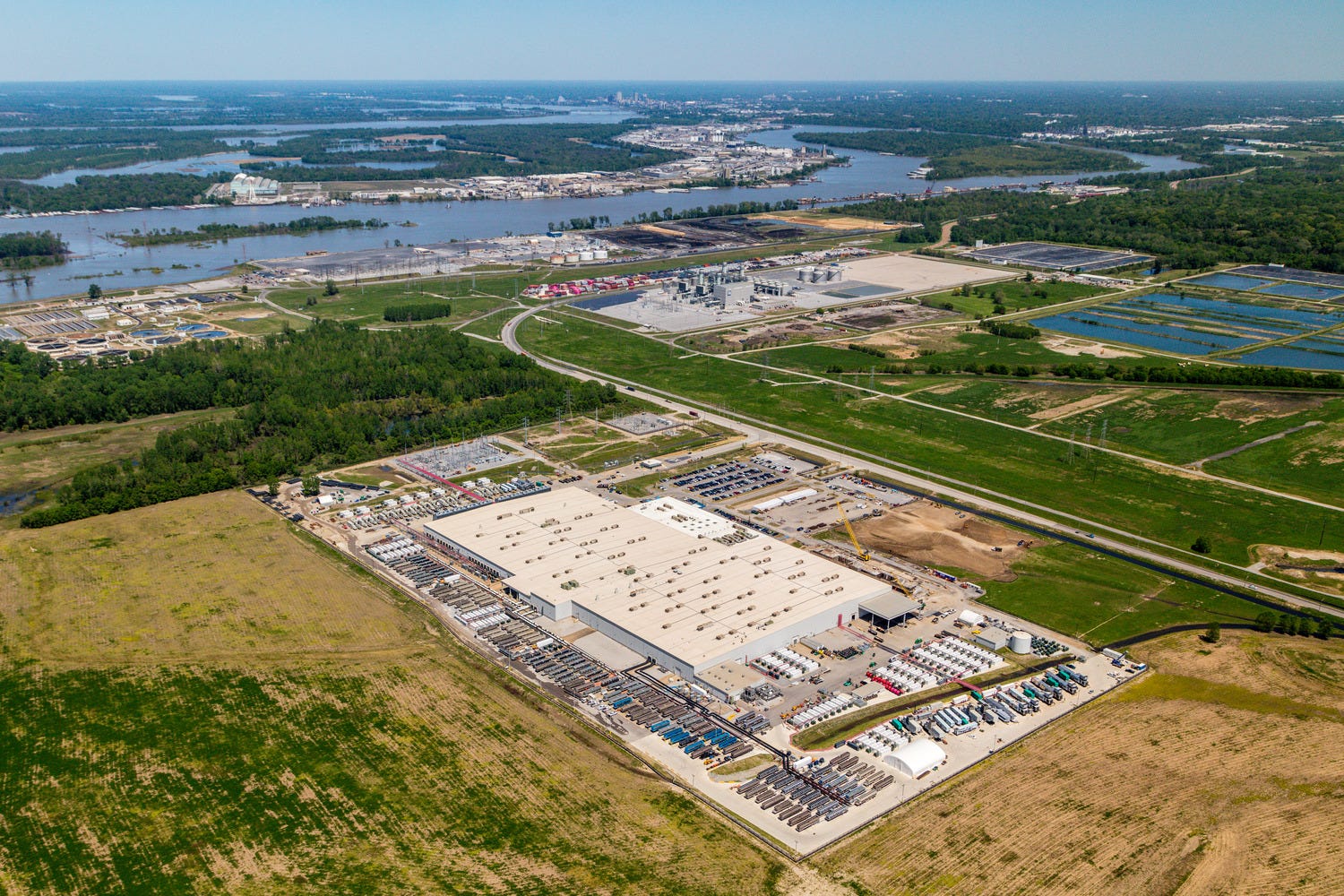
In the heart of South Memphis, Tennessee, the promises of the AI boom have collided with the lived experience of an already overburdened community. What began as a rapid buildout of one of the largest AI data centers in the world — a project by Elon Musk’s xAI called Colossus — has become a flashpoint for environmental health concerns, civil rights action, and grassroots resistance.
South Memphis includes neighborhoods like Boxtown, a predominantly Black, historically underserved area founded by formerly enslaved people almost 200 years ago, and now ground zero for an AI infrastructure experiment with very real consequences. Residents describe air so bad they cannot open their windows because of a “rotten” smell that settles over the community, turning everyday life into a struggle for basic health and comfort.
In the summer of 2025, a TIME investigation documented rising levels of air pollutants, such as nitrogen dioxide, in the area immediately surrounding the Colossus site. Compared to periods before the data center’s full operation, peak pollution levels surged, worsening daily breathing conditions for people already vulnerable to respiratory issues. One resident reported severe asthma after decades of relative stability, connecting the flare‑ups to the odors and exhaust from turbines running at or near the site.
The technology at the heart of these impacts illustrates the scale of the challenge. The Colossus supercomputer, powered by more than 230,000 specialized graphics processing units, consumes immense energy, far exceeding typical computing needs. To meet those demands, the project relies on dozens of methane‑fueled gas turbines, many operating without proper permits and without modern pollution controls. These turbines emit nitrogen oxides and other contaminants, a key driver of ground‑level ozone and smog, both of which aggravate asthma and other chronic lung conditions.
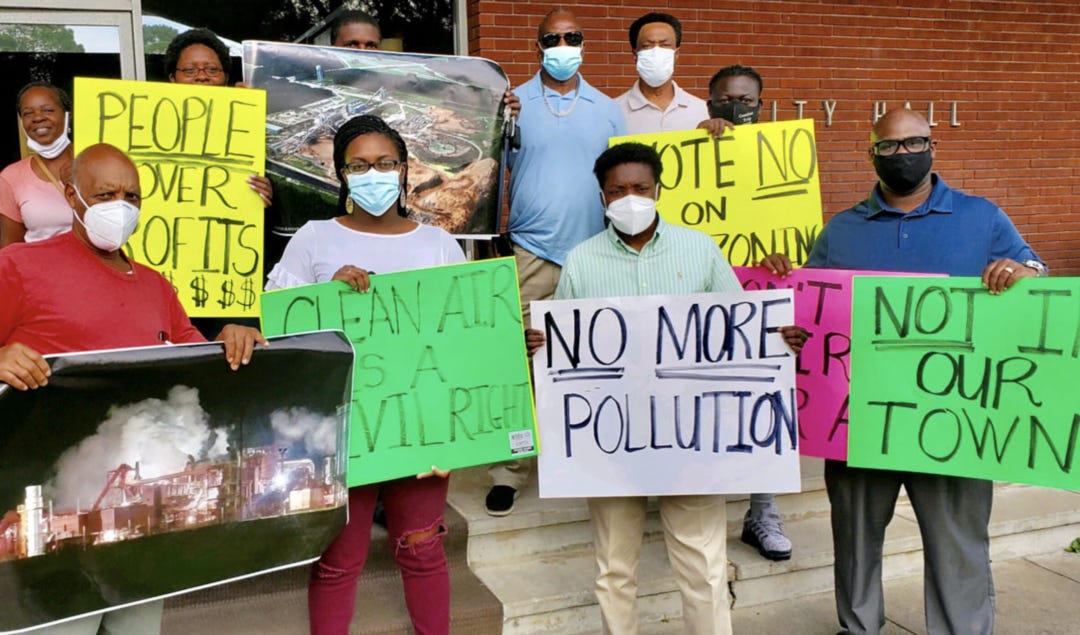
Public health advocates and environmental groups have raised these dangers for months, urging local regulators to peer more closely at the facility’s emissions and permitting status. Organizations like the Southern Environmental Law Center have pointed out that these turbines — some installed without formal air‑quality permits — may violate the Clean Air Act. In response, the NAACP and allied environmental groups notified xAI of their intent to sue over pollution concerns, framing the dispute not only as an environmental issue but also as a civil rights and public health crisis.
Pride Publishing
Despite these warnings and community pressure, local authorities have often sided with developers, approving permits without demanding stronger pollution controls. Critics describe this as a continuation of environmental racism, where industrial facilities and their attendant harms are disproportionately placed in communities of color and low‑income neighborhoods, reinforcing long‑standing inequities.
Memphis is not an isolated case. Across the American South, a new wave of data center proposals and expansions, including massive projects backed by major tech companies, is sparking growing concern that the same patterns of industrial harm that defined earlier eras of petrochemical and fossil fuel expansion will be repeated.
Louisiana
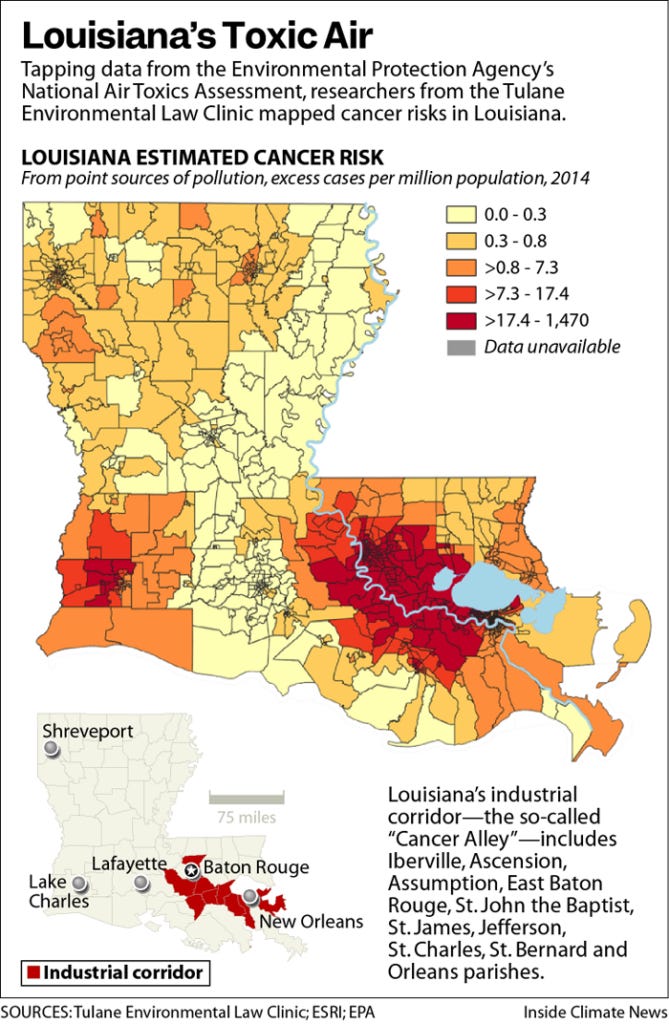
Nowhere is this more stark than in Louisiana, long shaped by decades of industrial pollution along its infamous Cancer Alley, an 85‑mile stretch of predominantly Black and working‑class communities between Baton Rouge and New Orleans where petrochemical plants have contributed to cancer rates far higher than the national average. Critics fear that the next stage of data center expansion, part of what some have dubbed a “Digital Cancer Alley,” will compound these historic injustices by introducing a new source of energy infrastructure that relies on the same fossil fuel power plants and gas utilities that already drive pollution in the region.
Inside Climate News
In northeastern Louisiana’s Richland Parish, the construction of a massive Meta‑backed data center, part of a broader $10 billion hyperscale development, has sparked alarm among local advocates. Public officials and environmental critics point out that to support the center’s power needs, utilities are planning new methane gas plants, locking the region into fossil fuel dependency for decades and delaying commitments to renewable energy. These investments, they warn, will not only elevate emissions but also increase utility costs and compound water scarcity issues in communities already burdened by industrial infrastructure.
One member of the Louisiana Public Service Commission warned that these decisions risk turning the state into a digital sacrifice zone, echoing the longstanding pattern across the Gulf South of communities bearing the costs of industry with minimal local benefit. While proponents tout economic development and a handful of local jobs, critics caution that most of the workforce for these centers is recruited from outside, and that higher utility bills, strained resources, and health risks will fall on residents without commensurate public return.
Local Pushback
Across both states and beyond, grassroots resistance is growing. Elected officials, community activists, and coalitions of national and local organizations have pushed back against data centers on environmental grounds, successfully delaying or blocking billions of dollars in proposed projects. Groups spanning issues from clean air to affordable energy to ecological justice are advocating for moratoriums on new buildouts until environmental impacts are fully assessed and mitigated.
In Tennessee, organized efforts urged regulatory agencies to deny air permits for xAI’s turbines. In Louisiana and other Gulf South states, diverse coalitions, including faith groups and physicians, have joined the push for pause and study, emphasizing that AI infrastructure should not be exempt from environmental accountability.
The pushback reflects a broader shift. Citizens and local governments are no longer complacent as global technology giants build infrastructure that consumes enormous amounts of energy and water with limited transparency and little accountability for long‑term health and environmental outcomes. Across the country, communities are asserting their right to healthy air, clean water, and robust governance amid rapid technological expansion.
A National Issue
While many of these concerns are local, the implications are national. If AI infrastructure continues to scale at current rates, the industry could consume as much power and water as entire regions or population centers. A study from Cornell University suggests that, without intervention, AI‑labeled data centers could contribute between 24 and 44 million metric tons of CO₂ per year by 2030, emissions roughly equivalent to those of several million cars on the road.
A Global Resource Challenge
The environmental costs of AI infrastructure are not confined to the United States. Around the world, policymakers are beginning to grapple with the resource demands of data centers and AI systems, even as they seek to support innovation and economic competitiveness.
The EU
In the European Union, regulators have taken some of the most concrete steps to confront these pressures. The EU’s Energy Efficiency Directive (EED), revised in 2023, sets binding energy efficiency targets for member states and requires monitoring and reporting of energy performance across sectors, including data centers. The directive aims to ensure that energy consumption in the EU aligns with broader climate goals and that energy use is taken into account in all major policy and investment decisions. These rules took effect as part of the EU’s climate package and are meant to guide national plans through at least 2030.
For data centers specifically, the European Commission is working on a Data Centre Energy Efficiency Package, anticipated to accompany its digital strategy in 2026. This is designed to push the sector toward carbon neutrality by 2030, requiring not just efficiency gains but regular reporting of energy use and sustainability metrics. Under the current framework, data center operators above certain size thresholds already must report energy and water consumption to EU databases, creating transparency that is rare elsewhere.
Beyond general energy policy, the EU’s upcoming AI Act, a comprehensive regulatory framework for artificial intelligence, includes specific provisions to document the energy consumption and environmental impacts of large AI models. Providers of general‑purpose AI systems will be required to produce technical documentation that consists of an estimate of energy usage, pushing environmental accountability into the regulatory mainstream for the first time.
Individual EU nations are also moving forward. For example, Germany has adopted national regulations that extend EU energy targets to data centers and emphasize renewable energy integration and facility-level efficiency, a model of national-level action within a broader regional framework.
Europe’s approach is not perfect. Some members are considering streamlining or relaxing environmental impact assessments for strategic industries, including data centers and AI facilities, to bolster competitiveness, reflecting a tension between sustainability and economic objectives. Still, these debates highlight a willingness to bring environmental oversight into the AI infrastructure discussion, a move that remains rare in the U.S.
In Asia
Other regions have begun experimenting with policy tools that reflect local priorities and constraints. In parts of Japan and South Korea, energy and environmental ministries are incorporating data center resource use into broader climate policy discussions, while in China, environmental impact assessments and efficiency standards for industrial projects, including large computing facilities, are tied to existing regulatory regimes rather than standalone AI laws.
Across the world, regulatory observers have also noted eco‑design rules for the hardware powering data centers. In the EU, servers and storage devices sold into data center environments must meet specific energy‐efficiency standards aimed at reducing idle power draw and emissions from compute equipment.
Yet even with these emerging frameworks, no nation has a fully developed, enforceable system that comprehensively governs AI’s environmental footprint. Reporting requirements and efficiency targets are a start, but binding standards for water use, energy sourcing, and lifecycle impacts are still generally in proposal or discussion stages. Many policymakers and researchers argue that what exists — even in Europe — is a first layer of accountability, not a fully protective regulatory regime.
The Overall Global Picture
This patchwork global picture highlights both the scope of the challenge and the relative lack of comprehensive solutions. In many parts of the world, growth in data center capacity and AI infrastructure is still proceeding ahead of regulations capable of limiting their environmental impacts, creating a situation where economy‑wide climate and resource targets must contend with a rapidly expanding digital footprint.
That contrast, between nascent efforts abroad and often minimal regulation in the U.S., underscores how far global policy has yet to go. Despite the EU’s lead in transparency and planning, even there, the policies are targeted and incomplete, and other major economies lag further behind. The result is a world where the infrastructure supporting the AI age is rapidly scaling without a synchronous strategy to govern its resource demands, a structural gap with consequences for climate targets, water security, and future sustainability.
Meanwhile, in the U.S.: Environmental Risk — or Political Design?
It would be one thing if these environmental impacts were accidental. However, the policy pattern in 2025 shows that political choices are shaping the landscape in ways that accelerate environmental strain rather than regulate it.
In summer 2025, there was a push in the U.S. Congress to include a provision in a larger budget package, informally known as the One Big Beautiful Bill, that would have prohibited states from enacting their own AI laws for a decade. That proposal was struck from the final bill amid bipartisan resistance, including from lawmakers concerned about federal overreach. The attempt, however, revealed an intention to preempt state‑level safeguards that might impose environmental or safety requirements on AI infrastructure.
Later, on December 11, 2025, the White House issued a new executive order titled “Ensuring a National Policy Framework for Artificial Intelligence.” This order directs federal agencies to promote a uniform national AI policy and to identify and challenge state laws the administration deems inconsistent with that framework. It calls for an AI Litigation Task Force within the Department of Justice to bring legal challenges against state AI laws. It encourages federal agencies to evaluate and, if deemed “onerous,” withhold funding from states.
The language in this directive frames state AI laws as a burden on innovation, labeling them as conflicting with federal priorities. The architects of the order have described this action as necessary to avoid a patchwork of rules that could slow U.S. competitiveness. However, environmental advocates and civil liberties organizations see it differently. They view it as a preemptive strike on state authority at a time when state governments like New York’s are beginning to enact their own AI safety laws with stronger transparency and accountability provisions.
Where tech and government overlap, the incentives to centralize control are especially evident. Major technology firms, from hyperscale cloud providers to AI developers, often lobby for federal uniformity because it simplifies compliance and expands market reach. Their financial interests align with policies that reduce localized oversight, even when those policies sidestep environmental or public health protections.
To gauge reader interest in further unpacking this political dimension, we’ve included a poll below asking whether you’d like a deeper investigation into the political and economic forces shaping AI policy.
Why It Matters Now
This is not a distant or hypothetical problem. We are already living it. The environmental price of AI in 2025, whether measured in electricity grids stretched thin or in water supplies under pressure, is now measurable in data, resources, and the lived experiences of communities near these facilities.
Without careful planning, strategic regulation, and sustained environmental oversight, the infrastructure that supports AI could become one of the most significant drivers of resource demand in the coming decade.
What We Need Instead
There is an alternative. Rapid innovation does not have to come at the expense of our environment or communities. Before further scaling, policymakers and industry leaders need to:
Develop transparent safeguards that tie AI infrastructure expansion to environmental standards and impact assessments.
Set sustainability targets for energy and water use that align with climate goals.
Empower states and local governments to enforce protections that reflect community needs.
Invest in renewable energy and advanced cooling technologies to reduce reliance on fossil–fuel–dependent grids and freshwater sources.
This isn’t an argument against innovation. It is an argument for responsible and sustainable innovation.
If our coverage of these issues matters to you, consider becoming a paid subscriber. Our readers, not corporate interests, fuel our work.
Sources:
AI surge in 2025 generated as much CO2 as NYC eWeek
AI’s water and electricity use soars in 2025 The Verge
US data centers’ energy use amid the artificial intelligence boom Pew Research Center
Communities are rising up against data centers — and winning The Verge
Desert storm: can data centres slake their insatiable thirst for water? Reuters
Data centers and water consumption Environmental and Energy Study Institute (EESI)
Holistically Evaluating the Environmental Impact of Creating Language Models arXiv
Environmental Burden of United States Data Centers in the Artificial Intelligence Era arXiv
AI data centres could have a carbon footprint that matches small European country, new study finds euronews
‘Roadmap’ shows the environmental impact of AI data center boom Cornell Chronicle
President Trump Signs Executive Order Challenging State AI Laws Paul Hastings
ENSURING A NATIONAL POLICY FRAMEWORK FOR ARTIFICIAL INTELLIGENCE The White House
Trump’s push for more AI data centers faces backlash from his own voters Reuters
New York Signs AI Safety Bill Into Law, Ignoring Trump Executive Order Wall Street Journal
‘We Are the Last of the Forgotten:’ Inside the Memphis Community Battling Elon Musk’s xAI TIME
Resident Says She Can’t Open Windows Anymore Because of ‘Rotten’ Smell from Living Near Elon Musk’s Giant Data Center People.com
Colossus (supercomputer) Wikipedia
NAACP, environmental group notify Elon Musk’s xAI company of intent to sue over facility pollution AP News
NAACP launches lawsuit over pollution from Musk’s xAI Politico
Big Tech Data Centers Compound Decades of Environmental Racism in the South Truthout
Cancer Alley Wikipedia
Data centers spark fears of a ‘Digital Cancer Alley’ in Louisiana The Lens
SACE urges SCHD to deny air permit for xAI Colossus Data Center in Southwest Memphis Southern Alliance for Clean Energy
Petition to pause Wis. data centers tops 1,000 signatures, protests set UpNorthNewsWI
Energy Efficiency Directive Energy
Data centres and energy consumption: evolving EU regulatory landscape and outlook for 2026 White & Case
Energy efficiency requirements under the EU AI Act White & Case
From EU Framework to National Action: How Germany Regulates Data Center Energy Use Columbia Law Blogs
EU proposes loosening rules on AI gigafactories in green rollback The Guardian
AI Regulations in 2025: US, EU, UK, Japan, China and More Anecdotes
Data centres and AI: legal challenges between sustainability and energy efficiency in an Italian and EU context IBA
AI Data Centers Pose Regulatory Challenge, Jeopardizing Climate Goals – Study DataCenterKnowledge
Big Tech, power grids take action to reign in surging demand Reuters
Artificial intelligence consumes massive amounts of energy. Here’s why Le Monde
In Australia, a data centre boom is built on vague water plans Reuters
Great follow up article. The poll didn't work for me, but I vote Yes!
It's interesting how this regime claims to want to have states take over everything from women's health care (i.e. abortion laws) to education funding. Yet, when it is something like this that is best considered from the citizens of the various state's perspective, the regime wants to criminalize such actions and impose their own will.
Thanks for a fine article and the large set of links for more info. In a few days of selective visits to various groups, I gathered over 100 names and addresses of people opposed to data centers. I used a template from Food & Water Action that had three sentences with sufficient info about data centers. Several people knew more than the sheet gave. Turns out data centers are quite noisy. Imagine a multiplicity of lawn mowers working 24/7, noxious air polluted with combustion of fossil fuels (in Ohio the powers in many counties and the State House are fossil fuel fans). In my area, the water table is good, but we have lots of farms, sometimes dry spells, and the local river occasionally runs low. Much suspicion too. Who owns it? What data are they going to analyze? My city council approved a center without first studying the regulations about it. I doubt they considered the morality of likely environmental damage.