


On October 20, 2025, the Senate quietly passed a bipartisan bill called the IRS MATH Act, which requires the Internal Revenue Service to explain itself when it changes a taxpayer’s return due to a “math error.” It was approved by the House on March 31st and was presented for signature on November 25th. Trump signed it into law on December 1st.
At face value, that shouldn’t be newsworthy, yet it is.
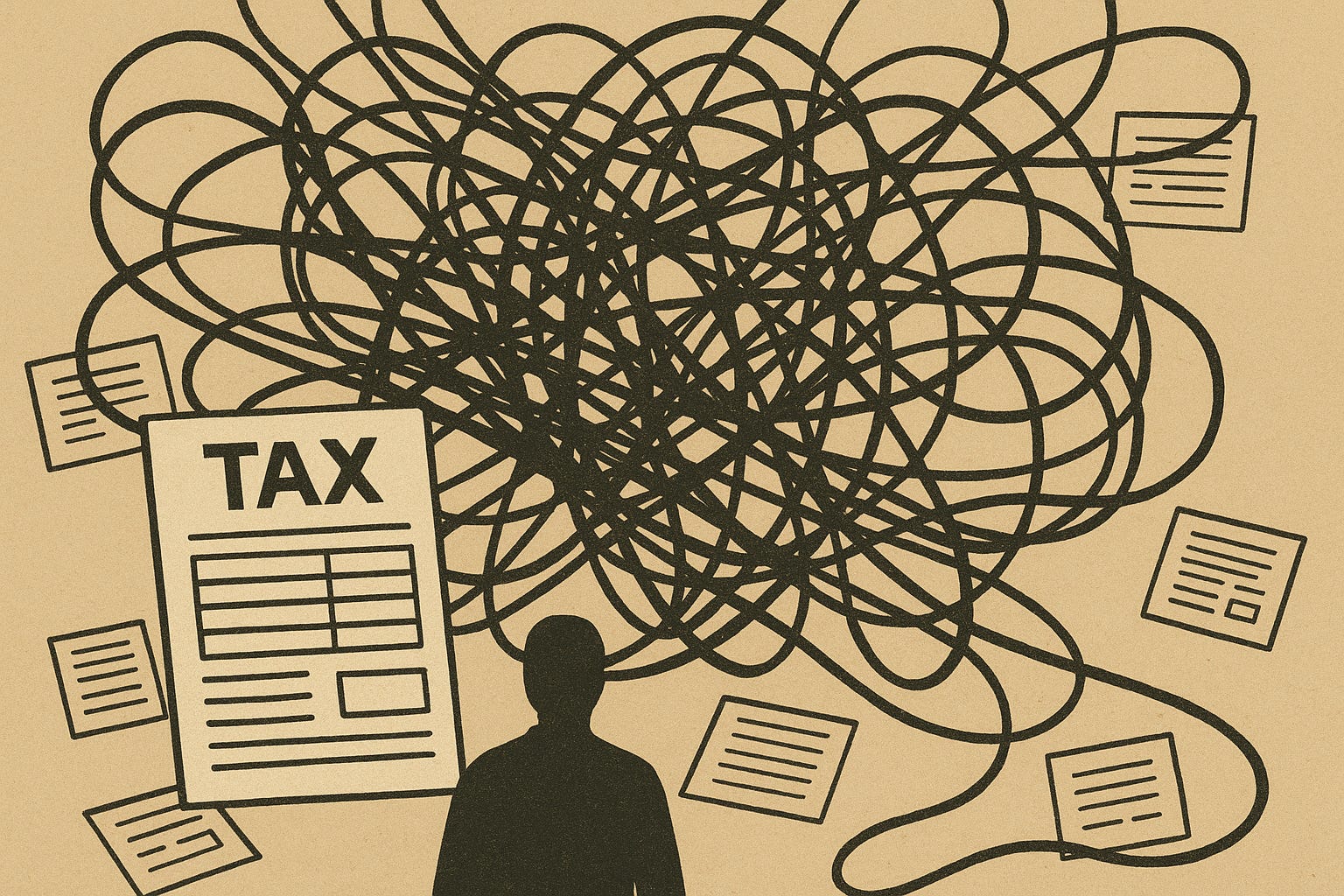
Until now, the IRS could — and often did — send notices telling taxpayers that their return had been changed, with little more than a vague list of possible reasons and a new amount owed. These so-called “math error notices” didn’t have to say what line was wrong, what the correction was, or how they calculated it. Taxpayers, often confused or intimidated, would give up, pay, or never respond, losing their right to dispute the change altogether.
The IRS MATH Act, formally titled the Internal Revenue Service Math and Taxpayer Help Act of 2025, requires that notices now include clear line-by-line details, itemized changes, contact information, and a plainly stated deadline to challenge the correction. The bill, co-sponsored by Senator Elizabeth Warren (D-MA) and Senator Bill Cassidy (R-LA), is a rare moment of bipartisan agreement in a fractured Congress.
It’s also a glaring reminder of how low the bar is.
Want to Know Your Rights?
Download a free digital copy of the U.S. Constitution—the same document Trump is trying to bulldoze. Learn exactly what he’s breaking… and how to fight back.
75,000+ strong — and counting.
This Black Friday & Cyber Monday, become a paid subscriber for just $1 a week and help us keep the truth alive.
Join The Coffman Chronicle — $1/Week Early Access
A Fix for a Symptom, Not the Disease
Let’s be honest. This bill is not tax reform. It’s not simplification. It’s not fairness. It’s a procedural patch, a band-aid on a gaping wound.
It says, essentially, that if the government thinks you made a math error on your taxes, it now has to tell you what the error is. That’s it. And it took a literal act of Congress to make it happen.
This is a system that demands ordinary Americans file complex government paperwork every year under threat of penalties, and until now, it didn’t even guarantee that the agency reviewing those filings would tell you what you supposedly did wrong.
That’s not transparency. That’s absurdity. And while the MATH Act brings a little more clarity to an opaque process, it doesn’t change the fact that the process itself is broken.
The Tax Filing System Was Designed Backward
Here’s what most people don’t realize. The IRS already has your numbers.
For the vast majority of Americans — around 80% — tax returns are simple. There may be one or two W-2s, a standard deduction, maybe a child tax credit, or a student loan interest deduction. These are not hedge fund-level filings. They’re glorified arithmetic.
The IRS receives your income information directly from your employer. It has your 1099s from the bank. It knows your Social Security number and your dependents. However, instead of just sending you a bill or a refund summary, as many countries do, it forces you to do the math yourself using its forms and instructions, or pay a third party to do it for you.
And if you get it wrong, even by a little, you might get one of those infamous math error notices, the ones the IRS didn’t previously explain.
Direct File Was the Beginning of a Solution
The U.S. government actually piloted a solution to this madness. In 2024, the IRS launched Direct File, a free, web-based platform that allowed eligible taxpayers in select states to file their federal tax returns online, simply, accurately, and at no cost.
It was popular, worked, and was what Americans had been asking for.
However, in 2025, under the revived Trump administration, the IRS announced it would not expand Direct File for the 2026 tax season. No official timeline for re-launch was offered. The program was killed quietly, drowned in industry pressure and ideological opposition.
The official reasons were cost, complexity, and service duplication.
The real reason is that it threatened the billion-dollar tax preparation industry.
Why the System Stays Broken
TurboTax, H&R Block, Liberty Tax, and others have spent decades lobbying against government-run tax filing systems. They’ve pressured lawmakers to block free filing options, signed deals with the IRS to restrict competition, and designed software that steers users toward paid options even when they qualify for free filing.
They profit when taxes are hard. They win when the system confuses you.
The other group that benefits from complexity is the wealthy. These are the people with investments, offshore accounts, trusts, and pass-through entities. They are also often the people who write the laws, fund the campaigns, and have the lawyers to exploit every loophole.
They fear an IRS with the time and tools to examine their complicated returns. They benefit when the IRS is buried under a backlog of W-2 audits and refund disputes.
What Biden’s IRS Plan Tried to Do
As part of the Inflation Reduction Act of 2022, President Biden secured $80 billion in long-term funding to modernize the IRS. The plan was simple: hire more agents, update outdated tech, improve customer service, and most importantly, shift enforcement away from low-income filers and toward wealthy tax cheats.
Estimates showed the funding would pay for itself many times over by closing the tax gap, the hundreds of billions lost each year to underreporting, loopholes, and evasion at the top.
It was logical. Update the software that originated in the 1960s. Fill vacancies to ensure the staffing matches need. Focus resources on the highest earners with the most complex tax returns, and thus the greatest impact on revenue when they are incorrect or fraudulent.
Predictably, the political backlash was swift. Republicans framed it as an “army of IRS agents” coming after the middle class. In reality, the new hires were mostly tech staff, customer service workers, and auditors trained to handle complex, high-dollar cases.
It was a move toward fairness, and it scared the hell out of the people who had the most to lose. As expected, it was gutted by the current administration. Direct file was ended, funding cuts slashed progress, and some programs have been terminated.
The Real Reform We Actually Need
If lawmakers actually wanted to fix the tax system, the solution is alarmingly simple.
First, let the 80% of Americans with simple tax returns skip the guesswork and the tax-preparer/software fees. The IRS could send them a pre-filled return or a simple refund/bill summary. There would be no forms, no software, and no stress. Instead, taxpayers would receive a notice saying, “Based on your earnings and taxes paid, this is the amount you owe. Click to confirm.”
Then, shift the IRS's focus where it matters: to the 20% of returns that are complex, high-value, and more likely to involve fraud, intentional or otherwise.
This isn’t radical. It’s what other countries already do.
The Education Gap Is Just as Rigged
While we’re at it, we should probably teach people how taxes work.
Most American students graduate high school without ever seeing a W-2, let alone learning how to fill out a 1040. Personal finance isn’t a national requirement, and math scores are declining nationwide. Yet every year, we expect people to do their own taxes with no training, and punish them if they get it wrong.
If you want to be certified to help others file their taxes, it takes coursework, exams, and, in many cases, years of training. Let that sink in. Our tax code is so convoluted, so bloated with loopholes, exceptions, and hidden traps that we’ve created an entire industry just to navigate it. Meanwhile, everyday Americans are expected to get it right once a year, on their own, or risk fines, delays, or audits. The complexity isn’t accidental. It’s a moat, a barrier that protects the wealthy and well-advised, while punishing those who don’t have the time, money, or training to navigate the maze.
Why It Doesn’t Change
The IRS MATH Act makes the IRS explain the math. However, it doesn’t change the fact that you’re still forced to do it yourself.
That’s the most telling part of all this.
The system is kept complicated on purpose, not because it needs to be, but because too many people benefit from your confusion. The tax prep industry profits. The ultra-wealthy dodge scrutiny. The politicians they fund write the rules.
So yes, it’s a small victory that the IRS now has to show its work. However, the real work — building a fair, simple, transparent tax system — is still being ignored.
Don’t let the bastards sneak anything past you. Subscribe and get your daily dose of rage and receipts delivered fresh, before the spin doctors can scrub it.
Sources:
“Warren and Cassidy Bill to Simplify IRS Tax Error Notifications Becomes Law” – QuiverQuant
“New law forces IRS to ‘show its math’ on error notices” – InvestmentNews
“A Win for Taxpayers: IRS Math and Taxpayer Help Act” – National Taxpayer Advocate
“IRS chief predicts agency performance will backslide if funds and staffing are cut” – GovExec
“IRS says taxpayer service will suffer if Congress cuts modernization funds” – Reuters
“IRS Direct File will not be available in 2026, agency tells states” – Federal News Network
“IRS Ends Direct File, Shifts Focus to Free File Upgrades and Private Sector” – The Tax Adviser
“Direct File Won’t Happen in 2026, IRS Tells States” – NextGov
THANK YOU for telling this.
This is what I have been feeling all along. I make less than $40,000 a year yet am so scared that I will fill out something incorrectly and be skewered, or miss out on a tax benefit which will truly help my meager bottom line, that I pay H&R block hundreds to fill out the forms, so grateful that the "professionals" are there to wend their convoluted way through this year' s tax changes for me when likely they don't even affect me. Ridiculous!! I despise those who cheat on their taxes either through lying or skating through complicated loopholes because they benefit from the services and programs and agencies that our taxes fund as much as I do, yet don't pay their fair share to keep them afloat. And if they paid more taxes, as they used to, it likely wouldn't even be noticed, whereas I notice every penny and it affects my daily life in every way. I am honored to pay taxes and support them because I realize our country and our neighbors are strengthened and stable and have a chance to thrive when taxes are used for the common good, as they are meant to do. But when a group (DOGE) which is charged with attending to fraud, waste and abuse instead, with no oversight, guardrails, or commonly agreed upon criteria destroys our country's foundational agencies which protect us and our environment and our education and our safety nets and our health care and our economy etc, I get very angry indeed.