


The shopping carts at Miller’s Market had developed what Ruth Miller called “an adventurous spirit.”
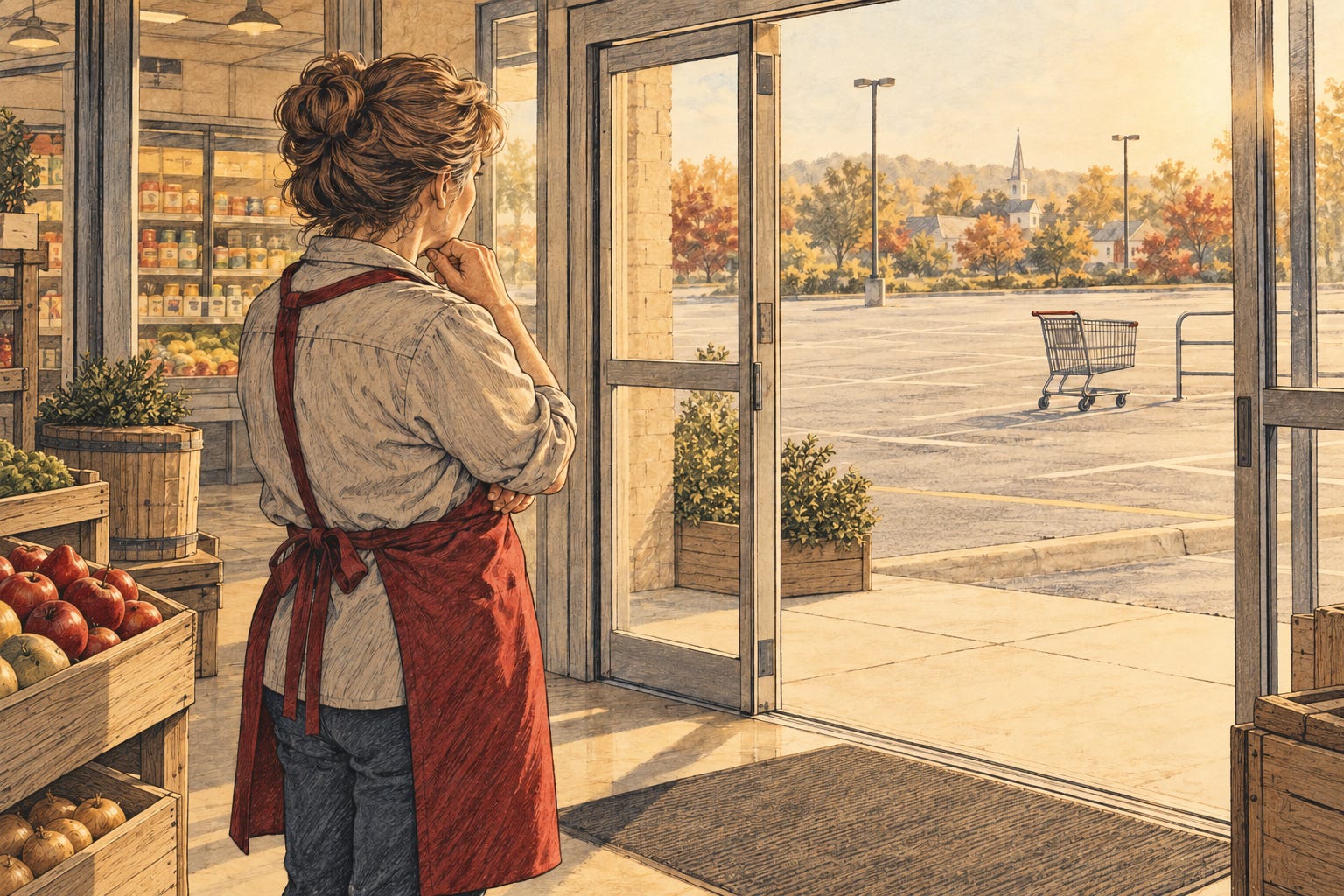
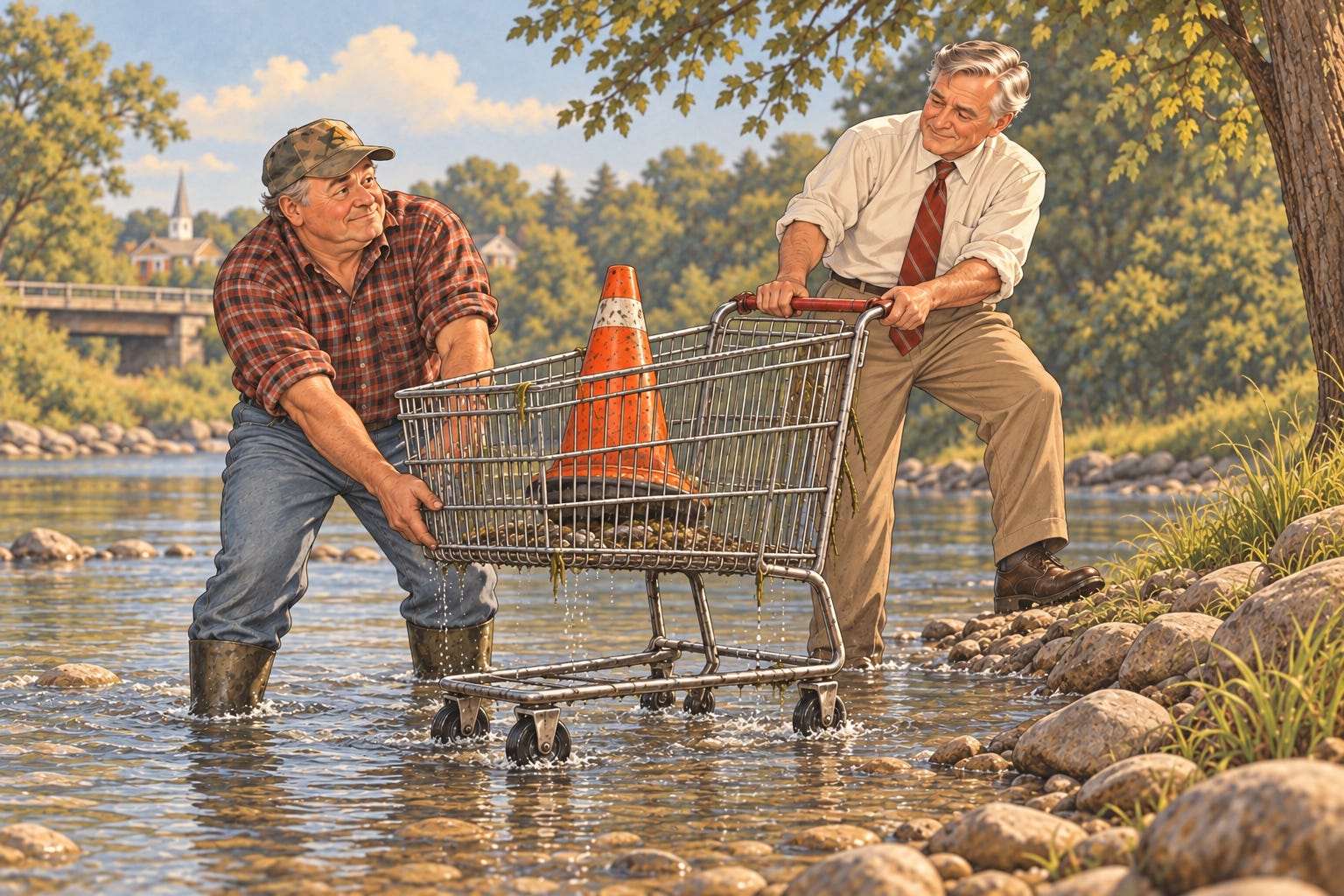
One was discovered at a bus stop three miles away. Another was pulled from Miller Creek wearing a traffic cone like a hat. A third spent most of June chained to the library’s bicycle rack, although nobody could explain what it had been reading.
Ruth had owned the market for twenty-three years, which meant she had spent roughly twenty-two of them asking people to return the carts.
Everyone agreed this was a serious community problem caused by other people.
Then, one Monday morning, a sign appeared outside the store. DUE TO CART LOSS AND DAMAGE, WE HAVE ONE WORKING CART LEFT. PLEASE SHARE.
Cart Number 17 stood beneath the sign like the last horse in a cavalry unit. Its left front wheel squeaked. Its handle leaned slightly to the right. A long piece of string was tied around one corner for reasons nobody remembered. Still, it rolled, which made it the most valuable vehicle in town that did not require insurance.
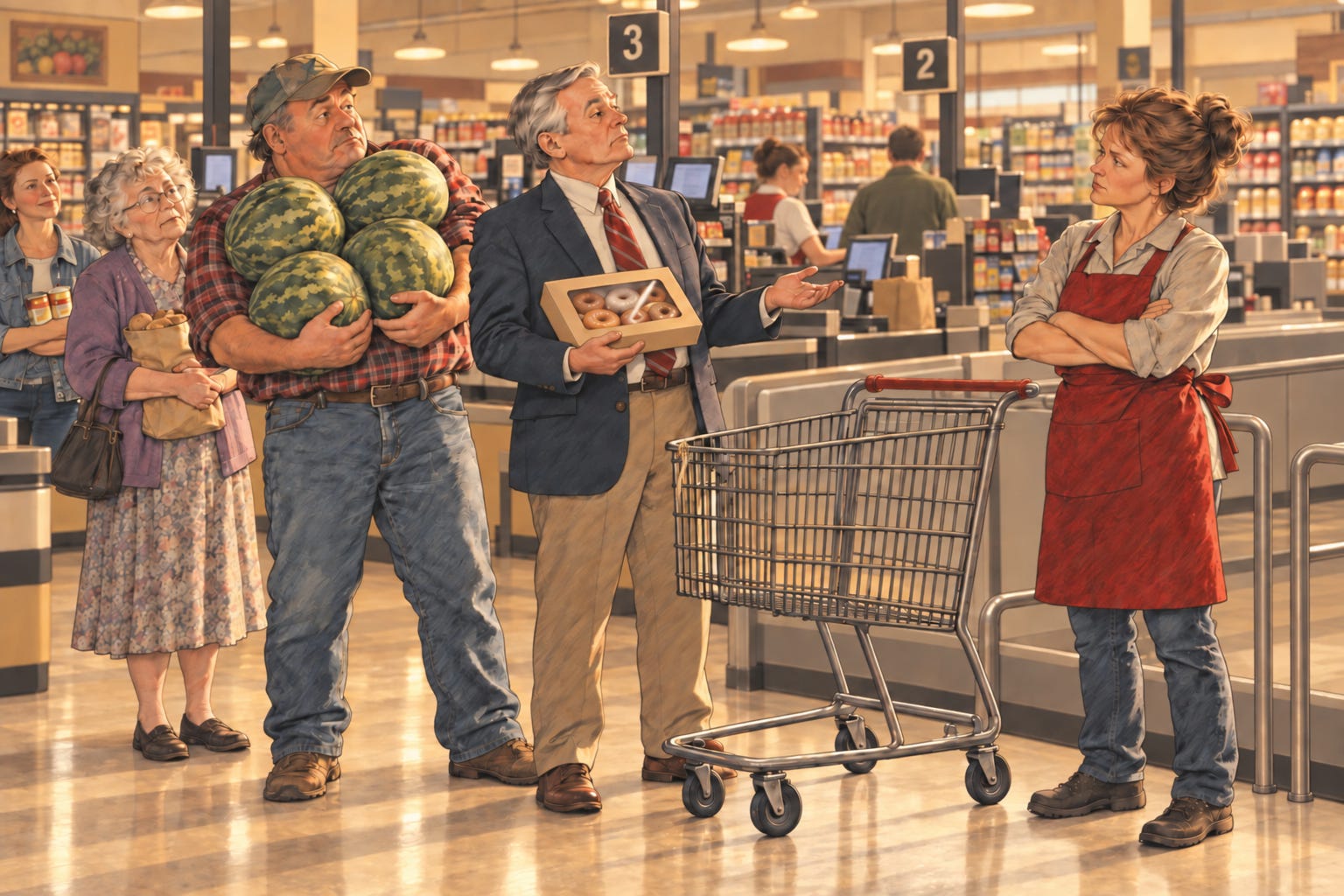
By nine o’clock, people were waiting for it. Mrs. Dobbins needed canned goods and a sack of potatoes. Earl Jenkins claimed priority because he was buying four watermelons and had “a medically delicate back.”
“You carried a television into your house by yourself last week,” Ruth said.
“That was recreational lifting.”
The mayor arrived at ten and suggested assigning cart privileges according to odd- and even-numbered addresses. “That worked during gasoline shortages,” he said.
“You’re buying one box of doughnuts,” Ruth replied.
“Government must plan ahead.”
“At least plan past breakfast.”
This Community Is Powered by You
What started as a small circle has grown into something much bigger, and it’s all because of readers like you.
Every time you forward this email, post it on socials, or bring someone new into the fold, you’re helping build one of the most passionate, independent communities out there.
Want to keep the momentum going?
Share this newsletter with someone who should be part of this conversation.
Thank you for being here. It means everything.
When the last cart disappeared
At eleven o’clock, Number 17 disappeared. The waiting customers reacted as though someone had stolen the Liberty Bell.
Ruth checked the parking lot. Earl searched behind the bakery. The mayor formed a committee, although nobody had asked him to.
Finally, a teenager named Caleb noticed muddy wheel tracks crossing Oak Street. The tracks ended at a small apartment building two blocks away.
There they found Mrs. Dobbins unloading groceries from Number 17.
Earl threw up his hands. “You took the last cart?”
Mrs. Dobbins pointed toward an upstairs window. “Mr. Palmer broke his ankle. He lives alone. He hasn’t been able to get to the store, so I brought his groceries home.” That quieted everyone for nearly four seconds.
Then Number 17’s front wheel fell off. The cart tipped sideways. Two cans of tomato soup rolled into a flower bed. A bag of onions split open and scattered across the sidewalk like tiny witnesses fleeing a crime scene.
Ruth picked up the wheel and looked at the bent axle. Nobody spoke.
“It didn’t break because Mrs. Dobbins borrowed it,” she said.
Earl looked at the pavement. “It broke because it was old?”
“That too.”
Ruth turned the wheel in her hands. “It broke because I kept repairing carts just enough to get another month out of them. It broke because people slammed them into curbs, left them in the rain, and abandoned them wherever they stopped being useful.” She looked at the group. “So no, this is not one person’s fault.”
The mayor nodded solemnly. “A failure of collective systems.”
Ruth stared at him. “You left one behind the post office last Thursday.”
The mayor stopped nodding. Ruth set the broken wheel on the sidewalk. “I own the carts. That means keeping them safe and usable is my responsibility, but once I put them out here for everyone to use, you have a responsibility too. Ownership does not erase stewardship. Neither does borrowing.”
Mrs. Dobbins folded her arms. “So what do we do?”
“For starters,” Ruth said, “we stop pretending responsibility belongs to whoever is not standing here.”
Everyone had a job
The next morning, something unusual happened. People began bringing carts back.
Children pulled one from beside the baseball field. The librarian returned the cart that had spent June at the bicycle rack. “It never checked anything out,” she said.
Earl and the mayor retrieved two from Miller Creek, including the one still wearing the traffic cone.
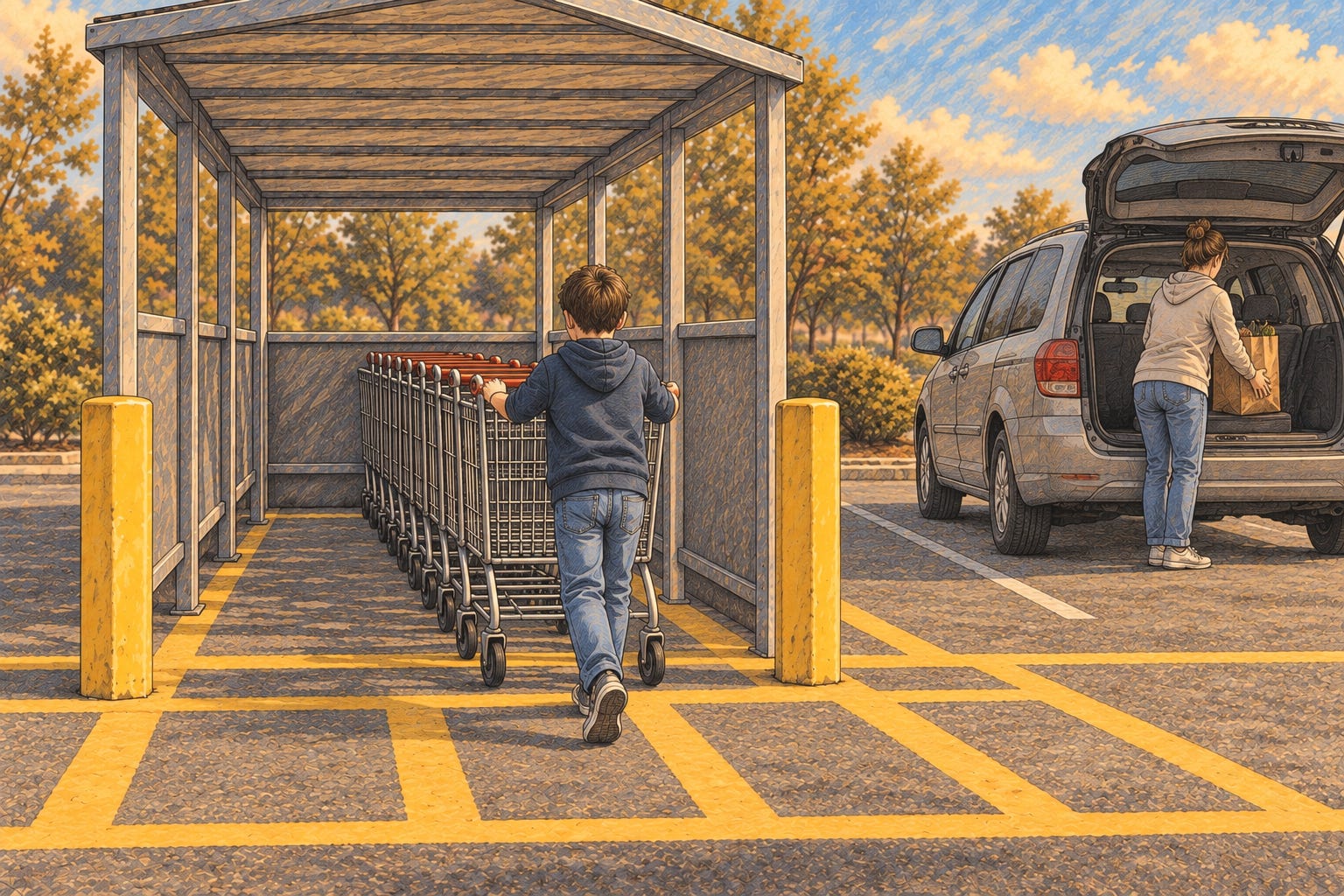
Mr. Alvarez from the repair shop volunteered an afternoon to straighten axles and replace wheels. Mrs. Dobbins scrubbed baskets. Caleb and two friends painted a bright yellow cart-return area in the parking lot.
Ruth did her part too. She stopped treating repairs as something to postpone until a wheel actually escaped. She created a maintenance schedule, installed two covered cart returns and ordered ten new carts.
By Saturday, Miller’s Market had seventeen working carts.
What came back
When the new ones arrived, Ruth put a small sign on every handle: MILLER’S OWNS THIS CART. THE COMMUNITY USES IT. BOTH HAVE A JOB.
At first, people laughed. Then they started acting differently.
Customers returned carts in the rain. They stopped loose ones before they struck parked cars. Parents made children take them back instead of leaving them beside the family minivan.
Earl once chased a runaway cart halfway across the lot while shouting, “Not on my watch!”
The mayor proposed a municipal Cart Protection Task Force. Ruth declined. “We seem to have this one covered.”
A month later, she found Number 17 sitting neatly in the return area. Its wheel no longer squeaked. Its handle had been straightened. Someone had removed the mysterious string. A handwritten sign hung from the front. THIS CART BELONGS TO EVERYONE.
Ruth smiled, took out a marker, and added one line beneath it. NOT EXACTLY. THE RESPONSIBILITY DOES.
That afternoon, someone added a third line. AND PLEASE STOP LEAVING IT AT THE LIBRARY. IT CANNOT READ. Nobody ever discovered who wrote that part.
The point was not that everything should belong to everyone. It was that anything used in common creates obligations larger than convenience.
The owner had a duty to maintain what she provided. The customer had a duty to return what he borrowed. The neighbor had a duty to help when someone could not manage alone.
Nobody had to surrender ownership. Nobody had to wait for a hero. They simply had to stop treating responsibility as somebody else’s property.
That was how Miller’s Market got its carts back, and, for a little while at least, how the town remembered what stewardship meant.
Where’s the strangest place you’ve ever seen an abandoned shopping cart?
Your story is wonderful and sparks many thoughts in my mind. It seems to me that people, especially Americans, seem to conflate ownership and responsibility. For example, we as a collective must be responsible for one another yet we do not own other people. Responsibility to a collective is why we value our National Parks. No one individual owns our National Parks yet we collectively pay for their maintenance through out tax system. Each one of has a little responsibility for our National Parks like not littering, helping out by picking up litter we see hanging around, making fires only in designated places and watching our fires carefully, not bringing firearms, etc. In this way we share responsibility with one another for the benefit of visiting our National Parks. No doubt there are many other examples. In our society we have a collective responsibility to protect children from Social Media abuses. We have a collective responsibility to ensure AI systems are not misused. Indeed, acting as a collective we work as a unit. America slowly slipped into the trap of “individualism” over the decades since WW II. This has been intensified by the words and actions of the current Trump administration. Along with individualism comes selfishness for the collective “we” gets pushed aside. Following selfishness comes ownership and greed. After that comes policies and laws reinforcing selfish individualism, and mechanisms to enforce that which usually amounts to force and coercion. This is what happens when everyone is in it for themselves, or their family, or their tribe. The idea of working together for a collective good is disintegrating before our very eyes. We must wake up to the fact that some of us may be deluded regarding some of these inevitable facts of life in America. Thank you for your time.