


There’s something sacred about a library.
Maybe it’s the quiet, the shelves loaded with the whispers of adventure, the soft whiff of paper and promise, and the unspoken invitation to linger. The feeling of possibility when you step inside is almost palpable, like knowledge is not just for someone else, but for you. Perhaps it’s the memory of the first book that changed you or the first librarian who helped you without judgment, the first space that didn’t expect anything in return. (Except the books. You must return those.)
For many of us, the public library was one of the first places that made us feel seen. And as the world becomes more chaotic, divided, and expensive, it remains one of the only places that still does.
That’s worth celebrating. But it’s also worth defending.
Second Responders: Long Before the Crisis
During the pandemic, public libraries' vital role became undeniable. But in truth, they had been stepping up long before lockdowns began.
For years—decades—libraries have quietly served as:
Warming and cooling centers during extreme weather
Polling places and voter registration hubs
Emergency shelters in times of local crisis
Food distribution points in underserved neighborhoods
The pandemic didn’t create these roles; it simply made them visible to those who hadn’t noticed.
Even when buildings were closed early in the lockdowns, libraries pivoted fast. Curbside service emerged. Virtual storytimes bloomed. Parking lots filled with families using library Wi-Fi to attend class or work from their cars. Librarians became essential tech support, educators, and emergency communicators, sometimes all in the same day.
This wasn’t new. It was just seen.
And that visibility reminded communities of a more profound truth: the library has always shown up.
Doing More with Less, Everywhere
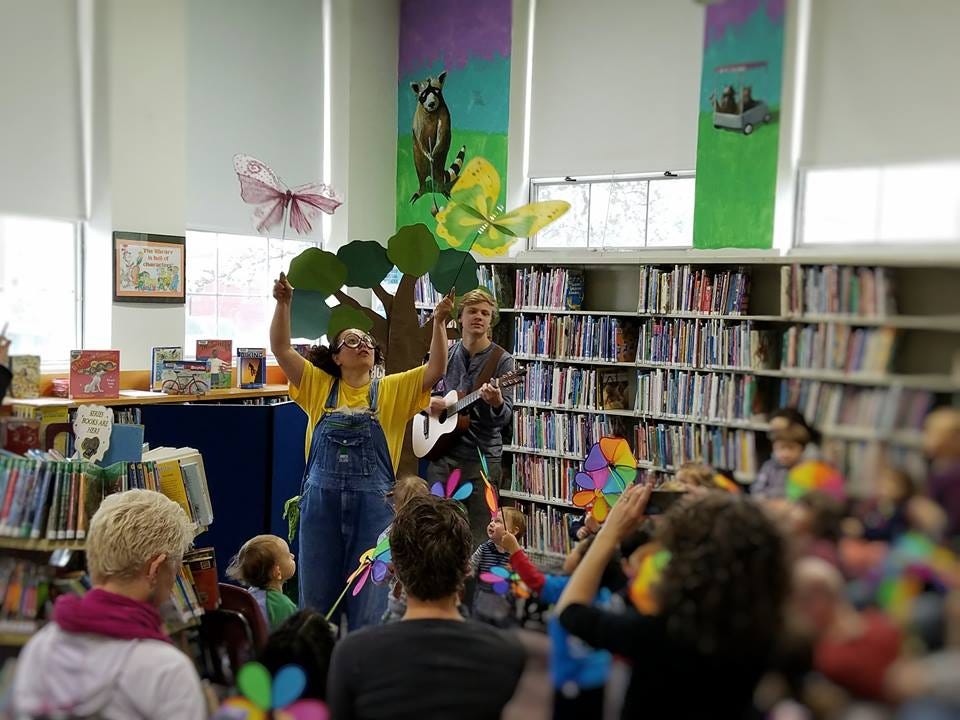
Libraries are notorious for picking up the slack, seeing a need and finding a way to fill it. Has your local school lost its art or music program? There’s a good chance the local library has stepped in with a club or workshop to fill the gap. Need a space to host your scouting group? Guess who has a community space.
Despite these expanded roles, public libraries across the U.S. are being asked to do more with shrinking support.
86% of library funding now comes from local governments, which means economic or political shifts at the city or county level can make or break a branch.
State support has dropped dramatically, from 12% of public library funding in 1995 to under 7% today.
Federal funding via the Institute of Museum and Library Services (IMLS) is now in jeopardy. Recent executive actions have placed its entire staff on leave, leaving the future of federal grants in doubt.
In Pennsylvania, most non-municipal libraries are required to fundraise up to 80% of their operating costs. In Ohio, a state with a historically strong library network, political clashes have raised alarm about sustainable support. These challenges aren’t limited to any one region or political party; they are national, structural, and accelerating.
https://www.somervillepubliclibrary.org/programs-events
The Bridge Where Other Systems Break
In his book Palaces for the People, sociologist Eric Klinenberg describes public libraries as part of our essential social infrastructure, as vital to a functioning democracy as roads or bridges. Libraries, he argues, aren’t just repositories of books; they’re places where people forge connections, strengthen community bonds, and build resilience that helps us survive not just daily life but disasters.
"There's a term you don't hear these days, one you used to hear all the time when the Carnegie branches opened: Palaces for the People. The library really is a palace. It bestows nobility on people who can't otherwise afford a shred of it. People need to have nobility and dignity in their lives." - Eric Klinenberg
We’ve seen that firsthand. With government cuts targeting education, food security, and housing, especially under the Department of Government Efficiency (DOGE), libraries are stopgaps for entire agencies that once supported vulnerable populations.
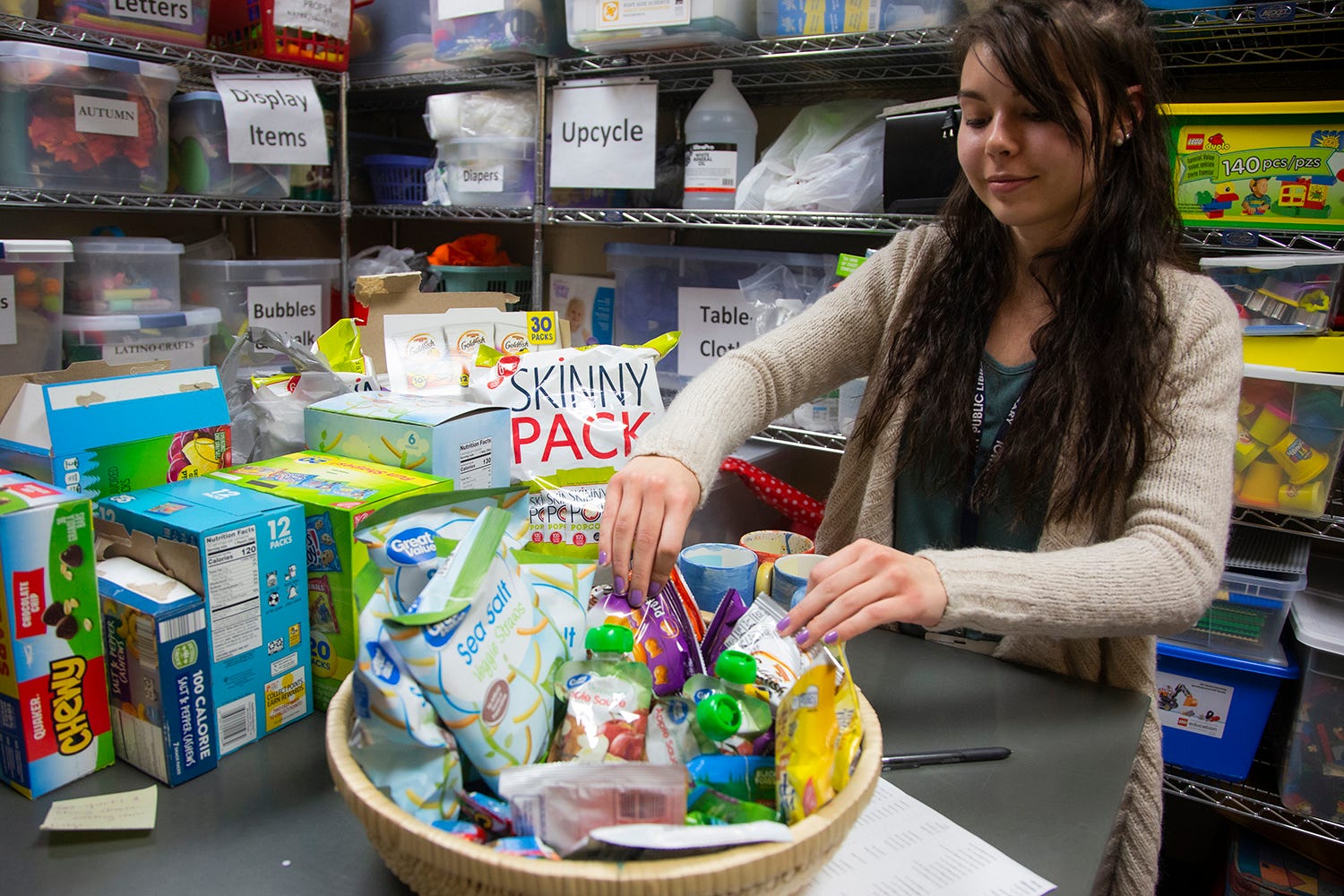
With Meals on Wheels and food bank programs slashed, libraries have become food distribution sites, if they weren’t already.
With the Department of Education gutted, libraries continue to offer resources for homeschoolers and families navigating underfunded schools.
With local agencies overwhelmed, libraries connect residents to services they might otherwise never find.
Klinenberg’s work reminds us that these roles aren’t accidental or secondary. They are foundational. Libraries offer what he calls “palaces for the people”—spaces where we are not customers, but citizens. That makes them not just important but irreplaceable.
Iowa City Public Library snack program
In a World In Turmoil, Why Talk About Libraries Now?
It would be easy to dismiss National Library Week at a time like this. The world is a dumpster fire, and near-global tariffs threaten to make everyday necessities impossible. Federal employees are being laid off left and right, and vital services are being gutted. Who can think about books now?!?
Here’s why. Libraries are not now, nor have they ever been, about books. At their core, libraries are about information. When a professional librarian gets their degree, it is a Master’s in Library and Information Science (MLIS). Just think of those nifty cardigans as lab coats. Their job is to connect the user not just with the latest bodice ripper, but also to the manual to fix their tiller.
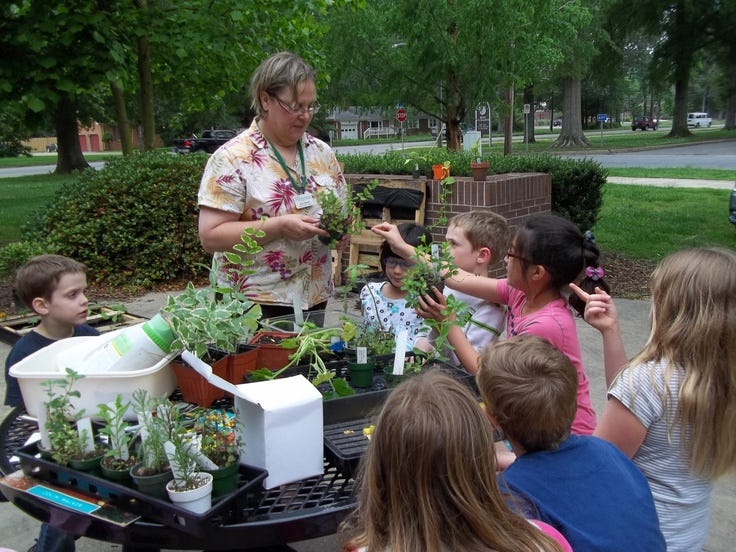
Many libraries are home to community gardens and seed exchanges. In rural areas, they commonly host farm extension programs teaching everything from canning to beekeeping, diabetic cooking to business skills. Especially in metropolitan areas, many employ dedicated social workers. Nearly all public libraries offer assistance with resumes, job searches, and entrepreneurship. They often partner with local health agencies to provide CPR training, screenings, and more.
When the world descends into a dystopian nightmare, we are heading to the library. There’s no better place to organize mutual support efforts, learn valuable survival skills, and, yes, maybe pick up some smut to make the world a bit less bleak. (Don’t judge us.)
Because as we learned during Trump1.0, the forest rangers and librarians will be the leaders of the resistance, protecting the land, the truth, and the future.
Chesapeake Central Libraries
This National Library Week: Show Up, Speak Out
We owe our libraries more than gratitude. We owe them action.
Here’s what you can do:
Attend a local event this week, even if it’s just storytime or a community lecture.
Donate to your local library or Friends of the Library group, or volunteer if possible.
Talk to your state reps about stable, sustainable funding for library systems.
Support organizations such as EveryLibrary, the American Library Association, the Association for Rural & Small Libraries, and others.
Speak up at board meetings and in local forums when censorship, defunding, or privatization is on the table.
Use your library. And tell others why you do.
In uncertain times, the library remains one of the few places that still believes in us. It believes we deserve knowledge, community, and dignity, and it offers those things without checking your bank account, your politics, or your past.
It just opens the door.
Final Thought:
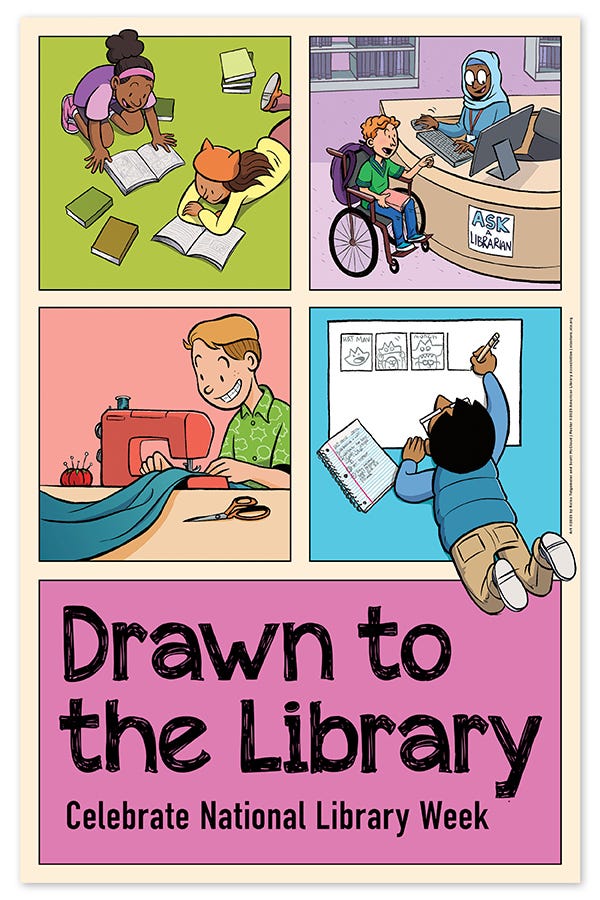
This year’s National Library Week theme is “Drawn to the Library.”
And we are.
Drawn to warmth in a cold world.
Drawn to community in a fragmented society.
Drawn to knowledge, imagination, and possibility.
The library doesn’t just reflect the color of our world; it helps us make it brighter together.
It’s no secret that we love libraries. We’ve written about them many times before. Perhaps you’d enjoy these articles as well:


We just hit 10,000 subscribers—thank you! We’re offering full access to The Coffman Chronicle for just $1 a week ($52/year) to celebrate.
Get exclusive analysis and fearless reporting you won’t find in corporate media.
Bibliography
American Academy of Arts & Sciences. “Public Library Revenue, Expenditures, and Funding Sources.” Humanities Indicators, 2021.
Institute of Museum and Library Services. “Annual Performance Report FY 2023.” IMLS.gov, 2024.
https://www.imls.gov/reports/annual-performance-report-fy-2023Jones, Timothy. “Entire Staff of IMLS Placed on Leave Amid Restructuring.” WIRED, March 31, 2025.
U.S. Public Library Services Survey. “Key Findings Report 2023.” American Library Association (ALA), 2023.
Monks, Kelsey. “Libraries Are Safe Spaces During the Summer Heat.” EveryLibrary, July 15, 2023.
Jones, Amanda. “The Rise of Social Workers in Public Libraries.” Public Library Quarterly, vol. 44, no. 1, 2025.
Taylor, Hannah. “USDA Cuts Over $1 Billion in Funding to Local Food Programs.” Yahoo News, March 15, 2025.
Superville, Darlene. “Trump’s Plan to Dismantle Department of Education Moves Ahead.” Associated Press (AP), March 21, 2025.
Klinenberg, Eric. Palaces for the People: How Social Infrastructure Can Help Fight Inequality, Polarization, and the Decline of Civic Life. Crown Publishing Group, 2018.