


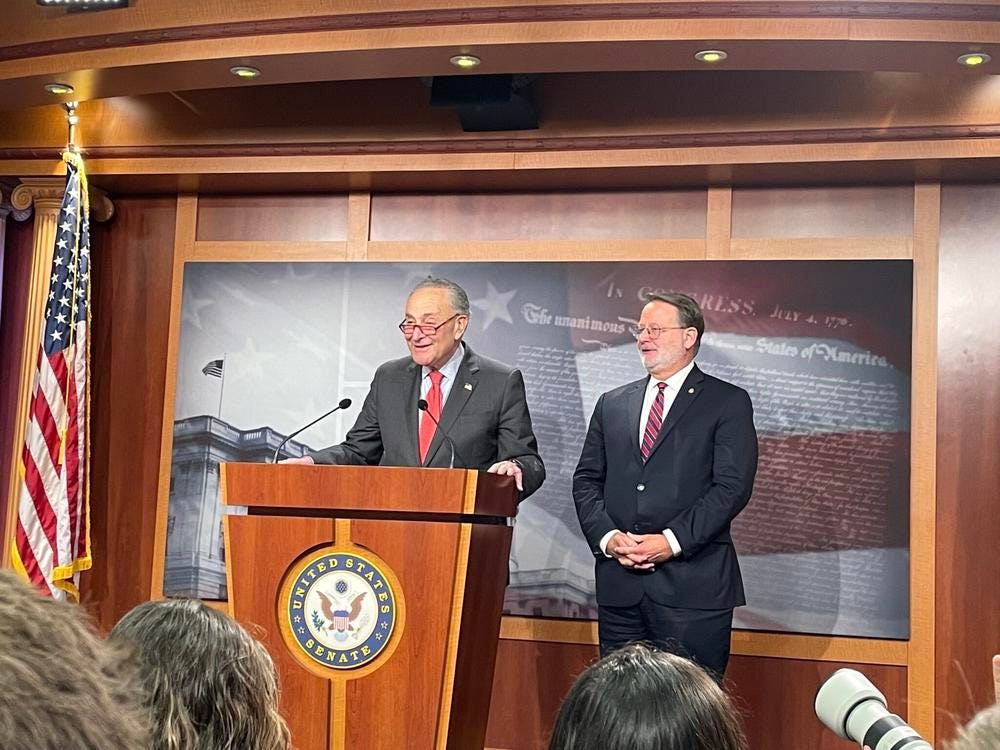
On July 31, 2025, Senator Chuck Schumer shocked Washington by using a nearly forgotten congressional oversight tool to put Donald Trump in a legal and political bind: release the Epstein files by August 15, or face court.
The move hinges on an obscure statute from 1928, 5 U.S.C. § 2954, nicknamed the Rule of Five. The law empowers any five members of the Senate Homeland Security and Governmental Affairs Committee to demand documents from executive branch agencies. Once invoked, the Department of Justice and the FBI are legally required to comply or issue a formal refusal that can be challenged in court.
Schumer, joined by Senators Peters, Blumenthal, Padilla, and Ossoff, filed the demand for the complete unredacted Jeffrey Epstein investigative files, including any records tying Epstein to prominent figures. It’s the first time in modern Senate history that the Rule of Five has been used against a sitting president on an issue this politically explosive.
With this single move, Schumer bypassed Republican leadership, Trump‑loyal committee chairs, and the usual slow grind of subpoenas. It’s a direct shot across the bow of the Trump White House, signaling that minority‑party oversight power still has teeth, and that the fight over Epstein’s secrets isn’t going away.
For Schumer, this wasn’t just a parliamentary stunt. It was a calculated strike using one of Congress’s oldest, sharpest, and most forgotten tools. While the demand for Epstein’s files grabbed headlines, the real story is the legal lever behind it: a century‑old oversight rule designed for moments exactly like this, when the executive branch would rather hide than answer.
Want to Know Your Rights?
Download a free digital copy of the U.S. Constitution—the same document Trump is trying to bulldoze. Learn exactly what he's breaking… and how to fight back.
📬 Stay Informed. Stay Loud.
Subscribe to The Coffman Chronicle for no-BS political analysis, action guides, and weekly truth bombs you won’t get from corporate media.
A Rule Seldom Used
The Rule of Five is so rarely invoked that most Americans and many members of Congress barely know it exists. Created in 1928, it was designed to give minority members of key oversight committees a way to pry loose executive branch records without needing a chairman’s blessing or a party-line vote.
Its last high-profile use came in 2016 and early 2017, when then‑Representative Elijah Cummings and a handful of Democrats demanded unredacted GSA lease documents for Trump’s Old Post Office property in Washington, D.C. At the time, the concern was whether Trump’s company violated its federal lease once he became president. Under the House version—the “Seven Member Rule”—the GSA eventually complied, setting a precedent that agencies can’t just ignore these demands without legal risk.
Until this week, the Senate’s version had never been aimed at a sitting president over a matter as explosive as the Epstein files. By invoking it now, Schumer is not just dusting off an antique law; he’s testing whether Trump’s Justice Department will respect a binding congressional oversight demand that bypasses the usual partisan gridlock.
For Trump, the calculation is clear: comply and risk revealing damaging information, or stonewall and trigger a legal showdown.
We’ve reported on the ongoing Epstein files situation for months. See some of that here:


Trump’s Likely Response and Risks
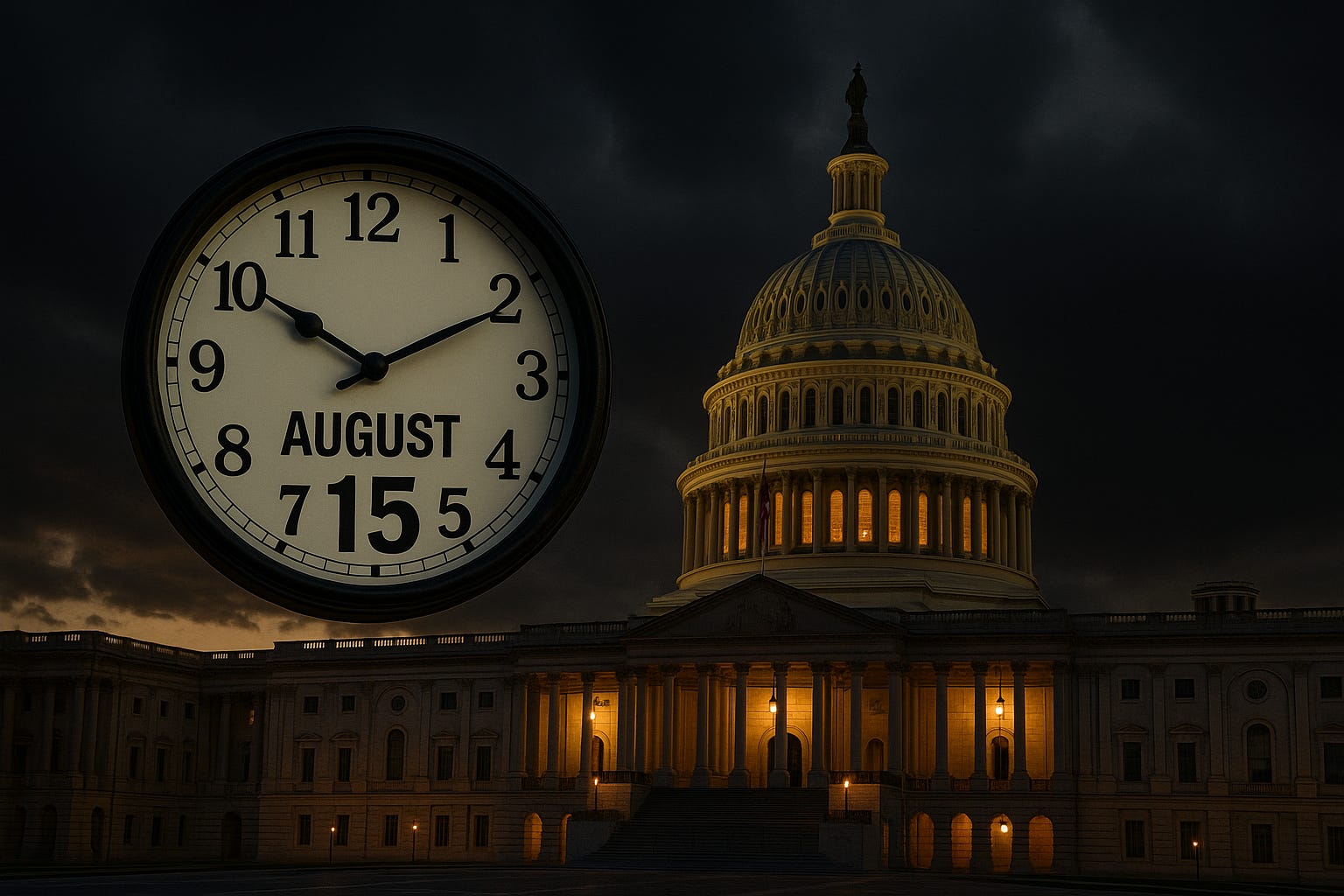
With the August 15 deadline looming, Donald Trump’s playbook is predictable. His presidency has been defined by stonewalling Congress, dragging oversight fights into court, and framing any demand for transparency as a “witch hunt.”
Despite campaign promises to release the Epstein files, Trump’s Justice Department has already backpedaled. In July, Attorney General Pam Bondi and acting FBI Director Kash Patel signaled that the files either don’t exist in the form the public expects or are too sensitive to release, a sharp contrast to Trump’s 2024 stump speeches, where he claimed the files were “ready to go.”
If Trump refuses outright or delivers only heavily redacted documents, the law gives Schumer and his allies a clear path to court. A federal judge in D.C. could order the release—or at least demand the files for in‑camera review—putting the Trump administration in a precarious position.
Politically, the risks are just as serious. Every day of defiance feeds the narrative of a cover‑up, reminding the public that Trump’s inner circle has every incentive to bury any names or evidence tying powerful allies to Epstein. Even a partial loss in court could be devastating, as the mere existence of redacted pages will spark questions the White House may not want to answer.
What Happens If Trump Refuses
If August 15 comes and goes without full compliance, the fight over the Epstein files will shift from Capitol Hill to the federal courts.
Under 5 U.S.C. § 2954, the Rule of Five isn’t a suggestion; it’s a binding oversight demand. If DOJ or the FBI refuses, Schumer and the other four senators gain automatic legal standing to sue in the D.C. District Court. Their lawsuit would likely seek:
Immediate preservation of all Epstein-related records to prevent destruction or alteration.
A court order compelling production, possibly under seal at first for sensitive material.
If the court sides with Congress, as it often does in clear statutory oversight cases, Trump could face a binding disclosure order. A continued refusal would escalate to contempt of court and potentially civil enforcement actions against agency heads.
Legally, Trump can delay with appeals and privilege claims, but outright defiance carries heavy political costs. The longer he stonewalls, the more he fuels public suspicion that the administration is shielding allies or suppressing damaging evidence. And every filing, motion, and appeal keeps the story alive in the headlines, inviting bipartisan pressure and amplifying the sense of a cover‑up.
In short, Trump can delay, but he probably cannot escape. The Rule of Five creates a paper trail and a court‑enforceable demand that even the most combative president struggles to ignore.
Whether Trump fights in court or blinks at the last minute, the clock is ticking. Every day after August 15 that the Epstein files remain hidden deepens the political and legal stakes. What began as a little‑noticed maneuver using an obscure 1928 law is now a full‑blown test of executive accountability, and the outcome will signal whether any president can bury records that Congress is legally entitled to see.
The Bigger Picture
This fight isn’t just about Epstein. It’s about whether Congress can still force the truth into the light when the executive branch would rather lock it away. The Rule of Five is rarely invoked because most oversight fights rely on negotiation, subpoenas, and political pressure. By reaching for this century‑old statute, Schumer is putting the very mechanics of checks and balances to the test.
If the Trump administration succeeds in stonewalling a lawful demand, it risks creating a blueprint for future presidents to ignore oversight entirely. That would weaken the legislative branch, shield corruption, and leave the public blind to the conduct of the powerful.
But if the Rule of Five works as intended—forcing at least partial disclosure—it could reaffirm Congress’s role as a watchdog, showing that even in an era of hyper‑partisan gridlock, the law still has sharp edges for those willing to use it.
A Call to Action
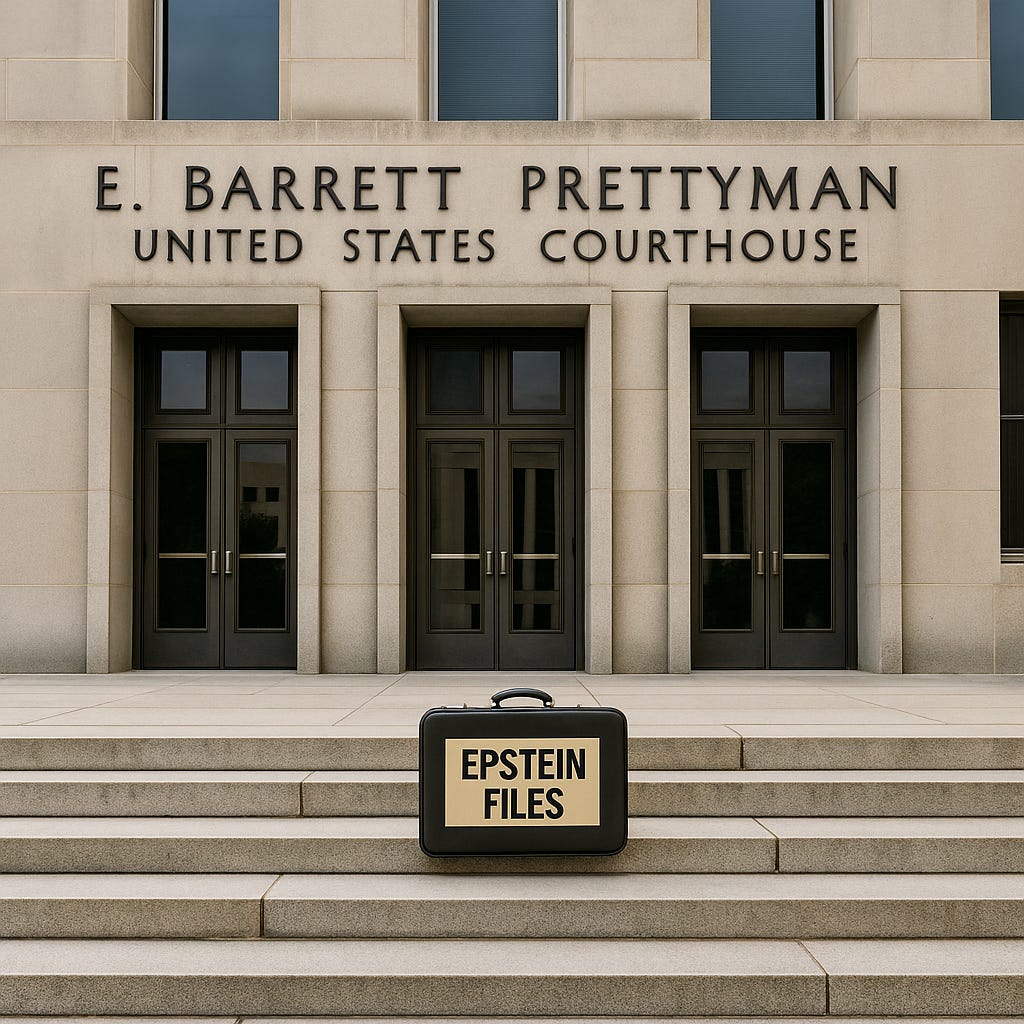
With the August 15 deadline approaching fast, the next two weeks are critical. The Trump administration will either release the Epstein files or gamble that the courts and public will tolerate another cover‑up. Congress has fired its legal shot. Now, public pressure matters.
Here’s what readers can do right now:
Contact your senators and representatives.
Demand they publicly support the Rule of Five request and commit to enforcement if Trump defies the August 15 deadline.U.S. Capitol Switchboard: (202) 224‑3121
Follow the deadlines and speak up.
Mark August 15 on your calendar. If the files aren’t released, post, write, and call. Lawmakers respond when constituents notice a missed deadline.Push for transparency beyond Epstein.
The same legal mechanism that can force these files open can also ensure no president hides records to protect friends or punish enemies.
History shows that sunlight only wins when people demand it. Every call, post, and headline keeps pressure on the administration and ensures that this fight isn’t buried like so many secrets before it.
Stay Informed. Stay Loud.
Subscribe to The Coffman Chronicle for no-BS political analysis, action guides, and daily truth bombs you won’t get from corporate media.
Bibliography:
“Democrats Invoke Rare Federal Law to Force Release of Epstein Files.” Axios, July 30, 2025.
“Senate Democrats Seek to Force Release of Jeffrey Epstein Files with Rarely Used ‘Rule of Five’ Law.” CBS News, July 30, 2025.
“Senate Democrats Try to Force DOJ to Release Epstein Files Using Little‑Known Law.” ABC News, July 30, 2025.
“Political Brawl over Epstein Files Sends US House into Early Summer Recess.” Reuters, July 22, 2025.
“Trump Pushes for Release of Epstein, Maxwell Grand Jury Testimony.” Reuters, July 30, 2025.
“Epstein Associate Maxwell Seeks Immunity as Condition for Testimony to US Congress.” Reuters, July 29, 2025.
Excellent move by Schumer. But as we have seen with Bondi at the helm of the DOJ she's going to run cover for the Cheeto-Pedo.
Thanks for writing this.
Had you see this reporting on Schumer's 'negotiations' with the Republicans?
I'm trying to be optimistic here that these Senators will be able to do... anything.
https://punchbowl.news/article/senate/thune-schumer-wh-struggle/