


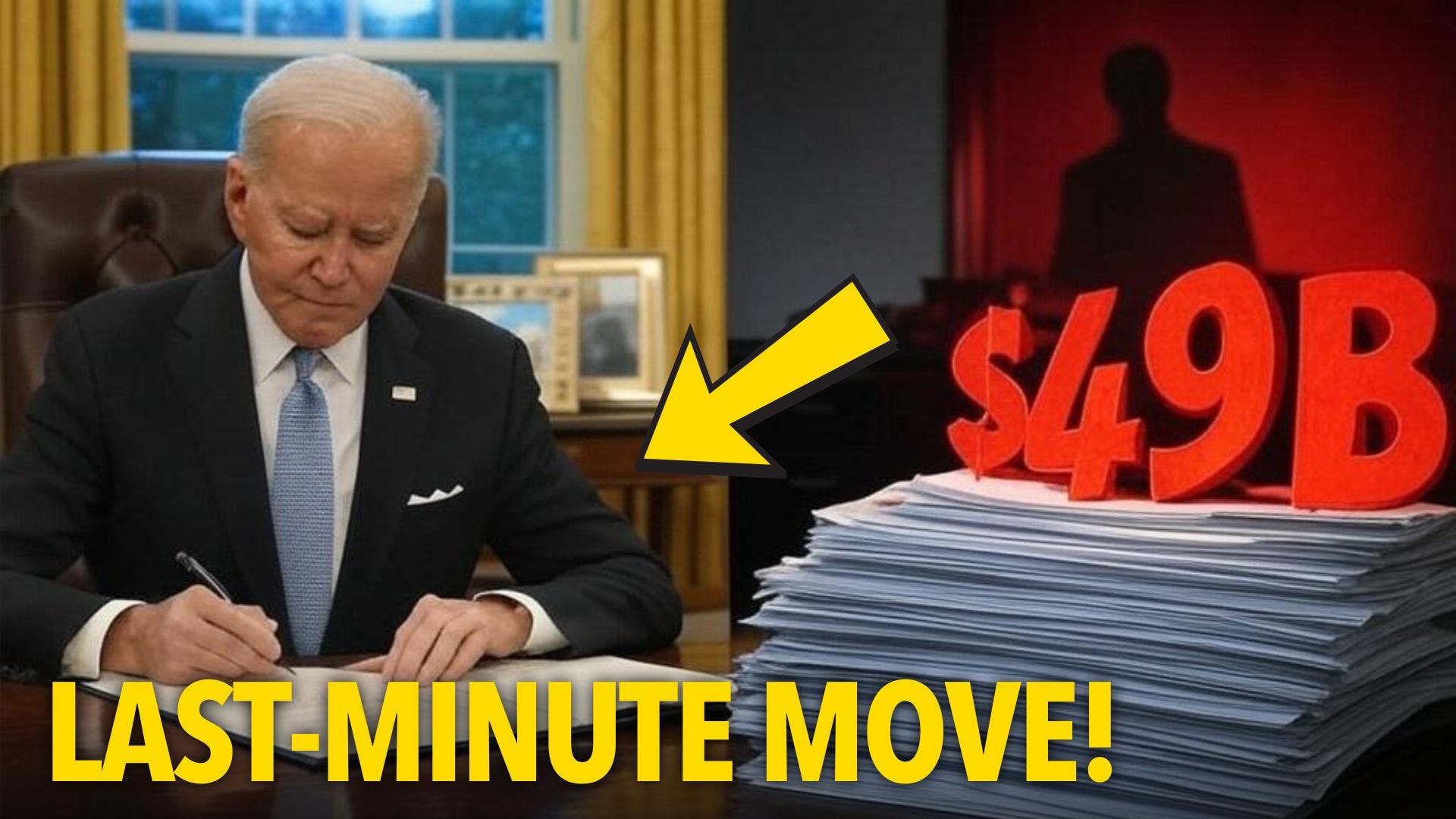
In a bold move just ten days before leaving the White House, the Biden Administration has announced a ruling that will significantly reshape the financial landscape for millions of Americans: unpaid medical debt will no longer be reported on credit reports. This decision, touted as a lifeline for those grappling with exorbitant medical expenses, presents over 15 million citizens with the possibility of erasing nearly $49 billion from their credit histories, thereby improving their access to mortgages, car loans, and business financing.
However, while we celebrate this progressive step, we must also acknowledge the storm clouds on the horizon. Critics warn that the incoming Trump Administration may contest this ruling and other reforms designed to mitigate healthcare costs and ease household financial burdens. The presence of potential political pushback raises serious questions about the long-term sustainability of these measures and whether they will endure.
Medical debt has become an overwhelming reality for millions of Americans. In the United States, healthcare expenditures represent a disproportionate share of overall spending. The Organization for Economic Cooperation and Development (OECD) reports that the U.S. spends nearly $4 trillion annually on healthcare, averaging approximately $12,500 per person—almost double that of other developed nations like Germany and France. Notably, despite these staggering costs, the U.S. ranks lower in health outcomes; for example, the average life expectancy in the U.S. is around 78 years, significantly shorter than that of Japan and Switzerland, which boast life expectancies over 83 and 82 years, respectively.
Furthermore, maternal mortality rates in the U.S. are alarmingly higher than in comparable countries. The U.S. reports approximately 23.8 deaths per 100,000 live births, while nations such as the UK and Norway record rates of 9 and 4, respectively. These figures highlight a troubling disparity in the quality and accessibility of care, particularly for marginalized communities.
While the Biden Administration has attempted to fulfill its promises to lower healthcare costs and alleviate financial burdens, this latest announcement will no doubt be viewed as a reaction to the “Luigi Effect.” Following the sensational murder and manhunt, social media praise of the actions of Mangione, who attacked Brian Thompson, the CEO of United Healthcare, has illustrated growing anger over record profits and high executive compensation amidst rising costs and daunting denial ratios. Although political leaders across the spectrum have condemned this drastic action as vigilantism or even terrorism, the public reaction tells a different story.
It is striking that the death of a single individual has sparked more discussion regarding the intricate ties between the healthcare industry, the economy, and politics than the countless preventable fatalities of those denied proper medical care. The substantial financial interests of healthcare corporations have long influenced policy, erecting barriers that prevent patients from accessing affordable care. With large healthcare providers engaged in monopolistic practices and unregulated price fixing, many Americans find themselves drowning in medical debt, often culminating in personal bankruptcy or death. The question isn’t why Mangione acted—it is why similar actions didn’t happen sooner.
Brian Thompson was a controversial figure known for his aggressive business methods and notable contributions to healthcare lobbying. Under his leadership, United Healthcare frequently pursued policies that critics argue prioritized profit over patient care. His death has prompted reflection on the implications of his leadership and its effects on the healthcare system. While some considered him a visionary, others condemned his role in driving up costs and limiting access to care for underserved populations. His death raises further questions about corporate responsibility and the morally ambiguous practices employed by industry titans routinely under investigation for illegal actions and a troubling lack of compassion.
The recent ruling from the Consumer Financial Protection Bureau effectively bars loan providers from considering medical debt in their lending decisions. As reported by CBS News, this final rule eliminates a significant barrier for individuals striving for financial stability. However, experts caution that true and lasting change must encompass a comprehensive health insurance system for all Americans. Vice President Kamala Harris has reiterated that beyond relieving debt, the federal government’s most crucial move would be to guarantee everyone access to affordable healthcare.
Set to take effect 60 days after publication in the federal registry, the ruling’s uncertainty lingers amidst the changing political landscape with President-elect Donald J. Trump’s return to office. Due to his ongoing promise to repeal Obamacare and consistently prioritize industry over citizens, his administration seems unlikely to let this and other policies stand.
The battle against medical debt is interwoven with a larger struggle for equitable and affordable healthcare for every citizen. If we allow ourselves to become mired in endless political skirmishes, those suffering under crushing medical expenses will remain in limbo. We must advocate for comprehensive solutions, not just temporary fixes. And this is a temporary fix. It does nothing to address rising costs, growing monopolies, and egregious profit-driven policies.
As we witness this final act of the Biden Administration, we are confronted with the urgent need for a systemic overhaul of our healthcare system. The Luigi Effect underscores the necessity of reforming medical debt policies and, more importantly, the pressing demand for a more equitable healthcare framework that genuinely serves all Americans. While the Biden Administration announced the pursuit of this policy in late 2023, it seems clear that pushing it through so late into his Presidency is an effort to address growing discontent sparked by the murder of Thompson. It just isn’t enough. Until the system is transformed, we merely place a band-aid on a much deeper wound. Let us hope this last-minute ruling and the societal response to Mangione’s action serve as the first steps toward comprehensive healthcare reform rather than just fleeting headlines and memes.
The next 4 years are going to be rough.
Biden is the GOAT president, Thanks President Biden