


Donald Trump has always sold himself as a businessman-president. But in his second term, the relationship between the White House and corporate America has gone beyond cozy. It’s become transactional theater.
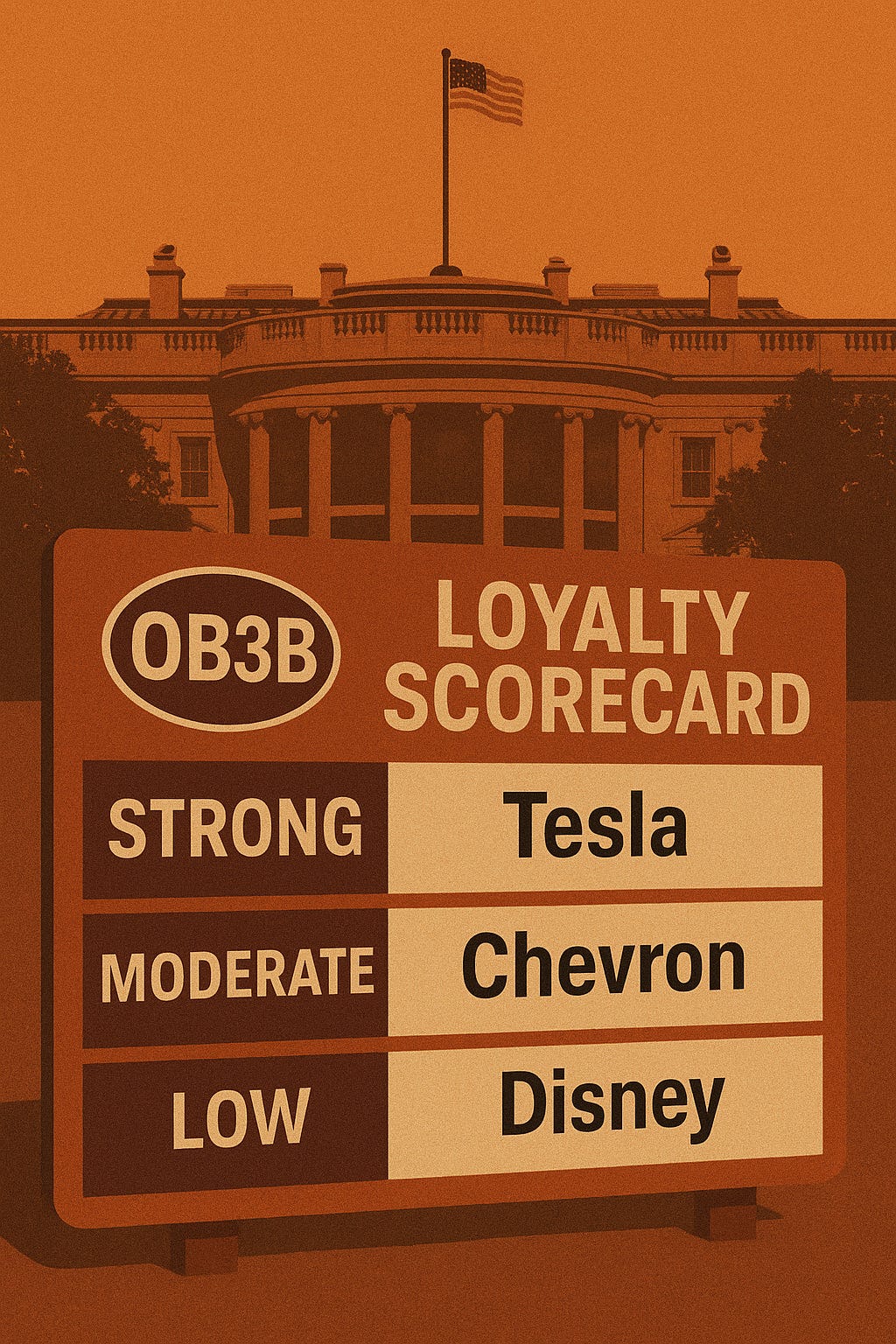
The latest revelation makes that clearer than ever: an internal White House document, known as the OB3 loyalty scorecard, ranks more than 550 companies and trade groups based on how loudly they cheer for Trump’s legislative agenda. The scale isn’t subtle. Firms are categorized as “Strong,” “Moderate,” or “Low” supporters based on their public statements, social media campaigns, and participation in White House events.
In other words, corporations are being graded not on compliance or quiet lobbying, but on visible allegiance. The rewards are unmistakable: access to Trump, visibility at administration events, and a seat in the policymaking process. The risk of silence is equally clear: exclusion, loss of access, and the unspoken threat of presidential retaliation.
This scorecard is more than a tool. It’s a window into the governing style of Trump 2.0: a presidency where corporate loyalty isn’t optional, it’s expected, and where CEOs are cast not as private actors but as co-stars in the MAGA production.
Because democracy doesn’t defend itself, and neither does your sanity. Subscribe here to keep your eyes open and your sarcasm sharp.
OB3: Loyalty as Currency
Inside the Trump White House, political loyalty is more than rewarded. It’s quantified. The OB3 scorecard, named for Trump’s “One Big Beautiful Bill,” evaluates over 550 companies and trade groups based on how visibly and vocally they promote the administration’s legislative priorities.
According to internal documents obtained by Axios, companies are ranked on a three-tiered scale: Strong, Moderate, or Low supporters. The White House tracks a range of inputs to assign these scores, including press releases, paid advertisements, video testimonials, social media amplification, and even attendance at White House-hosted events. It’s not enough to agree behind closed doors. Support must be loud, public, and measurable.
Executives were briefed on the scorecard by Trump aides, who made it clear: public silence equals disloyalty. One administration official told Axios, “This isn’t about just being on board—it’s about showing up for us, vocally.”
Several major corporations have embraced this logic, aligning their messaging and marketing efforts with the administration’s talking points. These companies haven’t just endorsed the policy. They’ve performed allegiance. Their reward is priority access, increased visibility, and a top-tier designation on the OB3 loyalty index.
As we’ll explore later, for many of these firms, that loyalty came with a seat on Air Force One and a starring role in Trump’s latest corporate spectacle.
Punishment by Silence
The OB3 scorecard doesn’t just function as a spotlight for Trump’s corporate allies. Like Nixon’s enemies list, it’s also a soft blacklist. In the world of Trump 2.0, neutrality isn’t tolerated. Companies that decline to issue public endorsements, avoid coordinated PR campaigns, or stay away from White House events are quietly marked as “Low Support” and risk being shut out of policymaking altogether.
This isn’t theoretical. The Trump administration has a long history of retaliating against perceived slights. In his first term, he attacked Harley-Davidson on Twitter for shifting production overseas, bashed General Motors over plant closures, and called for boycotts of the NFL over player protests. When corporations deviate from the script, Trump doesn't just notice. He responds, often with public threats and targeted snubs.
Now, with OB3, that instinct has been systematized. Trade groups that fail to rally behind the bill report being left off invitation lists for summits and industry briefings. Companies that avoid praise, or worse, offer muted critiques, find themselves without a White House liaison, a critical channel for industries navigating new regulations or federal contracts.
Insiders say the scorecard is actively updated, meaning a company's status is always in flux. One trade group official told Axios, “If you’re not on that list—or if you drop a tier—your calls don’t get returned.”
It’s a chilling escalation of the old carrot-and-stick model: where past administrations might have quietly deprioritized unfriendly companies, Trump’s team has crafted a real-time enforcement mechanism. The message is unmistakable. Loyalty must be visible, sustained, and strategic. Anything less is treated as opposition.
A White House Built for Business and Branding
This scorecard is only the latest example in a long list of moments where the Trump administration has functioned as a corporate marketing engine.
Goya Gets the Oval Office Treatment (July 15, 2020)
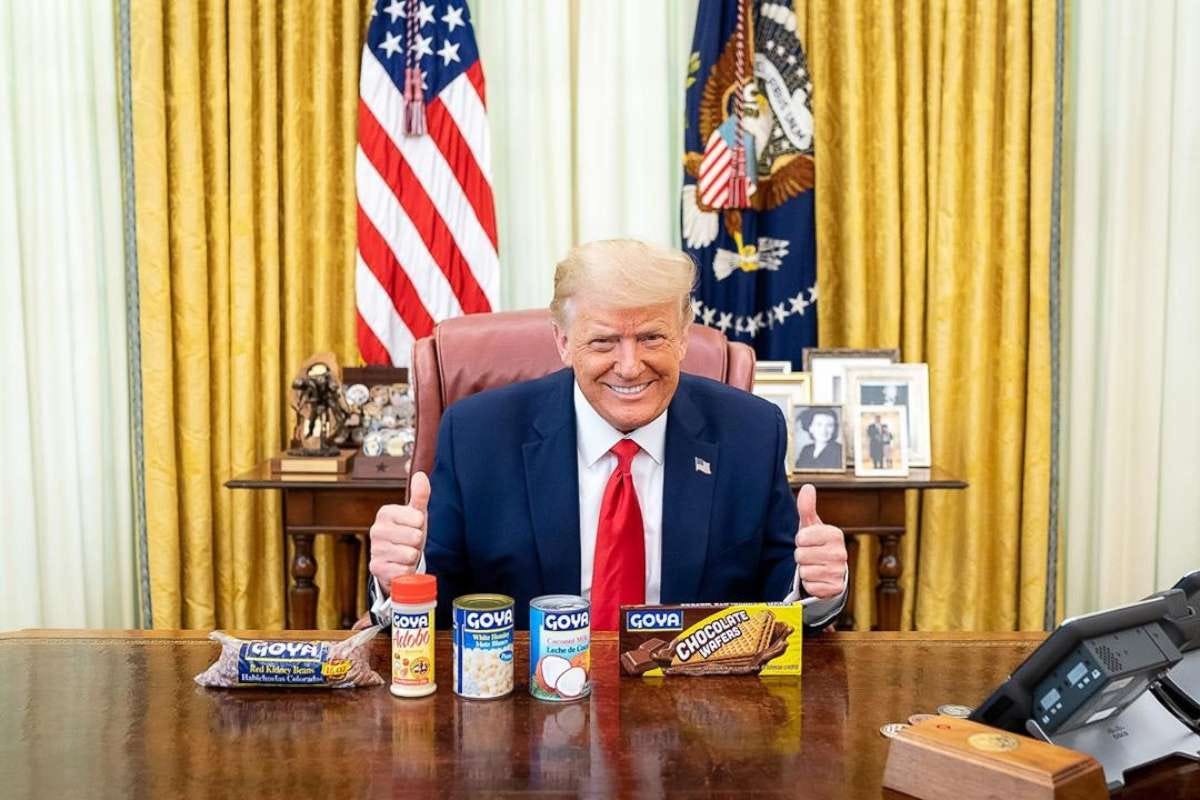
On July 15, 2020, Ivanka Trump posted a photo of herself holding a can of Goya beans on social media, captioned with the brand’s slogan in both English and Spanish, despite her official title as White House adviser appearing in her bio. Within hours, Donald Trump followed suit, posting an image from the Oval Office showing Goya products displayed on the Resolute Desk while giving a double thumbs up. Ethics experts pounced, arguing that this constituted a clear breach of federal rules barring public officials from using their office to endorse private businesses. In effect, the West Wing had transformed into a product placement set, marketing beans with the implied seal of presidential approval.
Donald Trump/Instagram
Tesla on the South Lawn (March 11, 2025)
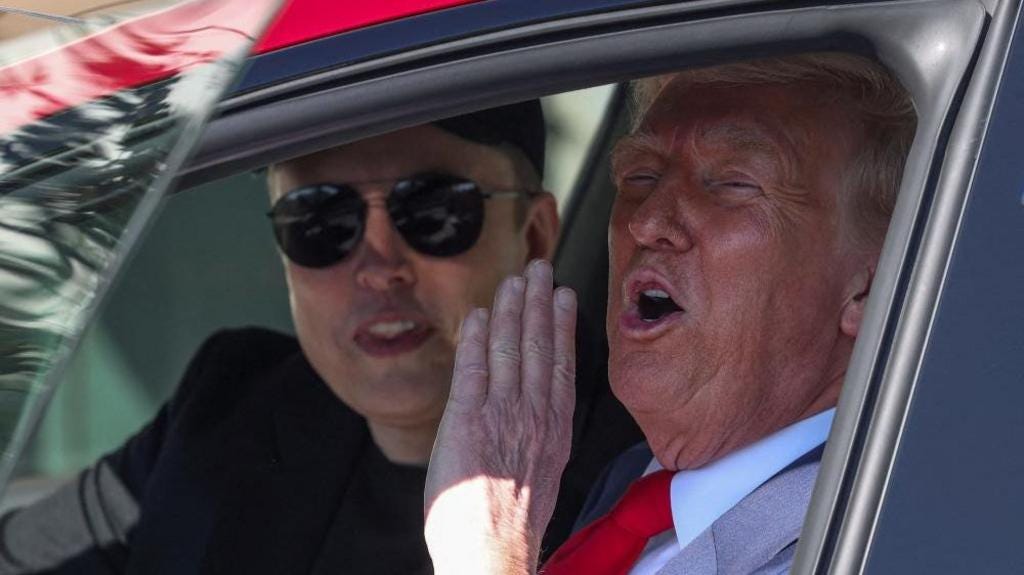
Fast-forward to March 11, 2025. Trump’s second term brought another spectacle: the White House South Lawn was turned into a Tesla showroom. Elon Musk unveiled a lineup of Tesla vehicles, while Trump toured the vehicles, praised their designs (“the coolest design”) publicly, and pledged to purchase a red Model S. Ethics observers warned that the scene blurred the line between statecraft and salesmanship; the president's presence lent a presidential endorsement to Musk’s brand. Trump even went further, labeling attacks on Tesla dealerships as potential acts of “domestic terrorism”. What’s more, Tesla’s stock saw an uptick shortly thereafter, spotlighting the immediate commercial impact of the White House “endorsement”.
Air Force One as Corporate Class
In July 2025, as part of the promotional blitz for the OB3 bill, Donald Trump invited executives from Uber, Delta, AT&T, United Airlines, DoorDash, and others to fly aboard Air Force One to a series of campaign-style policy events. The photo-ops were unmistakable: CEOs standing shoulder-to-shoulder with the president, praising the legislation, with White House staff orchestrating their soundbites for social media distribution. Shortly after, these same companies appeared in the White House’s internal OB3 loyalty scorecard as “strong supporters.” In effect, their reward for public performance was not just legislative access but direct, front-row participation in Trump’s rebranding of policymaking as a team sport for corporate America.
Broken Promises, Branded Politics
The Trump era has been littered with corporate showpieces that dissolved into PR debris. In 2016, the Carrier manufacturing “deal” was hyped as a victory for American workers. Trump claimed he’d saved 1,100 jobs in Indiana, but within two years, more than 600 workers were laid off as automation and outsourcing resumed. Then came Foxconn, promised as the “eighth wonder of the world”, a $10 billion Wisconsin facility that never materialized, despite billions in public subsidies. And in perhaps the most surreal scene of all, MyPillow CEO Mike Lindell stood at the White House briefing room podium during the early pandemic, promoting his company and proclaiming divine intervention on Trump’s behalf. These weren’t outliers. They were features of the Trump political economy: policy as performance, loyalty as leverage, and governance as infomercial.
Put It All Together: Performance Politicking
These events are more than PR stunts. They reflect a fundamental shift in how Trump's White House operated: not just policy, but product theater. From beans in the Oval Office to luxury electric cars on the front lawn, the administration routinely elevates corporate partners into newsworthy attractions, turning government spaces into stages for commerce. These aren’t hidden favors or quiet lobbying efforts. They are loud, bold, and broadcast to aligned audiences.
The Trump White House isn’t a partner to big business. It is their co-star.
Not Just Influence. Obedience
What makes Trump’s corporate strategy uniquely aggressive isn’t just how much influence big business wields, but how openly performative that influence must be.
In past administrations, lobbying was largely a behind-the-scenes affair. Corporations influenced legislation through PAC donations, policy proposals, or quiet backchannel meetings. Public alignment with a White House agenda was a choice, not a requirement. Even contentious relationships between business and government, like Obama’s with Wall Street or Biden’s with Big Pharma, allowed room for private dissent and negotiation.
Trump’s model is different. Public displays of loyalty are the currency.
To be a player in the Trump economy, a company can’t simply comply or contribute. It must promote, praise, and participate. CEOs are expected to show up on stage, film video testimonials, co-brand legislation with corporate advertising, and deliver talking points as if they were campaign surrogates.
The Trump administration doesn’t just invite business leaders to the table. It choreographs their roles, hands them the script, and expects them to perform on cue.
This shift has turned many major companies into political proxies, amplifying Trump’s policies not just for financial gain, but to secure continued access and avoid falling into disfavor. The result is a distorted political economy, where private-sector speech becomes an extension of government messaging.
This is no longer traditional influence. It’s obedience as strategy. The expectation isn’t just alignment. It’s evangelism.
Welcome to Corporate Fealty Politics
What we’re witnessing isn’t just the next phase of corporate influence. It’s the full-scale merger of branding and governance.
In Trump’s second term, political access has become transactional in the most literal sense. Corporations are expected to act not as stakeholders, but as participants in a public relations machine. They don’t just shape policy. They help sell it. Legislation becomes a product launch, CEOs become influencers, and policy debates are reduced to marketing campaigns choreographed by the White House.
This isn’t lobbying. It’s fealty.
The implications are far-reaching. If public loyalty becomes the standard for political access, then neutrality becomes an act of resistance, and an expensive one. Companies will increasingly weigh not just the risks of opposing policy, but the risks of saying nothing at all.
And the playbook doesn’t stop with Trump. Future presidents—Republican or Democrat—may be tempted to adopt elements of this model: visibility-based access, loyalty-based influence, and brand-aligned governance. The norms that previously protected the boundary between government and corporate theater are already eroding.
We are entering an era where governing is no longer separate from marketing, and where political power demands not just support, but spectacle.
Don’t let the bastards sneak anything past you. Subscribe and get your daily dose of rage and receipts delivered fresh, before the spin doctors can scrub it.
Sources:
“White House Creates Secret Enemies List of Biggest Companies” — The Daily Beast
“Trump's White House Tesla showcase for Musk raises ethics concerns” — ABC News
“Uber CEO Khosrowshahi supports Trump’s push to eliminate taxes on tips” — Reuters
“Invest America, Robinhood, & Uber CEOs Support President Trump’s One Big Beautiful Bill” — WhiteHouse.gov (official video/post)
“The One, Big, Beautiful Bill — Endorsements (industry statements)” — WhiteHouse.gov
“White House loyalty rating for companies”— Axios
“After ethics backlash over Ivanka Trump's posts about Goya beans, her father posts, too”— ABC News
“The President Is Shilling Beans”— The New Yorker
“What you need to know about the Carrier factory four years later”— IndyStar

The oligarchy isn't hiding or pretending anymore - they've found a useful idiot, installed him as President, and are now just out here mocking us (while taking everything)
Boycotting is effective but it's difficult to accomplish. Boycott as much as you can. Don't get discouraged if your efforts aren't perfect. It feels great in any amount.