


On April 12, 2026, Hungarian Prime Minister Viktor Orbán conceded defeat after 16 years in power. The result was not close, ambiguous, or the kind of election that invites recounts, delays, or plausible deniability. It was a decisive rejection of a political system that many observers had come to see as deeply entrenched and increasingly illiberal.
For years, Hungary has been cited as a case study in democratic backsliding within the European Union. Orbán reshaped institutions, consolidated media influence, and built a governing model that blended nationalism, centralized authority, and a persistent sense of external threat. That model did not collapse overnight. Instead, it was voted out.
The implications extend well beyond Hungary’s borders. This election offers a rare and striking test of whether an illiberal system, reinforced over more than a decade, can still be dismantled through democratic participation. The answer, at least for now, appears to be yes.
This Community Is Powered by You
What started as a small circle has grown into something much bigger, and it’s all because of readers like you.
Every time you forward this email, post it on socials, or bring someone new into the fold, you’re helping build one of the most passionate, independent political communities out there.
Want to keep the momentum going?
Share this newsletter with someone who should be part of this conversation.
Thank you for being here. It means everything.
The Facts: Who Ran, What They Promised, and What Happened
Hungary’s parliamentary election took place on April 12, 2026. The contest centered on two figures: the incumbent, Viktor Orbán, and the challenger, Péter Magyar, leader of the Tisza party.
Orbán’s campaign followed a familiar script. He framed the election as a choice between “war and peace,” casting himself as the defender of Hungarian sovereignty against outside forces. His messaging emphasized opposition to deeper involvement in the war in Ukraine, skepticism toward European Union policies, and resistance to what he characterized as foreign interference. Many observers noted that his platform focused on Ukraine’s Volodymyr Zelensky rather than on his actual opponent. The campaign frequently invoked external threats, including Brussels, migration, and geopolitical instability.
Magyar offered a different emphasis. A former insider within Orbán’s broader political orbit, he ran as a center-right reformer rather than a left-wing insurgent. His campaign focused on corruption, declining public services, rising costs of living, and Hungary’s strained relationship with the European Union. He argued for restoring institutional credibility, improving healthcare and transportation, and re-engaging constructively with European partners.
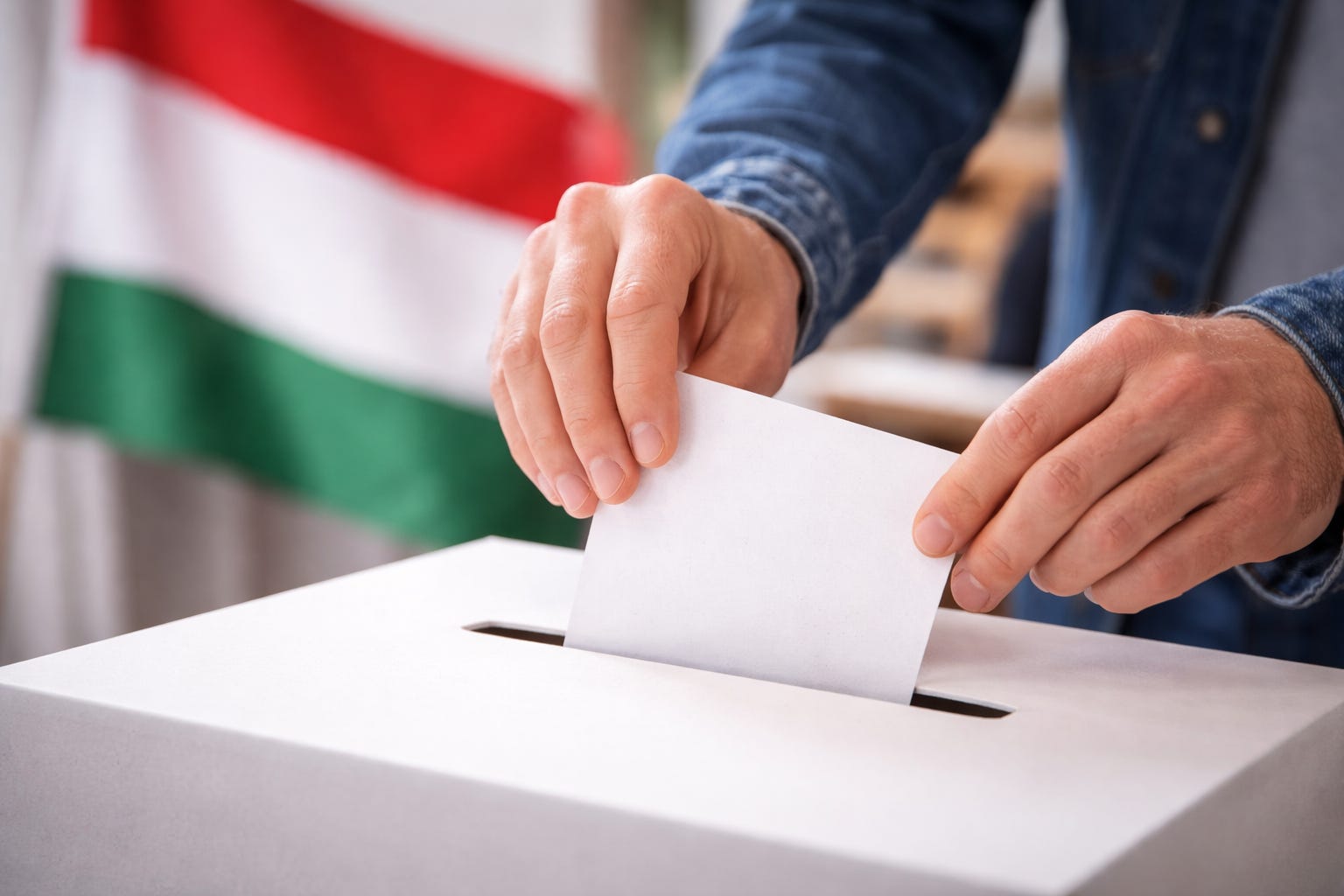
The results were decisive. Voter turnout approached 78%, one of the highest levels in Hungary’s modern democratic history. Magyar’s Tisza party won roughly 136 to 138 of the 199 seats in parliament, clearing the threshold for a two-thirds supermajority. Orbán’s Fidesz party fell to roughly 56 seats, a dramatic reduction that left it with little more than a third of its previous parliamentary strength.
Orbán conceded publicly, acknowledging the result and signaling that he would move into opposition.
A Historic Result by Any Measure
Hungary has held competitive elections throughout Orbán’s tenure, yet the playing field has not been level. Over 16 years, Fidesz reshaped electoral rules, cultivated a loyal media ecosystem, and extended influence across key institutions. That context makes the scale of this defeat particularly striking.
Turnout alone tells part of the story. An election approaching 80% participation resembles a referendum more than a routine political contest. It suggests that voters across the political spectrum understood the stakes and chose to engage rather than disengage.
The seat distribution further underscores the magnitude of the shift. A two-thirds parliamentary majority is not merely a victory. It enables the incoming government to pass significant legislation and, in some cases, alter constitutional frameworks. Orbán himself used such majorities to consolidate power. Now that same structural advantage appears to have been handed to his opponents.
The concession matters as well. In an era when contested elections and claims of illegitimacy have become more common, Orbán’s decision to accept the outcome reinforces the clarity of the result. There was little room to argue that the electorate's will was uncertain.
Why Europe and the World Care
A More Cohesive European Union
Hungary has long been one of the European Union’s most difficult members when it comes to consensus decision-making. The EU is a political and economic bloc of 27 countries, and many of its major foreign policy decisions require unanimity. Orbán repeatedly used that structure to delay or dilute policies, particularly those related to sanctions and financial support.
With Orbán out of power, the EU is likely to become more cohesive. A Hungarian government led by Magyar is expected to be more cooperative with Brussels, which could unlock funding that has been frozen over rule-of-law concerns and reduce internal friction in decision-making.
Ukraine and the Politics of Support
Hungary under Orbán often slowed European assistance to Ukraine. That included financial packages, sanctions on Russia, and broader political coordination. A shift in Budapest could make EU support for Ukraine faster and more predictable.
This does not mean Hungary will suddenly become the most hawkish voice in Europe. Magyar has taken a more cautious tone on certain aspects of the conflict. Even so, the removal of a consistent veto player changes the dynamics of EU policymaking in meaningful ways. Slovakia and, increasingly, Czechia have also pushed back against support for Ukraine, so the path forward will likely still be contentious.
Russia Loses a Key Foothold
For Vladimir Putin, Orbán represented a valuable partner inside the EU. Hungary often echoed Russian talking points about sanctions, energy policy, and the limits of Western unity.
Orbán’s defeat removes one of Moscow’s most reliable voices within European institutions. Russia does not, however, lose its influence overnight. It does lose a government that was willing and able to complicate EU consensus from within at their behest, but it may retain some pressure both through other allies and remaining allies within Hungary’s parliament.
A Signal for Donald Trump and His Allies
The international implications also extend to the United States. Trump and his allies publicly backed Orbán ahead of the election, with Trump suggesting that Hungary would benefit from American economic support if Orbán remained in power. This echoes previous comments Trump has made about foreign elections in support of his preferred candidates.
Orbán’s defeat does not prove that such endorsements are meaningless. It does suggest, however, that they have limits.
Hungary may be an early warning for Trump and his allies that MAGA-style endorsements do not travel as well as they might assume, particularly when voters are more concerned with corruption and the cost of living than with culture-war spectacle or geopolitical framing.
Why This Happened Now
To understand the importance of this election, it is worth noting that Orbán did not lose because his message disappeared. Instead, he lost because it was no longer sufficient.
Throughout the campaign, Orbán emphasized external threats and national identity. He framed the election as a civilizational choice, one that extended beyond Hungary’s borders. That approach had worked for years, helping to unify his base and define the terms of political debate.
Magyar changed the conversation. He consistently redirected attention to domestic concerns. Corruption, healthcare, wages, transportation, and the general functioning of the state became central to his campaign, and voters responded.
When the gap between political narrative and lived experience grows too wide, even a well-established system can falter. Hungary appears to have reached that point. Voters did not necessarily abandon conservative or nationalist instincts. They did, however, choose a candidate who promised to address the practical consequences of long-term governance failures rather than be drawn into culture wars and nationalistic fights during a time of domestic struggle.
What This Means, and What It Does Not
The election represents a significant shift. It is a clear rejection of Orbán’s governing model and a move toward a more cooperative relationship with the European Union. It may lead to more stable EU policymaking, more consistent support for Ukraine, and a less single-leader-dominated political environment in Hungary.
It also suggests that a center-right path back toward democratic norms is possible. Magyar’s victory was not a sweeping ideological reversal but rather a correction within the broader political center, which may make it more durable and less prone to immediate backlash.
At the same time, this result does not guarantee lasting transformation. Hungary’s institutions, media landscape, and political networks have been shaped over many years. Changing them will take time and may encounter resistance. A large electoral victory does not automatically translate into effective governance or successful reform.
This election also does not signal the end of far-right politics in Europe or elsewhere. It does not determine the outcome of the war in Ukraine, nor does it mark a definitive turning point in global political trends.
A Small Spark, and What It Represents
The most important meaning of this election may be the simplest one.
For citizens in countries experiencing democratic backsliding, it can feel as though the system is fixed and that participation no longer matters. Hungary offers a timely counterexample. High turnout, a decisive result, and a peaceful concession together demonstrate that voters can still assert themselves, even under difficult conditions.
That does not make change easy or inevitable, but it does suggest that it remains possible.
In a political moment often defined by cynicism and fatigue, that is not a trivial lesson. It is a reminder that the mechanisms of democracy, while strained, have not disappeared. And sometimes, when enough people decide to use them, they still work.
If you believe politics is still worth paying attention to and that voters still matter, consider subscribing. We’ll keep bringing you thoughtful, accessible analysis of the moments that shape our democracy and world.
Sources:
Reuters, Orban ousted after 16 years as Hungarians flock to pro-EU rival, April 12, 2026.
Reuters, Once inspired by Orban, Hungary’s Peter Magyar unseats him in landmark election, April 12, 2026.
Associated Press, Hungarian Prime Minister Orbán is ejected after 16 years in a European electoral earthquake, April 12, 2026.
The Guardian, Hungarian opposition ousts Viktor Orbán after 16 years in power, April 12, 2026.
The Guardian, Hungarians vote in hard-fought election that could oust Viktor Orbán after 16 years, April 12, 2026.
Vox, Viktor Orbán has fallen, April 12, 2026.
Reuters, Hungary opposition’s landslide win heralds reforms, thaw in EU ties, April 13, 2026.
Associated Press, European leaders celebrate Péter Magyar’s victory in a stunning Hungarian election, April 12, 2026.
Reuters, How has Hungary changed during Orban’s 16 years in power?, April 10, 2026.
Associated Press, On Hungary visit, Vance urges voters to support Orbán days before pivotal election, April 7, 2026.
Associated Press, How Donald Trump flexes his political influence abroad, April 11, 2026.
Well Hungary finally woke up. This is reminiscent of what happened decades before in Spain with Franco. Will America wake up? Will Trumplicans come after me because I used the word “woke”. There’s nothing woke about despising dictators and authoritarians who choose to abuse you.
We all know that everything t-Rump touches dies. But let's thank JD Vance for the assist!