


The Night the Culture War Lost the Classroom
There are election nights that shake up politics, and then there are nights that restore a little faith in it. November 5, 2025, was one of those nights in Pennsylvania.
As results came in from Bucks County to Pine-Richland, one story kept repeating: parents, teachers, and neighbors rejected the chaos and voted to take their schools back. Democrats and moderates swept board seats that just two years ago belonged to hard-right “parental-rights” crusaders.
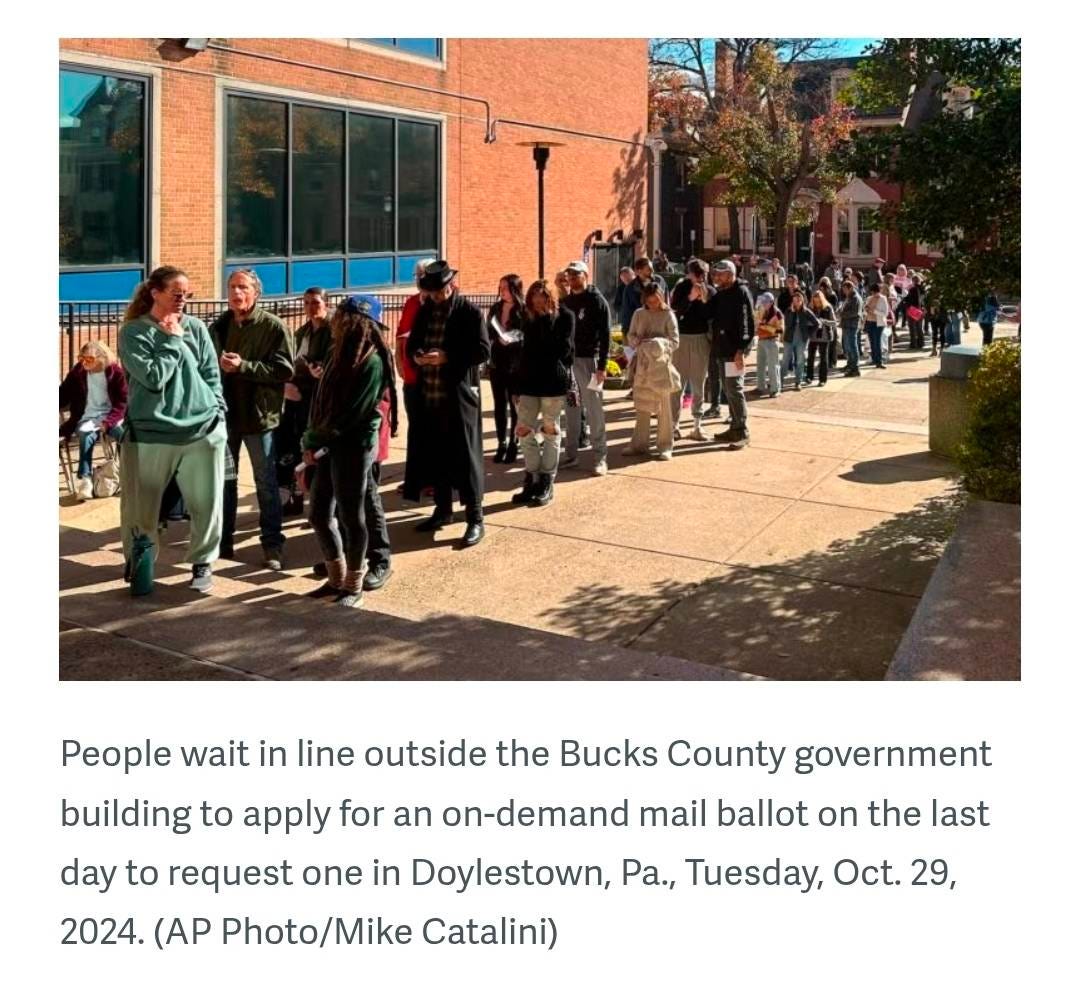
Outside polling places, you could see the story unfold in real time, lines stretching down sidewalks, parents chatting over coffee, teachers waving at former students. They weren’t showing up for slogans. They were showing up to get the noise out of their kids’ classrooms.
By midnight, WHYY and WESA confirmed what the long lines hinted at: a clean sweep in Pine-Richland and solid Democratic gains across the state. The cheers that followed weren’t about a party winning. They were about a community remembering what normal feels like.
For years, national groups treated Pennsylvania’s schools like staging grounds in their culture war. This election, parents sent the bill back unpaid.
Want to Know Your Rights?
Download a free digital copy of the U.S. Constitution—the same document Trump is trying to bulldoze. Learn exactly what he’s breaking… and how to fight back.
47,000 strong — and counting.
This Early Black Friday, become a paid subscriber for just $1 a week and help us keep the truth alive.
Join The Coffman Chronicle — $1/Week Early Access
The Backlash to a Manufactured Panic
For years, Pennsylvania’s classrooms had been drafted into someone else’s war.
National groups with names that sounded wholesome — Moms for Liberty, No Left Turn, and a half-dozen copycats — parachuted into quiet districts promising to “protect children.” What they really delivered was a pipeline of outrage.
They flooded school board meetings with talking points that came straight from cable-news scripts. They warned of “indoctrination,” “woke curricula,” and “Marxist math.” It didn’t matter that none of it matched what teachers were actually teaching. Fear traveled faster than fact.
The results were costly, not just politically, but literally. Districts spent millions on legal fees defending against performative lawsuits over book lists. Teachers left in record numbers. Parents stopped volunteering, afraid of being shouted down.
Pennsylvania’s teacher attrition rate hit a record 7.7 percent in 2023, the highest in state history.
By 2024, even families who once flirted with the “parental-rights” slogans started asking what, exactly, they’d won. Test scores were dropping. Substitute teachers were impossible to find. The “culture-war economy” had run out of customers.
The backlash that followed wasn’t partisan; it was practical. People wanted reading tutors, not grievance warriors. They wanted librarians, not book police. When the yard signs came out this fall, they didn’t say “fight back” or “retake our schools.”
They said something simpler: “For Every Student.”
That message hit home. Parents realized that while extremists were shouting about control, no one was talking about kids.
That shift — from outrage to organization — didn’t happen overnight. It grew one PTA meeting at a time, one teacher resignation too many, one library shelf suddenly emptied. By the time the 2025 elections arrived, Pennsylvania parents weren’t just reacting to the culture war anymore. They were ready to replace it, starting with Pine-Richland.
Pine-Richland: Ground Zero for a Reversal
If you want to understand what changed in Pennsylvania, start in Pine-Richland, a district north of Pittsburgh that became a test site for the culture war — and then its burial ground.
Two years ago, its school board made national headlines for firing a superintendent who had backed diversity training and mask mandates. They rewrote equity policies, targeted library books, and turned routine meetings into viral shouting matches.
At first, a few residents applauded. Then came the consequences: veteran teachers left, students lost electives, and the district’s once-sterling reputation slipped.
Parents noticed.
By mid-2024, a coalition calling itself “For Every Student” had formed, a mix of Democrats, moderate Republicans, and independents who shared one simple belief: schools should be about kids, not campaigns.
They organized phone trees, knocked on doors, and filled Facebook threads with data on lost staff and rising costs. Their pitch wasn’t ideological; it was functional.
One organizer told WESA, “We stopped arguing about politics and started talking about potholes — the kind you feel when your kid’s teacher quits mid-semester.”
On Election Night 2025, every candidate on the For Every Student slate won. The victory wasn’t loud. It was local. At a watch party in a church basement, parents hugged teachers and cried, not out of partisanship, but out of relief.
Pine-Richland had been proof that the culture-war playbook could seize power. Now it was proof that communities could take it back.
Bucks, Montgomery & Chester Counties: The Suburban Firewall Holds
If Pine-Richland was the spark, Bucks County was the blaze.
Just two years ago, Central Bucks became a poster child for the “parental-rights” crusade — banning Pride flags, disciplining teachers for talking about identity, and rewriting library rules under the banner of “protecting kids.” While the headlines were national, the backlash was local. Students walked out. Teachers quit mid-semester. Parents filled auditoriums, demanding to know when the shouting would stop and the teaching would start again.
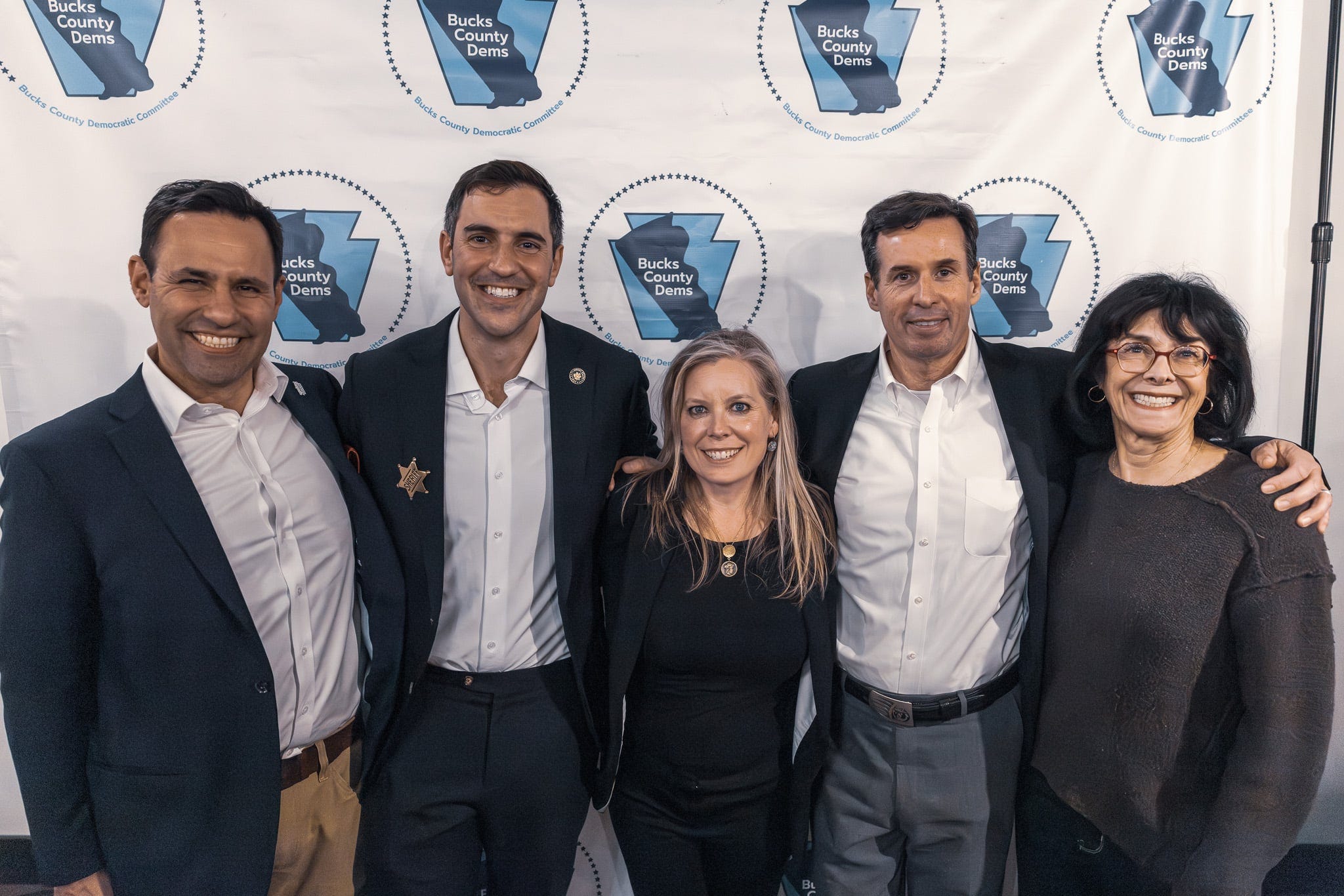
This fall, voters answered that question themselves.
Democrats flipped the board by wide margins, turning a right-wing stronghold into a mandate for calm, competence, and compassion. In the space of one election night, the narrative changed from “parental control” to “community control.”
The wave didn’t stop there.
In Montgomery and Chester Counties, candidates who had run on banning books or restricting curricula lost decisively to slates focused on funding, mental-health support, and safety. Yard signs that once screamed slogans like “Stop Woke Agendas” gave way to quieter ones that simply read: “Focus on Students.”
Across the collar counties, voters built what one organizer called “a firewall of sanity.”
And it held.
What’s remarkable is how ordinary it looked — neighbors helping neighbors, teachers standing beside parents, teenagers volunteering as poll greeters. After years of cable-news noise, the sound of democracy returning to normal was almost peaceful. Almost.
But behind every headline was something quieter — the people who made it happen.
The Parents Who Showed Up
For all the headlines about party sweeps and political shifts, what really changed Pennsylvania wasn’t a strategy. It was showing up.
This was not the performative kind of showing up you see on cable news, but the quiet, determined kind that happens between work shifts and soccer practice.
In Doylestown, a mother who once swore she’d never talk politics started knocking on doors after her daughter’s favorite librarian was driven out. In Pine-Richland, a retired teacher printed her own flyers because she couldn’t stand watching the district she loved unravel. In Chester County, a group of dads started a text chain that turned into a volunteer network big enough to staff every polling place.
None of them called themselves activists. They called themselves parents. Neighbors. People who were just tired of the noise.
Their campaign signs were handwritten, not corporate-funded. Their message was simple: let teachers teach and let kids learn.
And when the votes were counted, that message won.
You could feel it in the small moments — a teacher bringing cookies to volunteers, students high-fiving their parents after school, a librarian quietly shelving the books that had been pulled the year before. These weren’t grand political gestures. They were acts of repair.
The movement didn’t have a single leader or slogan because it didn’t need one. It had something stronger, a shared sense of enough.
That shared sense of enough didn’t stop at county lines.
A National Undercurrent: Voters Are Tuning Out the Extremes
What happened across Pennsylvania isn’t an isolated win. It’s part of something bigger: a quiet national shift away from outrage and toward ordinary competence.
According to education-union analysis, candidates backed by Moms for Liberty and similar conservative organizations lost approximately 80 % of their school board races in the November 2025 cycle.
In Virginia, Democrats held the state senate by campaigning on keeping schools focused on education, not ideology. In Kansas, voters who once backed “parental-rights” language in 2022 now reject it as political theater. Even in Florida, a handful of deep-red counties quietly voted out hard-right board members after years of book bans and teacher shortages.
The pattern is unmistakable: Americans are exhausted by performative politics, especially when it hurts their kids’ classrooms.
Polls from Pew and Education Week show that more than 70 percent of parents, across party lines, want schools to “stick to basics” — reading, math, and critical thinking — not partisan messaging.
That exhaustion doesn’t mean apathy; it means clarity. People are realizing that ideology doesn’t pay the electric bill or teach a child to read. Parents have started voting like managers, not fans, demanding results instead of rhetoric.
And that’s what made the results so striking. The state didn’t just reject extremism; it reaffirmed decency as a governing principle. Every yard sign, every volunteer table, every parent waiting in line under the November chill added up to a quiet national statement: “Enough of this. Let’s fix what matters.”
The undercurrent has always been there — from local libraries to school gyms — but this week, it broke the surface.
The Cost of the Culture War
Before this election-night sweep, the culture war had already sent Pennsylvania a bill —and it was steep.
Teachers fled in record numbers. In 2024 alone, nearly 9,000 Pennsylvania teachers left the profession — about 7 percent of the entire workforce — according to CBS Pittsburgh and state data. (CBS News, Aug. 5, 2024)
Districts spent millions on legal fights over “objectionable materials,” most of which were later dismissed by judges. In Central Bucks, board members tied to the book-ban movement spent more than $1.7 million defending against discrimination and censorship lawsuits, money that could have gone to new science labs or reading specialists. (Keystone Newsroom, Mar. 5, 2024)
And while politicians went viral, students paid the price through canceled electives, gutted libraries, and guidance counselors reassigned to “content-review committees.”
In districts like Pine-Richland, teacher morale sank and resignations climbed as educators faced new scrutiny over lessons once considered routine.
Meanwhile, insurance premiums for school boards skyrocketed because extremist candidates kept courting controversy that triggered claims.
This wasn’t a movement about protecting children. It was an ideological protection racket — outrage as a business model. Outside groups collected donations, consultants billed six figures, and the same talking heads who sparked the chaos moved on to their next district, leaving families to clean up the mess.
The moral cost was worse. Kids watched adults scream at teachers. LGBTQ+ students saw their identities debated like policy proposals. History lessons were sliced apart until even the truth felt partisan. For a generation of students, the classroom became a crash course in how power bullies knowledge.
So when parents filled the polls this November, they weren’t just voting for candidates. They were filing a damage report. They’d seen what happens when politics hijacks the school bus, and they were ready to take the keys back. Voters didn’t just reject the invoice. They started drafting a new budget for the next phase.
Local Victories, National Ripples
Pennsylvania’s school board elections weren’t supposed to make national news, but the aftershocks already are.
From the Alleghenies to the Delaware River, those local victories have begun reshaping not just school districts, but the conversation about who gets to define education in America.
Governor Josh Shapiro called it “a vote for calm over chaos.” However, calm doesn’t mean complacent. The same parents who took back their schools are now talking about running for county commissions, library boards, and statehouse seats. Democracy, it turns out, is contagious.
And while headlines tallied the wins, something deeper was already underway.
From School Boards to Civic Rebirth
Pennsylvania’s school board sweep has awakened a civic muscle many people forgot they had. Parents who once sat in the back row at board meetings are now chairing committees. Teachers who once feared retaliation are speaking publicly again. Students are organizing book drives to restock the shelves their districts once stripped bare.
Across towns and suburbs, democracy has become tangible again — something you do, not something you watch.
In Pine-Richland, volunteers who helped elect the For Every Student slate now meet monthly to monitor policy and support new board members. In Bucks County, students who protested book bans are helping write inclusion guidelines. In Montgomery County, librarians who nearly lost their jobs are training others on how to respond to censorship pressure.
None of it is glamorous. It’s slow, patient work, the kind that never makes cable news. But this is what civic repair looks like: a million small acts of participation building into something sturdy enough to outlast any demagogue.
After years of division, these communities are discovering that democracy isn’t about winning every fight, but rather about refusing to surrender the ring. They’re proving that civic engagement isn’t extinct. It was just waiting for the right people to remember why it mattered. And now they have.
A Blueprint for the Rest of the Country
Pennsylvania didn’t just deliver an election result. It delivered a strategy. The rest of the country is already taking notes.
What worked here wasn’t luck or party machinery. It was neighbors reclaiming the machinery of democracy. There were no big donors, no celebrity endorsements — just people who decided to trade outrage for effort.
The formula is simple, but powerful:
Start local. Big politics thrives on noise. Local organizing thrives on results.
Lead with community, not party. Shared values first; politics later.
Use receipts, not rhetoric. Facts beat slogans every time.
Center the kids. Always.
What Pennsylvania proved is that competence can be a movement, and once communities see they can take back one institution, they start asking what else they can reclaim — from zoning boards to county seats to Congress.
That’s the contagion democracy needs right now, and it always starts in the same place.
The Kitchen-Table Lesson
Every political shift, no matter how large it looks from above, begins with a conversation that could fit around a kitchen table.
In Pennsylvania, those conversations sounded like this:
“Why are my kids’ teachers quitting?”
“Why did they pull that book she loved?”
“Why does every meeting turn into a fight?”
They weren’t ideological debates. They were the kinds of practical questions families ask between dinner and dishes, the questions that cut through the noise and force accountability.
Parents didn’t need focus groups to know something was wrong. They could see it in their kids’ faces after school, in the stack of substitute-teacher notices, in the silence where curiosity used to be. That’s what pushed them from frustration to action.
The lesson is simple: democracy survives when regular people remember it’s theirs.
You don’t have to out-shout the extremists; you just have to out-show-up them.
That’s what Pennsylvania parents did. They brought politics back to the kitchen table, the one place where honesty still outweighs spin.
Because at the end of the day, this isn’t about parties or platforms. It’s about whether a kid can read freely, learn safely, and come home proud of what they discovered in class. It’s about whether communities trust each other enough to solve problems together.
That’s the real rebellion — not against a government, but against indifference.
Join the Rebellion
The story of Pennsylvania’s school board elections isn’t just about who won. It’s about who decided they’d had enough of losing — losing teachers, losing truth, losing trust.
For years, the loudest voices in the room tried to convince the rest of us that chaos was inevitable, that decency was outdated, that shouting was strength. This week, parents proved something louder: community still works.
They didn’t wait for permission. They didn’t ask for perfect conditions. They organized bake sales, printed flyers, held meetings in living rooms, and voted like their kids’ futures depended on it — because they do. That’s what democracy looks like when it remembers itself.
Now it’s your turn. Wherever you live, whatever your district looks like, this movement belongs to you, too. You don’t need a title or a campaign manager — just a kitchen table, a few neighbors, and the courage to start asking the right questions again.
Because the culture war only wins when the rest of us stop showing up.
So keep showing up.
Support your teachers.
Protect your libraries.
Run for the board, write the letter, cast the ballot.
And if you believe these stories matter — if you believe the quiet victories deserve as much coverage as the chaos — support independent media.
Subscribe, share, and help keep this rebellion alive.
We can’t all be in the same room, but we can all be at the same table.
And when enough of us sit down together, no amount of noise can drown out what comes next.
Bibliography:
“Pennsylvania Teacher Attrition and Turnover from 2014 to 2024.” University Park, PA: Center for Education Evaluation & Policy Analysis, July 30, 2024.
Kitchen, Sean. “Moms for Liberty School Board Members Spent $1.75 Million Defending Book Bans, Discrimination in Central Bucks.” Keystone Newsroom, March 5, 2024.
“Teachers’ Views of the State of Public K-12 Education.” Pew Research Center, April 4, 2024.
“Parents’ Views of What K-12 Children Should Learn in School.” Pew Research Center, October 26, 2022.
“Race and LGBTQ Issues in K-12 Schools.” Pew Research Center, February 22, 2024.
“Americans’ Views of Colleges and Universities, K-12 Public Schools.” Pew Research Center, February 1, 2024.
“2024 United States Public, Private and Charter Schools in 5 Charts.” Pew Research Center, June 6, 2024.
“Establishing a Baseline – How Do School Parents Feel in 2025?” EdChoice, February 20, 2025.
“Teachers Leaving Their Jobs at an Accelerating Rate in Pennsylvania, New Study Finds.” WITF, June 1, 2023.
“Pennsylvania: Democrats Sweep School Board Races, Ousting Extremists.” Diane Ravitch Blog, November 6, 2025.