


A Mother and Daughter Under Siege
Ordinary Women, Extraordinary Target
Ruby Freeman never set out to be a public figure. She was a grandmother in Georgia who loved her job as a temporary election worker, checking IDs and handing out water bottles while people cast their votes. Her daughter, Shaye Moss, followed in her footsteps, working as a local election official. They were not politicians or celebrities — just two women doing their part to ensure democracy functioned in their community.
That all changed in December 2020, when their names were dragged into one of the most dangerous lies in American political history. Then-President Donald Trump and his allies falsely accused Freeman and Moss of secretly stuffing ballots and rigging the vote count in Fulton County. The claim was baseless, disproven in court, and repeatedly debunked by investigators. But the damage had already been done.
The Nightmares That Followed
Ruby Freeman described it later in chilling testimony: the relentless phone calls, the messages filled with racial slurs, the strangers who showed up at her door. She was forced to flee her own home in fear. Her daughter, Shaye, told Congress she was so terrified that she no longer felt comfortable even introducing herself by name in public.
“I don’t go anywhere. I don’t want to go anywhere,” Shaye admitted. “It’s affected my life in a major way — in every way. All because I did my job.”
The threats weren’t just directed at them individually. They extended to their families, their neighbors, and even their workplaces. For Ruby and Shaye, what had begun as an ordinary civic duty turned into a personal siege.
From Isolated Horror to National Trend
When the country first heard their testimony, it was tempting to believe their experience was unique, an aberration fueled by the chaos of 2020. But four years later, the numbers tell a darker truth. What Ruby Freeman and Shaye Moss endured has metastasized into a national pattern. Local election officials across the country now report harassment, threats, and political interference as a routine part of their jobs.
Ruby and Shaye’s ordeal was the warning sign flashing in red. America just didn’t want to believe it.
The Pattern Spreads Nationally
From One Family’s Ordeal to a Systemic Crisis
In the months following Ruby Freeman and Shaye Moss's story, many Americans were horrified. The idea that two ordinary women could be hunted by conspiracy theorists and threatened by strangers simply for doing their jobs seemed like the kind of nightmare that could never become routine. But today, what happened to Ruby and Shaye is happening everywhere.
The Brennan Center for Justice recently conducted a nationwide survey of election officials. The results are stark. Nearly six in ten say they fear political interference in their work, and nearly half fear they themselves could be investigated or punished for doing their jobs. In other words, thousands of local clerks and county workers now live with the same dread Ruby and Shaye once carried alone.
A Chilling Effect on Democracy
These aren’t high-powered Washington insiders. They’re the people who run polling places in small towns, who tally ballots late into the night in county buildings, who keep the voter rolls updated so neighbors can cast a ballot. They are the lifeblood of the system, and they are being ground down by harassment and intimidation.
The trend is unmistakable: election workers are quitting in large numbers. Offices are losing decades of combined experience as officials resign rather than risk their families’ safety. Some states struggle to fill even the most basic election roles, exacerbating an existing lack of volunteers.
And the ripple effect is enormous. Every resignation means less institutional knowledge, fewer trained hands to manage the complex machinery of voting, and more room for partisan actors to step in. When Ruby Freeman was forced to flee her home, she didn’t just lose her peace of mind. Her community lost a dedicated worker who knew how to keep elections running smoothly. Multiply that story by thousands, and you begin to see the scale of the crisis.
A Warning Ignored
The voices of Ruby and Shaye should have been a wake-up call. Instead, they have become a grim forecast. Their story was not an anomaly. It was the opening chapter of a much larger unraveling, one that threatens not just individuals, but the very infrastructure of American democracy.
And behind every statistic, every resignation, is a story like Ruby’s and Shaye’s, a human cost that doesn’t fade when the cameras go away.
The Personal Cost of Intimidation
Fear That Doesn’t End With the Job
For Ruby Freeman and Shaye Moss, the nightmare didn’t end when the cameras turned off or when fact-checkers cleared their names. The threats lingered. Ruby spoke of always looking over her shoulder. Shaye described the paralyzing anxiety that seeped into every corner of her life. “I don’t introduce myself by name anymore,” she admitted, a simple act of self-erasure just to feel safe in her own country.
That fear is now shared by thousands of election officials across America. The latest surveys show that many clerks and poll workers no longer feel secure at work or at home. Some have reported armed protesters gathering near their offices. Others have endured doxxing, where personal information is posted online for strangers to exploit. What began with one mother and daughter in Georgia has become a defining risk of public service everywhere.
Families Under Fire
The damage is never confined to the officials themselves. Just as Ruby and Shaye’s families were threatened, election workers today report that their spouses, children, and even neighbors have been dragged into the storm. A county clerk in Michigan described receiving messages that mentioned her teenage son by name. A poll worker in Arizona recounted how strangers followed his wife home from work.
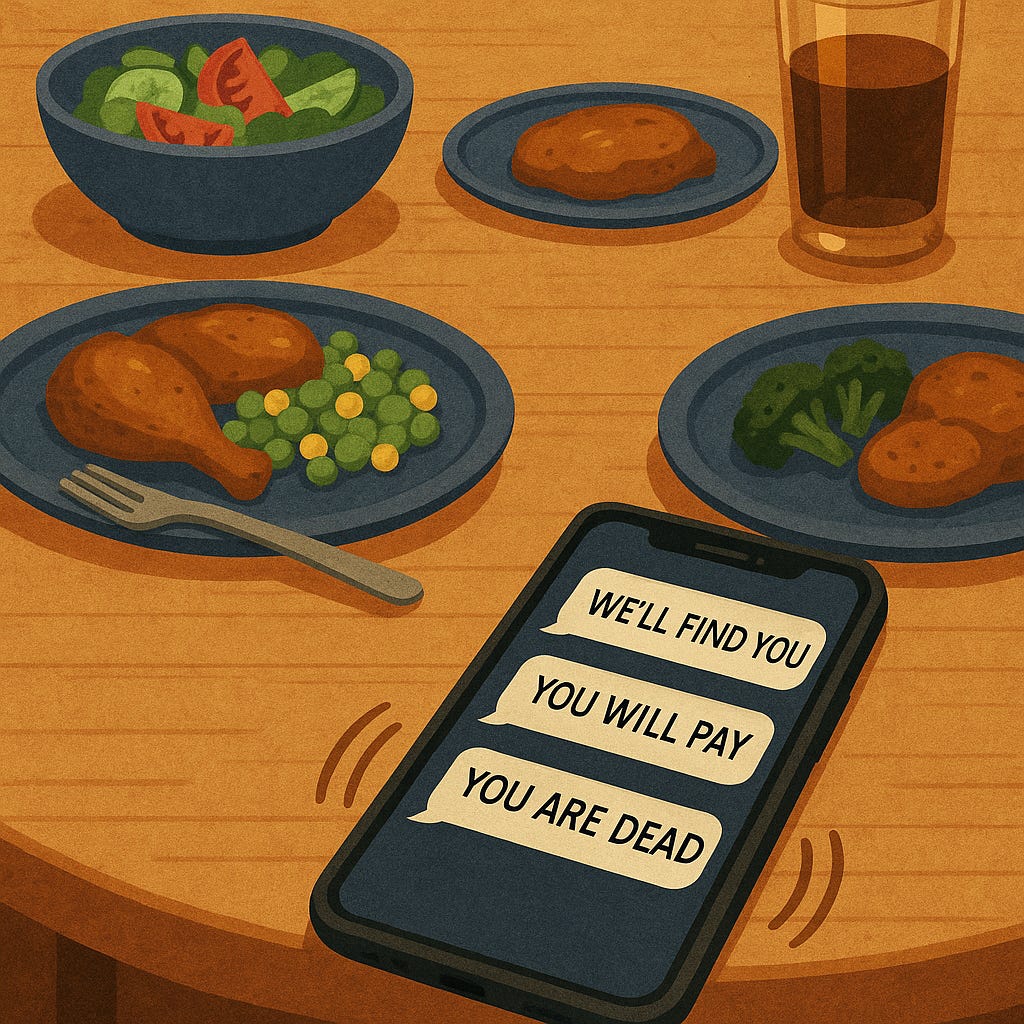
These stories echo Ruby and Shaye’s ordeal with chilling clarity: intimidation doesn’t stop at the office door. It seeps into family dinners, school runs, and daily routines. It is designed to isolate, to terrorize, and ultimately to drive people out of the very jobs that keep democracy alive.
When Silence Becomes Survival
Perhaps the cruelest effect of this intimidation is the way it forces people into silence. Ruby Freeman said she felt her identity stolen by lies, while Shaye Moss spoke of retreating from her community life, withdrawing from the world. Election workers across the nation are making similar choices — limiting their public appearances, locking down their social media accounts, and keeping a low profile.
The chilling effect is real. When those tasked with safeguarding elections are too afraid to speak openly or even live freely, democracy itself suffers. What Ruby and Shaye endured was never just about them. It was about breaking the spirit of everyone who might follow in their path.
Resignations and Vacancies
The Empty Chairs of Democracy
When Ruby Freeman left her job, it wasn’t just a personal decision. It was a loss for her entire community. Her knowledge of election procedures, her patience with anxious voters, her ability to guide neighbors through the process — all of it vanished the moment she was forced out by fear. Multiply that story across hundreds of counties, and you begin to see the deeper danger: the quiet emptying of the nation’s election offices.
Surveys indicate that a substantial number of local officials are either stepping down or contemplating doing so. Some retire early. Others resign mid-cycle. Still others stay on paper but avoid speaking up or taking on extra responsibilities, worried about drawing the wrong kind of attention. The result is a growing gap between what elections demand and what the people left behind can deliver.
A System Strained to the Breaking Point
Running elections is far more complex than most Americans realize. It isn’t just a matter of opening polling places and counting ballots. It requires precise logistics, careful planning, and often decades of institutional knowledge, the kind Ruby and Shaye carried in their heads every day on the job.
When those officials walk away, that knowledge goes with them. And the replacements, if there are any, are often new, inexperienced, or stepping into the role under extraordinary pressure. Some positions go unfilled entirely, forcing overworked staff to stretch themselves thin. Mistakes, delays, and confusion become inevitable, which only fuels more distrust and more threats.
An Invitation for Partisan Takeover
The vacancies don’t just weaken the system; they create openings for partisan actors eager to seize control. Election deniers and political loyalists have begun running for local election boards, or volunteering in vacant clerk roles, sometimes openly vowing to “stop the steal” in future elections. Where Ruby and Shaye once stood as neutral public servants, new officials may arrive with a political agenda already in hand.
This is the domino effect of intimidation: silence the faithful, scare off the experienced, and leave the door wide open for those who see election offices not as civic duty but as partisan battlegrounds. Ruby and Shaye’s departure was tragic for one community. Today, the same story is playing out across the country, with national consequences.
As these vacancies spread, lawmakers have begun rewriting the rules in ways that make the risk even greater, ensuring that what Ruby and Shaye endured could now carry not just threats, but also criminal charges.
Legal and Political Crosshairs
From Harassment to Criminalization
When Ruby Freeman and Shaye Moss were vilified in 2020, they faced lies, threats, and public humiliation. If the same thing happened today, their nightmare might be worse because in several states, election officials can now be criminally charged for mistakes as small as a clerical error.
Take Georgia, the very state where Ruby and Shaye worked. In 2021, lawmakers passed Senate Bill 202, which stripped power from county election boards and gave partisan state officials more oversight. It also opened the door to replacing local officials who “fail” to follow new rules, often written in vague language that invites political abuse (NPR, March 25, 2021).
Texas followed a similar path with Senate Bill 1 in 2021, which imposed criminal penalties on election workers who encouraged voters to use mail ballots without explicitly requesting one. Even well-meaning advice could land a clerk in legal jeopardy (Texas Tribune, Aug. 31, 2021).
For Ruby and Shaye, who were already falsely accused of fraud, these laws would have been a loaded weapon placed directly in their enemies’ hands.
A Wave of Political Interference
This isn’t just about individual laws. It’s a coordinated wave. A 2024 Brennan Center report found that 59% of local election officials fear political interference in their jobs, a significant increase from 33% the previous year (Brennan Center, May 1, 2024). Almost half said they worry about being investigated themselves.
The Department of Justice has added to those fears. Documents obtained by Reuters revealed that the DOJ recently considered demanding access to state voter rolls for criminal probes, a move critics warn could politicize the system and intimidate election staff into compliance (Reuters, Sept. 9, 2025).
Imagine Ruby Freeman, already fearing for her life, now wondering if federal investigators might show up at her door for simply doing her job.
The Net Tightens Around Workers
For local officials, the message is clear: every decision, every ballot, every signature carries the risk not just of harassment but of legal peril. The fear that once silenced Ruby and Shaye has been institutionalized, codified into law, and backed by political power.
This is no longer just about conspiracy theorists outside the system. It’s about legislatures and agencies rewriting the rules to make it easier to punish, replace, or silence election workers. The legal crosshairs that Ruby and Shaye felt in 2020 have now been mounted on a much larger weapon aimed at democracy itself.
Democracy on the Line: A Mother’s Warning
A Voice That Should Have Been Enough
Ruby Freeman’s voice trembled when she testified before Congress. She wasn’t a politician used to cameras, or a pundit with polished talking points. She was a grandmother, dragged into the national spotlight by lies she never asked for. She told America what it felt like to be hunted: “There is nowhere I feel safe. Nowhere.”
Beside her sat her daughter, Shaye Moss, breaking down as she described the daily terror that swallowed her life. She said she stopped going out in public, stopped speaking her own name, and stopped living the ordinary life she once cherished. She was made invisible by hate, by fear, by the violence of a lie.
Their testimony should have been enough to shake the nation awake. It should have been enough to end the campaign of intimidation against election workers. Instead, their story has become the template.
From Two Women to Thousands
Today, thousands of election officials live under the same shadow Ruby and Shaye described. Their stories don’t all make headlines, but the echoes are unmistakable: the clerk who moves her children out of state after her address is posted online; the poll worker who receives late-night death threats; the county official forced to install security cameras just to feel safe at home.
Ruby and Shaye were not the exception. They were the preview.
A Mother’s Warning to the Nation
If Ruby could stand before the country again, what would she say? Likely something simple, the way she always has: Protect my daughter. Protect the people who keep your democracy alive. Don’t let them be destroyed for doing their jobs.
It is the warning of a mother who has already paid the price. And it is the warning America is still ignoring.
Because when intimidation drives mothers and daughters from their homes, when the act of counting votes becomes a reason to fear for your life, democracy isn’t just fragile. It’s already broken. Ruby Freeman and Shaye Moss lived that truth. The only question now is whether the rest of us will listen before it’s too late.
If we need proof that their story has become a national crisis, the numbers speak loudly.
Call to Action: Protecting the Protectors
What We Can Do Right Now
If Ruby Freeman’s story taught us anything, it’s that silence enables the bullies. The only way to push back is with action — public, persistent, unapologetic action. Here’s where readers can make a difference:
Support Legal Defense and Safety for Election Officials
Donate to the Election Official Legal Defense Network (EOLDN), which provides pro bono lawyers and security advice to election workers under threat. eoldn.org
Back nonprofits like the Brennan Center for Justice, which tracks and fights election subversion nationwide.
Demand Legislative Protections
Call your state legislators and demand laws that criminalize harassment of election officials, similar to protections already in place for judges and first responders.
Oppose state bills that criminalize routine election work or give partisan actors the power to replace local officials. These laws turn Ruby’s ordeal into official policy.
Show Local Support
Attend local election board meetings and speak in support of clerks and poll workers. Publicly thanking them may seem small, but it counters the intimidation they face.
Volunteer as a poll worker yourself. The more ordinary citizens step forward, the harder it becomes for extremists to dominate the system.
Use the Capitol Switchboard
Call (202) 224-3121 to connect with your senators and representatives. Script:
“I am a constituent, and I’m calling to urge you to support protections for election officials. We cannot allow threats and harassment to silence the people who keep our democracy running. Please prioritize legislation that shields election workers from intimidation and political interference.”
Choosing Sides in the Fight for Democracy
Ruby Freeman and Shaye Moss never asked to be symbols of anything. They were just two women trying to count votes. But when lies and intimidation came for them, they became the faces of a much bigger truth: democracy is only as strong as the people willing to defend it.
Now, the choice belongs to the rest of us. Should we allow election officials to continue being hounded, threatened, and pushed out until the system collapses? Or do we stand with them, loudly and visibly, until the message is clear: every worker who defends democracy will be defended by us?
Ruby and Shaye carried the burden first. It’s time we carry it with them.
Stay Informed. Stay Loud.
Subscribe to The Coffman Chronicle for no-BS political analysis, action guides, and daily truth bombs you won’t get from corporate media.
Bibliography:
Frazin, Rachel. “Threats, Harassment of Election Workers Has Risen, Poll Shows.” Politico, May 1, 2024.
“Identifying and Minimizing the Risk of Election Subversion and Stolen Elections in the Contemporary United States.” Harvard Law Review Forum, December 2022.
“Election Threats Task Force.” U.S. Department of Justice. Accessed September 15, 2025.
“US Justice Dept Considers Handing over Voter Roll Data for Criminal Probes, Documents Show.” Reuters, September 9, 2025.
“DOJ Hits States with Broad Requests for Voter Rolls, Election Data.” Washington Post, July 16, 2025.
“Election deniers now hold posts on local US election boards, raising concerns for midterms.” The Guardian, 15 September 2025.
Ever since becoming involved in politics 25 years ago in my mid-size town, I have admired these volunteer election workers for their integrity, total focus and energy on long election days, and palpable deep commitment to doing the superb job they do in this, the most important job buttressing our democracy. This is so sad. 😭
This is a blueprint for how you destroy democracy - intimidation, fear, threats - These types of actions have a chilling effect - keeping dissenting voices silent, keeping people out of the process.