

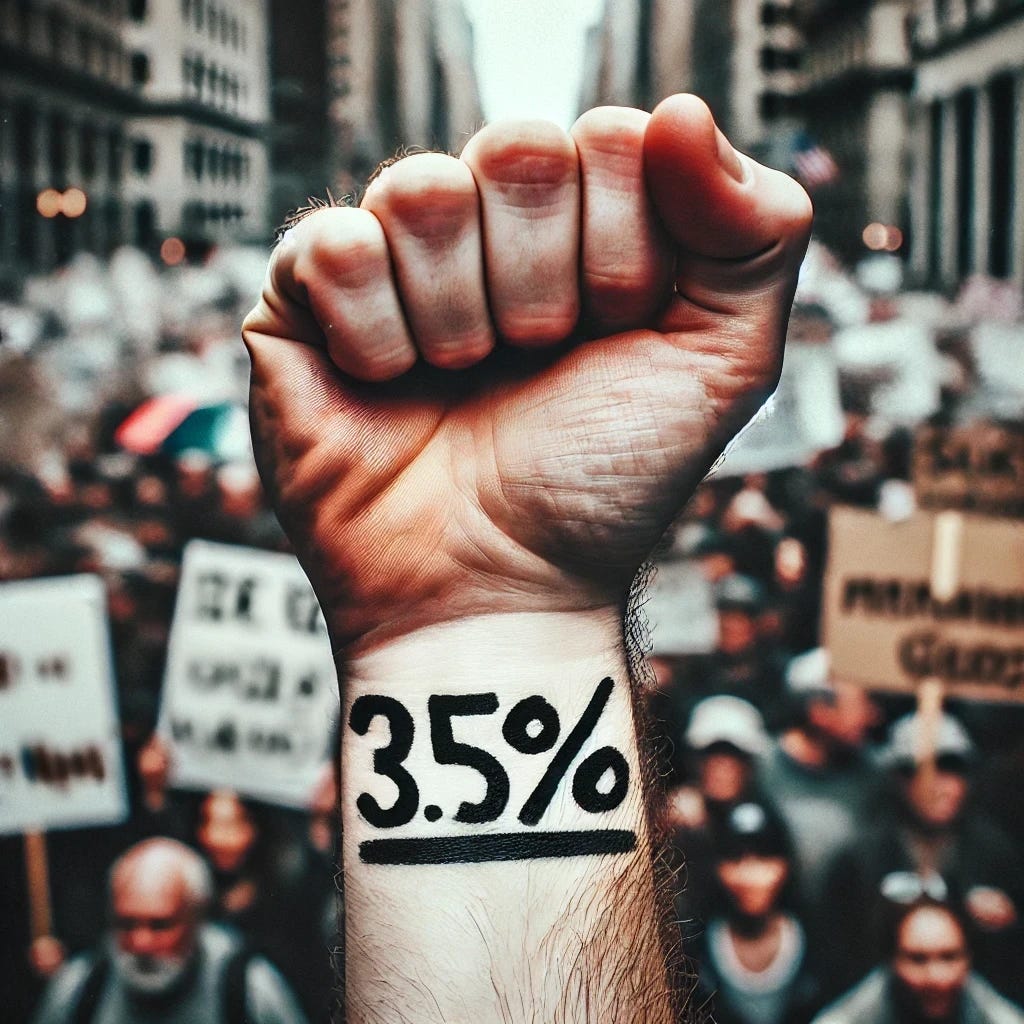
Throughout history, mass movements have reshaped societies, toppled regimes, and forced the hands of governments. But here’s something that might surprise you: real, lasting political change doesn’t require a majority. According to political scientist Erica Chenoweth, movements almost always succeed when just 3.5% of a country’s population actively engages in nonviolent resistance.
That number is staggeringly small. With a population of around 330 million in the U.S., roughly 11.5 million people could be enough to force real transformation. The challenge is getting that level of sustained engagement.
With political polarization deepening and public demonstrations often met with force, the question isn’t just whether mass mobilization works. The real question is how to do it effectively and safely in today’s political climate.
The Coffman Chronicle is powered by YOU—no billionaires, no corporate overlords. Help us keep exposing the BS, delivering sharp insights, and keeping you informed.
For just $8 a month or $80 a year, you can fuel the fight and be part of the movement.
Not ready to subscribe? No worries, chaos loves company, and you're always welcome. But if you’re fired up to keep us loud, proud, and unfiltered, smash that subscribe button now!
What is the 3.5% Rule?
The idea behind the 3.5% rule is simple: governments have no choice but to respond when enough people take consistent, collective action.
Chenoweth’s research, which examined protest movements from 1900 to 2006, found that nonviolent movements with at least 3.5% of the population participating almost always succeeded. This was true across different countries, political systems, and causes.
However, participation has to be sustained and strategic. Showing up to one march isn’t enough. Successful movements require long-term commitment through protests, strikes, boycotts, civil disobedience, and other disruptive tactics that force those in power to act.
Nonviolence is also critical. Data shows nonviolent movements are twice as likely to succeed as violent ones. They attract broader public support, making it harder for governments to justify crackdowns.
The 3.5% Rule in Action
History proves this strategy works. Some key examples include:
People Power Revolution (Philippines, 1986): Over 2 million Filipinos took to the streets, forcing dictator Ferdinand Marcos to flee.
The Civil Rights Movement (U.S., 1950s–1960s): Led by figures like Martin Luther King Jr., mass protests, boycotts, and sit-ins led to significant legislative victories.
The Fall of the Berlin Wall (East Germany, 1989): Half a million East Germans protested, triggering the collapse of the Berlin Wall and German reunification.
Serbia’s Bulldozer Revolution (2000): The student-led Otpor! movement helped topple dictator Slobodan Milošević.
Sudanese Revolution (2018–2019): Massive, sustained protests led to the removal of Omar al-Bashir after 30 years in power.
In each case, the movement wasn’t just about sheer numbers. Persistence, discipline, and strategy were what made the difference.
Can It Work in the U.S. Today?
Yes, but it’s complicated.
Recent years have shown glimpses of mass mobilization’s potential.
George Floyd Protests (2020): An estimated 15–26 million people participated, making it the largest protest movement in U.S. history. While it led to some police reforms, it failed to achieve large-scale systemic change.
Women’s March (2017): Millions rallied against Trump’s policies but struggled to maintain long-term momentum.
January 6 Riots (2021): Though anti-democratic and violent, the attack on the Capitol showed how even smaller, highly motivated groups can disrupt government institutions.
The biggest challenge in the U.S. is that change tends to happen through institutions rather than direct government overthrows. Successful movements here don’t collapse systems but pressure lawmakers, influence elections, and shift public policy.
The good news is that the 3.5% rule can still work. But only if activists stay organized, focused, and persistent.
How to Protest Effectively and Safely
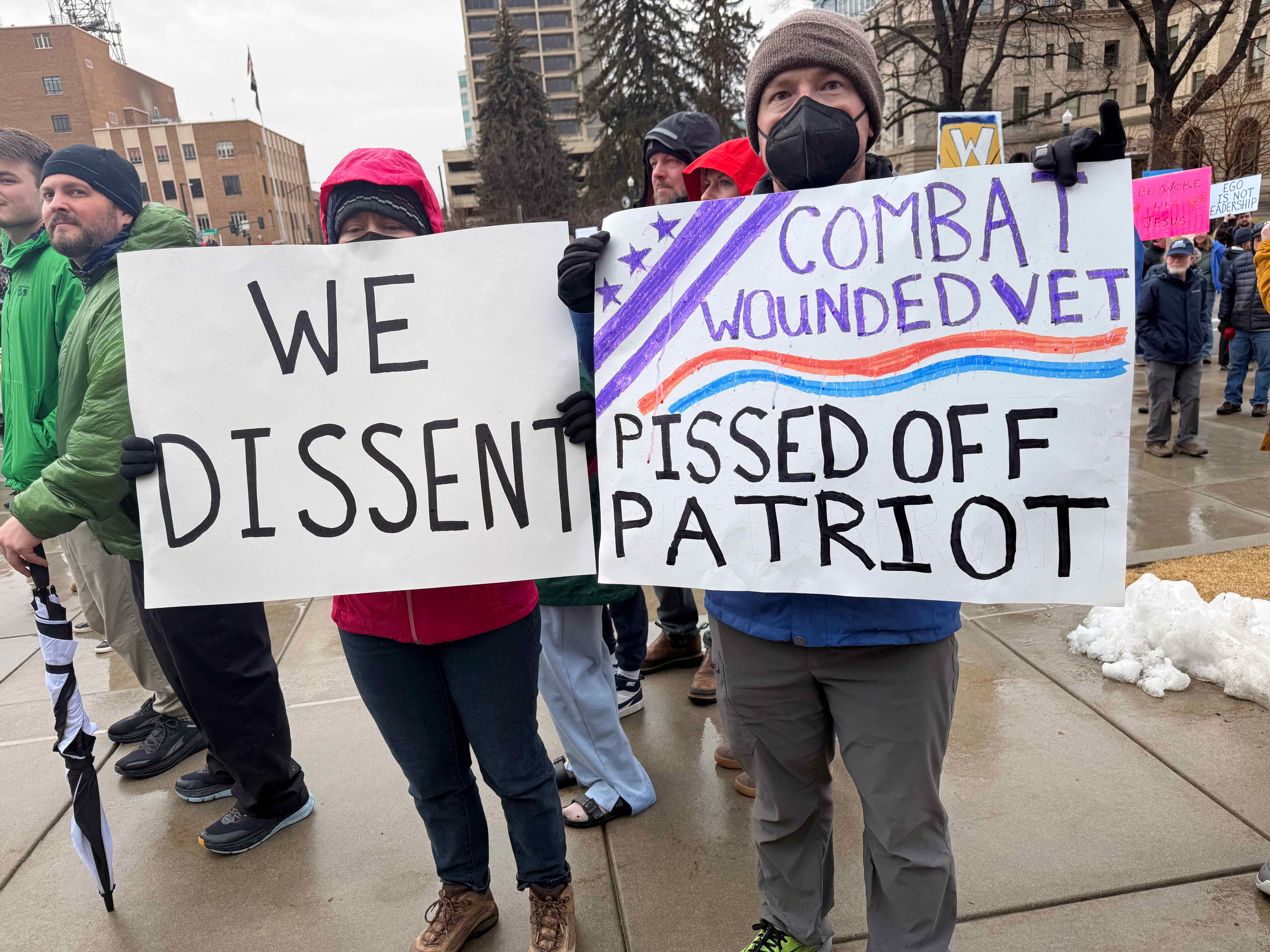
If you want to be part of meaningful change, it’s not just about showing up. Success depends on strategy, consistency, and staying safe.
1. Set Clear, Achievable Goals
Movements with vague demands lose momentum. Those with specific goals, like ending segregation during the Civil Rights Movement, are more likely to succeed. Whether fighting for police reform, voting rights, or climate action, focus on concrete and winnable changes.
2. Use Nonviolent Disruption
Successful movements don’t just march. They disrupt. Consider these tactics:
Strikes – Work stoppages create economic pressure.
Boycotts – Target corporations to force policy changes.
Sit-ins and Walkouts – Disrupt business as usual.
Mass Demonstrations – Large-scale peaceful protests amplify messages.
3. Protect Yourself Online
Governments and corporations monitor digital activity. Take precautions:
Use encrypted messaging apps like Signal for organizing.
Avoid sharing personal data on social media.
Be cautious about livestreaming since law enforcement watches.
4. Know Your Rights
The First Amendment protects peaceful protest, but there are legal limits.
You can protest in public spaces, but large gatherings may require permits.
Police cannot arrest you for peaceful protest but can intervene if laws are broken, such as trespassing or blocking traffic.
If detained, invoke your right to remain silent and ask if you are free to leave.
5. Prepare for Police Crackdowns
Even peaceful protests face repression. Protect yourself by:
Wearing goggles, masks, and comfortable shoes.
Carrying water, snacks, and emergency contacts.
Writing your emergency contact information on your arm in case your phone is confiscated.
Using a burner phone instead of your personal device to avoid tracking.
Bringing heat-resistant gloves to handle tear gas canisters safely.
6. Build a Broad Coalition
Movements succeed when they unite diverse groups. The Civil Rights Movement worked because it built a broad, cross-racial coalition. Avoid internal divisions and focus on the larger goal.
A Call to Action
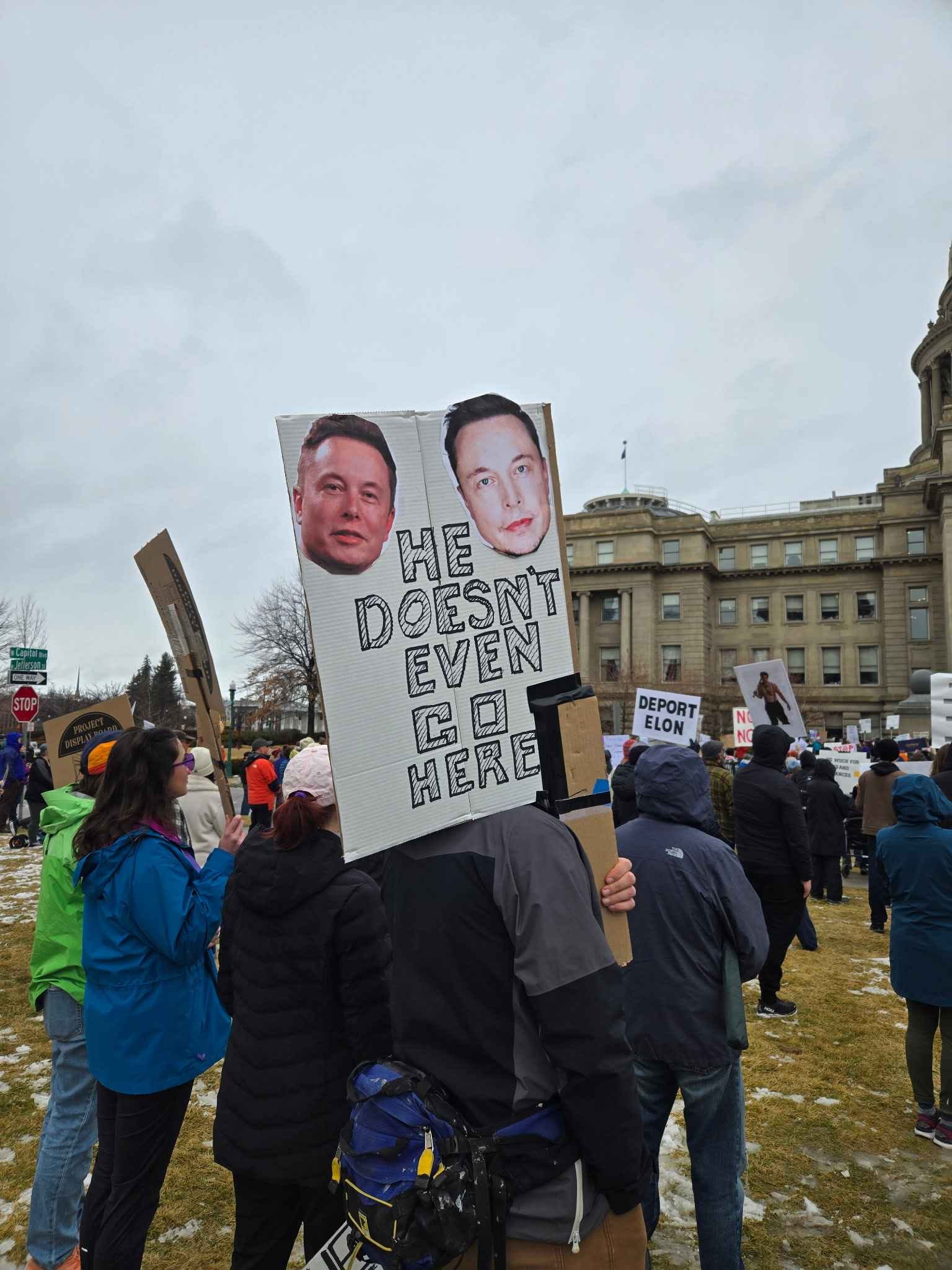
The 3.5% rule isn’t just a statistic. It is a strategy.
If 11.5 million Americans engaged in sustained, nonviolent activism, the political landscape could shift dramatically. But that won’t happen without commitment and organization.
Movements don’t succeed solely on passion. Protests matter, but so do voting, lobbying lawmakers, supporting grassroots organizations, and staying engaged for the long haul.
If you care about a cause, don’t just talk about it. Show up. Organize. Vote.
History tells us that change happens when people refuse to back down. The only question left is whether enough of us are willing to make it happen.
Bibliography:
Chenoweth, Erica, and Maria J. Stephan. Why Civil Resistance Works: The Strategic Logic of Nonviolent Conflict. Columbia University Press, 2011.
Chenoweth, Erica. "The '3.5% Rule': How a Small Minority Can Change the World." Harvard Kennedy School, 2019.
Chenoweth, Erica. "It May Only Take 3.5% of the Population to Topple a Dictator – with Civil Resistance." The Guardian, 2017.
"The Magic Number Behind Protests." NPR Planet Money, 2019.
"Nonviolent Resistance Proves Potent Weapon." Harvard Gazette, 2019.
"Stand Up and Be Counted: Six Ways to Protest That Will Make Your Voice Heard." The Guardian, 2025.
"The Success of Nonviolent Civil Resistance." International Center on Nonviolent Conflict.
"What is the '3.5% Rule' Beloved of Climate Protesters?" The Economist, 2021.
"Research – Erica Chenoweth." Erica Chenoweth's Personal Website.
Fiftyfifty.one