


Want to Know Your Rights?
Download a free digital copy of the U.S. Constitution—the same document Trump is trying to bulldoze. Learn exactly what he’s breaking… and how to fight back.
We just hit 25,000 subscribers, 1,000 articles, and 1,000 podcast episodes. To celebrate, paid subscriptions are 20% off for a limited time. That’s just $64/year—less than $1.25 a week.
The Missing Story
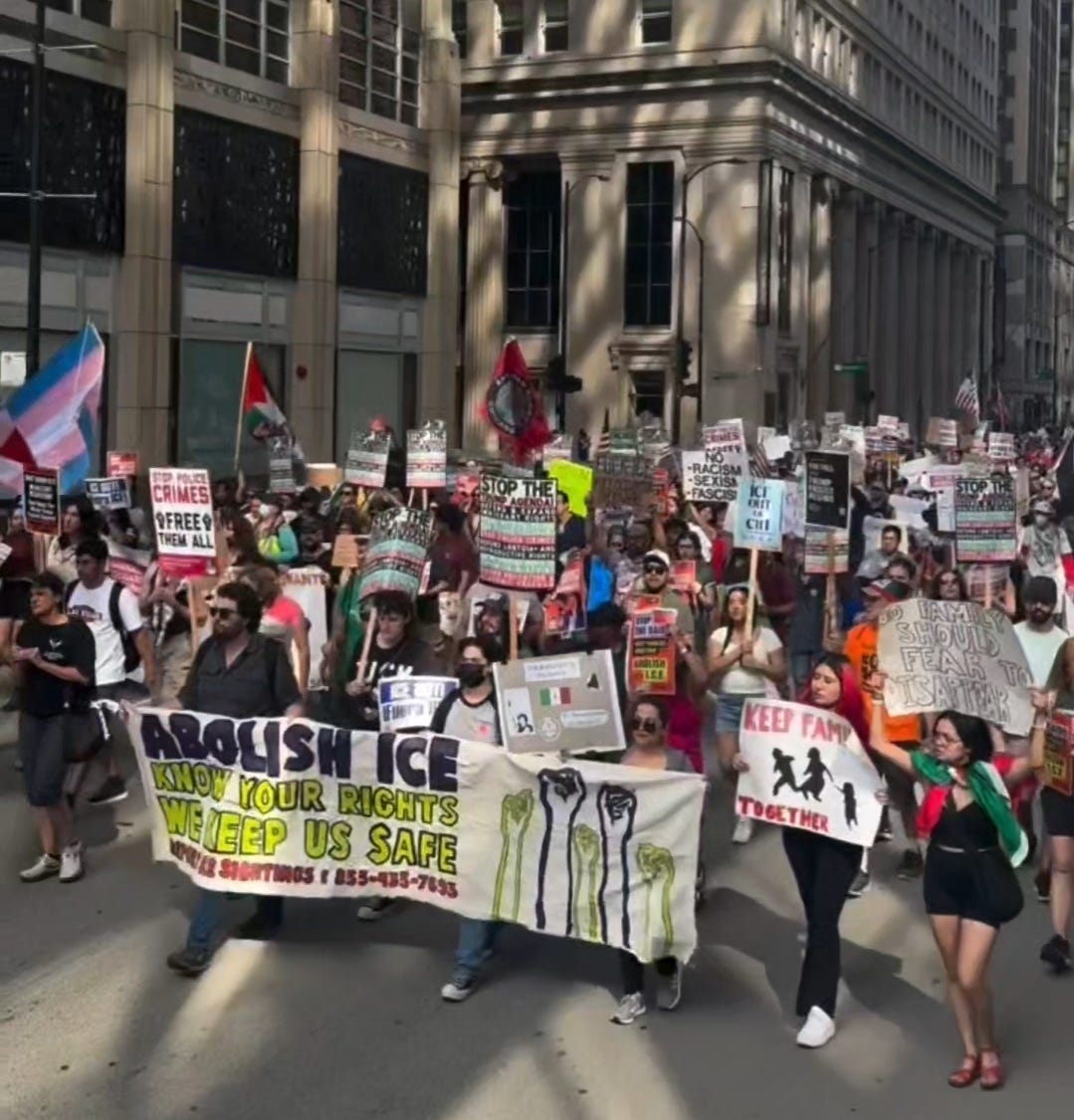
America is on its feet, and the cameras are looking the other way.
Across the country, people are marching, striking, and standing up in numbers we haven’t seen in a generation. Teachers on the statehouse steps. Farmers blocking highways. Veterans camping in the cold outside federal buildings. These aren’t random flare-ups. They’re a movement.
But you’d never know it from the six o’clock news.
ABC doesn’t mention it. CNN scrolls past it. The New York Times might toss a photo onto page A16, stripped of context, stripped of truth.
Gil Scott-Heron warned that “the revolution will not be televised.” Half a century later, Kendrick Lamar proved it could be, live, raw, and undeniable. When he rapped “they’re not like us” on the biggest stage in the world, the message hit harder than any press conference ever could: the people have their own cameras now, their own broadcast, their own truth.
However, when millions of Americans take to the streets today, the same corporate networks that looped that performance for clicks suddenly pretend they’ve lost the feed. The revolution is happening. They just refuse to show it.
This isn’t oversight. It’s orchestration.
Because to air these protests would be to admit that people are waking up, that the “normalcy” sold on screen is cracking. Silence isn’t an accident; it’s a business model. It’s the most profitable form of censorship ever invented.
The blackout is manufactured — democracy muted by omission, edited for the comfort of power.
So the question becomes: Who decides what America sees?
The Silence Is the Story
When the cameras fall silent, numbers reveal the truth.
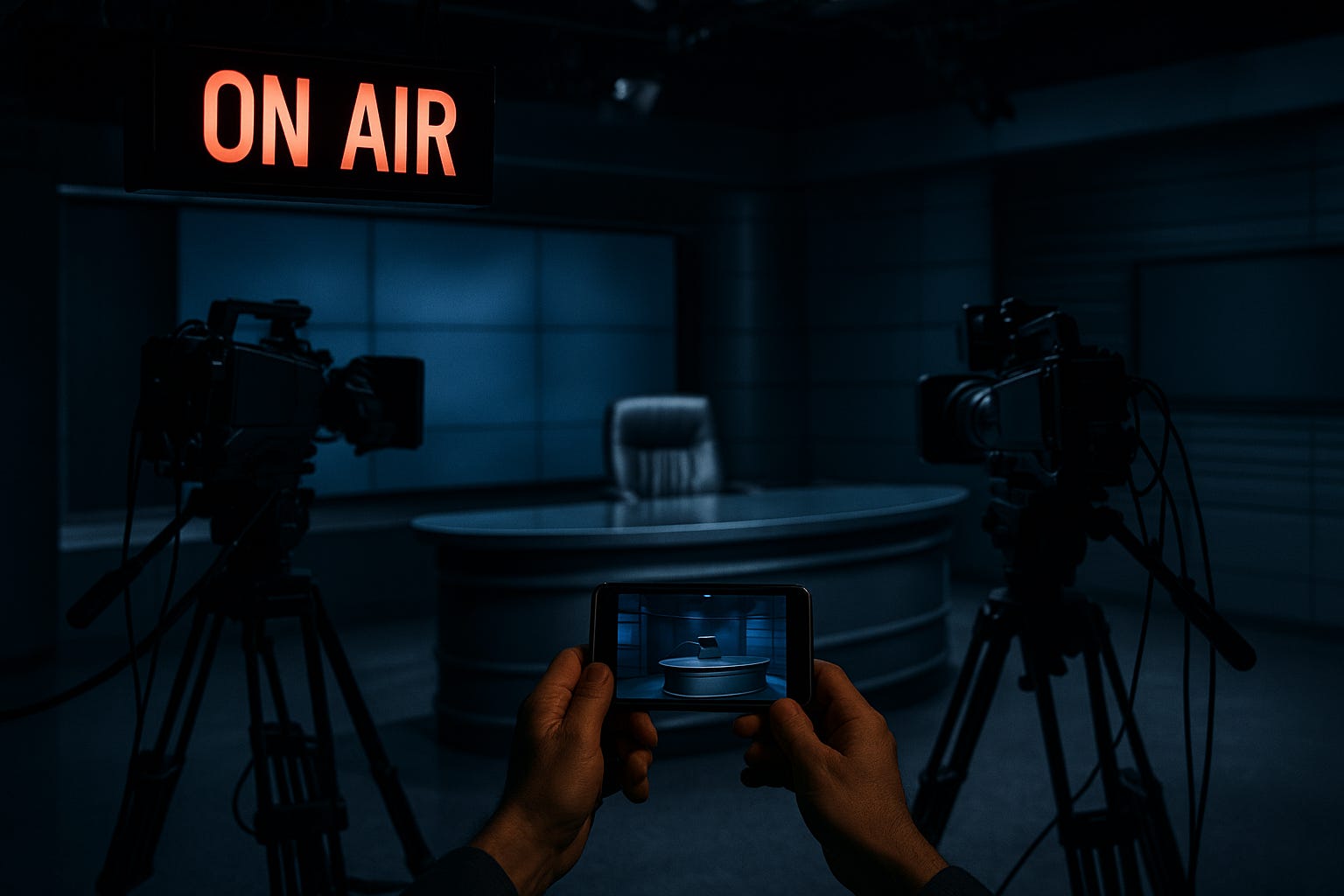
Media watchdogs at FAIR analyzed three major nationwide protest waves this year — The People’s March, 50501 State Protests, and No Kings Day. Across the evening news shows of ABC, CBS, and NBC, the combined number of dedicated segments was exactly zero.
Print coverage wasn’t much better. The New York Times and Washington Post buried short wire-service blurbs below the fold. When the Los Angeles Times did run a piece, it was about traffic delays, not democracy in action.
This is what researchers call the protest paradigm, the media’s habitual framing of dissent as disorder. Studies show the pattern: protesters are “angry,” “unruly,” “disruptive.” The focus is on arrests and clashes, rather than causes or coalitions. If there’s no broken window, there’s no breaking news.
Even the rare coverage that makes it through gets rewritten in passive voice, drained of agency:
“Crowds gathered.”
“Police responded.”
“Emotions ran high.”
The people vanish from their own movement, reduced to background noise in their own story.
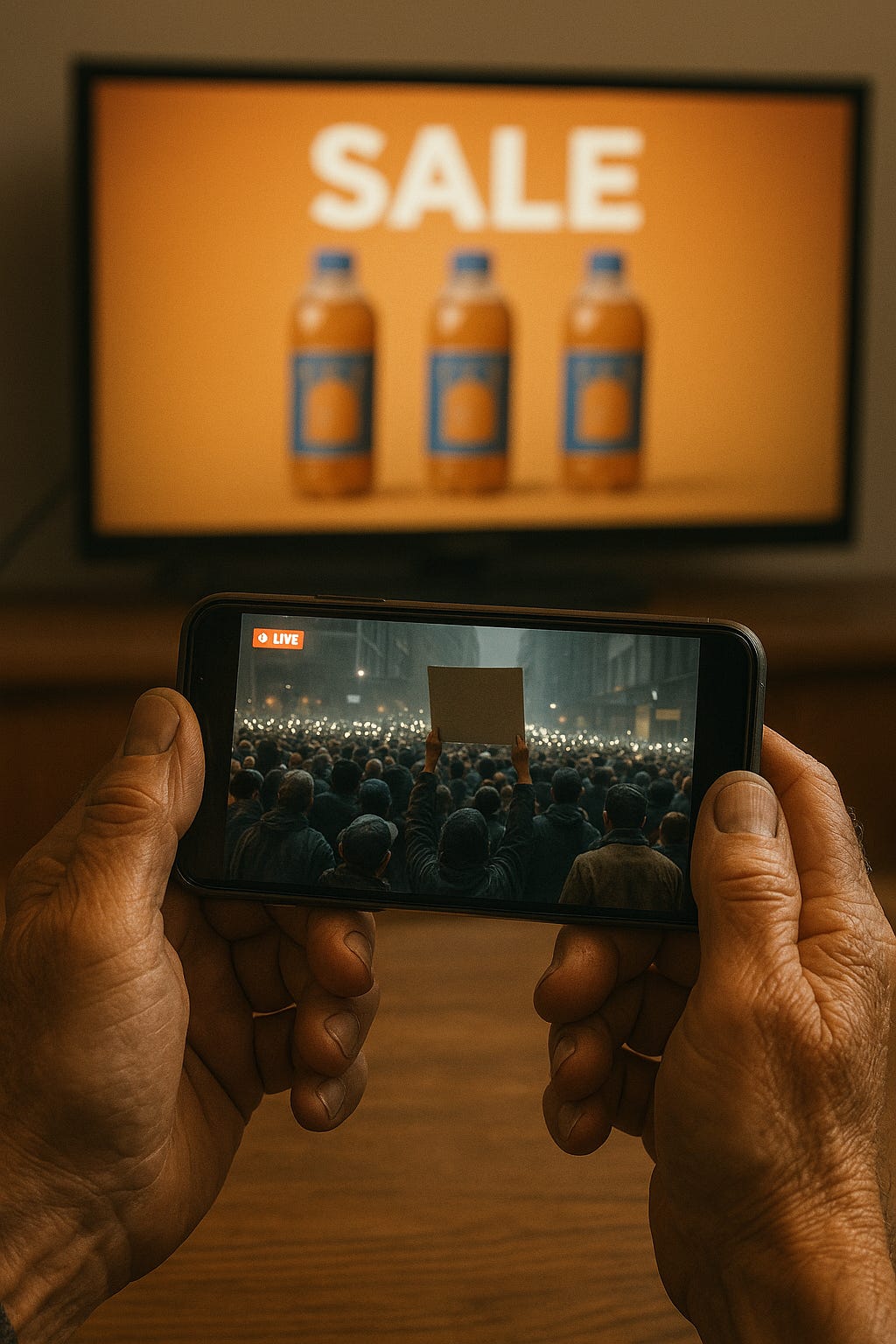
Meanwhile, the same networks that can dedicate an entire hour to a celebrity meltdown can’t spare a minute for thousands of citizens demanding fair wages, housing, or healthcare.
This isn’t journalism. It’s narrative management.
The cost isn’t just truth; it’s visibility. When people don’t see resistance, they assume it doesn’t exist. When movements disappear from screens, they fade from the nation’s imagination.
That’s the sleight of hand: make dissent invisible, and you make it irrelevant.
The silence is the story, and every empty broadcast slot is an editorial decision to protect the powerful from the sight of the people who built their empires.
That’s not an accident. It’s ownership.
Who Owns the News
If you want to know why you’re not seeing it, look at who signs the checks.
Every major broadcast network in America is owned by a corporate empire with deep political and financial interests. NBC belongs to Comcast, whose lobbyists carpet Washington. ABC is part of Disney, forever negotiating tax breaks and IP deals. CBS sits under Paramount Global, where journalism is just another content stream between ad blocks and movie trailers.
These aren’t newsrooms anymore. They’re subsidiaries. And subsidiaries don’t run revolutions. They insure against them.
Follow the money and you’ll see the story they’re not telling. Defense contractors sponsor the Sunday shows. Oil companies buy primetime during climate coverage. Big Pharma underwrites programs that should be asking why insulin costs more than rent.
You don’t bite the hand that feeds your quarterly earnings.
We reported on the silencing of corporate media in our Muted series this summer. See that here:
Note: These articles are more than 45 days old and now live in our archive. Become a paid subscriber for exclusive perks including full access to our 1100+ article archive.


That’s why, when protesters demand living wages, march against corporate greed, or call out billionaires buying elections, the coverage often evaporates. Not because reporters don’t care — but because executives do. They care deeply about keeping advertisers comfortable and investors calm.
Inside those boardrooms, dissent isn’t news, but rather a risk management strategy. The fewer people who see resistance, the safer the market looks.
That’s not bias. That’s business.
This is corporate capture, when the watchdog becomes the guard dog, trained to protect owners instead of the public.
The result is an industry that pretends to be neutral while censoring solidarity, a news cycle where power writes the script and truth gets cut in post-production.
So when the anchors smile and say “nothing much happened today,” they’re right — for them, nothing did. The system worked exactly as designed.
The Real Reporters
While the legacy networks hide behind studio glass, the real reporters are out in the rain.
They’re livestreaming from sidewalks and courthouse steps, dodging police lines with battery packs taped to their chests. They’re Substack writers piecing together timelines at kitchen tables, podcasters whispering facts into USB mics, students stitching protest clips into TikToks before the algorithm buries them.
No million-dollar cameras. No makeup. Just clarity.
These are the journalists who don’t wait for press passes. They press record. When ABC ignores a march, they film it. When The Times sanitizes a headline, it publishes the full story. When a crowd chants in the cold, they don’t call it “unrest”, they call it democracy breathing.
Independent media isn’t perfect, but it’s free — free of boardroom gatekeepers and ad-sales filters. Every clip uploaded, every article shared, is an act of defiance against engineered silence.
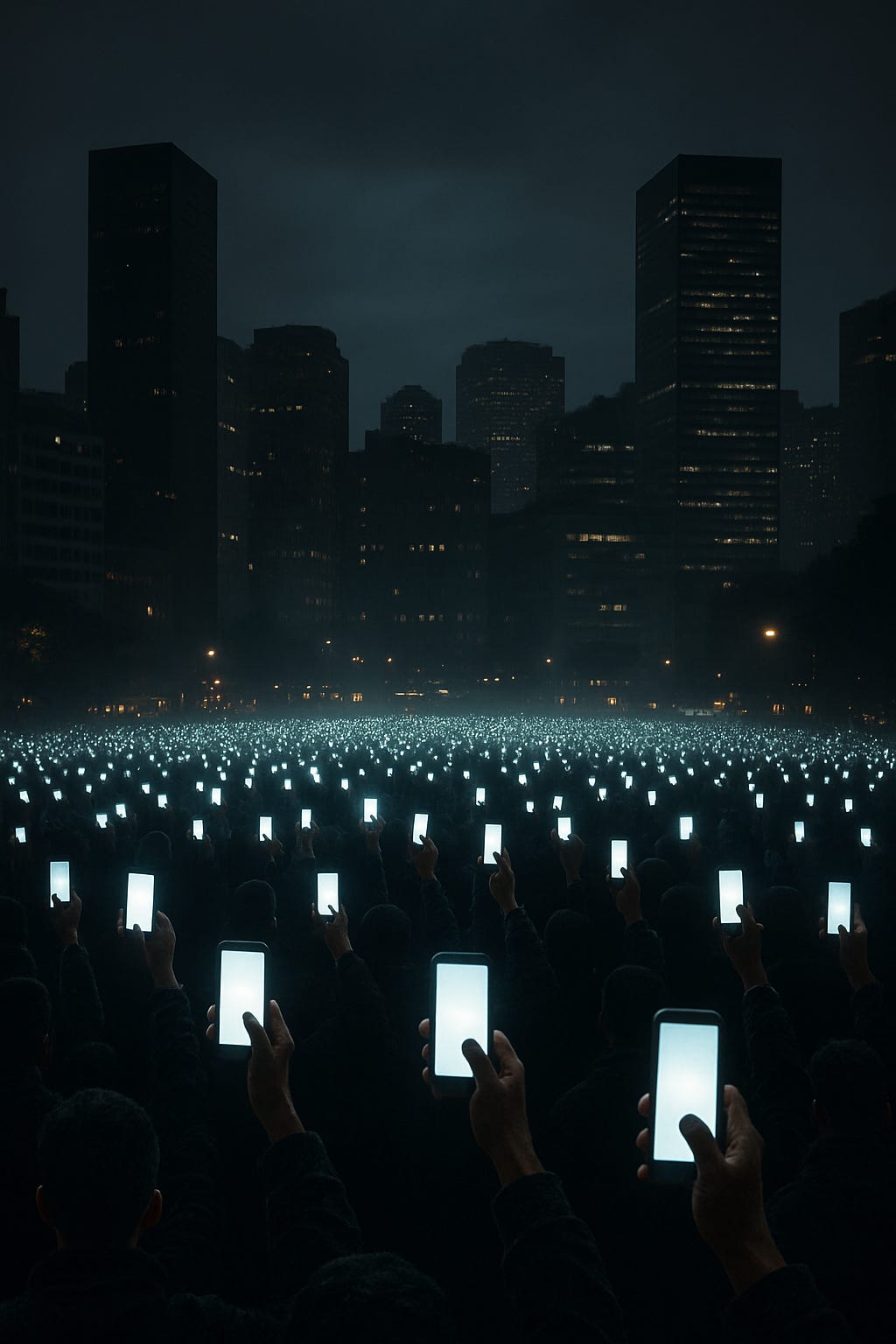
And the beauty of it? The revolution is being televised — just not by them. It’s broadcast on phones, mirrored across platforms, amplified by people who refuse to disappear. Kendrick said it best: “They’re not like us.” He was right. Because “us” is everyone who still believes that seeing the truth shouldn’t depend on who can afford the airtime.
Legacy media built walls. Independent media built networks.
That’s why when the lights go out on the corporate stage, the glow you see in the dark comes from phones raised high, citizens documenting what the billion-dollar newsrooms won’t.
They can own the cameras. We’ll own the story. And owning the story means owning the future of truth itself.
Don’t Just Read. Resist.
Legacy media has made its choice. They’ve sided with the advertisers, lobbyists, and politicians who treat silence as a strategy. They’re not failing. They’re functioning exactly as designed.
That’s why independent outlets matter more than ever. We don’t answer to shareholders. We answer to you. Every word published here, every clip shared, every headline they ignore — it exists because people like you refuse to be kept in the dark.
If you’ve ever shouted at the TV, “Why isn’t anyone covering this?”, this is your answer. Because we’re the ones covering it.
Independent journalism isn’t charity. It’s survival. It’s how truth stays visible when the networks pretend not to see.
So if you want real coverage — if you want cameras that point at the people instead of the powerful — then support it. Become a paid member today. Not because it’s fashionable, but because this is what it looks like when a democracy fights for its pulse.
The revolution is being televised — just not by them. We’re the broadcast now.
Stay Informed. Stay Loud.
Subscribe to The Coffman Chronicle for no-BS political analysis, action guides, and daily truth bombs you won’t get from corporate media.
Bibliography:
FAIR. “The Resistance Will Not Be Televised.” March 2025.
The Guardian. “Why Is the Media Ignoring Growing Resistance to Trump?” June 13, 2025.
Tufts Daily. “The Revolution Will Not Be Televised: How Media Suppresses Protest Coverage.” September 2025.
D0N’T BE aL0Ne : EVeRYb0dY NeedS WiTNeSSeS
SH0W UP . STaNd UP . BE WiTH
LiKe-HeaRTed Pe0PLE . GeT ReFReSHed