


On February 3, 2026, the House of Representatives narrowly passed a five-bill government funding package that had already cleared the Senate days earlier. Hours later, President Trump signed it into law, officially ending a two-day partial government shutdown that began when the previous continuing resolution expired at midnight on February 1.
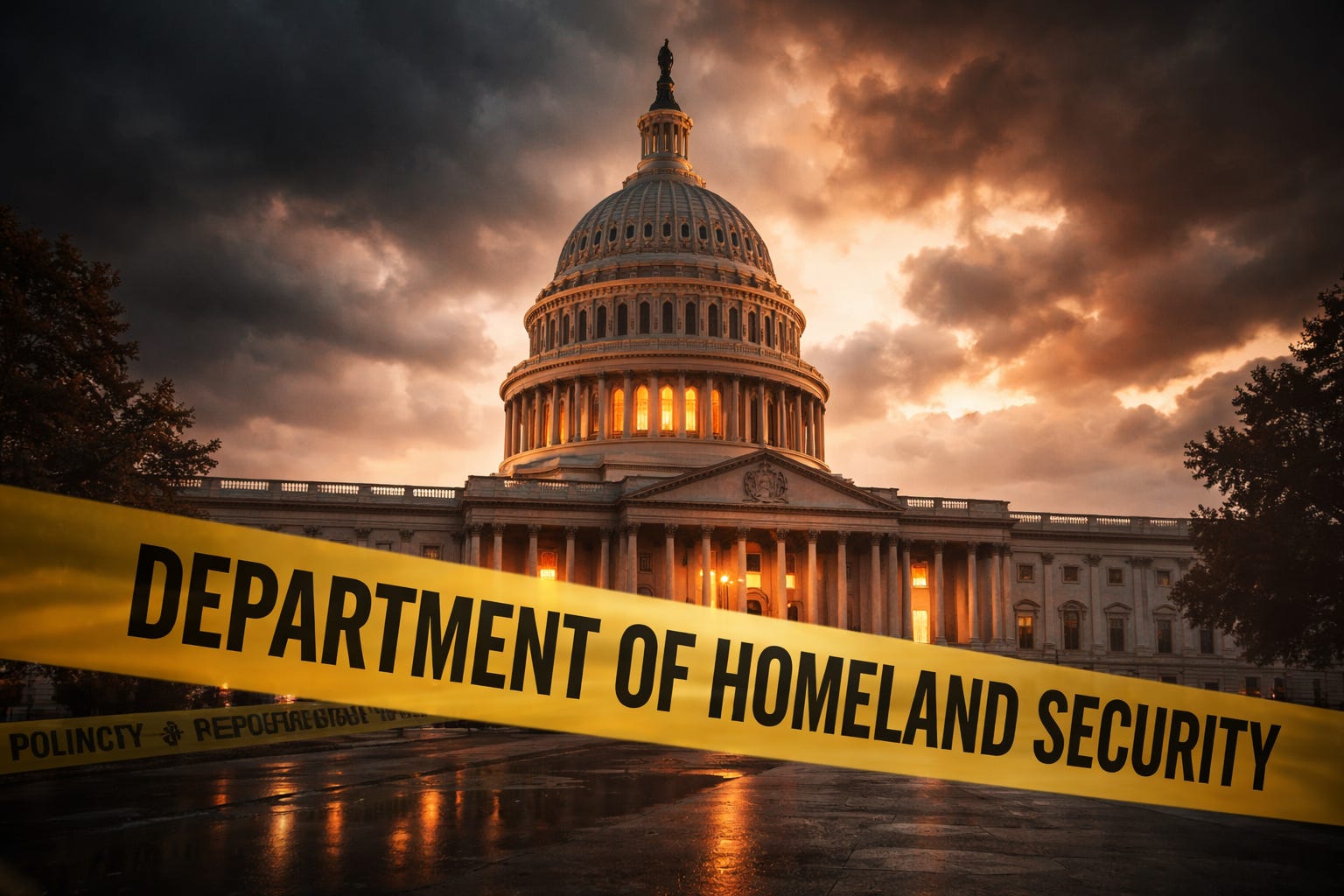
The legislation provides full-year funding through September 30 for the Departments of Defense, Education, Health and Human Services, Energy, State, and several related agencies. It also includes funding for transportation, financial services, and public housing programs. The only major agency excluded from full-year appropriations was the Department of Homeland Security. DHS will continue operating under a short-term extension, giving lawmakers until February 13 to negotiate a final bill.
This resolution ends the second government shutdown in just five months, both triggered by the failure to pass a complete fiscal year 2026 budget on time last year. The earlier impasse led to the longest government shutdown in U.S. history. The current package, unlike many before it, passed without ideological riders or last-minute policy demands.
This Community Is Powered by You
What started as a small circle has grown into something much bigger, and it’s all because of readers like you.
Every time you forward this email, post it on socials, or bring someone new into the fold, you’re helping build one of the most passionate, independent political communities out there.
Want to keep the momentum going?
Share this newsletter with someone who should be part of this conversation.
Thank you for being here. It means everything.
How We Got Here: Six Bills, One Catalyst, and a Broken Stalemate
This moment was not inevitable. Just two weeks ago, it appeared Congress was finally moving toward a full-year government funding solution. On January 22, the House passed a six-bill minibus that included appropriations for Homeland Security, along with five other major spending bills. That package followed smaller three-bill minibuses passed last fall and earlier in January, which had already secured full-year funding for roughly half of the federal agencies.
Then came January 24. That day, 37-year-old Alex Pretti was fatally shot by federal immigration enforcement agents in Minneapolis. Video footage from bystanders contradicted DHS claims that Pretti was armed, and the Hennepin County medical examiner later ruled his death a homicide. His killing immediately changed the political climate in Washington, particularly as tensions were already high following the shooting of Renee Good earlier in the month. What had seemed like an inevitable funding package began to unravel.
See our recent reporting here:


Public outrage over Good and Pretti’s deaths reignited calls from Democratic lawmakers to condition DHS funding on new oversight measures. Those demands were not new, but now they had faces and names. Senate Democrats, already wary of approving ICE and CBP budgets without accountability, announced they would not advance the six-bill minibus with DHS included. Despite GOP pushback, eventually Senate leadership responded by stripping DHS from the package, adding a short-term continuing resolution to fund the agency through February 13, and passing the other five bills separately. The House, under pressure to end the shutdown quickly, narrowly passed the Senate’s version unchanged on February 3.
What Made It In, and What Didn’t
The final legislation, signed by President Trump, funds the remaining government agencies minus DHS through the end of the fiscal year. It includes robust funding for Defense, but not at the level requested by the White House. While Trump had asked Congress to approve a record-breaking $1.01 trillion in defense spending, the enacted bill provides roughly $839 billion—still high, but far short of what hardliners demanded.
Beyond the Pentagon, the package largely protects domestic priorities. Public education, student loans, Pell Grants, Head Start, and Title X family planning services remain intact. There are no cuts to public housing or transit programs. Clean energy research and climate resilience funding also survived Republican attempts to defund them.
Crucially, the final bill is free of the ideological riders House Republicans had pushed throughout last year. Proposals to defund DEI programs, restrict gender-affirming care, roll back abortion access, or insert border policy mandates were all stripped from the final package. The IRS, long a target of right-wing attacks, retains its modernization funding. By all indications, this is one of the cleanest major appropriations bills passed by Congress in recent memory.
All Eyes on DHS
What comes next may be the most consequential funding fight of the year. The Department of Homeland Security is operating under a short-term continuing resolution that expires on February 13. When that extension runs out, Congress will face a binary choice: pass a full-year DHS appropriations bill or allow a partial shutdown that affects only DHS.
This time, there is no broader government budget hanging in the balance. There is no Pentagon funding to use as leverage. Democrats are demanding reforms. Among them are mandatory body cameras for ICE and CBP agents, restrictions on detention quotas, limits on warrantless surveillance, and greater oversight of use-of-force incidents.
Republicans, by contrast, are pushing for a clean extension of DHS funding with no new conditions. Some are even calling for additional funds to expand ICE operations and harsher immigration policies. However, with DHS funding now isolated, Democrats are in a stronger position to insist on accountability.
Their case was made even stronger this week as Congress held hearings on DHS abuses. On February 3rd, members of the House and Senate held a forum to hear testimony from Americans who had been shot at, assaulted, or wrongfully detained by federal immigration officers. The brothers of Renee Good, a U.S. citizen killed during a DHS operation, testified publicly for the first time.
The room was packed with press and Democratic lawmakers. Republican members, while invited, did not show up. Not a single Republican lawmaker is reported to have attended the hearing.
The Hearing They Skipped
There are moments in politics when silence says more than a thousand speeches. This was one of them.
At a time when Republicans are demanding full DHS funding with no reforms, they refused to hear the stories of Americans harmed by the very agency they want to bankroll. The families who came to testify were not political operatives. They were grieving brothers, sisters, and survivors. They had no demands other than to be heard. And yet the party that claims to back law enforcement and protect the Constitution could not bring itself to sit in the room and listen.
This is not just a policy failure. It is a moral one. If lawmakers cannot face the families of those killed by federal agents, they should not be entrusted with funding those agents’ operations.
For Democrats, the hearing served both a moral and strategic purpose. It humanized the debate. It reinforced their argument that DHS, unlike other agencies, should not receive automatic renewal without reform or operate with guardrails. Most tellingly, it highlighted the GOP’s stunning unwillingness to engage.
A Clean Bill That Shouldn’t Feel Revolutionary
The fact that Congress passed a clean funding package without culture war amendments should not feel like a victory. It should feel normal. This is what governance is supposed to look like: appropriations bills funding programs, not ideological crusades masquerading as budget policy.
Yet in today’s political environment, that outcome is rare enough to warrant notice.
With DHS now standing alone, the country may finally get a real debate about the scope, conduct, and accountability of federal immigration enforcement. Whether Congress meets that moment remains to be seen.
Meanwhile, the public is watching, and after the events of the last year of DHS abuses, silence is no longer an option.
Stay Informed. Stay Engaged.
If you’re finding value in this kind of reporting with clear timelines, hard facts, and policy analysis, subscribe to get the next the moment it drops. We track the stories that shape national policy, expose the power plays behind the headlines, and ask the questions cable news won’t.
The government just passed the cleanest funding bill in a generation. Let’s make sure it doesn’t take another generation to do it again.
Democracy works better when more of us are watching.
Sources:
Trump signs $1.2T funding bill, ending partial government shutdown – The Guardian, February 3, 2026
Trump signs $1.2T spending package that ends a brief government shutdown – Fierce Healthcare, February 3, 2026
House narrowly passes $1.2T funding deal to end shutdown – The Washington Post, February 3, 2026
Congress passes $839B budget for Defense as part of minibus – Air & Space Forces Association, February 3, 2026
House approves partial funding package ahead of shutdown threat – CBS News, January 8, 2026
Government Shutdown 2026: Updates as critical funding deadline looms – Economic Times, February 2, 2026
House passes Commerce, Justice, Science; Energy & Water; Interior funding bills – House Appropriations Office, January 8, 2026
Senate passes five funding bills, strips out DHS to allow renegotiation – U.S. Senate Appropriations Committee, January 30, 2026
House passes final FY26 appropriations and DHS appropriations acts – House Appropriations Office, January 22, 2026
Appropriations Watch: FY 2026 updated through Feb 3 – Committee for a Responsible Federal Budget, February 3, 2026
2026 United States federal government shutdown – Wikipedia
Senate Democrats stall Senate vote on House-passed spending package, demanding separate DHS vote – National Low Income Housing Coalition, January 26, 2026
Congress nears finish line on 2026 budget bills – American Federation of Government Employees, February 2, 2026
The cowardly no shows of the republicans at the victim testimonies for the DHS funding is an example of their hypocrisy and incompetence and general denial and fantasy about how their “immigration control” is hurting regular Americans and law-abiding immigrants. Not only that, but law abiding immigrants who except for having entered this country illegally are an important part of our economy. They are not targeting the “violent criminals”, they are targeting 5year old kids. Since the republicans seem to be unable to listen to the results of their policies, let the Democrats have charge of the DHS, maybe it will become more humane. The Democrats need to get more of a spine and call it like they and the rest of us see it and take care of the killing and abuse of human beings.
The real battle begins, it will take a huge effort of staying focused to get it done. The Democrats can't lose site of the prize at the end. Keep up the fight.