


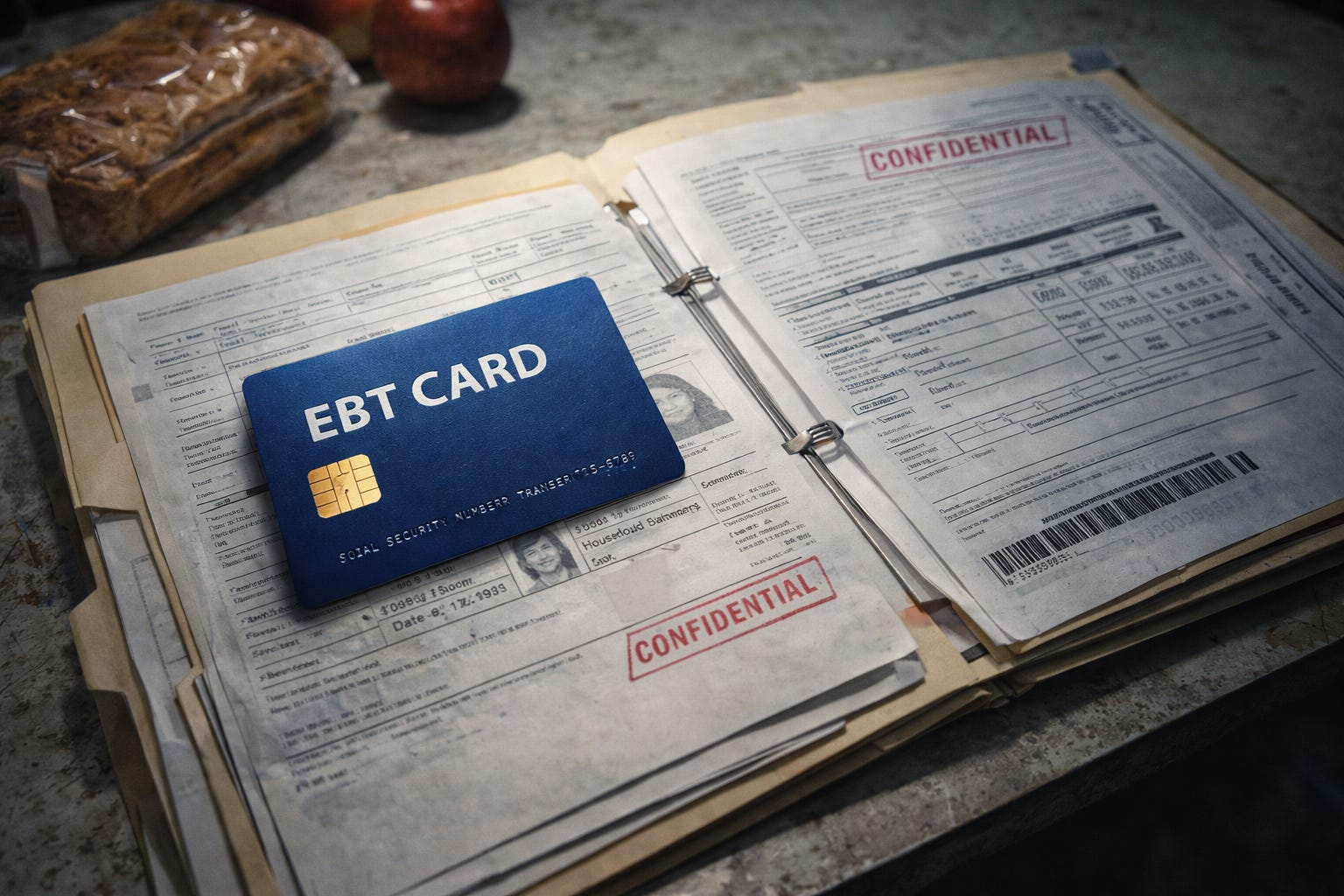
Most people assume that when they apply for help buying groceries, they are entering a food program, not a surveillance system. They assume the government wants to know whether they qualify, not whether their names, addresses, birth dates, Social Security numbers, and other personal details can be swept into a broader federal database. That is what made the fight over SNAP recipient data so disturbing. A program meant to help families eat became, in the eyes of multiple states and advocates, a way for Washington to demand sensitive information on millions of people. USDA announced in May 2025 that states would be required to share records associated with SNAP benefits, and lawsuits quickly followed challenging the breadth and legality of that demand.
That might sound bureaucratic until you strip away the language and look at real life. A parent filling out paperwork for food assistance is not signing up to help build a federal database. A senior trying to make it through the month is not consenting to have private information turned into leverage in a fight between Washington and the states. Yet that is how many state officials saw the administration’s push: not as routine oversight, but as an attempt to force states to hand over detailed personal data under threat of financial punishment. On February 26, 2026, a federal judge issued a preliminary injunction blocking the USDA from withholding SNAP administrative funding from 22 plaintiff states that refused to comply.
SNAP serves about 42 million people. When a program that large becomes the subject of a mass-data fight, the issue is no longer just about privacy. It is power: who gets scrutinized first, who gets pressured first, and whether families who need help feeding themselves can also be made unusually vulnerable to government overreach.
This Community Is Powered by You
What started as a small circle has grown into something much bigger, and it’s all because of readers like you.
Every time you forward this email, post it on socials, or bring someone new into the fold, you’re helping build one of the most passionate, independent political communities out there.
Want to keep the momentum going?
Share this newsletter with someone who should be part of this conversation.
Thank you for being here. It means everything.
What the Government Tried to Take
What the USDA wanted was not a narrow audit file or a limited fraud review. It was a sweeping pool of personal information tied to people who had applied for or received SNAP benefits. On May 6, 2025, USDA said states would be required to share “all records associated with” SNAP benefits and allotments with the federal government. AP later reported that the legal challenge described a demand for five years of data, including names, birth dates, personal addresses, and Social Security numbers. Reuters reported that the requested information also included immigration status.
That breadth is what made the request so alarming. SNAP is one of the largest anti-hunger programs in the country, reaching parents trying to cover groceries, seniors on fixed incomes, disabled Americans, and working families whose paychecks still do not stretch far enough. When the government asks for “all records” in a program that large, the scale changes the meaning of the request. This was not targeted oversight. It was bulk collection.
USDA said the purpose was to ensure the lawful use of federal funds and crack down on waste, fraud, and abuse. But if the administration had wanted a narrow anti-fraud review, it could have sought limited records tied to specific concerns. Instead, states were told to turn over years of highly sensitive data connected to ordinary people who had done nothing more than ask for help buying food. That is where the story stops looking like administration and starts looking like overreach.
The Official Excuse and the Real Alarm
On paper, the USDA’s argument sounded familiar. Protect taxpayer dollars. Root out waste. Prevent fraud. Officials know that language sounds responsible before anyone asks how much information is actually being gathered or what happens to it next. USDA used exactly that framing in its May 2025 announcement.
The states that sued did not argue that fraud prevention is illegitimate. They argued that the scale of the request went far beyond what normal program oversight should require. AP reported that the lawsuit challenged USDA’s demand for five years of data on SNAP applicants and enrollees, including names, birth dates, personal addresses, and Social Security numbers. That does not look like a narrow check on suspicious claims. It looks like a bulk collection order.
And once the request is that broad, the next question becomes unavoidable: who else could get the data, and for what? AP reported that the states challenging the order warned the information could be used beyond SNAP administration, and that a judge later temporarily barred the federal government from collecting personal information about SNAP enrollees in 21 states and Washington, D.C. In that context, the USDA’s fraud rationale did not calm fears. It made the request look like one more front in a larger effort to turn ordinary administrative systems into sources of enforcement data.
Why States Went to Court
That is the point at which states stopped treating this as a troubling policy choice and began treating it as a legal emergency. USDA’s May 6, 2025, directive did not merely request cooperation. It asserted that states had to provide “all records associated with” SNAP benefits and allotments to the federal government. For the states that sued, that was a line-crossing demand from the start.
The pushback began quickly. AP reported in May 2025 that privacy and hunger groups sued the USDA over its attempt to collect personal data from SNAP applicants and recipients, arguing that the department had no lawful basis to demand such a broad sweep of records. By September 2025, a federal judge had temporarily barred the administration from collecting personal information about SNAP enrollees in 21 states and Washington, D.C., a sign that the courts saw enough risk to step in before the underlying legal questions were fully resolved.
Then came the sharper escalation. On February 26, 2026, U.S. District Judge Maxine Chesney issued a preliminary injunction blocking the USDA from withholding SNAP administrative funding from 22 Democratic-led states that refused to hand over the demanded data. Reuters reported that the judge found the department’s data demands and its threat to cut funding likely violated the SNAP law. A preliminary injunction is not symbolic. It means the court believed the challengers had shown sufficient merit and potential harm to justify halting the government while the case moved forward.
This was not one stray lawsuit filed for headlines. It was a widening legal revolt against the idea that the federal government could use a food-assistance program to obtain years of sensitive personal data and then punish states that resisted. Once judges began intervening more than once, the story stopped looking like a paperwork dispute and started looking like a warning.
Hand Over the Data or Pay the Price
What made the administration’s push especially dangerous was not just the size of the data demand. It was the threat attached to it. Reuters reported that the USDA moved to withhold SNAP administrative funding from states that refused to provide the requested information until Judge Chesney blocked that effort for the plaintiff states. That transformed the dispute from a fight over records into a fight over leverage.
That distinction matters because administrative funding is not some abstract line item. It helps states operate the machinery behind food assistance: staff, systems, oversight, and the day-to-day work that keeps benefits moving. So when the federal government signals that funding could be pulled unless states surrender sensitive personal data, the pressure does not land only on governors or attorneys general. It hangs over the entire structure that families rely on to get help putting food on the table.
That is why this was never just a privacy story. It was a coercion story. States were not simply being asked to interpret a policy memo. They were being forced to choose between protecting residents' private information and risking disruption of a core anti-hunger program. The funding threat revealed the administration’s real theory of the case: if the data request would not stand on persuasion alone, it might stand on pressure.
The Poor Are Always Tested First
What makes this hit harder than a typical privacy dispute is who the people in the records are. These are families applying for help buying groceries, seniors trying to stretch a fixed income, disabled Americans navigating an already demanding system, and working households whose paychecks still do not cover the basics. SNAP serves about 42 million people, which means the scale of any overreach is enormous from the start.
That changes the moral shape of the story. When the government overreaches into a program like this, it is not reaching first into the lives of the powerful. It is reaching into the lives of people who are already under scrutiny, already asked to prove need, and already forced to disclose deeply personal details just to get help keeping food on the table. AP’s reporting on the lawsuit makes that plain. The records at issue included names, birth dates, personal addresses, and Social Security numbers.
There is also a cruel asymmetry built into that kind of demand. Families do not come to SNAP with leverage. They come because groceries cost too much, wages are not enough, rent is high, and something in the monthly budget has already broken. So when a program built to relieve hunger becomes a vehicle for gathering expansive personal data, the burden falls on households that often have the least ability to protect themselves if the government decides the rules are changing. That is one reason the court rulings mattered so much. Judges saw enough risk to step in before the administration could force the issue to its endpoint.
This Was Never Just a SNAP Story
The reason so many officials saw this as more than a SNAP story is that it did not happen in isolation. AP reported that the states challenging USDA’s demand argued it fit into a broader push to gather residents’ private information across agencies, and Reuters reported that lawmakers objecting to the plan described it as an effort to build a nationwide database of SNAP recipients. That broader context changed how the USDA demand read. It no longer looked like a self-contained records dispute. It looked like part of a larger governing instinct: take systems built to deliver public services, mine them for sensitive information, and normalize the idea that access through one program can be used for other purposes too.
Big shifts in power do not always arrive with a dramatic speech or a televised showdown. Sometimes they arrive through forms, databases, funding threats, and the quiet redefinition of what government thinks it is entitled to know. In that kind of story, poor and working people are often the first ones tested, because they are easiest to stigmatize and easiest to pressure. That is what makes the SNAP case feel so revealing. It shows how quickly a program designed to reduce hunger can be pulled toward a very different purpose when people in power decide that need itself is an opening.
Why You Probably Barely Heard About It
Part of what makes this story so easy to miss is that it sits at the intersection of three subjects that major outlets often struggle to keep in the spotlight simultaneously: poverty, administration, and data. Stories about food assistance are too often treated as niche stories about poor people. Stories about agency power get flattened into legal process. Stories about privacy get framed as technical fights over databases and compliance. Put all three together, and you get a story with enormous consequences that still does not generate the kind of sustained national attention it deserves. AP and Reuters both treated the fight as a significant legal and governance story, but it never truly became the kind of daily headline story proportionate to the scale of what was at stake.
There is another reason it stayed quieter than it should have. This kind of power shift does not arrive in the dramatic language most people have been trained to watch for. It begins with letters, forms, administrative threats, and demands that sound technical until you realize what they add up to. That is exactly the kind of story that can slip past public attention while still reshaping the relationship between government and ordinary people.
A Hunger Program Should Not Become a Checkpoint
A family applying for help buying food should not have to wonder whether that decision also makes them easier for the government to track, profile, or pressure. That ought to be a baseline democratic principle, not a controversial one. But the fight over SNAP data showed how quickly that principle can erode when an administration decides that a public-assistance program is not just a way to reduce hunger, but a useful opening for broader data collection and state coercion. USDA said it was trying to protect taxpayer money and fight fraud. The states that sued saw something very different: an attempt to force them to hand over years of sensitive personal information and to punish them if they refused. Federal judges stepped in more than once, first to block collection in many states and later to block the threat of cutting off administrative funding to 22 states. Those rulings did not end the larger argument. They simply stopped the administration from going further, for now.
That is why this story matters far beyond SNAP. Once a government starts treating public service systems as reservoirs of exploitable personal data, the meaning of those systems changes. Food aid is no longer just food aid. It becomes a checkpoint. And when that happens, the first people to feel it are almost never the powerful. They are the people already standing in the longest lines, filling out the hardest forms, and making the most painful tradeoffs just to keep food in the house. This fight pulled back the curtain on that logic. The courts may have slowed it down, but they did not invent it. They only revealed how far it had already moved.
Support Independent Media: The Coffman Chronicle
If this piece hit you in the gut, that is the point. Stories like this do not get the attention they deserve because too many outlets have stopped treating quiet abuses of power like front-page news. We do. That only works because readers like you make it possible. If you want more reporting that follows the paper trail, cuts through the spin, and keeps the kitchen-table consequences front and center, consider becoming a paid subscriber today. Your support keeps The Coffman Chronicle independent, relentless, and answerable to readers rather than to power.
Thank You for The Support
Sources:
“Federal Government Blocked from Gathering Personal SNAP Data.” AP News, September 19, 2025.
“USDA Sued for Collecting Personal Data of SNAP Recipients.” AP News, May 23, 2025.
“Trump Administration Cannot Force States to Supply Food Stamp Data, US Judge Rules.” Reuters, February 26, 2026.
“Trump Effort to Build Food Aid Recipient Database Is Unlawful Privacy Violation, Lawmakers Say.” Reuters, July 17, 2025.
“Secretary Rollins Requires States to Provide Records on SNAP Benefits, Ensure Lawful Use of Federal Funds.” USDA, May 6, 2025.
Might be a good time for a soft secession. Although it's said that can hurt the economy, our economy is already crap thanks to trump and maga republican policies, decisions, and actions, so that might make this the perfect time to do it. I live in a blue state and we could just pay for our own stuff and let the red states see how much they need our progressive ideas. Time to stop enabling red states and red voters to continue to work against their own best interests by bailing them out again and again when they just continue to drink the Koolaid.