


In just over a year, America will mark the 250th anniversary of the Declaration of Independence. It should be a moment of celebration and reflection, a chance to evaluate how well the nation has lived up to its founding ideals of liberty, equality, and justice. But instead, we find ourselves caught in a struggle over who gets to define what it means to be an American. And whether we will have the courage to confront our past or continue to bury it.
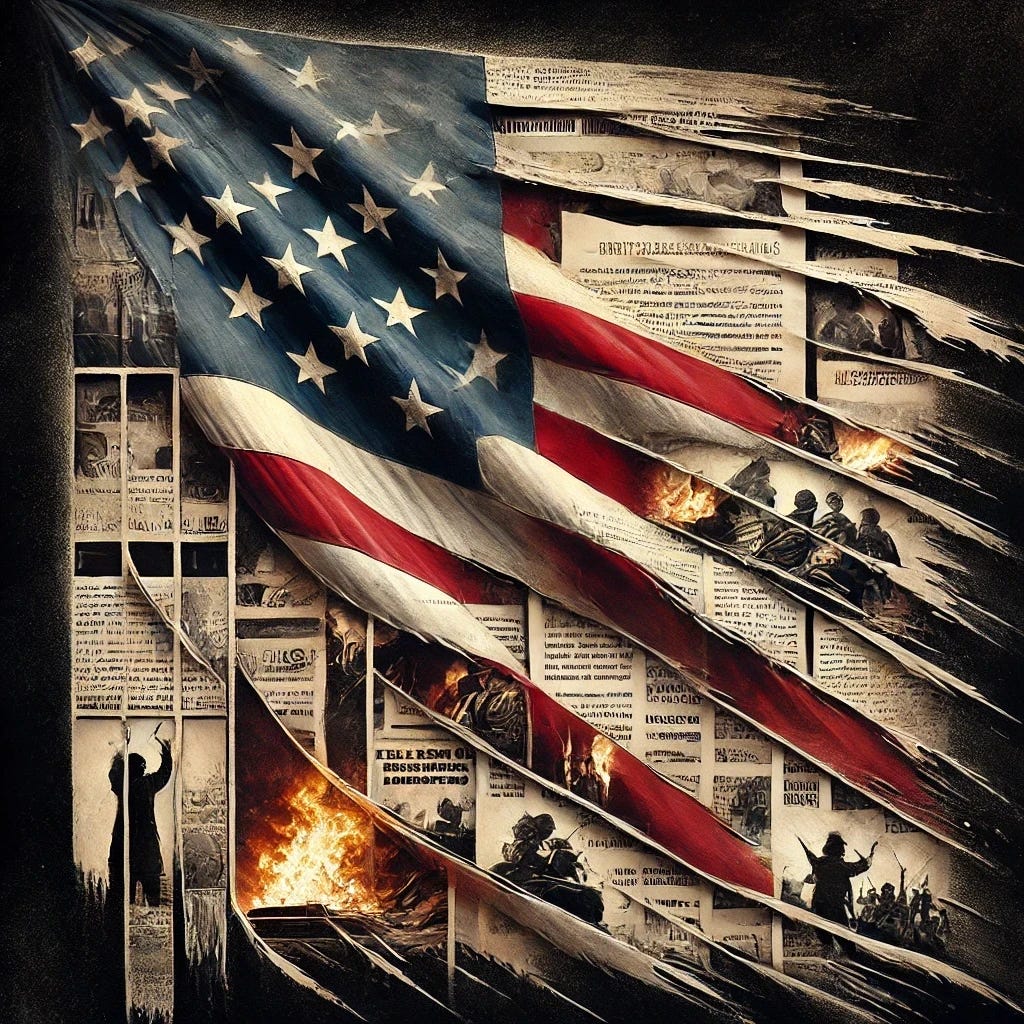
President Trump’s recent executive order, titled “Restoring Truth and Sanity to American History,” is the latest attempt to rewrite that past. The order directly targets the Smithsonian Institution and other federal cultural organizations, demanding they eliminate what the administration deems “improper ideological influences.” The language is deliberately vague but disturbingly clear in its intent: to force museums, historical sites, and even the National Zoo to conform to a narrow, sanitized version of history. It has nothing to do with truth or sanity, only propaganda.
The order threatens funding cuts and leadership purges if institutions do not comply. It echoes previous attempts to dismantle diversity, equity, and inclusion (DEI) programs throughout the federal government, this time aimed at cultural and educational institutions that are supposed to serve the public good, not political agendas.
See our previous reporting here on the Trump regime’s attacks on art, culture, and history:


The timing couldn’t be more bitterly ironic. What better way to declare America’s supposed perfection than by trying to destroy any evidence that suggests otherwise? This begs the question: What kind of patriotism is so fragile it can’t withstand the truth? And is it truly pride if it is attached to a myth?
True patriotism is about striving to fulfill our ideals, not pretending we’ve already achieved them. A loyalty built on a lie is far weaker than pride in a flawed history that strives to do better. And the lengths to which Trump and his allies are willing to go to preserve their mythmaking are nothing short of terrifying.
Recognizing the Pattern: From Censorship to Control
Trump’s executive order demanding the Smithsonian eliminate so-called “improper ideology” is just one piece of a broader pattern of authoritarianism. It’s part of a deliberate strategy to control information, undermine dissent, and rewrite public memory to suit a narrow, self-serving narrative.
The Pattern Is Clear:
Discrediting the Media:
Trump’s war on the press has been relentless. From his earliest days in office, he has branded the press as the “enemy of the American people” or “fake news”, phrases he has used repeatedly to delegitimize reporting he doesn’t like.His administration revoked the Associated Press’s credentials after the outlet refused to comply with a directive to rename the Gulf of Mexico the “Gulf of America.”
Trump has also threatened networks like ABC and CBS with losing their broadcast licenses and has even suggested that journalists should be jailed if they refuse to reveal confidential sources.
By undermining the credibility of the press, Trump is creating a society where truth itself is constantly under siege.
Targeting Foreigners and Those Who Don’t “Belong”:
The Trump administration has escalated its attacks on visa-holding students and asylum seekers under the guise of national security.Denying entry to visiting scholars for supposed criticism of the administration.
In a return to his previous administration’s “Muslim Ban”, 45/47 has generated a new list of over 40 nations he wants to be prohibited from traveling to the US.
Mass deportations and confinement of thousands in reportedly abysmal conditions, including some sent to other nations for detainment.
Mahmoud Khalil (Columbia University), Rumeysa Ozturk (Tufts University), and Alireza Doroudi (University of Alabama) have all been detained by ICE agents on vague charges related to supposed connections with terrorist organizations. They have been held in unknown facilities with limited access to legal representation and denied basic due process.
Over 200 Venezuelans have been deported under the Alien Enemies Act of 1798, a wartime statute rarely invoked since WWII. The justification? Allegations of gang membership in the Tren de Aragua, a claim many have disputed.
Reports indicate some individuals were pressured into signing documents admitting gang membership, while others were targeted solely for having tattoos mistaken for gang symbols.
Deportation flights continued even after U.S. District Judge James Boasberg issued an injunction to halt them, demonstrating the administration’s willingness to violate judicial authority to maintain control.
Controlling the Narrative:
Trump’s order against the Smithsonian is about more than just removing exhibits or altering programs. It’s about waging war on historical memory itself.The order seeks to ensure that only approved narratives of American history are presented to the public by demanding the elimination of “improper ideology.” Notably, the term is not defined, but that is no doubt by design, to ensure archivists and museum staff will self-censor to avoid raising his ire.
When truth-telling institutions are forced to bow to political pressure, the nation loses its ability to recognize injustice, past or present.
This coincides with executive orders mandating approved history curricula and dismantling the Department of Education.
Weaponizing Nationalism:
From Nazi Germany’s fantasies of Aryan purity to Argentina’s framing of dissenters as enemies of the state, the tactic of weaponizing nationalism to justify authoritarianism is not new.Authoritarian leaders consistently exploit nationalism by presenting simplified, mythologized versions of history that glorify the nation while erasing inconvenient truths.
Vladimir Putin’s exploitation of Soviet nostalgia demonstrates how whitewashed history can be repurposed to justify authoritarianism’s return.
Trump’s attempt to force institutions like the Smithsonian to conform to a singular, triumphant narrative of American history is the same strategy repackaged for American consumption.
We’ve reported on many of these developing stories. See some of our articles below:


Lessons from the Past – The Costs of Denial and the Strength of Reckoning
History offers countless examples of what happens when nations refuse to confront their darkness. But it also shows how acknowledging that darkness can be a source of strength. Critically, it shows what happens when authoritarianism is allowed to take root under the guise of “protecting the nation.”
Germany’s Reckoning:
If we are to talk about truth-telling, Germany’s post-WWII journey offers a powerful, albeit imperfect, example. For years after the war, many Germans resisted acknowledging the full extent of the Holocaust and their nation’s culpability. Public memory was fragmented, and denialism festered under the surface.
It wasn’t until the 1960s and 1970s, driven by a younger generation demanding honesty, that Germany began seriously confronting its atrocities. This reckoning accelerated further after reunification in the 1990s. Holocaust education became mandatory in German schools. Students aren’t just taught the facts of what happened; they’re taught how it happened, how fear, propaganda, and authoritarianism manipulated a nation into committing unspeakable crimes.
Public memorials like Berlin’s Memorial to the Murdered Jews of Europe force citizens to confront that history every single day. The concept of “Vergangenheitsbewältigung” (coming to terms with the past) remains central to Germany’s identity. Yet even today, the process is incomplete, and far-right extremism remains a threat.
But Germany’s willingness to face its own darkness, however imperfectly, has unquestionably strengthened it. It has allowed the nation to build a resilient democracy that understands the stakes of allowing authoritarianism to grow unchecked.
The lesson here is not that Germany’s reckoning was flawless. It wasn’t. The lesson is that confronting the truth—even when it’s ugly—is a prerequisite for real national growth. The question America must ask itself is: If Germany can reckon with the Holocaust, what excuse do we have for refusing to acknowledge our own atrocities?
Argentina’s Dirty War (1976-1983):
Argentina’s experience illustrates both the damage caused by suppression and the excruciating difficulty of truth-telling once the lies have taken root. During the Dirty War, the Argentine military dictatorship abducted, tortured, and murdered thousands of its citizens, labeling them as subversives or threats to national security.
The regime’s strategy was clear: Control the narrative by eliminating those who dared to challenge it. Journalists, intellectuals, students, and activists were systematically targeted. The government manipulated the media and weaponized propaganda to brand anyone who questioned the official narrative as an enemy of the state.
The regime’s fall in 1983 began a painful truth-telling process. Within a year, the newly restored democratic government established the National Commission on the Disappearance of Persons (CONADEP) to investigate human rights abuses. Their findings were published in the landmark “Nunca Más” (Never Again) report, which documented the regime’s atrocities and established a baseline of truth from which the nation could begin to heal.
But the process was far from perfect. Some perpetrators escaped justice. Political backsliding and the occasional return of authoritarian sympathizers have threatened to undermine progress. Still, acknowledging the atrocities, however imperfectly, laid a foundation for rebuilding trust in democratic institutions.
Argentina’s experience shows how difficult it is to root out authoritarianism once it has taken hold. It also demonstrates that truth-telling is essential even when the process is painful and incomplete. The question is whether America will allow itself to reach the point where such a reckoning becomes inevitable.
The Soviet Union’s Collapse and Its Lingering Shadows:
The collapse of the Soviet Union offers perhaps the most direct parallel to America’s current trajectory. For decades, the USSR relied on propaganda, historical erasure, and the suppression of dissent to maintain control. Citizens were fed a carefully curated version of their history, one where atrocities like the Holodomor, Stalin’s Purges, and the gulags were either justified or erased from public memory.
The truth began to emerge under Mikhail Gorbachev’s policies of glasnost (openness) and perestroika (restructuring) in the 1980s. For the first time, Soviet citizens were confronted with the horrifying realities of their government’s crimes. The sheer scale of the abuses—crimes that many had been taught never happened—shattered the carefully constructed myth of Soviet righteousness.
But here’s where the lesson becomes particularly relevant: The Soviet Union’s collapse was not followed by a genuine reckoning with its crimes. The truth came out, but it was not embraced. The crimes were acknowledged, but accountability was never truly pursued. The nation stumbled forward without fully addressing the rot at its core.
That failure made Russia vulnerable to the kind of authoritarian resurgence we see today under Vladimir Putin. By exploiting Soviet nostalgia and appealing to a warped sense of national pride, Putin has cemented his power by reviving the authoritarian playbook. The danger of failing to reckon with the past is that it makes authoritarianism all the more likely to rise again.
America is not immune to this dynamic. What happens when Trump’s attempts to erase history are successful? What happens when the truth is buried so deeply that the public no longer has the tools to recognize authoritarianism when it reappears? The danger is real, and it’s happening right now.
What Happens When The Truth Comes Out?
The attempt to sanitize history isn’t just a moral failure; it’s a strategic blunder. Because the truth always comes out. And when it does, it leaves people with two choices: deny it or feel betrayed.
Those who choose denial will twist themselves into knots trying to justify the lie.
Those who feel betrayed will lose faith not only in those who fed them the lie but in the very institutions that allowed it to happen.
America’s refusal to confront its own history is sowing the seeds of future disillusionment and division. The longer the lie persists, the harder the reckoning will be. And history has shown us what happens when this happens: disengagement, disenfranchisement, and uprising.
The 250th Anniversary: What Kind of Nation Do We Want to Be?
America is on the verge of a defining moment. Should we continue to cling to sanitized myths, or confront our history and strive to do better? Can we claim moral superiority and to be the beacon of democracy when we cannot admit to our own weaknesses and failures? The hypocrisy is undeniable. How can we celebrate 250 years of an ideal that we are actively trying to annihilate?
True patriotism isn’t about worshiping perfection. It’s about facing the truth, learning from it, and building something stronger. Pretending otherwise is just cowardice. And cowardice has never made a nation great.
Independent News. Just $1/Week.
We just hit 10,000 subscribers—thank you! We’re offering full access to The Coffman Chronicle for just $1 a week ($52/year) to celebrate.
Get exclusive analysis, daily rundowns, and fearless reporting you won’t find in corporate media.
Support truth. Stay informed.
Bibliography:
“White House Asks Supreme Court to Allow Deportations Under Wartime Law.” The Guardian. March 28, 2025.
https://www.theguardian.com/us-news/2025/mar/28/trump-deportation-flights-supreme-court“Families of Deported Venezuelans Dispute Gang Claims After Deportations Under Alien Enemies Act.” NPR. March 21, 2025.
https://www.npr.org/2025/03/21/nx-s1-5333886/families-of-deported-venezuelans-dispute-gang-claims“Deported Venezuelans Told to Sign Papers Admitting Gang Membership.” Newsweek. March 22, 2025.
https://www.newsweek.com/deported-venezuelans-told-sign-papers-admitting-gang-membership-filing-2049871“The US Government Is Effectively Kidnapping People for Opposing Genocide.” The Guardian. March 28, 2025.
https://www.theguardian.com/commentisfree/2025/mar/28/rumeysa-ozturk-tufts-trump-immigration-gaza"Restoring Truth and Sanity to American History." The White House. March 27, 2025.
https://www.whitehouse.gov/presidential-actions/2025/03/restoring-truth-and-sanity-to-american-history/“Germans, Jews & History - Holocaust Education In Germany.” PBS. March 15, 2025.
https://www.pbs.org/wgbh/pages/frontline/shows/germans/germans/education.html“Nunca más: The Report of the Argentine National Commission on the Disappeared.” International Affairs. March 14, 2025.
https://academic.oup.com/ia/article/63/2/361/2568432
I give that twerp the pinky, just to show him what a pathetic tiny man he truly is!
He CANNOT erase history. When this nightmare is over, these parts of history he's trying to erase, will rear their ugly/glorious heads again!!
Wake up America!