


Senators Chuck Grassley and John Curtis say they’re defending clean energy jobs. They’ve blocked three of Donald Trump’s Treasury nominees, demanding answers about how clean energy tax credits will be handled.
On the surface, it looks like a principled stand, Republicans standing up for their states' wind and solar economies. But look deeper, and it’s something else entirely, a carefully choreographed performance.
Trump’s executive order to phase out clean energy credits is already in effect. The policy is being implemented with or without these nominees. And the senators delaying the confirmations are not trying to stop the policy. They’re trying to insulate themselves from the backlash.
This isn’t resistance. It’s rehearsal.
Stay Informed. Stay Loud.
Subscribe to The Coffman Chronicle for no-BS political analysis, action guides, and daily truth bombs you won’t get from corporate media.
What’s at Stake
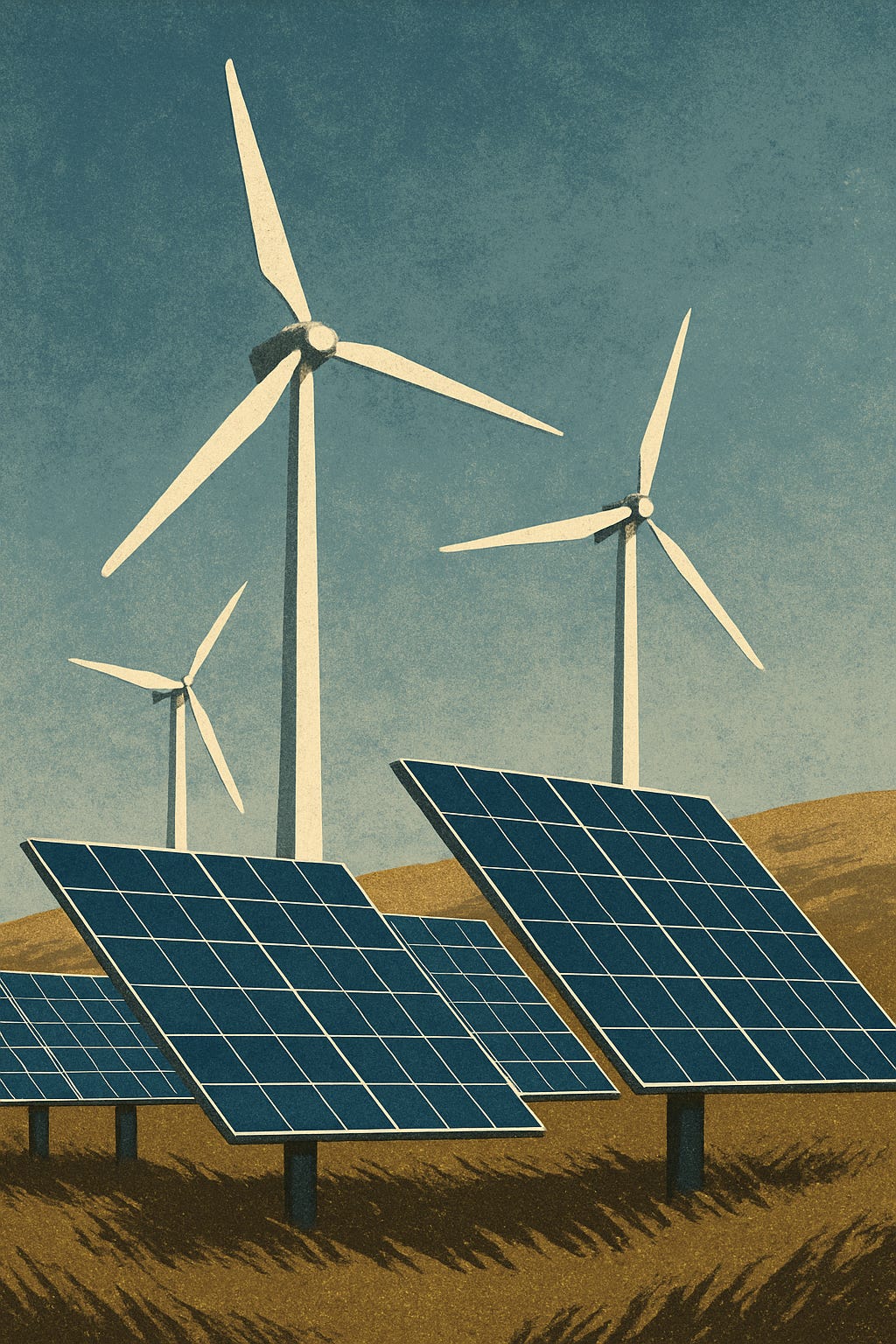
For years, clean energy tax credits, such as the Investment Tax Credit (ITC) and Production Tax Credit (PTC), have powered job creation, lower utility costs, and infrastructure growth across the country. These credits help make solar panels affordable, wind farms viable, and energy storage scalable. They’ve driven over $130 billion in new investments, many of them in red and purple states.
This isn’t just climate policy. It’s energy economics and job creation. And it’s about your power bill.
As we detailed in our recent piece on rising electricity costs, the phase-out of clean energy credits is already driving up prices. In Texas alone, households could see their utility bills increase by $200 per year by 2035. Cancelled projects mean less competition, higher reliance on fossil fuels, and more strain on aging grids.
See that reporting here:

These tax credits don’t just benefit solar startups or wind tech investors. They keep monthly energy costs manageable for families, especially in rural and working-class communities. When they're rolled back, everyone pays more.
The Nominee Blockade
In July, President Trump nominated three individuals to key positions within the Treasury Department: Brian Morrissey for Assistant Secretary for Tax Policy, Francis Brooke for Under Secretary for Domestic Finance, and Jonathan McKernan for General Counsel.
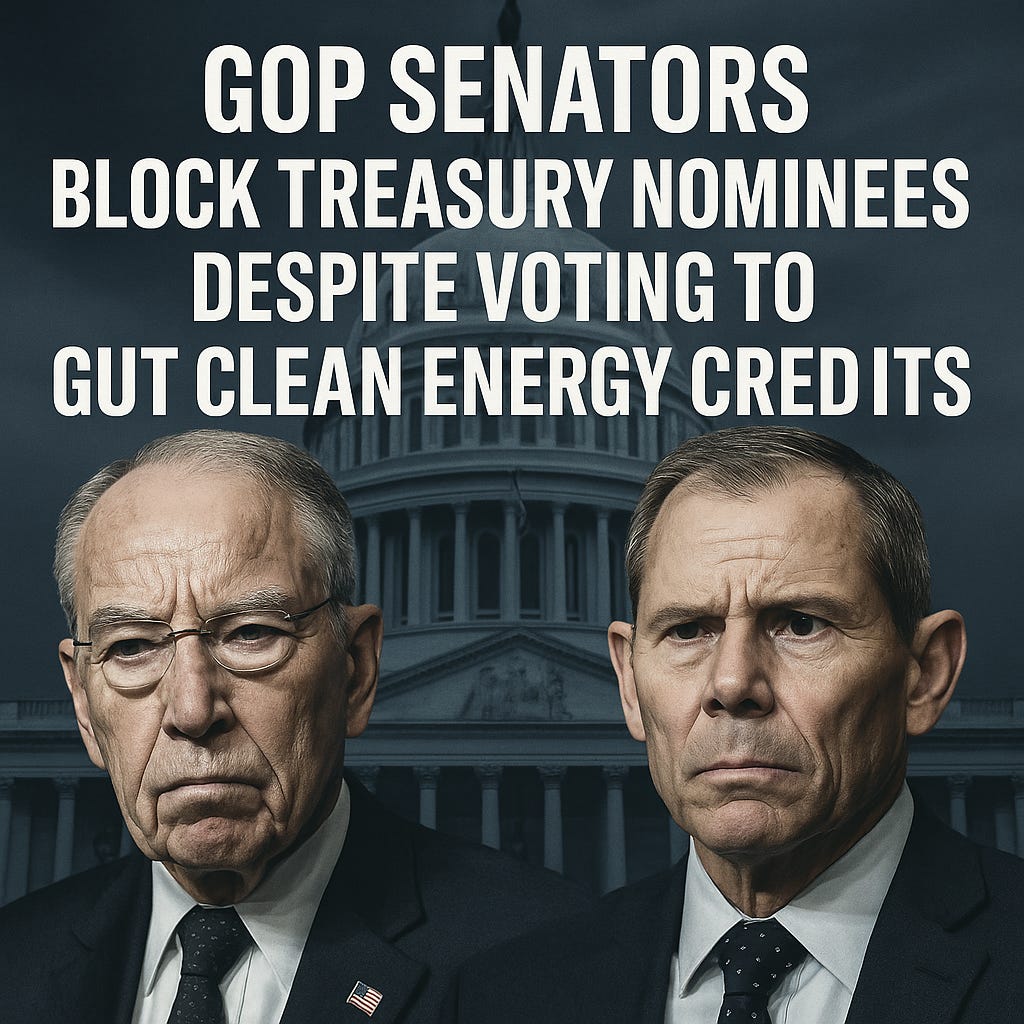
All three are technically qualified and aligned with Trump’s broader economic goals. And all three are now being blocked, not by Democrats, but by two Republicans: Senator Chuck Grassley of Iowa and Senator John Curtis of Utah.
The reason? Grassley and Curtis want assurances that these nominees will preserve access to clean energy tax credits, especially the technical rule known as “begin construction,” which determines project eligibility for credits. Grassley put it plainly:
“What it means for a project to ‘begin construction’ has been well established by Treasury guidance for more than a decade... This is a case where both the law and congressional intent are clear.”
Curtis echoed the concern, adding:
“Let’s just be thoughtful in how we phase them out. Let’s not destroy careers and things like that. Let’s give people a chance to adjust.”
However, there’s a fundamental problem with this strategy. Trump’s executive order has already changed the rules. The Treasury is already implementing the rollback using acting officials. Blocking these nominees won’t reverse that policy. It only delays confirmed oversight and accountability.
In other words, Grassley and Curtis aren’t fighting the policy. They’re just stalling the personnel. The train has left the station. They’re arguing about who gets to drive.
Theatrics, Not Resistance
If Senators Grassley and Curtis were serious about defending clean energy jobs or protecting the credits their states rely on, they’d do more than block nominees. They are United States Senators. They have the power and the responsibility. They could introduce legislation to override Trump’s executive order. They could use the budget process to restrict its enforcement. They could speak out directly against the policy.
But they won’t, and they haven’t.
Instead, they’re performing a soft, strategic opposition, just enough to look concerned, but not enough to face consequences. It’s resistance designed to be forgotten, a pause button they can point to when voters ask what happened to their wind jobs or why electricity bills keep rising.
These procedural holds aren’t a show of strength. They’re a political insurance policy.
As Trump continues to demand loyalty and obedience from the party, Grassley and Curtis have found the only “safe” way to push back is to stall nominees whose job it is to carry out the policy, while doing absolutely nothing to stop the policy itself.
Let’s call it what it is: theater.
The Timeline They Don’t Want You to Remember
The most revealing part of this political theater isn’t what Senators Grassley and Curtis are saying now. It’s what they did just weeks ago.
In June, both senators voted in favor of the One Big Beautiful Bill Act, a sweeping legislative package that not only reduced clean energy funding but also rewrote its future. The bill included hard deadlines for tax credit eligibility, banned access to credits for projects with ties to certain foreign suppliers, and fast-tracked the expiration of most clean energy incentives by 2027.
On July 4, Trump signed that bill into law with full Republican backing. Then, just three days later, he followed it with an executive order instructing the Treasury Department to interpret the new law in the strictest terms possible, effectively gutting what was left of Obama- and Biden-era guidance.
That’s when Grassley and Curtis began to flinch— not when the bill was debated, not when the executive order was signed, but afterward, when it became clear how quickly the policy was moving forward. Only then did they begin to slow confirmations and demand “clarity” from Trump’s Treasury nominees.
However, there’s no ambiguity to clarify. The law they helped pass is being enforced exactly as written, faster than expected, maybe, but unmistakably on course. Their sudden concern isn’t a principled objection. It’s a political shield. One designed not to stop what’s happening, but to deflect responsibility for helping it happen.
Who’s Really Getting Hurt
You might think clean energy tax credits mainly benefit California or New York. While California is a factor, the states with the most to lose from Trump’s executive order aren’t liberal strongholds. Instead, they are red and purple states that form the backbone of his electoral coalition.
Texas, the country’s clean energy titan, has seen over $60 billion in renewable investment since 2022. Iowa ranks second in wind energy production. Utah has rapidly expanded solar deployment in rural areas. North Carolina, Kansas, Wyoming, and New Mexico are all major players in wind, solar, and clean energy manufacturing. And all are now facing job losses, project cancellations, and rising energy costs due to Trump’s executive order.
In Texas alone, analysts estimate up to 94,000 jobs could be lost by 2035 as credits disappear and projects stall. Every rollback raises your utility bill by as much as $200 per year in some regions, especially in rural and working-class communities that already carry heavy energy burdens.
These aren’t climate consequences. They’re kitchen-table consequences, including lost paychecks, higher power bills, and stalled economic growth. Ironically, it is Trump’s own base who will feel the impact first and hardest.
That is what makes the behavior of Grassley and Curtis even more galling. They’re not just letting this happen. They’re helping it happen while pretending to oppose it.
Why This Is Insulting to Everyone
Grassley and Curtis’s performance isn’t just hollow. It is deeply insulting, not just to their colleagues or the nominees they’re stalling, but to every voter they’re trying to manipulate.
To clean energy workers, it’s a false promise. These senators act like they’re protecting rural jobs and preserving credits, but they won’t lift a finger to stop the policy that’s actually doing the damage.
To MAGA loyalists, it’s a false fight. The message being sold is that these nominees are dangerous radicals or Biden-era holdovers. They’re not. They’re Trump’s own picks, qualified, aligned, and chosen to carry out his agenda.
In reality, both groups are being played. The performance is for headlines and donor newsletters. The real consequences—lost jobs, rising bills, economic disruption—are already unfolding.
And when the policy takes full effect, when the credits vanish and the costs pile up, Grassley and Curtis will have their excuse ready: “We tried.”
But did they?
What Comes Next
This ends the way it always does. It ends with confirmation. Maybe not immediately, but eventually, these nominees—Morrissey, Brooke, and McKernan—will be confirmed. They’re qualified (for once). They’re Trump’s picks. The GOP majority will rubber-stamp them just as they have every other nominee.
Regardless of when that happens, the executive order they were supposedly going to “clarify” will already be entrenched. The rules will be rewritten. The guidance will be enforced. Clean energy investments, disproportionately in red states, will continue to dry up.
What Grassley and Curtis are doing isn’t stopping that future. It’s stalling just long enough to claim they fought, without ever risking political capital or party loyalty.
Yet voters won’t see who stalled the policy. They’ll just see the resulting rising electricity bills, cancelled projects, and layoffs. When those consequences hit, the senators will be back home, campaigning on the illusion of “standing up for their state.” The fact that they didn’t use their legislative powers to counter Trump’s executive order will be lost in the fog of memory.
We Knew This Was Coming
When Trump returned to office, we warned you that he would militarize executive orders. We told you that the GOP majority in the House and Senate would follow his orders with a “yes, sir” and “may I have another, sir?” Some may have wondered if experienced lawmakers like Grassley or Curtis would act as a check on overreach.
Seven months in, we have the answer.
This isn’t just a procedural fight over a few Treasury nominees. It is confirmation of how this administration operates. Now it’s the blueprint, all executive power, zero dissent, and a party too afraid to do anything but pretend they tried.
The clean energy rollback is real. The job losses are already beginning. The bills are rising. And the people most hurt by these changes aren’t Democratic donors or coastal elites. They’re the voters Trump and the GOP claim to represent.
Grassley and Curtis know this. That’s why they staged the delay. However, theatrics don’t protect economies. Loyalty tests don’t keep the lights on. Pretending to resist doesn’t stop real consequences from hitting the people you’re supposed to serve.
Ultimately, political theatre is simply a diversion that they will later tell you how to remember.
Call to Action
This isn’t over unless we let it be.
If your senator is playing political theater instead of protecting your energy future, let them hear from you.
Call the U.S. Capitol Switchboard at (202) 224‑3121
Ask to be connected to your senators.
Tell them to stop posturing and start legislating.
Demand they:
Protect clean energy credits through new legislation
Block executive overreach with real action, not procedural delay
Put working families over political loyalty
Legal Accountability
Support the fight to challenge executive overreach.
Several legal and climate organizations are preparing court challenges to the clean energy rollback. They need support, visibility, and public pressure.
Look into groups like Earthjustice, NRDC, or Democracy Forward, which have successfully challenged executive overreach before.
Write letters to the editor, post on social media, or pressure your representatives to back these legal efforts.
Remember at the Polls
We cannot afford more political theatre. When it is time to vote, remember who played games and who fought for you. Hold them accountable.
Stay Informed. Stay Loud.
Subscribe to The Coffman Chronicle for no-BS political analysis, action guides, and daily truth bombs you won’t get from corporate media.
Bibliography:
“GOP Senators Place Holds on Treasury Nominees over Solar, Wind Credits.” Politico, August 4, 2025.
“Republican Lawmakers Slow Trump Treasury Picks over Wind, Solar Credits.” Reuters, August 4, 2025.
“Boom fades for US clean energy as Trump guts subsidies.” Reuters, July 24, 2025.
“Key US clean energy charts that track Trump’s tax bill impact.” Reuters, May 28, 2025.
“Texas could lose billions in investment and thousands of jobs.” The Texas Tribune, July 24, 2025.
“1,673 Texas Energy Jobs Already Lost or Threatened under Trump, with Tens of Thousands More at Risk.” Climate Power, April 30, 2025.
Clean Air Task Force. “The geography of clean energy investments in the U.S..” CATF, July 1, 2025.
“Republican Lawmakers Slow Trump Treasury Picks Over Wind Solar Credits.” U.S. News & World Report, August 4, 2025.
“Here’s what to know about clean energy in Republican megabill headed to Trump.” AP News, July 2025.
“Trump is falling into an old energy trap.” Washington Post, August 4, 2025.
“US axes 24 clean energy projects, including at Exxon’s Baytown site.” Reuters, May 30, 2025.
“Clean Energy Tax Credits: An Economic Impact Analysis.” BW Research (report), 2025.
Columbia University Business School. “How States Like Texas Are Driving the Clean Energy Boom in ...” Business Insights, March 24, 2025.
“Trump Executive Order Seeks End to Wind and Solar Energy Subsidies.” Reuters, July 7, 2025.
“Impact on the IRA’s Clean Energy Tax Credits.” Steptoe Insight, July 23, 2025.
“Impact of ‘One Big Beautiful Bill’ on Clean Energy Tax Credits.” Chapman, July 17, 2025.
“The One Big Beautiful Bill Act: Considerations for Cities and Community Partners.” Columbia University, July 7, 2025.
“Save More with Tax Credits for Energy‑Efficient Home Improvements While You Still Can.” Kiplinger, July 2025.
“Big Beautiful Bill Green Energy Tax Credit Changes.” Tax Foundation, July 2025.
“The Implementation Timeline of the One Big Beautiful Bill Act.” American Progress, July 2025.
“Trump Seeks Tighter Restrictions on Wind and Solar with Executive Order.” Utility Dive, July 9, 2025.

Grassley & Curtis are two old Cranks that know better but will lie to cover up for trump probably long enough until they both Croke! What a shame, Stupid is as Stupid does.
The climate crisis is real. Trump and the senators and representatives are corrupted.