


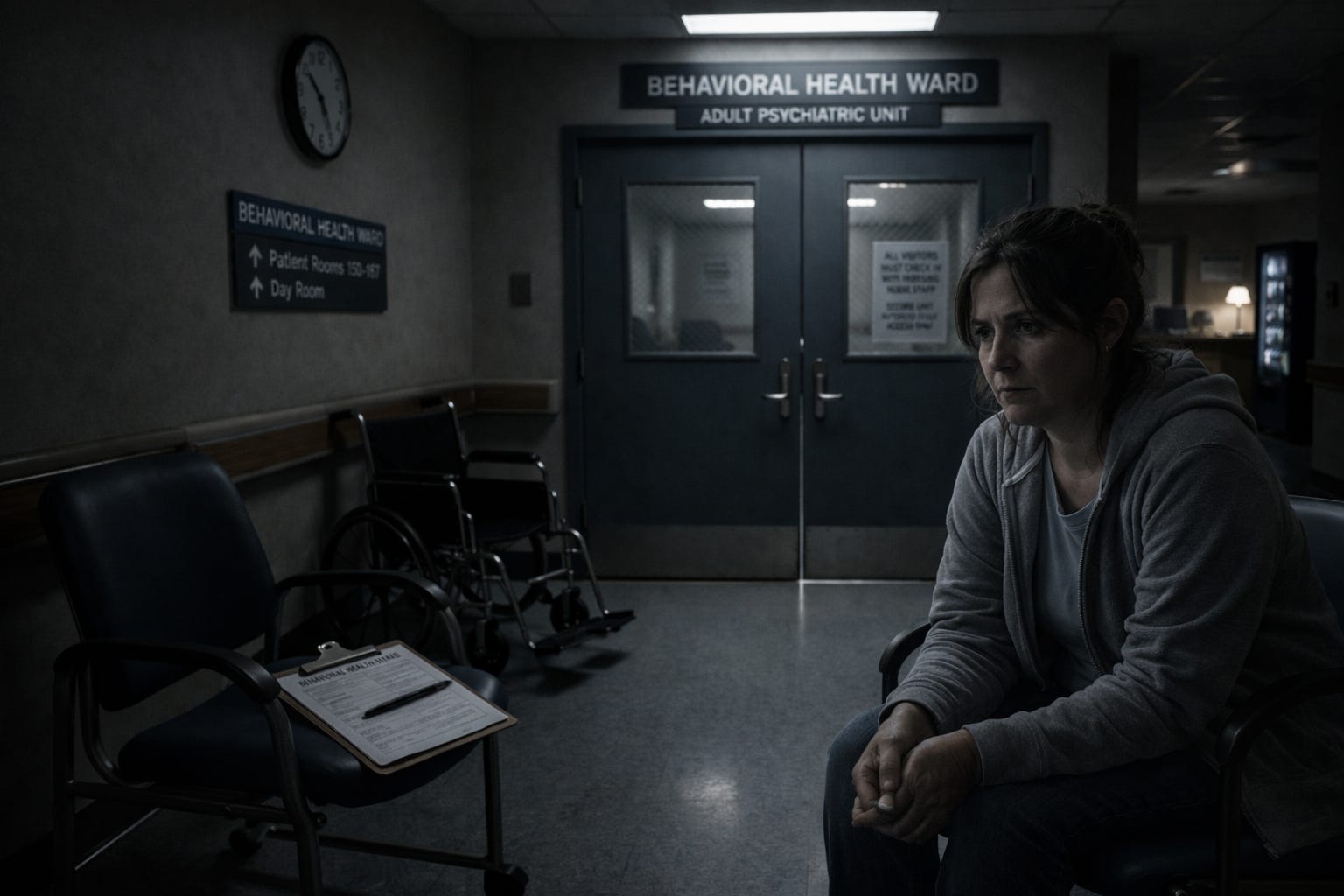
The Trump administration says its Medicaid crackdown on Minnesota is about fraud, accountability, and protecting taxpayer dollars. However, on the ground, the first people likely to feel the damage are not bureaucrats, consultants, or the kinds of providers who can hire lawyers and ride out a funding fight. They are patients in mental-health crisis, families already stretched thin, and hospitals warning that psychiatric units could close if the disruption continues. In other words, this is being sold as fraud enforcement, but in practice, it is destabilizing the healthcare infrastructure that low-income people rely on most. MPR News reported on March 24 that Minnesota hospital leaders are warning the federal Medicaid freeze could force hospitals to close psychiatric units, while KFF, an independent health policy research organization, says CMS’s newer approach to suspected Medicaid fraud can create uncertainty for state budgets and consequences for enrollees and providers far beyond the alleged wrongdoing itself.
That is the pattern worth watching. Medicaid is not just another budget line. It is one of the country’s core financing systems for low-income Americans, children, disabled people, and patients who need long-term or behavioral-health care. So when Washington applies blunt pressure to Medicaid in the name of oversight, the first visible cracks tend to appear in the parts of the system operating with the least cushion. In Minnesota, that appears to mean psychiatric care, and when psychiatric beds start disappearing, the burden does not vanish with them. It shifts to emergency rooms, families, rural hospitals, and patients with nowhere else to go. Stateline reported this week that Medicaid cuts could add pressure to psychiatric units nationwide, many of which are already struggling financially.
This Community Is Powered by You
What started as a small circle has grown into something much bigger, and it’s all because of readers like you.
Every time you forward this email, post it on socials, or bring someone new into the fold, you’re helping build one of the most passionate, independent political communities out there.
Want to keep the momentum going?
Share this newsletter with someone who should be part of this conversation.
Thank you for being here. It means everything.
What actually happened in Minnesota
The sequence starts with the administration’s fraud allegations against Minnesota’s Medicaid program. Reuters reported on February 25 that the Trump administration halted $259 million in Medicaid payments to Minnesota, alleging fraud and requiring the state to submit a corrective plan within 60 days. The administration framed the move as part of a broader anti-fraud push, while Minnesota officials argued it amounted to a political and financial attack on the state.
That immediate halt was only part of the larger dispute. KFF Health News reported that CMS had already alleged Minnesota was out of compliance with federal rules on fraud, waste, and abuse, setting the stage for the administration’s move to withhold over $2 billion in federal Medicaid funds to Minnesota this year, or about 18% of what the state received the year before. KFF’s policy analysis says the federal government’s new posture differs from older practice because it relies more heavily on pausing or withholding major sums while disputes are still playing out, creating uncertainty for states that must keep funding care in real time.
That matters because a fight officially framed around fraud control is already being felt at the provider level as financial instability. Psychiatric units are among the most Medicaid-dependent and financially fragile services in the hospital system, which makes them one of the first places where funding disruption becomes visible to the public. MPR’s reporting makes that danger explicit: hospital leaders warned the freeze could push psychiatric units toward closure. That is the point where a state-federal funding dispute stops being abstract and becomes a healthcare access story.
Why psychiatric units crack first
If you want to know whether a Medicaid crackdown will remain an abstract budget fight or become a real-world crisis for vulnerable people, one of the first places to look is psychiatric care. Psychiatric units sit at the intersection of three forms of fragility at once: they rely heavily on Medicaid, they are expensive to operate, and they exist in a system that already has too few beds and too little slack. So when federal officials freeze or threaten large Medicaid funding streams, psychiatric care is often one of the first places where financial stress becomes a closure risk. That is exactly what Minnesota hospitals are now warning. MPR reported that hospital leaders say the federal Medicaid freeze could force psychiatric units to shut down if the disruption continues.
That is not just a Minnesota problem. Stateline reported this week that Medicaid cuts could put added pressure on psychiatric units around the country, many of which are already struggling to stay open. The story notes that psychiatric units often lose money for hospitals and survive only because health systems treat them as essential services, not because they produce strong margins. When those systems face a reimbursement shock, psych beds become one of the clearest danger zones. These units are not vulnerable because the mental health need is low. They are vulnerable because the financing model surrounding them is weak, and Medicaid is central to it.
That helps explain why this story has such a clear class dimension. Wealthier patients with money, transportation, and strong private insurance may still be able to find outpatient care, private facilities, or treatment farther from home. Poorer patients are much more likely to depend on local hospitals, public reimbursement, and a psychiatric bed being available when a crisis hits. So when psych units close or shrink, the people who lose first are usually the people with the fewest alternatives. The federal government may describe this as an anti-fraud action, but the operating effect is pressure on a safety-net service used disproportionately by low-income people. KFF’s analysis makes that concern explicit, warning that the newer CMS approach can affect providers and enrollees who are not themselves involved in fraud because it puts large sums at risk before disputes are fully resolved.
Psychiatric care is also uniquely unforgiving when capacity shrinks. A closed psych bed is not like a delayed elective procedure or a longer wait for a routine appointment. When a patient is suicidal, psychotic, severely depressed, or in acute crisis, there is no easy substitute for an available treatment setting. If the unit is full, understaffed, or gone, the burden spills outward fast. Patients board in emergency rooms for hours or days. Families are told to wait, travel farther, or manage impossible situations at home. Rural hospitals with thin staffing get trapped trying to stabilize patients they are not equipped to treat long-term. That is why psychiatric units function as an early warning system. When they start to crack, it usually means the broader safety-net structure is already under extreme strain. Stateline’s reporting underscores that these pressures are likely to worsen in rural America, where facilities are sparse, and replacement options are limited.
The significance of what is happening in Minnesota goes beyond a single state’s fiscal fight. The state is showing where the damage appears first when Washington pressures a healthcare system built on unequal access and thin margins. The first casualty is not an accounting entry. It is psychiatric capacity. And once that begins to disappear, the public is no longer looking at a fraud story. It is looking at a mental-health access crisis.
A system already operating with no slack
What makes the Minnesota story so dangerous is that it is not hitting a stable system. It is hitting one that was already short on beds, margin, and backup options before the federal government ever froze a dollar. A 2025 National Association of State Mental Health Program Directors Research Institute report found that 90% of responding states reported a psychiatric bed shortage in 2025, including 38 states reporting shortages of psychiatric inpatient beds in non-state hospitals. The same report found that bed shortages increased waits for state hospital beds in 31 states, increased waits for psychiatric beds in other hospitals in 24 states, and contributed to emergency department boarding in 7 states.
That broader shortage has been persistent, not temporary. A 2025 peer-reviewed study tracking inpatient psychiatric bed capacity from 2012 to 2022 found that more than 60% of the U.S. population consistently lived in regions with psychiatric bed shortages across that entire period. The authors also found that hospitals in the most severely short regions were less likely to offer outpatient psychiatric services, meaning places with the fewest beds often lack robust substitute systems to absorb the pressure. Their conclusion was direct. The country needs targeted financial support for general hospitals at risk of closing psychiatric units, as well as broader investment in psychiatric infrastructure.
When people hear “bed shortage,” they often imagine a technical planning problem. In reality, it means the system is already operating with almost no slack. Penn’s Leonard Davis Institute noted in February that it has become common for children and adolescents in psychiatric distress to be boarded in emergency departments for days because no psychiatric beds are available, and cited research indicating that this burden may disproportionately affect Medicaid-enrolled youth. That is what fragility looks like before a new financial shock is applied: not calm, not resilient, but already jammed.
So when Minnesota hospitals warn that a Medicaid freeze could push psychiatric units toward closure, they are not describing the first crack in an otherwise healthy structure. They are describing new pressure on a system that has been under strain for years. That is why this story matters beyond one state dispute. The danger is not simply that a funding fight might create a problem. It is that it may accelerate an existing collapse in psychiatric capacity, especially in safety-net settings where poor patients have the fewest alternatives. MPR’s reporting on the Minnesota freeze and the national data on bed shortages point in the same direction: there was very little room for error here to begin with.
When the bed disappears, families absorb the shock
The most misleading thing about a story like this is how easily it can be made to sound abstract. Funding gets paused. Compliance fights break out. States appeal. Federal officials talk about fraud prevention. However, none of that is how the crisis is experienced by the people living inside it. They experience it when a son in psychosis sits in an emergency room for hours because there is no bed. They experience it when a suicidal teenager is kept in a chaotic hospital bay instead of being moved into treatment. They experience it when a rural hospital can stabilize a patient for the night but has nowhere to send them after that. That is what happens when psychiatric capacity shrinks: the pain does not disappear. It gets pushed outward onto families, emergency departments, and communities already operating with very little room to spare. Penn’s Leonard Davis Institute noted last month that long psychiatric boarding periods in emergency departments can worsen young patients’ conditions, and said this burden may disproportionately affect Medicaid-enrolled children.
That is why the Minnesota warnings matter so much. MPR’s reporting was not about an accounting inconvenience. Hospital leaders warned the Medicaid freeze could force psychiatric units to close. Once that possibility enters the picture, the human consequences become predictable. Patients in crisis wait longer. Families are told to keep holding on. Emergency rooms become overflow holding areas for psychiatric patients they were never designed to treat for extended periods. And in low-income or rural communities, where alternative facilities may be hours away or nonexistent, “go somewhere else” is not a real option at all.
This is where the class dimension becomes impossible to ignore. A wealthier family may still have ways to improvise around a collapsing public-health infrastructure. They may have a car, flexible work, private insurance, or the ability to travel farther for care. Poorer families are more likely to depend on the nearest hospital, public coverage, and whatever psychiatric capacity still exists locally. So when that capacity disappears, the burden does not fall evenly. It falls hardest on the people least equipped to absorb delay, distance, lost wages, or the cost of alternatives. That is not rhetoric. It is the built-in logic of a system where Medicaid is one of the main payers for behavioral-health care, and psychiatric units are already under severe financial strain.
And the fallout does not stay inside hospital walls. When psychiatric patients cannot get timely treatment, the pressure shifts to parents sleeping in emergency rooms, to local law enforcement asked to respond to mental-health crises, to schools and social-service systems trying to cope, and to small-town hospitals forced to hold patients longer than they can safely manage. Every missing bed becomes a burden someone else has to carry. In that sense, a Medicaid funding fight in Washington is not really a fight about bureaucracy at all. It is a decision about who will bear the cost when the system runs out of places to send people in crisis.
That is the kitchen-table reality underneath the policy language. A psychiatric bed is not just a unit of hospital capacity. It is the difference between treatment and waiting, between stabilization and chaos, between a family getting help and a family being left alone to improvise through the worst night of their lives. If Minnesota’s psychiatric units start to shrink under federal Medicaid pressure, that is not just a healthcare management story. It is a story about what happens when government stress falls on the families with the fewest choices.
Minnesota is starting to look like the template
What is happening in Minnesota no longer looks like an isolated dispute. It looks increasingly like the first major test of a broader federal strategy: use fraud and program-integrity allegations not just to investigate providers or recover improper payments, but to pause or threaten large streams of Medicaid funding to states themselves. KFF’s March analysis says CMS is now relying more heavily on tools that can pause or withhold significant federal Medicaid dollars in suspected-fraud cases, a shift with potentially broad implications for states, providers, and enrollees. KFF says the new focus initially centered on Minnesota and four other states, and that separate congressional inquiries suggest the scope could grow further.
Once Minnesota is treated as a model rather than an exception, the whole story changes. KFF Health News reported that after focusing public attention on Minnesota, the administration expanded its Medicaid fraud claims to other states, including California, New York, and Maine. The House Energy and Commerce Committee also broadened its inquiry in early March, announcing letters to 10 additional states seeking information and documents related to Medicaid fraud, waste, and abuse. In other words, the Minnesota fight now sits inside a wider campaign, not a one-off conflict.
This matters politically as well as medically. If the federal government can use the threat of withholding major Medicaid dollars to force states into a defensive posture, the pressure does not stay confined to the original allegations. It radiates outward through hospital systems, state budgets, and access to care. KFF’s analysis explicitly warns that this approach can affect providers and enrollees who are not involved in the alleged fraud, as states must keep care systems running while the dispute unfolds. The practical result is that patients can end up absorbing the shock of an enforcement strategy aimed somewhere else.
Once you see Minnesota as a test case, the class pattern becomes even clearer. A federal strategy built around squeezing Medicaid dollars is not pressure applied evenly across the healthcare system. It is pressure applied to the parts of the system that serve poorer patients most heavily. If this model spreads, the same vulnerable points are likely to crack elsewhere too: psychiatric units, rural hospitals, safety-net providers, and local systems already short on beds and staffing. Minnesota matters not only because of what is happening there now, but because it may show how future Medicaid fights are waged across the country.
The real question is no longer whether Minnesota can eventually negotiate, appeal, or litigate its way through this dispute. The larger question is whether Washington is building a new template for governing Medicaid by financial threat. If that is the template, then Minnesota is not just the first story. It is the preview.
The real story is who gets left exposed
The public story here is simple and politically convenient. Washington says it is cracking down on fraud, protecting taxpayer dollars, and forcing states to clean up their Medicaid systems. But the real story is not told in the press release. It is told in the psychiatric unit that may not survive another round of instability, in the emergency room that becomes a holding pen for patients in crisis, and in the family that discovers too late that there is nowhere left to go. That is where the meaning of this policy shows up. Not in the rhetoric, but in who is left exposed when the pressure starts to bite.
That is what this fight reveals. When government applies blunt force to a safety-net program, the damage does not fall evenly. It lands first on the people with the fewest buffers, the fewest alternatives, and the least power to absorb one more delay, one more drive, one more night waiting for help that may never come.
That is the warning buried inside Minnesota’s Medicaid fight. If this is the new model, then the country is not just watching a fraud crackdown. It is watching how much psychiatric care can be stripped away before the suffering becomes too visible to ignore. The first casualty may be a bed. The next casualty is whoever needed it.
Support Independent Media: The Coffman Chronicle
If you value reporting that follows the money, names the pattern, and tells the truth about who pays the price, please consider becoming a paid subscriber to the Coffman Chronicle. Your support helps keep this work independent, keeps the receipts coming, and makes it possible to keep digging into the stories powerful people would rather bury than answer for.
Sources:
KFF. “CMS’ New Approach to Federal Medicaid Spending in Cases of Potential Fraud.” March 16, 2026.
KFF Health News. “Oz Escalates Medicaid Fraud Claims Against States After Focus on Minnesota.” March 20, 2026.
Leonard Davis Institute of Health Economics, University of Pennsylvania. “ED Psychiatric Boarding of Children Worsens Nationwide.” February 9, 2026.
Liu, Michael X., et al. “Regional Changes in Inpatient Psychiatric Bed Capacity and Availability of Alternative Psychiatric Services, 2012–2022.” JAMA Network Open 8, no. 1 (2025).
Minnesota Public Radio News. “Medicaid Freeze Could Lead to Minnesota Hospitals Closing Psychiatric Units.” March 24, 2026.
National Association of State Mental Health Program Directors Research Institute. Use of State Psychiatric Hospitals, 2025. July 2025.
Reuters. “US Halts Some Medicaid Payments to Minnesota, Alleging Fraud.” February 25, 2026.
Stateline. “Medicaid Cuts Could Add Pressure to Already-Stressed Psychiatric Units.” March 23, 2026.
When I moved from Minnesota, it was said to have the best and most effective psychiatric care in the country. People were hospitalized when needed, there were outpatient programs to help people stay out, for supportive care. It was treated as an illness or medical disorder. It has the most stigma of all medical problems. I’m a retired home health psych RN, now living in Oregon, where, unfortunately the mental health care is towards the bottom of the states. By doing all these changes and calling fraud, they are the ones creating even worse problems. They are the ones creating the fraud by intentional ignorance, lack of empathy, accountability on their part. Nobody wants to have a mental illness just like nobody wants to have a heart attack. But the individual has more control by their lifestyle to avoid the heart attack than the mental illness. The treatment is everything.
Would that the excesss profits banked by the billionaire class were merely distributed through wages/salaries to workers in their businesses. There would be less need for public safety net services.