


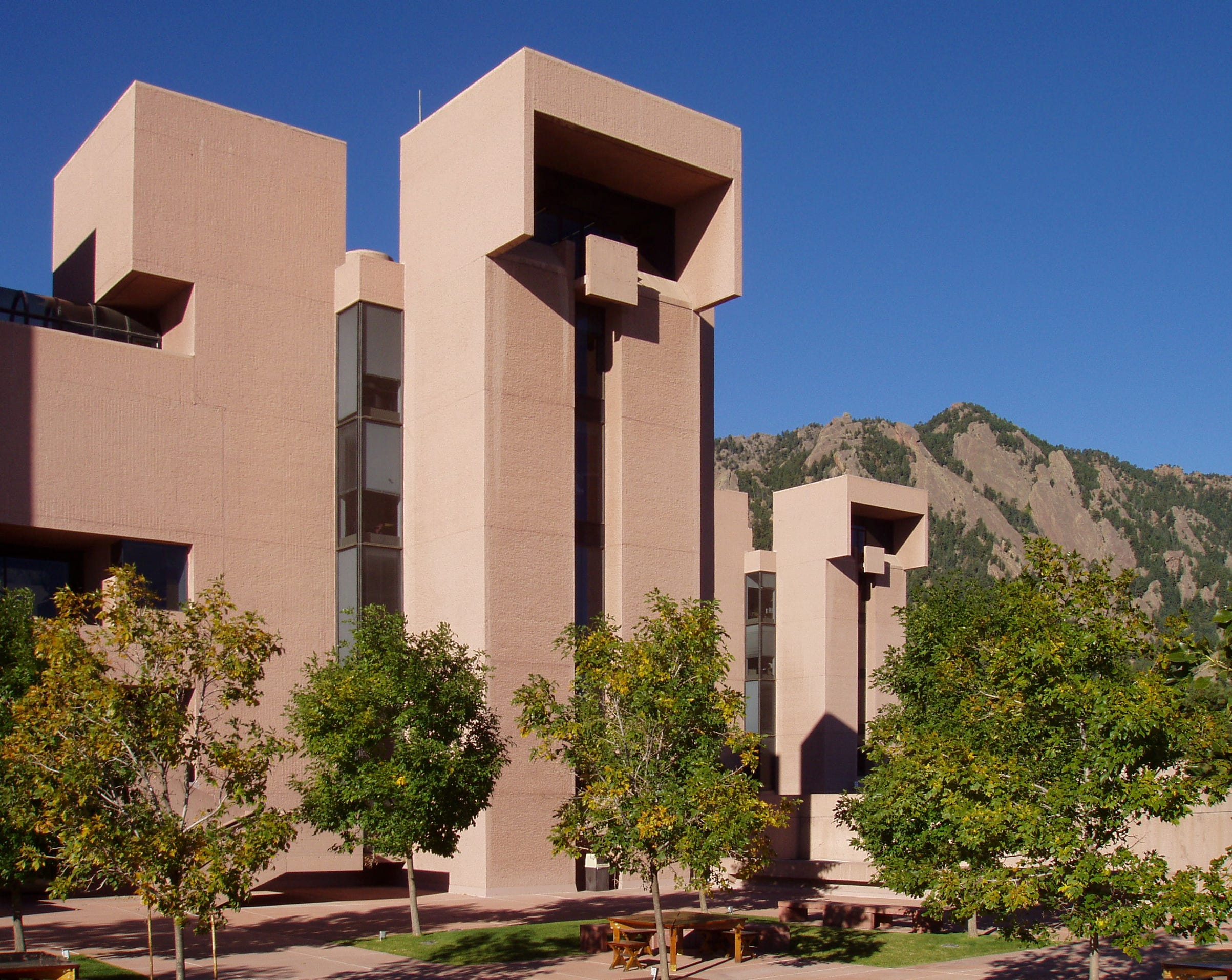
Most Americans will never hear the name NCAR. They won’t see it on a ballot. They won’t hear it mentioned in a presidential speech.
But when a tornado veers twenty miles east instead of west, when wildfire smoke suddenly blankets a town overnight, when a hurricane track tightens instead of sprawling, NCAR is often the reason people have time to get out of the way.
And that’s why this matters.
This week, the Trump administration announced plans to dismantle the National Center for Atmospheric Research, a 65-year-old institution that quietly sits at the core of America’s weather forecasting, climate modeling, and disaster-preparedness infrastructure. Not trimmed. Not reformed. Broken apart, with its functions scattered, its staff displaced, and its mission effectively erased.
The justification was ideological. The mechanism was bureaucratic. The consequences will be physical.
This wasn’t an argument about climate models. It was an act of power aimed at weakening one of the last independent systems that turns inconvenient facts into public warnings.
And like most acts of institutional sabotage, the damage won’t show up immediately.
It will show up later, measured in missed warnings, higher insurance bills, slower evacuations, and the familiar official refrain after disaster strikes: “No one could have seen this coming.”
That sentence is about to become more common by design.
Want to Know Your Rights?
Download a free digital copy of the U.S. Constitution, the same document Trump is trying to bulldoze. Learn exactly what he’s breaking, and how to fight back.
80,000+ strong — and counting.
This holiday, become a paid subscriber for just $1 a week and help us keep the truth alive.
Join The Coffman Chronicle — $1/Week
What NCAR Actually Does And Why You’ve Been Taught Not to Notice
If you think NCAR is just a “climate research lab,” you’ve already been misled — not accidentally, but conveniently.
The National Center for Atmospheric Research isn’t a standalone ivory-tower operation. It is a federally funded research center sponsored by the National Science Foundation and operated by the University Corporation for Atmospheric Research, a consortium of universities that feeds expertise directly into the nation’s operational weather and climate systems.
In plain English, NCAR doesn’t just study the atmosphere. It helps run the machinery that predicts it.
Here’s what that means in real terms.
NCAR scientists help build and maintain the numerical models that underpin forecasts used by:
The National Weather Service
NOAA
Aviation authorities
Emergency management agencies
State wildfire response teams
When you see a forecast cone tighten, when meteorologists start sounding more confident instead of hedging, and when warnings shift from “possible” to “probable,” there is a strong chance NCAR’s research is somewhere upstream.
NCAR’s work informs:
Severe storm prediction
Flood modeling
Wildfire behavior and smoke dispersion
Turbulence forecasting for aviation
Drought outlooks that affect agriculture and water policy
This is not abstract science. This is applied public safety.
And that’s precisely why it has become a target. NCAR operates at an uncomfortable intersection. It produces facts that can’t be spun, softened, or delayed. Its models don’t care about ideology. They care about physics.
You can argue with a pundit. You can fire an inspector general. You can bury a report. But when atmospheric data points to danger, it does so whether politicians like the conclusion or not.
That’s the threat.
Over decades, NCAR has served as a neutral engine, translating raw data into tools that everyone else relies on, from local meteorologists to global forecasting systems. It trains scientists, shares code, and collaborates internationally. It is deliberately boring, methodical, and slow to panic.
This makes it uniquely resistant to political control.
So instead of confronting the science, the Trump administration has chosen a different route: remove the institution that produces it.
By labeling NCAR a source of “climate alarmism,” administration officials attempted to reframe an early-warning system as an activist organization. However, that framing collapses under scrutiny. You don’t dismantle a lab because it’s inefficient. You dismantle it because it’s inconvenient.
Scientists in Boulder alone won’t pay the costs of that decision.
They’ll be paid by homeowners who see insurance premiums spike because risk models degrade, by rural communities that get less warning before flash floods, by firefighters operating with older, less precise smoke and wind projections, and by airline passengers flying through increasingly volatile skies.
This is the kitchen-table reality of dismantling state capacity.
NCAR doesn’t tell people what to believe. It tells systems how to see.
And when you blind the system, you don’t create freedom. You create plausible deniability after catastrophe.
Who Pulled the Trigger and How This Was Done Without a Vote
The most dangerous part of the decision to dismantle NCAR isn’t just what the Trump administration chose to do. It’s how they did it.
There was no congressional debate, authorizing vote, public scientific review, or warning to the communities that rely on the work NCAR produces.
Instead, the move came through the machinery of executive control, routed quietly through the Office of Management and Budget and the National Science Foundation, the agency that sponsors NCAR.
OMB Director Russ Vought framed the decision bluntly, dismissing NCAR as a hub of “climate alarmism” and signaling that its functions would be broken apart and reassigned. The language mattered. This wasn’t about efficiency, duplication, or modernization. It was a political judgment about what kinds of knowledge should continue to exist inside the federal system. That distinction is critical.
When Congress defunds a program, it does so openly, subject to hearings, amendments, and backlash. When an administration dismantles an institution through administrative restructuring, it can claim continuity while destroying capacity.
NCAR wasn’t “closed” in a single dramatic announcement. It was disassembled.
Here’s why that was possible.
A single act of Congress did not create NCAR in the way agencies like NASA or the Environmental Protection Agency were. It exists as a federally funded research and development center established by the National Science Foundation under authority granted by Congress decades ago. That structure was intentional, designed to keep atmospheric science insulated from political cycles and day-to-day ideological fights.
That trust is now being exploited.
Because NCAR sits under NSF oversight rather than its own statutory charter, the administration did not need to repeal a law to dismantle it. It only needed to redirect authority — quietly, internally, and without putting members of Congress on the record.
That procedural detail isn’t a footnote. It’s the mechanism.
Core research units are slated for relocation or dissolution. Staff face uncertainty about whether their work will even continue, let alone where. Long-term collaborative projects are frozen in limbo. And the administration has offered no clear plan for how NCAR’s integrated mission — the very thing that makes it valuable — will be preserved once it’s broken into pieces.
This is not accidental. It’s structural.
NCAR’s power comes from concentration, a centralized hub where atmospheric scientists, modelers, engineers, and forecasters work side by side over decades, refining tools that improve incrementally but matter enormously when conditions turn extreme.
Scatter that expertise, and you don’t just move people. You fracture feedback loops, delay innovation, and lose institutional memory that cannot be reconstructed on a political timeline.
That’s why the absence of a transition plan isn’t a bureaucratic oversight. It’s the point.
By routing the decision through NSF oversight rather than Congress, the administration avoided a public fight it likely would have lost. Few lawmakers want to explain to constituents why tornado warnings, flood forecasts, or wildfire models are worsening under their watch.
Instead, the decision was framed as internal housekeeping—a “reassessment” of priorities—while one of the nation’s most important scientific institutions was placed on the chopping block.
This is executive power used not to govern, but to unmake.
It fits a pattern that should feel familiar by now: Independent institutions are not confronted, but hollowed out. Their credibility is questioned, their budgets squeezed. Their missions are redefined until the original purpose disappears.
By the time the consequences are visible, the architecture that once prevented them is already gone.
The administration insists that “essential weather research” will continue elsewhere. However, that promise sidesteps the real issue. Weather research doesn’t function as a set of interchangeable parts. It depends on continuity, scale, and trust between scientists, agencies, and the public.
You can’t rebuild that overnight, outsource it cleanly, or politicize it without degrading it.
This raises the question the administration has carefully avoided answering: If this isn’t about saving money — and it isn’t — and if this isn’t about improving forecasts — and it won’t — then what problem does dismantling NCAR actually solve?
That answer becomes clearer when you stop looking at the lab and start looking at the broader playbook.
Pattern Recognition: How Independent Science Gets Hollowed Out
Once you stop viewing NCAR as a single institution and start viewing it as a type of institution, the decision to dismantle it no longer seems unusual. It starts looking familiar.
NCAR fits a category that has increasingly come under pressure in the modern executive state: independent, expertise-driven bodies that exist to generate facts rather than enforce ideology. These institutions don’t make policy, run campaigns, or answer to donors. Their power lies in something far more threatening to political control. They establish reality before politics gets a vote.
That makes them uniquely vulnerable.
The playbook is rarely frontal. You don’t abolish these institutions outright. You don’t openly argue against their core mission. You erode them slowly, procedurally, and just quietly enough to avoid public backlash.
We’ve seen this before.
At NOAA, climate research divisions have faced repeated attempts to separate “weather” from “climate,” as if the atmosphere can be cleanly divided to satisfy political preference. At the EPA, scientific advisory boards were purged and refilled with industry-friendly voices, turning independent review into managed consensus. At NASA, Earth science missions have been delayed, defunded, or reframed as optional rather than essential, even as climate-driven disasters intensify.
Each case follows the same logic: Don’t deny the science outright. Redefine it as biased. Question its relevance. Then restructure it out of existence.
NCAR’s dismantling follows this exact trajectory. First came the rhetorical framing — “climate alarmism.” Then came the administrative maneuver — break it apart, scatter its functions, and promise that “essential work” will continue somewhere else. Finally comes the most important step: fragment accountability.
Once an institution like NCAR is no longer whole, no single agency owns failure.
If a hurricane forecast degrades, responsibility is diffuse. If wildfire smoke modeling lags, the cause is bureaucratic. If flood predictions miss key signals, it’s chalked up to uncertainty.
This is how institutional sabotage avoids fingerprints.
It’s why these moves are often defended as neutral management decisions rather than political acts. The language is bloodless — “realignment,” “efficiency,” “prioritization.” However, the effect is anything but neutral. It is the deliberate weakening of systems designed to operate independently of partisan pressure.
What makes NCAR especially dangerous to this worldview is its integrative role. It doesn’t just produce data; it connects systems. It feeds research into operations, trains future experts, and maintains continuity across decades of atmospheric change. That kind of institutional memory is resistant to spin.
So it has to go.
This is not about rejecting science. It’s about controlling the conditions under which science can influence public action. Forecasts that arrive late, uncertain, or fragmented are easier to ignore. Warnings that lack institutional backing are easier to dismiss. Disasters without clear failure points are easier to explain away.
And over time, the public is trained to expect less — less precision, less warning, less accountability.
That erosion doesn’t just weaken science. It weakens democracy.
Self-government depends on shared facts. When those facts are produced by institutions designed to outlast administrations, they serve as a stabilizing force, a check on impulse, ideology, and denial. When those institutions are hollowed out, reality becomes negotiable.
NCAR’s dismantling is not an isolated event. It is part of a broader effort to replace independent expertise with controllable fragments, to ensure that no single institution can stand up and say, clearly and credibly, this is what is happening, and this is what it means.
Once that voice is gone, politics doesn’t become freer. It becomes louder, angrier, and far less anchored to consequence. By the time the costs are impossible to ignore, the institutions capable of explaining them — and warning us sooner — are already gone.
Who Benefits When NCAR Disappears and Why Privatization Is the Endgame
Whenever a public institution is dismantled, the most important question isn’t why it was criticized. It’s who steps in to fill the vacuum.
NCAR’s disappearance doesn’t eliminate the need for weather modeling, climate forecasting, or risk assessment. Storms don’t pause for politics. Wildfires don’t wait for ideology. The demand for atmospheric intelligence only grows as conditions become more volatile.
So if the public system weakens, something else replaces it, and that replacement is rarely free, neutral, or accountable.
Private weather analytics firms already sell forecasting tools, risk models, and predictive services to insurers, energy companies, airlines, agriculture conglomerates, and defense contractors. Much of their value, however, depends on public infrastructure, including open data, public models, and foundational research produced by institutions like NCAR.
When that foundation erodes, two things happen at once.
First, public agencies become more dependent on private vendors, purchasing tools they once helped build internally. Second, access to high-quality forecasting becomes stratified, better for those who can pay, worse for those who can’t.
This is how privatization actually works in practice, not through a clean handoff, but through degradation.
NCAR doesn’t compete with private firms. It underwrites them. Its models, code, and research form the baseline that private actors refine, package, and sell. Remove or weaken that baseline, and the public sector loses leverage while private providers gain pricing power.
That shift has consequences far beyond the lab.
Insurance companies rely on sophisticated risk modeling to set premiums, determine coverage, and decide when to exit entire regions. Energy companies use atmospheric data to manage grids under extreme heat or cold. Aviation depends on turbulence forecasting to reduce fuel costs and passenger risk. Agriculture relies on long-range outlooks to plan planting, irrigation, and harvest.
When those tools become proprietary, the public pays twice, once through degraded public service and again through higher costs passed down the chain.
And when forecasts fail, accountability dissolves. A government agency can be questioned. A public model can be scrutinized. A private algorithm can be declared proprietary.
That asymmetry is not accidental.
Public institutions like NCAR operate under transparency norms. Their models are peer-reviewed. Their assumptions are documented. Their failures can be analyzed and improved. Privatized systems, by contrast, are shielded by contracts and trade secrets.
You don’t get better science. You get less visible science.
This is why the promise that “essential work will continue elsewhere” rings hollow. The question isn’t whether some forecasting will survive. It’s whether the United States will continue to treat atmospheric intelligence as a public good or as a market commodity.
Once the latter takes hold, warning systems no longer exist primarily to protect lives. They exist to manage liability, and that shift changes priorities fast.
Public forecasting asks: Who is at risk?
Private forecasting asks: Who is paying?
NCAR’s integrative role — its insistence on shared baselines and open collaboration — is a barrier to that transformation. It anchors forecasting in public responsibility rather than a profit motive, which is precisely why it’s expendable under a system that increasingly views government not as a provider of public goods but as a broker for private solutions.
This isn’t theoretical. We’ve seen it before in prisons, in healthcare, in disaster recovery. Public capacity is weakened, private alternatives rush in, and the costs quietly migrate to households and local governments.
The dismantling of NCAR is simply the atmospheric version of the same playbook.
Once forecasting becomes something you buy instead of something you share, the kitchen-table consequences arrive quickly: higher insurance bills, uneven warning quality, and a growing gap between those who get early information and those who don’t.
Weather doesn’t discriminate. Access to protection increasingly does.
The Brain Drain You Don’t Get Back: Scientists, Students, and the Cost of Starting Over
When institutions like NCAR are dismantled, the first question people ask is what happens to the building. The more important question is what happens to the people.
NCAR employs hundreds of scientists, engineers, modelers, and support staff whose work sits at the intersection of theory and real-world application. Many of them are not easily transferable to other agencies or private firms without losing what makes their work effective: long-term collaboration, shared baselines, and continuity across decades of research.
This isn’t a workforce you reassign with a memo.
Atmospheric science is cumulative. Models improve because the same teams refine them year after year, learning from past failures and successes. When those teams are broken apart, you don’t just pause progress. You reset it.
Some scientists will leave public service entirely. Some will go overseas. Some will exit the field. And the institutional memory they carry with them goes too.
That loss compounds quickly. NCAR isn’t just a research center; it’s a training pipeline. Graduate students, postdocs, and early-career scientists pass through its programs, learning how to turn raw data into operational tools used by weather services worldwide. They are trained not just to publish papers, but to build systems that hold up under pressure.
When that pipeline collapses, future capacity collapses with it.
Universities can’t replace this role alone. Private firms won’t. Agencies already stretched thin don’t have the bandwidth to recreate decades of infrastructure while responding to increasingly extreme weather.
This is why scientists describe institutional dismantling as uniquely destructive. You can rebuild a lab. You can buy new hardware. You cannot easily reconstruct a community of practice that took generations to assemble. Once that community disperses, it rarely re-forms.
The administration’s reassurances that “essential work will continue” ignore this reality. Work doesn’t continue in the abstract. People do the work, and when people lose confidence that their expertise will be respected, protected, or even allowed to exist without political interference, they leave.
This isn’t a hypothetical risk. The United States has seen it before in environmental enforcement, public health, nuclear safety, and space science. When expertise is treated as expendable or suspect, the best talent finds environments where evidence is not a liability. The result is a quieter, slower erosion than a shutdown headline suggests, but a far more permanent one.
Years from now, when forecasting gaps appear, when models lag behind rapidly changing conditions, when the country scrambles to rebuild capacity it once had, officials will insist the problem is complexity or cost. They will not say the simpler truth: The experts left when the institution that protected their work was deliberately dismantled. And by the time the damage becomes obvious to the public, the people who could have prevented it will already be gone.
When the Warnings Fail: Disaster Without Accountability
This is the part that no administration press release ever addresses: What happens after the institution is gone, after the experts have scattered, after the models degrade quietly, and after the warning system no longer fails loudly but subtly.
That’s how real damage happens.
Disasters don’t usually announce themselves with a single catastrophic mistake. They unfold through small degradations: a forecast that’s a little less precise, a warning that comes a little later, a confidence interval that stays wider than it used to. None of it looks scandalous on its own, until it does, when a hurricane strengthens faster than expected, when a wildfire jumps containment lines overnight, when flash floods overwhelm towns that were told the risk was “moderate.”
In those moments, the question everyone asks is the same: How did we miss this? Increasingly, the answer will be because the system that used to see it coming no longer exists in one piece.
NCAR’s role was never to make perfect predictions. That’s a fantasy. Its role was to reduce uncertainty, to tighten the cone, sharpen the signal, and give emergency managers enough confidence to act early rather than late. Break that system apart, and uncertainty grows.
And uncertainty kills, not dramatically. Incrementally, in ways that are easy to explain away and impossible to trace back to a single decision.
That’s what makes this kind of dismantling so dangerous. It doesn’t create a clear failure point. It creates plausible deniability.
When warnings fail after NCAR is gone, there will be no single official to question, no institution to subpoena, no model to interrogate. Responsibility will be diffused across agencies, contractors, and “legacy systems” that no longer quite work the way they used to.
The story will always sound the same: “The weather was unpredictable.” “Conditions changed rapidly.” “No forecast system is perfect.” All of these are true, and all of which were less true when the system was stronger.
This is how accountability disappears, and the consequences don’t land evenly.
Wealthier communities buy better data. Corporations hedge with private forecasts. Airlines, insurers, and energy companies pay for early signals the public never sees. Everyone else waits.
They wait for warnings that arrive later. They wait for evacuations that come closer to impact. They wait for help that arrives after the damage is done.
That is the kitchen-table reality of weakening public forecasting: higher insurance premiums, fewer escape routes, more rebuilding, more debt, more funerals explained as “acts of God.”
But these are not acts of God. They are acts of governance. A government that dismantles its early-warning systems is not neutral. It is choosing to absorb catastrophe rather than confront inconvenient facts beforehand. It is choosing reaction over prevention because prevention requires institutions that can speak clearly, early, and without permission.
NCAR did precisely that, which is why it had to be broken, because the most dangerous institution to any political movement that treats reality as optional is the one that turns data into an undeniable warning.
Once that voice is gone, the fires don’t stop burning. The storms don’t stop forming. The floods don’t stop rising. They arrive with fewer sirens and more excuses.
You Don’t Miss the Fire Department Until the House Is Burning
There is a persistent lie at the center of modern governance, that institutions only matter when they are visible.
NCAR was never meant to be visible. It didn’t cut ribbons. It didn’t issue orders. It didn’t campaign.
It existed to do something far less glamorous and far more essential — to sit quietly upstream of disaster and give the rest of the system time to act. That’s the kind of institution you only notice when it’s gone.
You don’t argue about the fire department while your house is standing. You argue about it after the flames spread faster than expected, when response times are longer, warnings are thinner, and officials insist the outcome was unavoidable.
By then, the choice has already been made.
What the Trump administration has done with NCAR is not a rejection of science. It is a rejection of preparedness, of the idea that government has a responsibility to prevent harm rather than explain it afterward.
This isn’t about believing in climate change. It isn’t about academic models. It isn’t even about politics, in the narrow sense. It’s about whether a modern society chooses to invest in systems that reduce suffering or systems that distribute blame.
Once early-warning institutions are weakened, disaster becomes a management problem rather than a prevention one. The goal shifts from keeping people safe to controlling the narrative after they aren’t.
That shift tells you everything you need to know about priorities.
Governments that respect facts build institutions that outlast them. Governments that fear facts dismantle those institutions quietly, hoping no one notices until it’s too late.
NCAR stood in the way of that strategy. It translated reality into warning. It forced decisions earlier than politics prefers. So it was broken.
The costs of that decision will not show up on a balance sheet. They will show up in insurance renewals, evacuation orders, rebuilding loans, and obituaries written after storms that arrived just a little faster than expected. That is the price of treating public safety as optional.
If this dismantling succeeds — if NCAR disappears without consequence — it will not be the last institution to fall. It will be the proof of concept. Once a government learns it can quietly unmake an early-warning system without backlash, the temptation to do it again grows stronger.
Democracy does not fail all at once. It fails when the systems designed to warn us are no longer allowed to speak. By the time the silence is obvious, the damage is already done.
Support Independent Media. Become a Subscriber
If you made it this far, you already see what’s happening.
Critical public institutions are being dismantled quietly, with little scrutiny and even less accountability, and too often, legacy media looks the other way.
The Coffman Chronicle exists to catch those stories before they become disasters and excuses.
This work only continues with reader support.
If this piece mattered to you — if it connected power to real kitchen-table consequences — please consider becoming a paid subscriber and supporting independent media.
Independent journalism survives because readers choose it.
👉 Become a paid subscriber to The Coffman Chronicle.
Sources:
Brasch, Sam. “The White House Promises to Dismantle the National Center for Atmospheric Research.” CPR News, December 17, 2025.
“Trump Administration Moves to Dismantle Prominent US Weather and Climate Research Center.” ABC News, December 17, 2025.
“Trump Officials to Dismantle ‘Global Mothership’ of Climate Forecasting.” The Washington Post, December 17, 2025.
“Trump Administration Moves to Dissolve National Climate Research Lab in Colorado.” Associated Press via KATU, December 17, 2025.
“NCAR, Major Climate Research Center, Targeted for Closure in Trump Dispute with Colorado.” InsideClimate News, December 17, 2025.
“Trump Administration Threatens to Dismantle Leading Climate and Weather Research Center.” Union of Concerned Scientists, December 17, 2025.
“Trump Administration Decreasing Safety & Attacking Science.” Office of Colorado Governor Jared Polis, December 16, 2025.
Thompson, Andrea, and Claire Cameron. “Scientists Denounce Trump’s Plan to Kill Crucial Atmospheric Science Center.” Scientific American, December 17, 2025.
“National Center for Atmospheric Research.” Wikipedia
This part of Project 2025. Dismantle government agencies, destroy the social safety net, crash the economy and create a real life version of the hunger games. Making people so poor and desperate they would be willing to do anything just to survive. Billionaires should never be allowed to hold office.
This is terrible news, why are the republicans so afraid of science, you must fight this evil, you are being dragged into the dark ages! 🤷♀️🤬🤐😡🤦♀️