


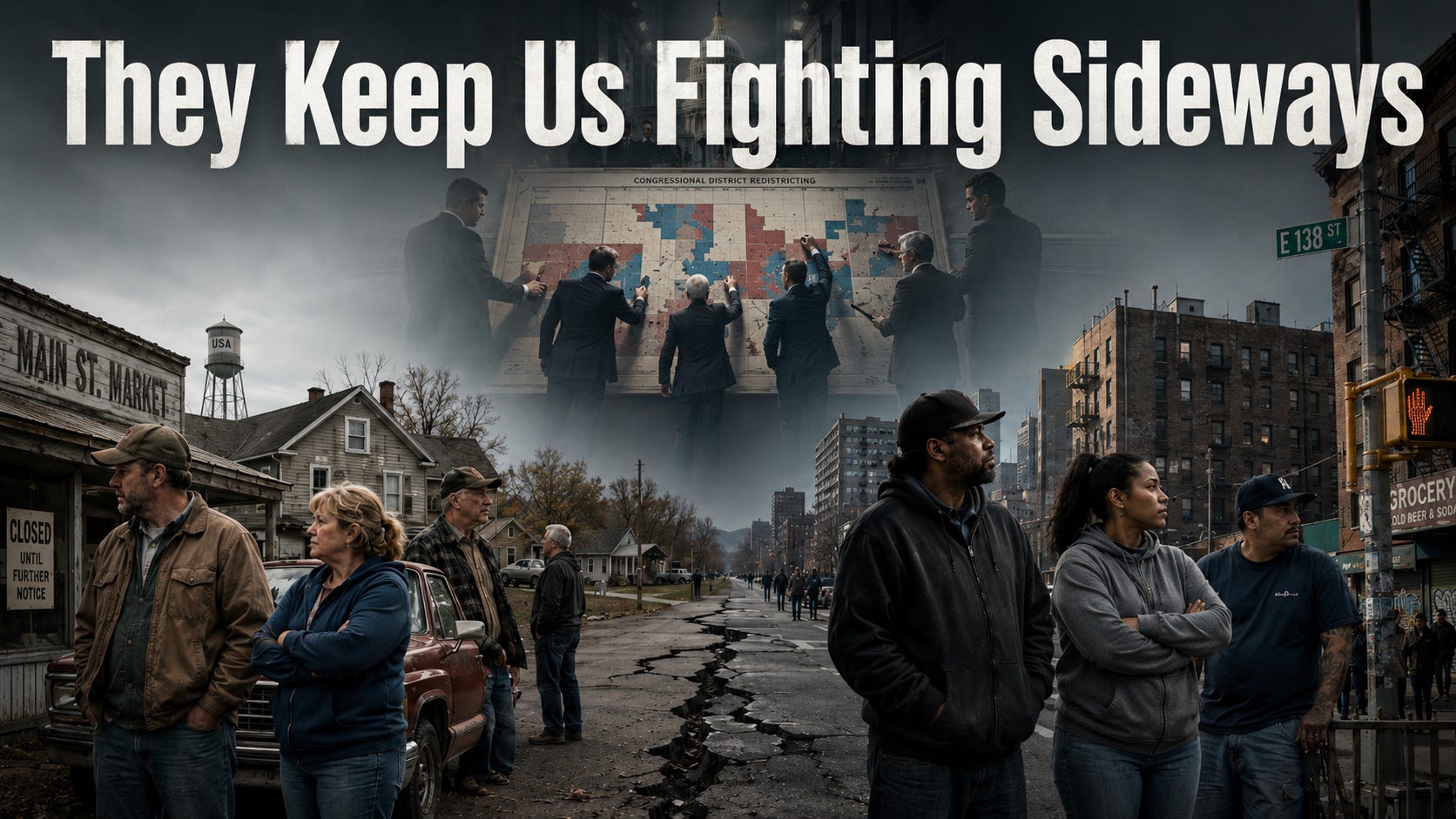
Tennessee was not the end of the story. It may have been the model.
In May, the NAACP filed a federal lawsuit challenging Tennessee’s newly enacted congressional map, arguing that lawmakers dismantled the state’s only majority-Black congressional district in Memphis and diluted the voting strength of Black Tennesseans. The League of Women Voters said the map fractured Black communities for partisan and racial advantage and was pushed through in just 48 hours, with limited transparency and little meaningful public input.
The fight is spreading. Reuters reported that Louisiana Republicans advanced a map that would eliminate one of that state’s two majority-Black, Democratic-held congressional districts, while South Carolina Republicans moved toward a new map that could threaten Representative Jim Clyburn’s district. The Supreme Court also cleared the way for Alabama Republicans to pursue a more favorable congressional map after a lower court had blocked it as racially discriminatory.
The map war is not theoretical anymore. It is happening now, but this fight is bigger than lines on paper.
A poor white family in a rural county and a Black or Latino family in an urban neighborhood are usually treated as opposites in American politics. They do not have the same history. Race, policing, housing, schools, banks, courts, and political power have not treated them the same, but both families may still be sitting at the same kind of kitchen table, staring at the same squeeze: high groceries, low wages, medical debt, closed hospitals, weak schools, addiction, rent, utility bills, and politicians who only show up when they need votes.
That is the part power works hardest to hide. If poor rural whites and urban minorities ever stop seeing each other as enemies, they might notice something dangerous. While they are being told to fight each other over race and culture, someone else is redrawing the maps, weakening Congress, and moving their power somewhere else.
This Community Is Powered by You
What started as a small circle has grown into something much bigger, and it’s all because of readers like you.
Every time you forward this email, post it on socials, or bring someone new into the fold, you’re helping build one of the most passionate, independent political communities out there.
Want to keep the momentum going?
Share this newsletter with someone who should be part of this conversation.
Thank you for being here. It means everything.
Race Is Real. It Is Also Weaponized.
The wrong lesson from this story would be to say race does not matter. It does. Racism is not imaginary. Racial voter dilution is not a talking point. Black political power has been attacked, contained, cracked, packed, ignored, and suppressed throughout American history, and the effort to dismantle Memphis’ majority-Black congressional power belongs inside that history.
Race is not only the injury here. It is also the battlefield power wants us trapped inside.
Poor rural white voters are told their enemy is the city. They are told their enemy is Black voters, immigrants, welfare recipients, “DEI,” crime, liberal elites, or people who supposedly receive benefits they did not earn. Urban Black and Latino voters are told poor rural whites are unreachable, racist, backward, and politically useless. Each side is handed a caricature of the other and then told to aim its anger there.
That is how the trap works. The powerful do not have to invent every resentment from scratch. They take existing pain, prejudice, fear, and mistrust, then organize it into political loyalty. They turn hardship into blame. They turn blame into votes. They turn votes into maps. Then they use those maps to make sure the people fighting each other have even less power to change the conditions hurting them both.
Race is the fault line. Class is the shared wound. Power is the hand pushing on the crack.
That does not mean poor rural whites and urban minorities are treated the same. They are not. It means they are being kept divided on purpose, because if they ever looked past the fight they were handed, they might finally ask who benefits from keeping them apart.
Bigotry Is the Fuel
This is where bigotry becomes useful to power, not because every struggling person is consumed by hate, or because every poor rural voter wakes up thinking about race, or because every urban voter sees the countryside through one simple lens. Real life is more complicated than that. Bigotry gives politicians a shortcut.
It lets them take a person who cannot afford groceries and tell him the problem is someone else’s benefits. It lets them take a family whose hospital closed and tell them the real emergency is immigration. It lets them take a worker whose wages have been stagnant for years and tell them that “DEI” is why they cannot get ahead. It lets them take communities hollowed out by corporations, bad trade policy, weak labor power, addiction, medical debt, and public abandonment, then hand them a scapegoat instead of an explanation.
Bigotry turns economic pain into cultural resentment. Cultural resentment becomes political loyalty. Political loyalty becomes permission to rig the map.
Once the map is rigged, representatives no longer have to answer to the full public. They only have to survive inside the electorate they helped design.
That is why the Tennessee fight is not separate from the class story. It is how the class story gets divided.
The attack on Memphis’ Black political power is real. It should be named plainly. But the same politics that dilutes Black voters also teaches poor white voters that this is somehow a victory for them. It tells them they are winning because someone else is losing representation.
But what have they actually won? They have not won lower rent, a reopened hospital, better wages, cheaper medicine, stronger schools, or cleaner water. They have won a map that makes politicians less accountable to everyone.
Bigotry is the match. Class pain is the dry wood. Gerrymandering is what they build once the fire is burning.
Tennessee Shows How Division Becomes Law
The map does not lower grocery prices. It does not reopen a rural hospital. It does not raise wages in Memphis. It does not fix underfunded schools, reduce medical debt, make child care affordable, bring broadband to neglected communities, or put a grocery store back in a neighborhood that lost one.
It does one thing. It redistributes power.
A congressional district is not just a shape on paper. It is the path between a community and federal power. It is how people turn local needs into national pressure. It is how a hospital closure, a polluted water system, a school crisis, a housing shortage, or a collapsing local economy becomes someone’s problem in Washington.
When that path is cracked apart, the damage does not stay abstract.
The immediate injury in Tennessee is racial. A majority-Black community in Memphis is being split and diluted. Black voters are not wrong to see this as an attack on their political power, because that is what happens when a community’s voting strength is carved apart and spread across districts where its influence is weakened.
The broader warning is constitutional.
Once politicians learn they can choose voters, every ordinary voter becomes easier to ignore. The poor rural white voter who is told this map helps “their side” may wake up later and discover that their own representative no longer has to answer them either. A safe seat does not serve the voter. It serves the officeholder.
The public is told to argue over race and party while the real transaction happens underneath: representation becomes less responsive, power becomes more protected, and voters become easier to manage.
The modern move is to make racial power look like partisan math.
The Federal Guardrail Is Being Pulled Back
The Tennessee fight came after the Supreme Court narrowed one of the federal tools used to challenge maps that dilute minority voting power.
In Louisiana v. Callais, the Court held that because the Voting Rights Act did not require Louisiana to create an additional majority-minority district, no compelling interest justified the state’s use of race in creating that map. The Court held that the map was an unconstitutional racial gerrymander.
That matters because Section 2 had long been one of the remaining federal guardrails against state maps that weakened minority voters’ ability to elect candidates of their choice. The ruling does not erase the Voting Rights Act. It does not make intentional discrimination legal. It does not end every federal voting-rights claim.
However, it does pull the guardrail back.
It makes it harder for the federal government, federal courts, and voting-rights plaintiffs to step into state map fights when the legal argument depends on race-conscious Voting Rights Act enforcement. It gives state mapmakers more room to say they are pursuing partisan advantage, not racial discrimination. And because race and party often overlap in the places where these fights are happening, that distinction becomes the battlefield. The Court itself emphasized the need to disentangle race and politics in these cases.
The argument is no longer only about whether Black voters were harmed. It becomes a fight over whether the harm can be legally separated from party politics enough for federal law to intervene.
That is why Tennessee matters now. When the federal guardrail weakens, state politicians do not suddenly become more restrained. They test the opening. They push the boundary. They find out how much power they can take before someone stops them.
The ruling weakens Washington’s ability to police race-based vote dilution, while Tennessee shows what state politicians may do when that guardrail is pulled back.
The Miscalculation
Here is the part the people cheering this moment may not be thinking through.
In the short term, weakening race-conscious Voting Rights Act enforcement may help Trump-aligned Republicans and Republican-led states. It gives them more room to redraw maps, weaken majority-Black districts, and convert legal ambiguity into political advantage before voters ever cast a ballot. Reuters reported that Republican-led Southern states raced to redraw congressional maps after the Supreme Court decision weakened protections for districts with significant minority populations.
That is the immediate prize, but there may be a long-term cost hidden inside it.
By weakening the federal government’s ability to intervene in state election maps through race-conscious Voting Rights Act enforcement, they are also weakening one of Washington’s own tools for controlling the battlefield. That may feel useful when Republican-led states are moving first. It may feel like victory when Memphis is carved apart, Louisiana moves, Alabama pushes, and South Carolina tests the limits.
But legal doctrine does not only belong to the party that benefits from it today.
Once the federal guardrail is pulled back, it is pulled back for everyone. Future administrations, future courts, and future political coalitions may find that the same ruling celebrated as a short-term partisan weapon also limits Washington’s ability to force states to draw, preserve, or defend districts on race-conscious Voting Rights Act grounds.
That is the miscalculation. They are using race to weaken voting rights now, but they may be weakening federal power itself for later.
This is not a defense of federal overreach. It is a warning about short-term power thinking. The same people who claim to want a strong executive when it helps them may be helping create a doctrine that gives state mapmakers more room to ignore Washington when Washington later wants control.
They are weaponizing race to win the map war, but they may be burning down one of Washington’s own tools for controlling the battlefield.
The Party Is the Symptom, Not the Disease
Republicans are driving the Tennessee map. That should be said plainly. They are the ones using this moment to carve up Memphis, weaken Black political power, and push Tennessee closer to a congressional delegation that reflects party control more than actual representation.
But if we stop there, we miss the deeper sickness.
The Republican Party is not the whole disease. It is the clearest current symptom of a system that now rewards politicians for manipulating voters instead of persuading them. The disease is a political structure where power flows to whoever can divide communities, engineer districts, nationalize resentment, and make representatives less accountable to the people they claim to serve.
Yes, Republicans are using this moment aggressively. Yes, the racial harm must be named. Yes, the attack on Memphis’ political power matters on its own terms. But the larger warning is that the system itself is teaching every party the same lesson: if you can draw better maps, you do not need better arguments.
Modern parties increasingly trust engineered electorates more than persuasion, voters become inventory, and politics becomes a question of who gets to design the electorate instead of who can persuade it.
Both parties have used gerrymandering. That does not make every gerrymander morally or legally identical. A map that dismantles a majority-Black district must still be named as racial harm. However, it does mean the deeper problem is not only the party doing it today.
The party is the symptom. The disease is engineered representation.
Article I Is the Casualty
This is where the map fight becomes a constitutional fight.
Article I is Congress. It comes first in the Constitution for a reason. Before the presidency, before the executive branch, before the machinery of one-person power, the Constitution lays out the legislative branch. Congress is supposed to be where the people’s power enters the federal government.
The House of Representatives is supposed to be the closest chamber to ordinary people. Short terms. Local districts. Frequent elections. Direct accountability. Representatives are supposed to be nervous. They are supposed to know that if they stop listening, voters can send them home.
That nervousness is not a weakness in the system. It is the safeguard.
Gerrymandering attacks that safeguard. It flips the relationship between voters and power. Instead of representatives answering to communities, communities are sorted into districts designed to protect representatives. Instead of politicians persuading voters, politicians redesign the electorate. Instead of elections being moments of accountability, they become managed outcomes.
That is how Article I gets weakened without being formally abolished.
Congress can still exist. Elections can still happen. Members can still give speeches, raise money, hold hearings, and appear on television. But if too many seats are engineered to be safe, the House becomes less responsive to the public and more responsive to party machines, donors, primaries, and ideological performance.
A rigged map does not just weaken one district. It weakens the constitutional design that was supposed to keep power close to the people.
Article I was designed to make politicians answer to voters. Gerrymandering redesigns voters so politicians do not have to answer.
A Weak Article I Creates a Strong Article II
Power does not disappear when Congress gets weaker. It moves.
When the House becomes less representative, less competitive, and less accountable, the public starts to lose faith that Congress can solve anything. People stop looking to their representative. They stop expecting legislation. They stop believing slow, messy, constitutional government can deliver results.
Then the demand shifts somewhere else. One person. One office. One signature. One order.
That is how Article II begins stepping on Article I. Not always through one dramatic seizure of power, but through accumulated public surrender. Congress becomes performative. Presidents become central. Executive orders become substitutes for law. Emergency powers become shortcuts. Agency rulemaking becomes the place where policy gets made because Congress is too broken, too bought, too divided, or too insulated to act.
A Congress protected from voters is a Congress less capable of governing. A Congress less capable of governing creates the excuse for presidents to do more. And once Americans are trained to believe every major solution has to come from the presidency, both parties begin chasing the same dangerous prize: control of Article II.
This is concentrated power wearing democratic clothing.
The map still exists. The election still happens. The representative still takes the oath. Yet the people’s branch gets weaker because the people’s leverage has been reduced. Into that vacuum steps the executive branch, promising speed, strength, order, and action.
They do not have to destroy Article I if they can make it useless.
Concentrated Power Is the Outcome
This is how concentrated power works.
It does not always arrive with tanks in the street or a president declaring openly that Congress no longer matters. Sometimes it arrives quietly, through process. A district line moves. A guardrail weakens. A court ruling narrows a remedy. A legislature rushes a map. A community gets split. A seat becomes safer. A representative becomes less accountable. A Congress becomes weaker.
Then everyone acts surprised when the presidency grows stronger.
That is the design of the crisis. While ordinary people are fighting each other over race, culture, party, geography, religion, and resentment, power is moving upward. It moves from voters to mapmakers, from communities to party machines, from Congress to presidents, and from representation to control.
That is why the rural/urban divide matters so much. Poor rural whites and urban minorities are not enemies by nature. They are made useful to power when they are convinced to see each other that way. Bigotry supplies the emotional fuel. Gerrymandering supplies the legal machinery. Weak representation supplies the constitutional vacuum. Concentrated power fills that vacuum.
The whole point of the Constitution was to keep power divided, checked, balanced, and answerable. Article I was supposed to keep federal power close to the people. But if the people’s branch is hollowed out, the system begins to bend toward the very thing it was built to resist.
While we fight each other over race and culture, power moves upward.
The Coalition They Fear
The system does not fear poor people being angry.
It knows how to use anger. It knows how to package it into campaign ads, cable segments, social media outrage, fundraising emails, and primary campaigns. It knows how to aim anger at immigrants, Black voters, rural whites, cities, welfare recipients, teachers, trans kids, college students, or whoever the scapegoat of the week happens to be.
What the system fears is poor people becoming aligned.
A coalition of poor rural whites, Black urban voters, Latino workers, union households, Medicaid families, indebted students, struggling renters, service workers, gig workers, and people trapped in medical debt would threaten the donor-class arrangement more than any single culture-war fight ever could.
That kind of coalition would ask different questions.
Why are hospitals closing while executives get richer? Why are wages flat while corporations raise prices? Why are schools underfunded while tax cuts keep flowing upward? Why are families fighting over scraps while donors write the rules? Why does Congress always seem too broken to help ordinary people but somehow functional enough to protect concentrated wealth and power?
That is the conversation power does not want.
So, the system keeps abandoned people separated by race, bigotry, geography, party identity, media narratives, religion, resentment, and district lines. It tells them their enemy is another struggling family somewhere else, not the people designing the conditions both families are forced to live under.
The people at the bottom were never each other’s real enemy.
The Map Is the Warning
Tennessee is not just about one district.
It is a warning about a system where politicians increasingly manage voters instead of persuading them. It is a warning about what happens when racial harm is treated as partisan strategy, when bigotry is converted into political fuel, when working people are taught to blame each other, and when mapmakers are allowed to redesign representation before voters ever reach the ballot box.
The first injury is racial. Black political power in Memphis is being carved apart, and that cannot be softened or skipped. However, the deeper constitutional warning is that once politicians can do this to one community, they learn they can do it to others. Once representation becomes something engineered from above, every ordinary voter becomes easier to ignore.
That is why the fight cannot end at party labels. The party doing it today matters. The racial harm matters. The legal fight matters. But underneath all of it is a larger machine: divide the public, weaken the map, weaken Congress, and move power upward.
Race is the fault line. Bigotry is the fuel. Class is the coalition they fear. The Voting Rights Act rollback is the federal guardrail being pulled back. Article I is the power weakened while Americans are taught to fight each other. Article II is where that power goes when Congress becomes too broken, too rigged, or too performative to represent the people.
The abandoned rural family is not the enemy. The abandoned urban family is not the enemy.
The real enemy is the system that teaches them to fight while it redraws the lines, weakens their Congress, and moves their power somewhere else.
Support Independent Media
If this piece helped clarify the larger pattern, consider becoming a paid subscriber to The Coffman Chronicle.
We are not here to chase the outrage of the day and move on. We are here to follow power, connect the dots, and explain how the fights they sell us are often covering the power they are taking from us.
Independent media matters because stories like this are rarely told in full. The map is not just a map. The culture war is not just noise. The constitutional damage is not just theory. It all lands at the kitchen table.
If you can afford it, become a paid subscriber and help us keep doing this work.
Support independent media. Help us follow the power.
Sources:
Ax, Joseph. “Louisiana, South Carolina Republicans Advance New Congressional Maps.” Reuters, May 14, 2026.
Kruzel, John. “US Supreme Court Clears Way for Alabama Republicans to Pursue New Voting Map.” Reuters, May 11, 2026.League of Women Voters. “League of Women Voters, NAACP, and Partners Challenge Tennessee’s Racially Discriminatory Congressional Map.” May 14, 2026.
NAACP. “NAACP Files Federal Lawsuit Challenging Tennessee’s Racially Discriminatory Congressional Map.” May 13, 2026.
Supreme Court of the United States. Louisiana v. Callais et al., Nos. 24-109 and 24-110. Slip opinion, April 29, 2026.
Tony Michaels Podcast. “Congress Is Rigged: Tennessee’s Map Grab Explained.” Transcript uploaded by user, May 2026.

Nothing trumble does is worth while. Reject even listening to the treasonous creep.
Look they laid out their bigot cards before the election when both Trump and Vance publicly said that Haitians are eating our cats and dogs. Personally I don’t know if they are bigots but they will act that way to satisfy their base. Americans need to face up to the fact that Trump is a wanna be dictator. And, since this is a democracy and not a dictatorship Trump must be forcibly removed from office maybe forced to resign like Nixon.