


No Kings, No Chaos
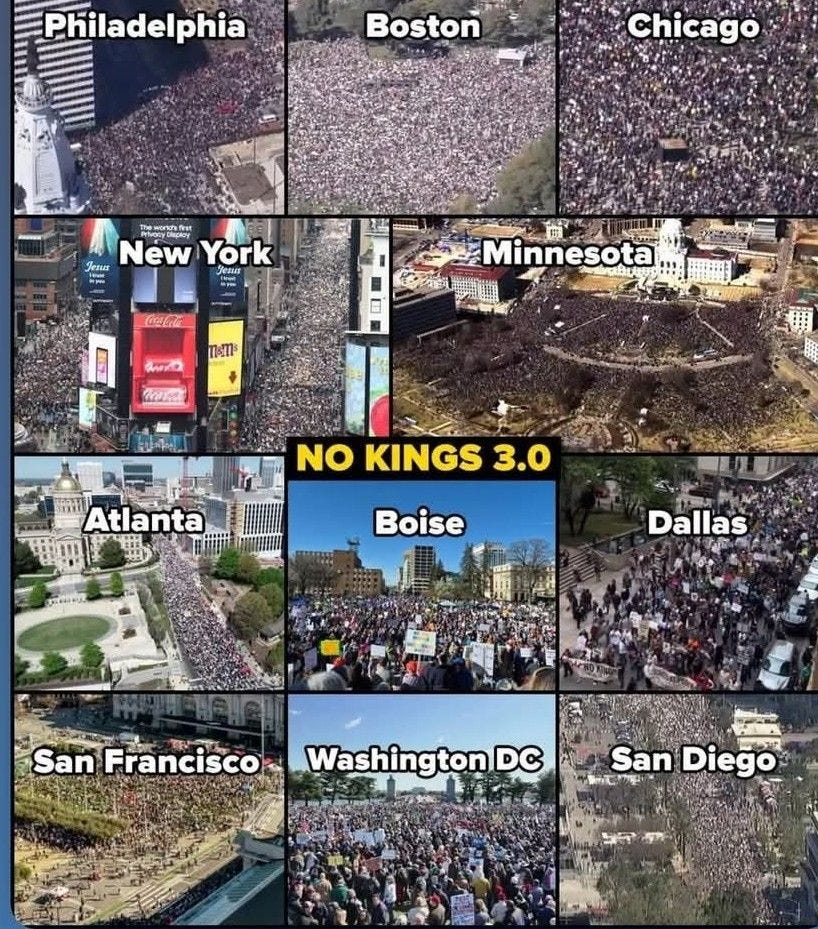
The easiest way to shrink a mass protest is to reduce it to its most combustible moments. That is what often happens when millions of people show up, and a few confrontations generate the clips that travel fastest. But the March 28 No Kings protests tell a larger story than the footage most likely to circulate. Across more than 3,100 events nationwide, and more than 3,200 or 3,300 by other major counts, the demonstrations were described by major outlets as largely or overwhelmingly peaceful. Organizers estimated turnout at more than 8 million worldwide. However, the exact totals shake out, the central truth is clear: the peaceful majority was the story, and the viral minority was the part most likely to be replayed.
This Community Is Powered by You
What started as a small circle has grown into something much bigger, and it’s all because of readers like you.
Every time you forward this email, post it on socials, or bring someone new into the fold, you’re helping build one of the most passionate, independent political communities out there.
Want to keep the momentum going?
Share this newsletter with someone who should be part of this conversation.
Thank you for being here. It means everything.
A national protest, not a fringe spectacle
Scale matters because it changes the meaning of what happened. This was not one city boiling over. It was a nationwide protest day stretching across all 50 states, with actions in major cities, smaller towns, and communities that rarely enter the national frame. Reuters reported more than 3,200 rallies across the country. The Washington Post put the number at more than 3,300. AP counted more than 3,100 events. The organizer's estimate of more than 8 million participants should be presented carefully as an organizer figure, not an independently audited count, but the size of the mobilization itself is not seriously in doubt.
That scale matters for another reason. A protest this large is often expected to produce enough disorder to overshadow everything else. According to the strongest reporting, that did not happen. AP said the demonstrations were largely peaceful overall, even though Los Angeles produced the most serious confrontation, with 74 arrests for failing to disperse and one additional arrest involving a dagger after police used tear gas near a federal detention center. Denver also saw nine arrests. Those incidents were real. They belong in the story, but they were not the story of March 28.
Why the sharpest footage wins
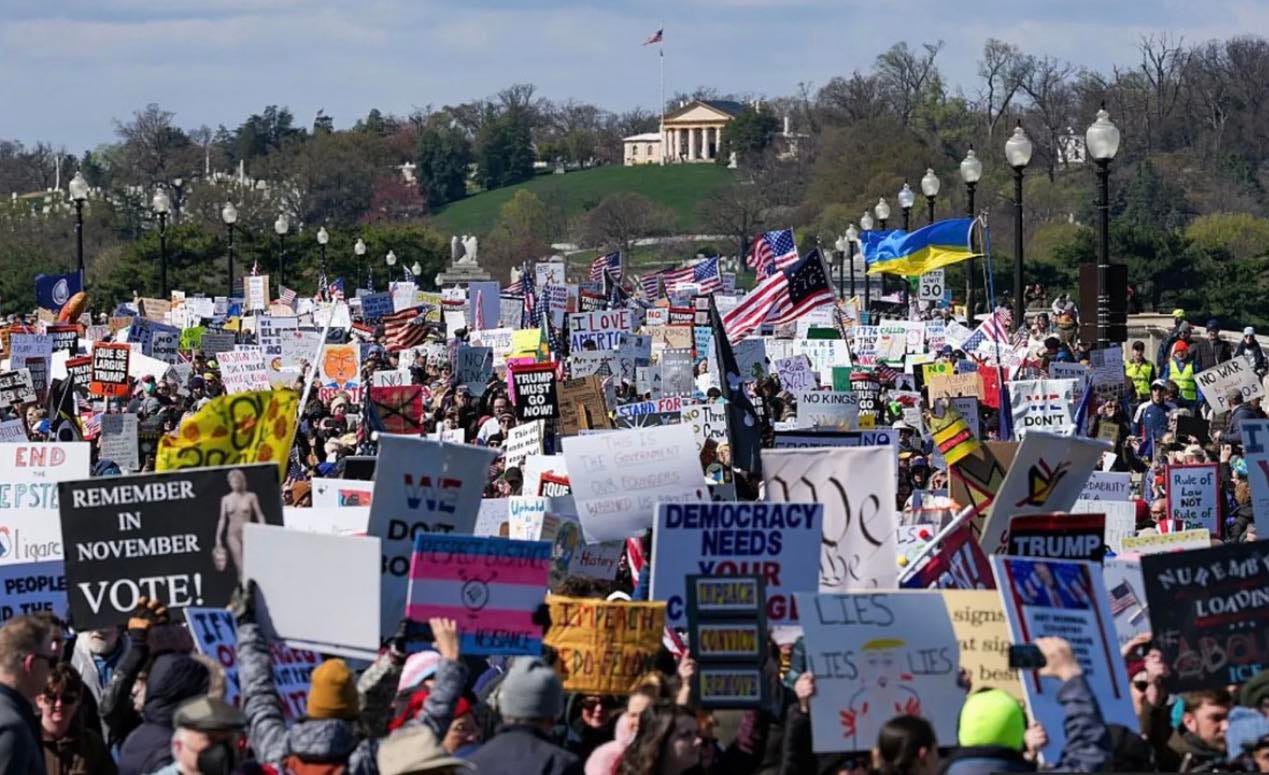
Mass protest is often judged through the narrowest possible lens. A police line, a dispersal order, a cloud of tear gas, a late-night arrest: those images can be clipped in seconds and replayed for hours. Hours of marching, chanting, sign-holding, listening, and simply occupying public space do not travel the same way. Conflict is visually louder than discipline, which means the part of an event most likely to go viral is often the least representative.
That is what made March 28 so easy to flatten. The most dramatic images came from a handful of flashpoints, especially Los Angeles. But treating those images as the event itself distorts the public record. The broad reporting from AP, Reuters, and the Washington Post points in the same direction: this was a massive protest wave, national in scope, in which isolated clashes did not define the day. The imbalance was not between peace and unrest. It was between what happened and what got amplified.
Peaceful at this size means something
Peacefulness at this scale is not a footnote. It is evidence of discipline. A protest spread across thousands of events does not remain mostly peaceful by accident. It requires local coordination, message discipline, planning, and participants who understand that showing up in large numbers is itself a political act. When an action of this size stays overwhelmingly peaceful, that is not a soft detail around the edges. It is one of the main facts.
That is what makes the March 28 protests harder to dismiss than critics would like. Even if the organizer's estimate of more than 8 million is treated cautiously, every major account still points to the same conclusion: millions appear to have participated across thousands of events, and the demonstrations did not collapse into the generalized chaos their opponents would have preferred to see. That matters. It suggests a public willing to show anger without proving every caricature made about protest movements.
Why some people need protests to look chaotic
There is a reason the most combustible images travel fastest, and it is not just because they are dramatic. Disorder is politically useful. A protest that can be framed as chaotic is easier to dismiss, easier to police, and easier to turn against itself. A protest that draws millions and remains overwhelmingly peaceful is much harder to wave away. It suggests legitimacy. It suggests discipline. It suggests that public anger is not confined to a fringe but is shared broadly enough to fill streets across the country without collapsing into the mayhem critics are always predicting.
That is part of what made March 28 significant. The strongest reporting did not describe a country consumed by protest violence. It described a huge national demonstration in which isolated clashes never became the defining feature. That matters because it denies opponents the simplest argument available to them. If millions can show up and remain mostly peaceful, then the story is no longer that dissent is inherently dangerous. The story is that mass opposition can be organized, visible, and disciplined all at once.
The real story was restraint at scale
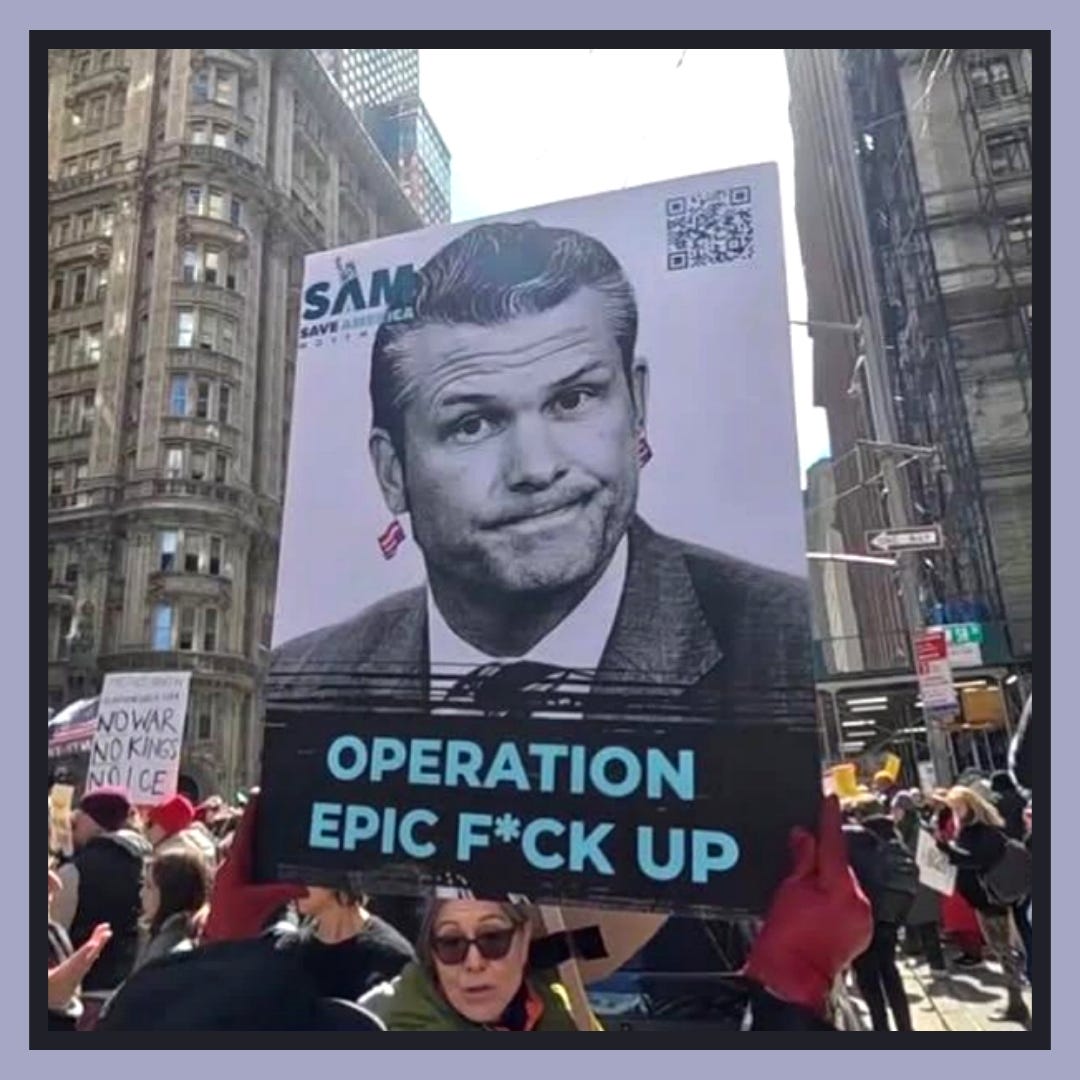
What gets minimized in coverage like this is not just the calm. It is the meaning of the calm. When millions of people can assemble across thousands of events without descending into mass disorder, that says something important about the character of the action itself. It suggests organization, restraint, and breadth. It suggests that what took place was not fringe theater, but a large civic statement made by people who showed up in numbers too big to wave away.
And that is the real story of March 28. Not that there were no clashes. There were. Not that every crowd estimate is beyond dispute. It is not. The real story is that one of the largest protest days in recent memory was defined less by violence than by restraint. Millions showed up. Most remained peaceful. The peaceful majority was not background noise. It was the headline, and it deserves to be remembered that way.
Support Independent Media
When millions of people show up, and the story still gets reduced to the smallest, loudest slice of the day, independent journalism matters more, not less. The Coffman Chronicle exists to push past the distortion, follow power, and report the truth about what is actually happening in this country. If you value that work, and you can afford to support it, please consider becoming a paid subscriber.
“Dozens Arrested for Failing to Disperse After ‘No Kings’ Rally in Los Angeles.” Associated Press, March 29, 2026.
“Third No Kings Protest Draws 8 Million Worldwide to Push Back on Trump Administration.” The Guardian, March 28, 2026.
“Anti-Trump ‘No Kings’ Rallies Pop Up in Thousands of US Cities.” Reuters, March 28, 2026.
“No Kings Protests Fill Streets at Over 3,300 Rallies in All 50 States, a Record Number.” The Washington Post, March 28, 2026.
“ The peaceful majority was not background noise. It was the headline, and it deserves to be remembered that way.” 👍
The peacefulness is the major headline, and as a citizen body, it is something to be proud of. The question now is: should we have more such massive demonstrations that remain peaceful even with more than 8 million participating? Or should there be a unified "ask" of our government to which they must respond? We need to inject these demonstrations with more pointed goals to which it is clear the government must react.