


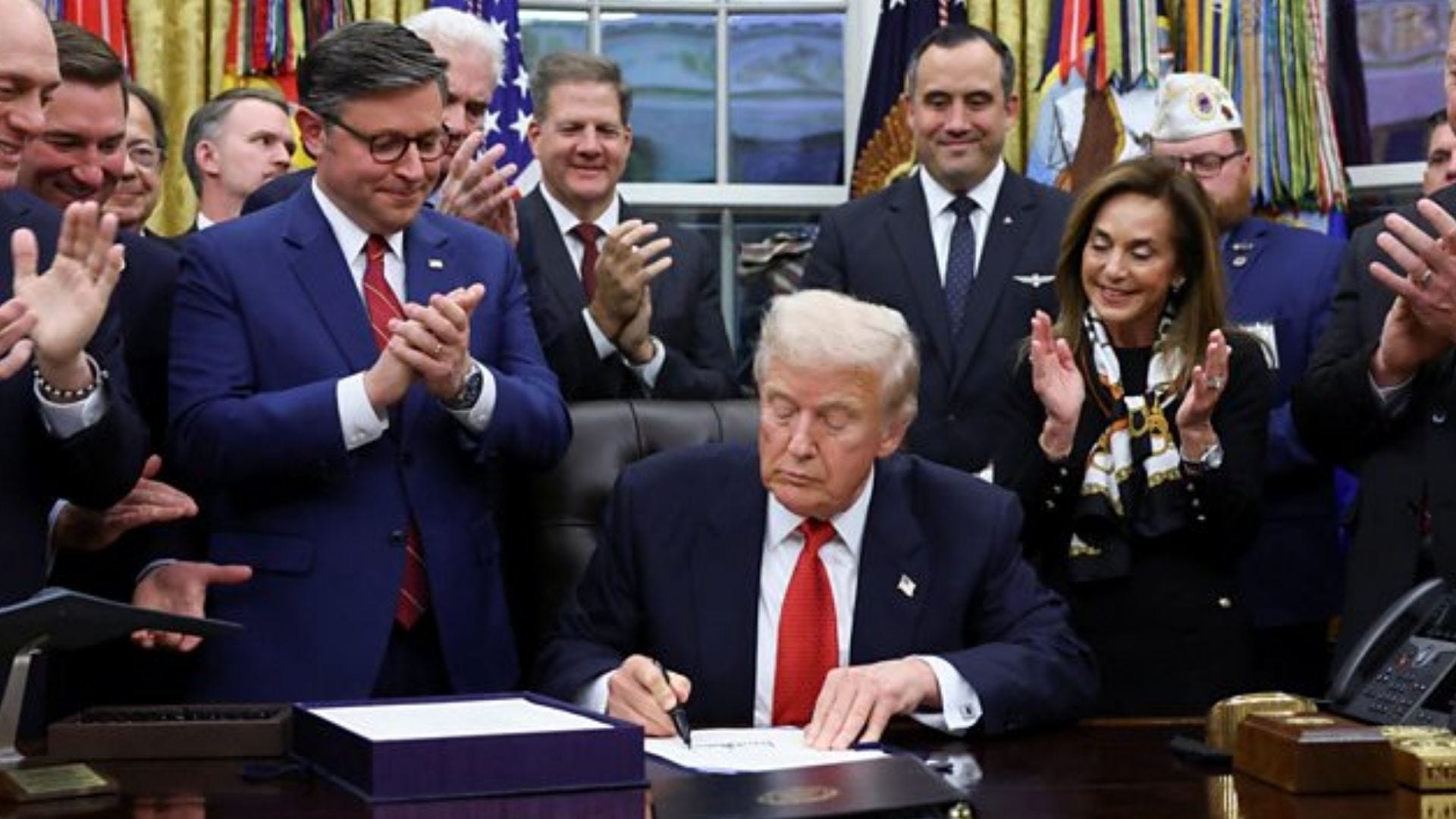
President Donald Trump has signed the government funding package that ends the weeks-long shutdown — and with it, a dramatic reversal in federal hemp policy that will outlaw most hemp-derived THC products now sold in stores nationwide.
Follow The Coffman Chronicle on NewsBreak for daily breaking political coverage.
Tucked deep inside the bipartisan deal is a redefinition of “legal hemp” that effectively shuts down the booming delta-8 and delta-10 cannabinoid industry. The provision eliminates the 2018 Farm Bill loophole that allowed producers to extract intoxicating forms of THC from legal hemp and sell them as gummies, drinks, vape cartridges, oils, and smokable flower.
Under the new law, any hemp product containing more than 0.4 milligrams of THC per container — or made with cannabinoids other than naturally occurring low-THC hemp — will be treated as an illicit, federally prohibited substance. The change affects thousands of manufacturers and retailers and an estimated multibillion-dollar sector that grew rapidly over the past five years.
The White House said Trump supported the measure as a “safety and regulatory fix,” echoing concerns from lawmakers who argue that unregulated hemp-derived intoxicants have flooded the market with little oversight.
Industry organizations sharply dispute that framing. “This is a death sentence for small hemp businesses,” one national hemp trade group warned in a statement, calling the move “a prohibition masquerading as consumer protection.” Growers and processors say the ban threatens hundreds of thousands of jobs and will hit rural economies especially hard.
The law does not take effect immediately. Congress included a one-year implementation period, giving the industry a narrow window to push for alternative regulations or a standalone replacement bill. The Congressional Research Service noted last week that even federal agencies appear uncertain about how to enforce the upcoming ban, or whether existing resources are sufficient.
Follow The Coffman Chronicle on NewsBreak for daily breaking political coverage.
States are already bracing for impact. Texas, Florida, Tennessee, and several Midwestern states have large hemp-derived THC markets that operate legally at the state level. Attorneys general in multiple states say they expect legal challenges if federal enforcement conflicts with existing state-regulated hemp programs.
Consumer access will also shift dramatically. Products widely available in gas stations, grocery stores, vape shops, and online marketplaces — from delta-8 gummies to THC-infused seltzers — will disappear from the federal market once enforcement begins.
For now, the ban stands as one of the most significant cannabis-policy reversals in years, marking a full pivot from the federal legalization framework Trump signed into law in 2018.