


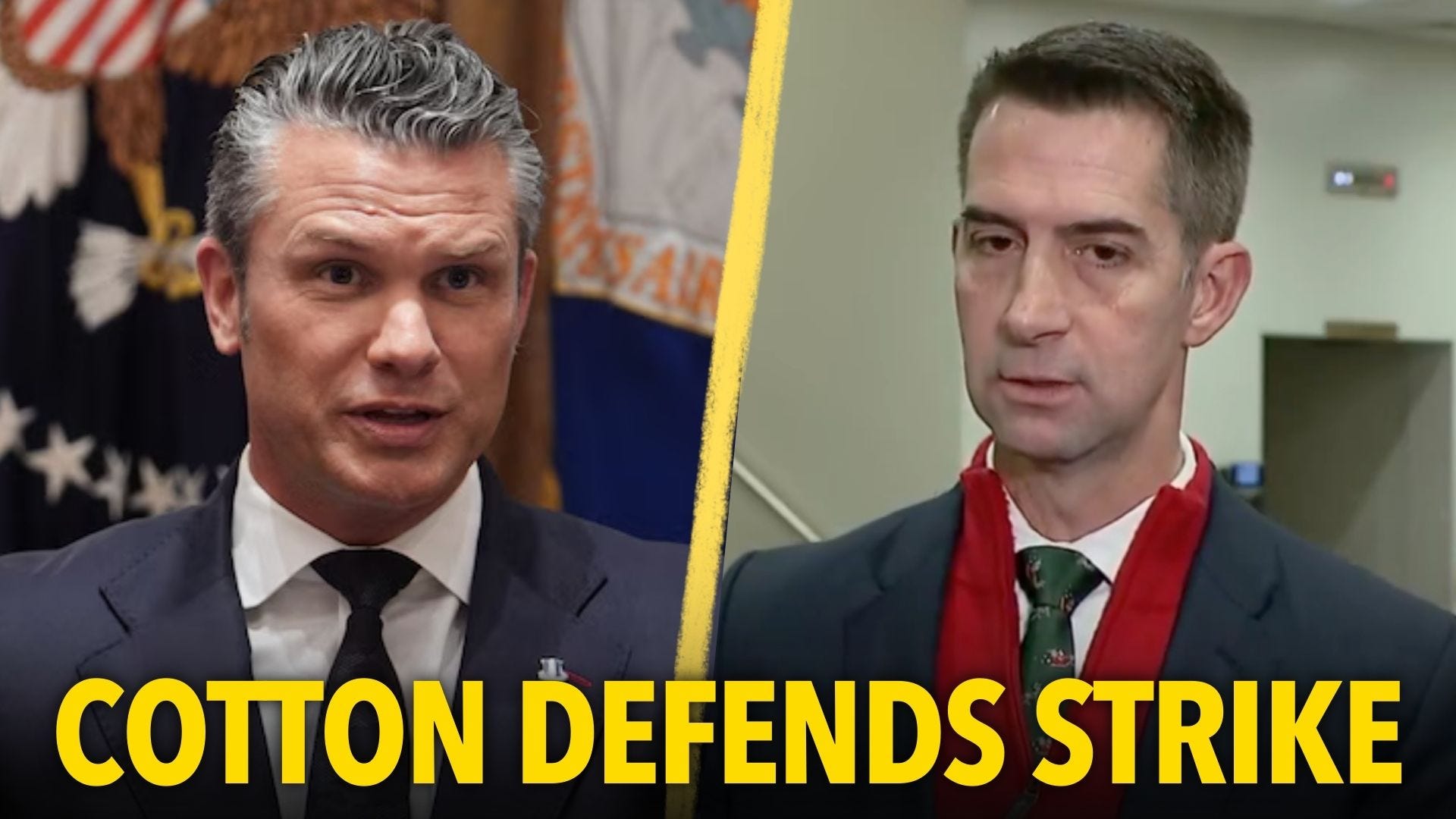
Sen. Tom Cotton defended the U.S. military’s conduct in a controversial Caribbean boat strike on Thursday, telling reporters that the senior officer who ordered the operation was given no directive to “kill them all,” despite growing scrutiny over the deaths of survivors in a second strike.
Follow The Coffman Chronicle on NewsBreak for daily breaking political coverage.
Cotton spoke after a closed-door briefing with Admiral Frank Bradley, the Navy commander who authorized both missile strikes on a suspected drug-trafficking vessel. The incident has triggered bipartisan concern after lawmakers viewed classified footage appearing to show two survivors clinging to a capsized boat before being targeted again.
Cotton pushed back on reports that Defense Secretary Pete Hegseth issued a verbal “no quarter” instruction ahead of the operation — a claim first raised in media accounts earlier this week. “Admiral Bradley was very clear that he was given no such order,” Cotton said, adding that he viewed the military’s actions as “entirely lawful.”
Other lawmakers, including several Republicans, described the video as alarming, with some saying the second strike raised serious questions about compliance with international law and the rules governing armed engagements at sea. Pentagon officials have not released the footage publicly, citing operational security.
The Pentagon’s legal rationale for the second strike — and its assessment of whether the survivors posed an ongoing threat — remains a key point of contention as congressional oversight intensifies. Cotton, however, maintained that the individuals in the water were not incapacitated but attempting to reenter the fight.
The incident is expected to prompt further inquiry from both parties, with some members calling for the release of the video and additional details about the chain of command leading up to the operation. As the debate continues, pressure is building on the administration to provide a clearer account of how the decision-making unfolded in real time.