


The Spill: A Town Engulfed in Acid
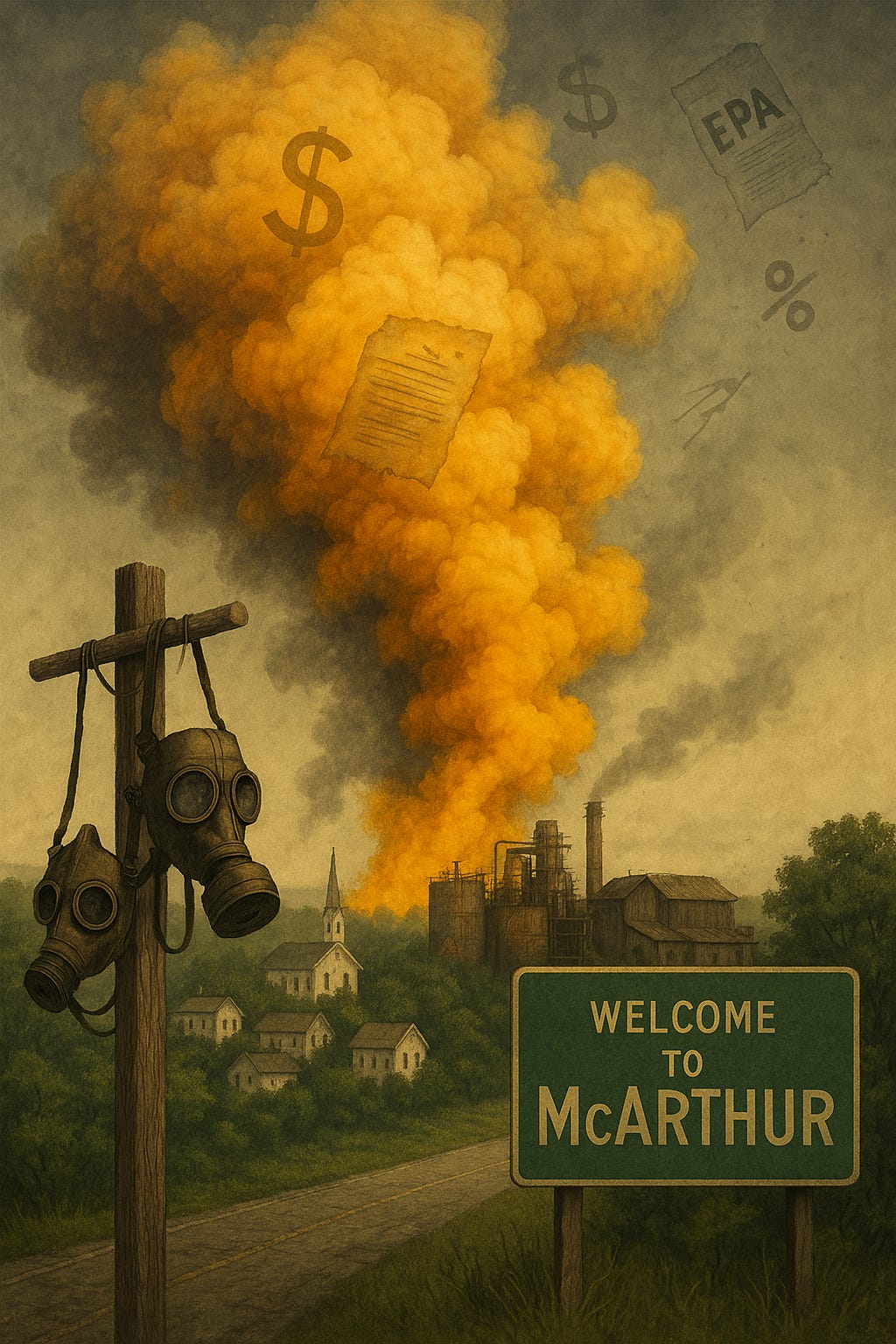
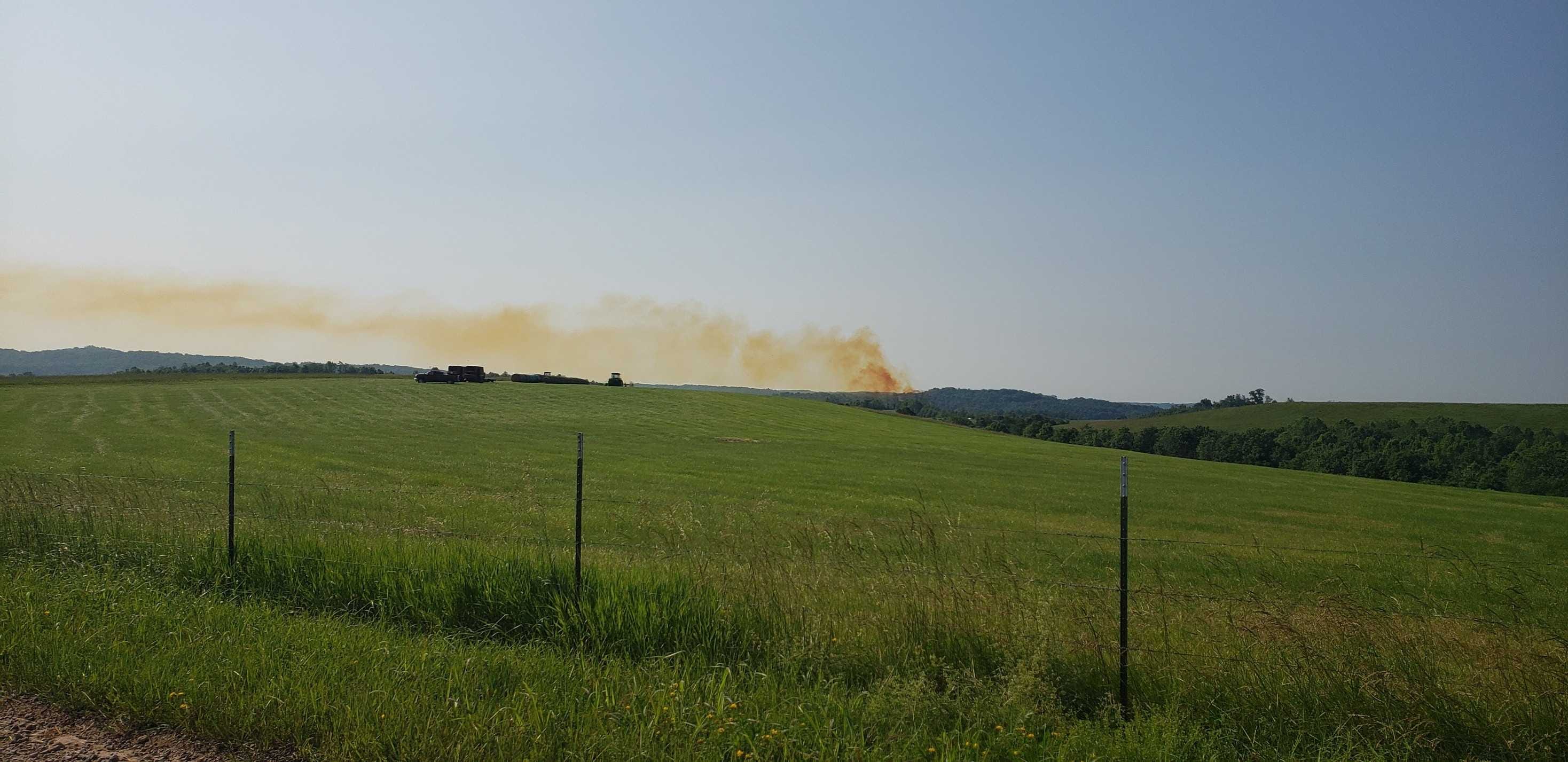
Just after sunrise on June 11th, residents of McArthur, Ohio woke to the kind of nightmare you can’t smell coming until it’s too late. A 5,000-gallon nitric acid tank ruptured at the Austin Powder Company’s explosives facility, releasing a corrosive yellow-orange plume that crept silently over the tree line and into the community. By 9 a.m., hundreds were evacuating, school was canceled, and a temporary no-fly zone blanketed the county.
The chemical—nitric acid, used in explosives manufacturing—reacts violently in open air, releasing toxic nitric oxide gas. Exposure can cause coughing, dizziness, or even unconsciousness. For a poor, rural town like McArthur, where emergency services are already stretched thin, this wasn’t just a leak. It was a full-blown hazmat nightmare.
Ohio’s environmental agency rushed to deploy mobile air quality monitors. The FAA restricted airspace for 30 nautical miles. Local roads were barricaded. A Red Cross shelter popped up at the high school. Officials say no one has died, but the fear hangs heavy. When the air can kill you, no update feels fast enough—and no excuse is good enough. Especially when the dangers were already known.
Independent News. Just $1/Week.
We just hit 15,000 subscribers—thank you! To celebrate, we’re offering full access to The Coffman Chronicle for 50% OFF!
Get exclusive analysis, daily rundowns, and fearless reporting you won’t find in corporate media.
Support truth. Stay informed.
A Pattern of Violations
This isn’t Austin Powder’s first brush with danger. In 2022, the company faced EPA enforcement action for wastewater discharge violations. Locals say accidents at the plant have been a whispered constant for years—just another risk of living in a forgotten town that builds explosives so other places can feel safe.
But that’s the problem: these risks aren’t random. They’re the consequence of failing to regulate industries that handle deadly substances. There’s no excuse for a 5,000-gallon nitric acid tank to fail in 2025. Not with modern sensors. Not with proper maintenance. And definitely not with a robust inspection regime.
But inspections have been slashed. Since 2018, EPA Region 5—covering Ohio—has seen staffing drops of nearly 20%, with steep cuts to air quality enforcement and chemical safety oversight. Plants like Austin Powder are operating with fewer watchdogs, fewer audits, and less public scrutiny. It’s not hard to imagine how this ended up in a plume stretching across miles.
That plume didn’t rise in a vacuum—it rose in a country that’s been systematically defunding the very people meant to prevent it.
The Oversight Vacuum
What happened in McArthur isn’t just a local failure—it’s the direct consequence of a federal retreat. Over the last decade, especially under Trump’s first term, the EPA’s chemical accident prevention rules were gutted. Safety audits were weakened. Public disclosure requirements were scaled back. Third-party inspections? Scrapped.
The result: companies no longer have to prove they’re preventing disasters—only that they’ll respond after one happens.
This rollback mindset didn’t end in 2020. Trump’s return to office in 2025 brought renewed vows to “unshackle industry” from “job-killing regulations.” One of his first executive orders revived the same deregulatory task force that once pushed to eliminate chemical hazard disclosure rules altogether.
And while local responders race to contain the damage, they’re doing it without the staffing, funding, or federal backup they need.
Who Pays the Price
This story isn’t unique to McArthur—it echoes across rural America.
It’s always the same communities left holding their breath—literally. McArthur, population just under 2,000, is a rural, working-class town where most people live paycheck to paycheck. This isn’t some isolated industrial zone—it’s home to schools, farms, and families.
These are the people who pay the highest price for regulatory collapse. Not the lobbyists. Not the CEOs. Not the politicians slashing agency budgets in Washington.
When you gut environmental protections, the fumes don’t rise over Mar-a-Lago or Capitol Hill—they settle over places like Vinton County. Places with no media spotlight. No emergency hospital. No backup plan.
They’re the canaries in America’s deregulation coal mine. And right now, they’re choking on nitric acid.
Conclusion: The Spill Wasn't an Accident—It Was Policy
This wasn’t just a tank failure. It was the result of deliberate policy choices—choices to cut safety inspections, to weaken oversight, to let dangerous facilities operate in the shadows. What happened in McArthur is exactly what happens when government is hollowed out in the name of deregulation.
If we don’t fund the agencies that protect our air, water, and communities, we’re not just inviting disaster—we’re subsidizing it.
The next spill could be bigger. Deadlier. Closer to home.
📞 Call Congress at (202) 224‑3121. Demand a full investigation into this incident. Demand the restoration of EPA funding and chemical safety rules. Demand protections that prioritize people over polluters.
Because clean air shouldn’t be a luxury. And no one should have to evacuate their town because their government decided safety wasn’t worth the budget.
Bibliography
Environmental Protection Agency (EPA). “Enforcement Annual Results for Fiscal Year 2022.” United States Environmental Protection Agency, December 2022. https://www.epa.gov/enforcement/enforcement-annual-results-fiscal-year-2022.
Funk, John. “EPA Cuts Could Undermine Ohio’s Ability to Protect Environment, Watchdog Group Says.” Cleveland.com, March 3, 2018. https://www.cleveland.com/metro/2018/03/epa_cuts_could_undermine_ohios_ability_to_protect_environment_watchdog_group_says.html.
Garcia, Rachel. “Chemical Leak at Austin Powder Plant Prompts Evacuations in Vinton County, Ohio.” WLWT News 5, June 11, 2025. https://www.wlwt.com/article/chemical-leak-austin-powder-plant-evacuation-vinton-county-ohio/65036244.
Gebel, Erika. “Evacuations Underway in Ohio as Wind Drives Chemical Leak into Communities.” Fox Weather, June 11, 2025. https://www.foxweather.com/extreme-weather/ohio-massive-chemical-leak-explosives-plant-vinton-county.
Helsel, Phil. “Trump EPA Rollbacks Would Weaken Rules Projected to Save Billions of Dollars and Thousands of Lives.” Associated Press, September 30, 2019. https://apnews.com/article/0a289aec2507ed38d386680afdd0ea45.
Ohio EPA. “Austin Powder Company: Water Discharge Permit and Violations Summary.” Ohio Environmental Protection Agency, August 2022. https://epa.ohio.gov/static/LinkClick.aspx?fileticket=F2Q9b8aEhdg%3d&portalid=0.
Turner, Craig. “Nitric Acid Leak Creates Plume from Vinton County Plant, Prompts Evacuations.” 10TV WBNS, June 11, 2025. https://www.10tv.com/article/news/local/ohio/chemical-leak-austin-powder-red-diamond-manufacturing-plant-vinton-county-ohio/530-0a026700-a218-427e-b3ba-1165a924830e.
United States Government Accountability Office. “EPA: Improved Information on Federal and State Enforcement in Resource-Constrained Environments.” GAO Report to Congressional Committees, July 2022. https://www.gao.gov/assets/gao-22-104247.pdf.

Incompetence of Trump's Amdrica . He must be removed immediately before more damage is spread across America.
If it was an avoidable event then it can never be called an accident.