


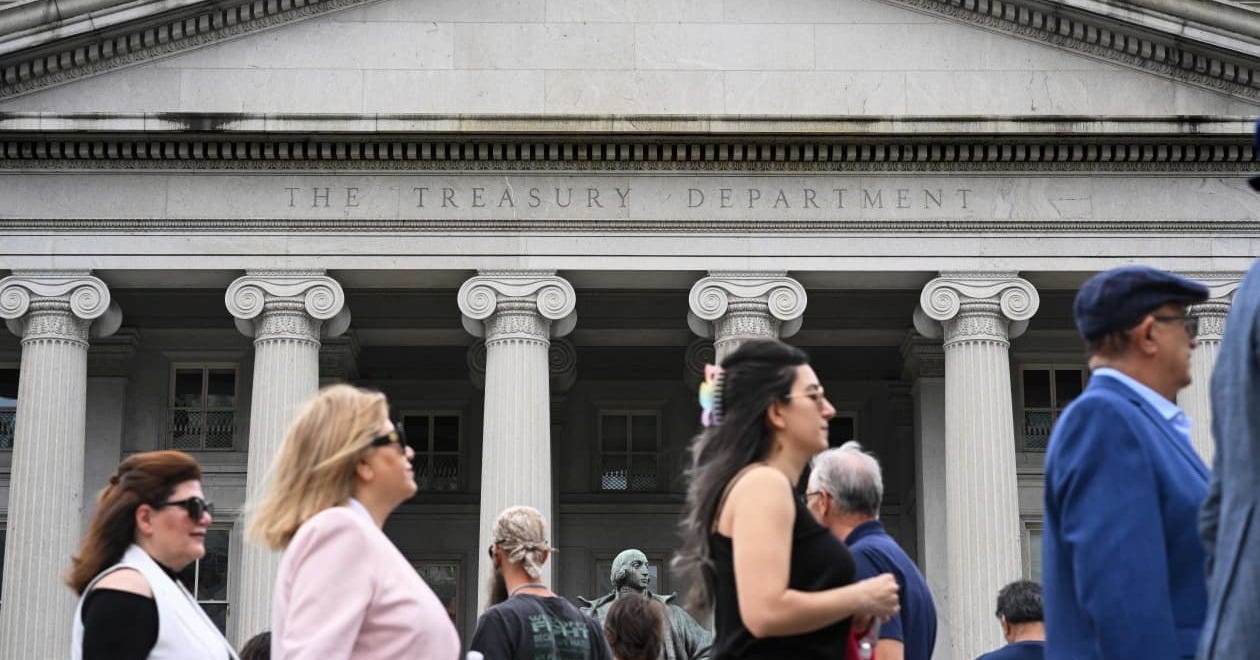
The U.S. Treasury Department confirmed that the federal government borrowed approximately $1.246 trillion during the first eight months of Fiscal Year 2026, including a $293 billion deficit in May. Treasury data showed both revenues and spending reached record levels for the October-through-May period.
The latest figures place the federal budget at the center of another fiscal debate during President Donald Trump’s second administration.
Treasury reported year-to-date receipts of $3.656 trillion and spending of $4.902 trillion. While revenues increased from the previous year, spending continued to outpace collections, requiring additional borrowing.
One of the largest spending pressures remains interest on the national debt. Treasury reported gross interest payments of $133 billion in May, a record for the month. Officials said the increase was driven primarily by the growing amount of outstanding federal debt.
Subscribe free for daily political analysis they won’t broadcast. Join 110K+ readers →
The administration has emphasized tariff revenue as a source of additional federal income. Earlier Treasury reports showed customs collections rising sharply after new tariffs were imposed on imports. However, budget analysts note that tariff gains remain small relative to overall federal spending and borrowing needs.
Fiscal watchdog groups argue the larger issue is the gap between long-term spending commitments and government revenue. The Congressional Budget Office projects annual deficits near or above $2 trillion over the coming decade absent significant policy changes.
The next major test will come as Congress and the White House confront future spending legislation, tax policy decisions, and debt projections that continue to show borrowing remaining historically elevated.
Subscribe free for daily political analysis they won’t broadcast. Join 110K+ readers →