


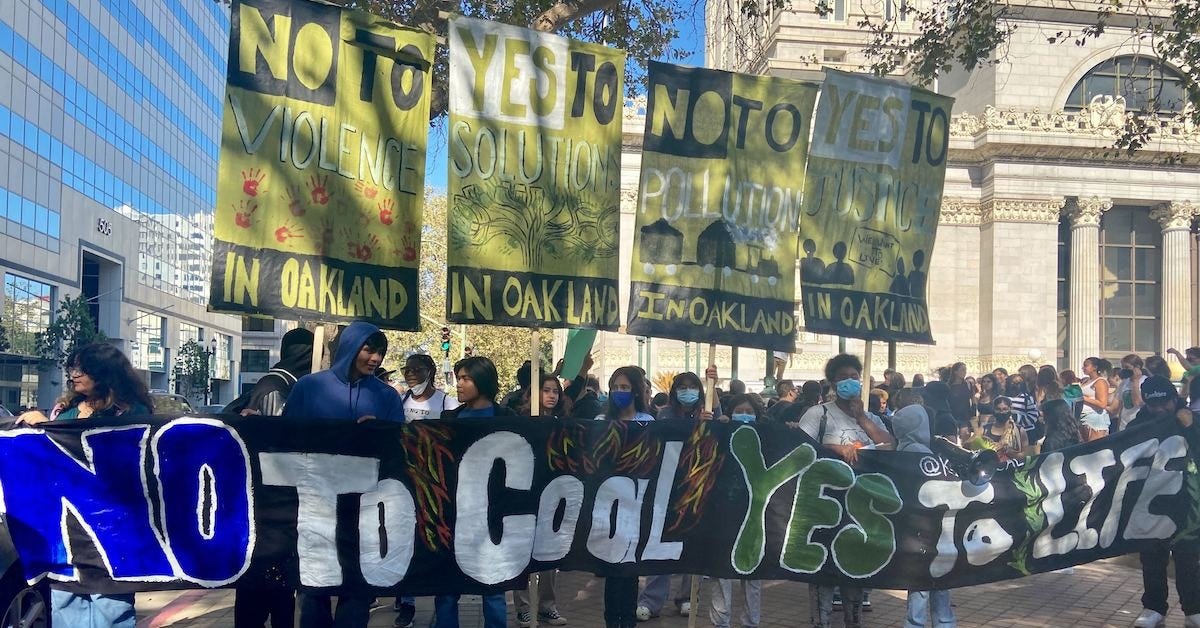
A new federal push to revive America’s coal industry has placed Oakland back at the center of one of California’s longest-running infrastructure disputes.
The Trump administration recently awarded $75 million to the Oakland Bulk and Oversized Terminal project, part of a broader $700 million initiative designed to support coal infrastructure nationwide. Administration officials have framed the effort as a way to strengthen energy security, exports and industrial jobs.
But in the Bay Area, the announcement immediately revived opposition from environmental organizations and community groups that have spent years trying to block coal shipments through West Oakland.
The project’s roots stretch back more than a decade. After plans emerged to use the former Oakland Army Base site as a coal export hub, Oakland leaders moved to prohibit coal handling. Developers challenged those restrictions, and court decisions ultimately revived the terminal’s pathway forward.
Subscribe free for daily political analysis they won’t broadcast. Join 110K+ readers →
Now the conflict has shifted.
Rather than focusing solely on litigation, opponents are targeting permitting agencies, regulators and potential investors. Organizers argue West Oakland already faces disproportionate pollution burdens and should not become a major coal-export corridor.
Supporters contend the terminal could support jobs, trade activity and energy exports while helping coal-producing western states reach overseas markets.
For Bay Area residents, the dispute increasingly reflects a larger question: how much influence local communities should have when federal energy priorities collide with local environmental goals.
With permits still required and financing questions unresolved, the political and regulatory battle surrounding the terminal appears far from over.
Subscribe free for daily political analysis they won’t broadcast. Join 110K+ readers →