


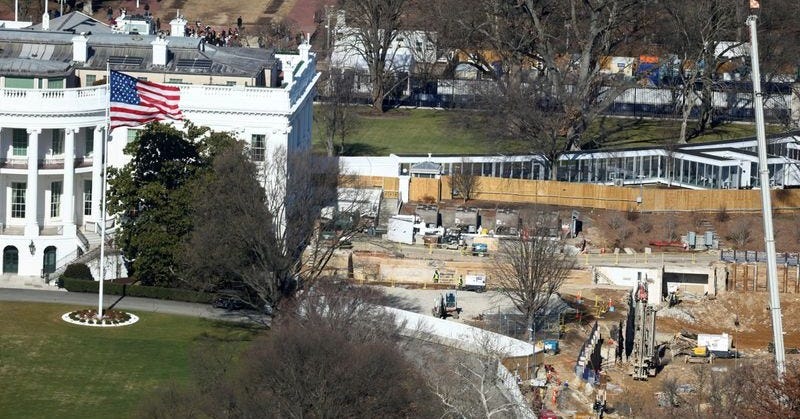
The Trump administration has filed an emergency motion to restart work on its White House ballroom after a federal judge halted construction, escalating a legal fight that now centers on whether the pause itself creates security risks. In Washington, the filing matters immediately because the administration is asking an appeals court to undo the latest barrier to a project already reshaping the White House grounds.
According to Reuters, the administration told the D.C. Circuit that Judge Richard Leon’s order left the executive mansion “open and exposed” and threatened “grave national-security harms” to the president, his family and staff. That argument collides with Leon’s earlier finding that the government had not shown a full construction halt would jeopardize security.
The core facts are now clear. Leon ruled March 31 that the $400 million, 90,000-square-foot ballroom cannot proceed while the case moves forward, saying no statute comes close to authorizing the president to carry out such a project without Congress. The lawsuit was brought by the National Trust for Historic Preservation, which says the work began without required review and authorization.
Subscribe free for daily political analysis they won’t broadcast. Join 115K+ readers →
But the case is not a total stop. AP reported Leon specifically exempted work necessary for White House safety and security, while Reuters reported the administration still insists the president has complete authority to renovate the White House. That leaves the appeals court weighing not just presidential power, but whether the government’s security claim is broader than the lower court already allowed.
“We are pleased with Judge Leon’s ruling today to order a halt to any further ballroom construction until the Administration complies with the law,” National Trust CEO Carol Quillen said.
The fight matters beyond one building. Reuters reported the planning commission approved the project on April 2, even as critics said it was rushed and too large, showing the administration still has institutional support on design while facing a major legal setback on authority.
What happens next is the D.C. Circuit’s response to the emergency motion and, potentially, a longer fight over whether Congress must explicitly sign off before construction resumes.
The legal pause may be temporary, but the clash over who controls changes to the White House is not.
Download a FREE Pocket Constitution NOW →
