


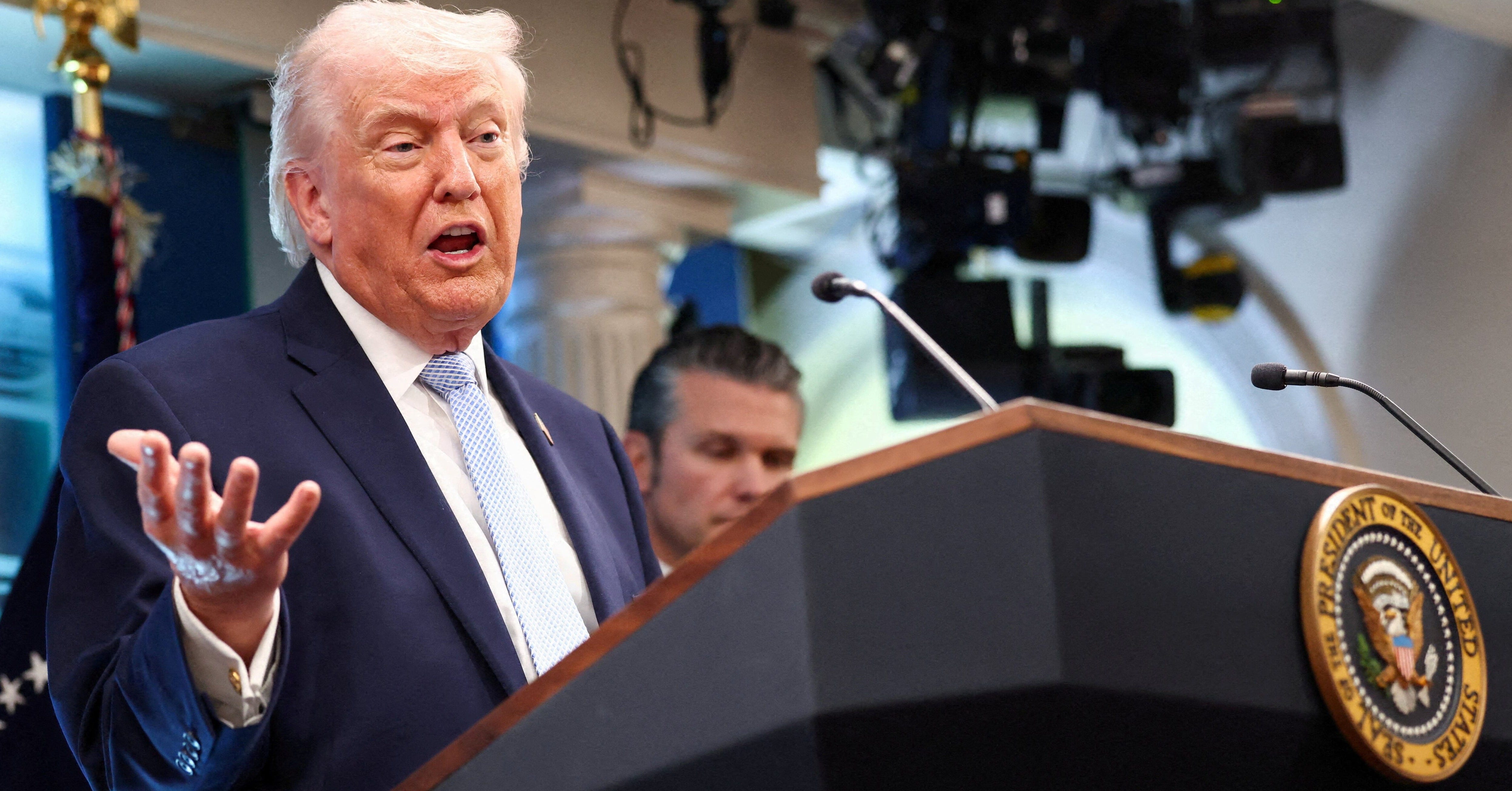
President Donald Trump said the United States should be reimbursed for protecting the Strait of Hormuz, turning a military-security dispute with Iran into a proposed payment fight over one of the world’s most important shipping routes.
Trump said in a Fox News interview that the U.S. would keep or run the strait and become its guardian, adding that the country should be paid for that role. The Jerusalem Post, citing Reuters and its own staff, reported that Trump also used the phrase guardian angel of the strait.
CBS News reported that Trump later posted that the U.S. would be known as the guardian of the Hormuz Strait and would seek a 20 percent reimbursement rate on cargo shipped through the waterway to cover security costs.
The policy consequence is significant. If implemented, the proposal would convert U.S. naval protection from a security posture into a contested cargo charge, raising questions about legal authority, allied support, enforcement, and whether Congress would be asked to approve or fund the operation.
Subscribe free for daily political analysis they won’t broadcast. Join 110K+ readers →
Iran has rejected U.S. control claims. AP reported that Iran argues it has the right to manage traffic through the strait, while the U.S. and others dispute that position on freedom-of-navigation grounds. The European Union’s top diplomat called for the strait to remain open, and Iran’s Revolutionary Guard said it would not accept U.S. interference.
The economic stakes are immediate. AP reported that Brent crude rose 3.9 percent to $78.95 after the U.S. and Iran each asserted control over the strait, with prices briefly nearing $80 after Trump called for the 20 percent toll.
Social reaction amplified the remark quickly, with international outlets, Iran-focused media, commodity analysts, OSINT accounts, and pro-Trump commentators circulating the guardian angel language. That reaction strengthens the story’s distribution signal, but the core facts rest on Trump’s public statements and reputable news reporting.
What happens next depends on whether the White House formalizes the reimbursement plan, whether allies support it, and how Iran responds in the waterway.
Subscribe free for daily political analysis they won’t broadcast. Join 110K+ readers →