


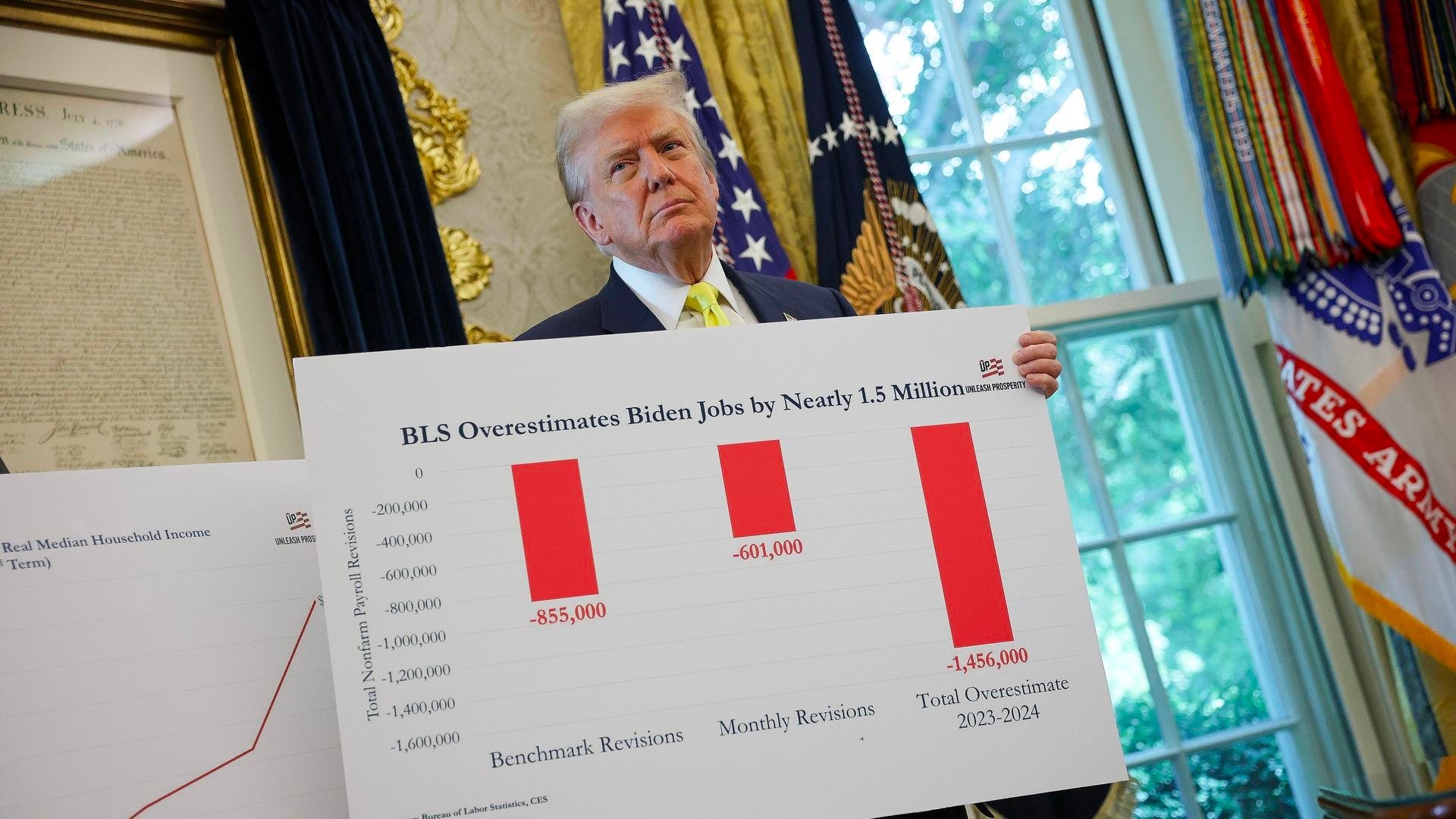
President Donald Trump’s August 2025 dismissal of the head of the Bureau of Labor Statistics continues to reverberate through economic and political circles, as economists warn that sustained attacks on federal data may be undermining public trust — even as experts insist the numbers themselves remain sound.
The controversy erupted after the BLS released a jobs report showing weaker-than-expected employment growth and substantial downward revisions to earlier estimates. Trump publicly accused the agency of publishing “rigged” data and removed the commissioner shortly afterward. While the agency has operated under an acting commissioner since then, the episode has remained a touchstone in debates over the independence of U.S. economic statistics.
Economists broadly agree on one point: there is no evidence the BLS manipulates or falsifies employment data. Revisions, they note, are a routine and essential part of the jobs reporting process, reflecting late survey responses and updated employer records. Former BLS officials have also emphasized that the commissioner does not view or approve figures before release, limiting any realistic avenue for political interference.
Still, the political fallout has lingered. Recent commentary from economists and market analysts suggests that the larger risk is not altered data, but eroded confidence. Persistent claims that official statistics are “rigged” — combined with leadership turmoil — may cause investors, businesses, and the public to discount or misinterpret economic indicators that guide financial markets and policy decisions.
Follow The Coffman Chronicle on NewsBreak for daily breaking political coverage.
“Politicizing economic statistics is a self-defeating act,” said economist Michael Madowitz, reflecting concerns shared by a wide range of labor economists that attacks on statistical credibility can do lasting institutional damage, regardless of whether the underlying data remain accurate.
The renewed focus comes as jobs growth has shown signs of moderation and revisions have drawn heightened attention — developments that, under normal circumstances, would prompt technical analysis rather than political confrontation. Economists warn that conflating routine statistical updates with misconduct risks confusing the public about how federal data is produced.
Employment and inflation data underpin interest-rate decisions, corporate hiring plans, investment strategies, and government budgeting. If confidence in those indicators weakens even unjustifiably, it could distort economic decision-making during a period of uncertainty.
Lawmakers from both parties have indicated oversight hearings remain possible to examine how federal economic statistics are compiled and insulated from political pressure. Even without further leadership changes at the BLS, economists say the dispute has already reshaped how future data releases are likely to be received, placing credibility itself at the center of the economic debate heading into the new year.
Follow The Coffman Chronicle on NewsBreak for daily breaking political coverage.