


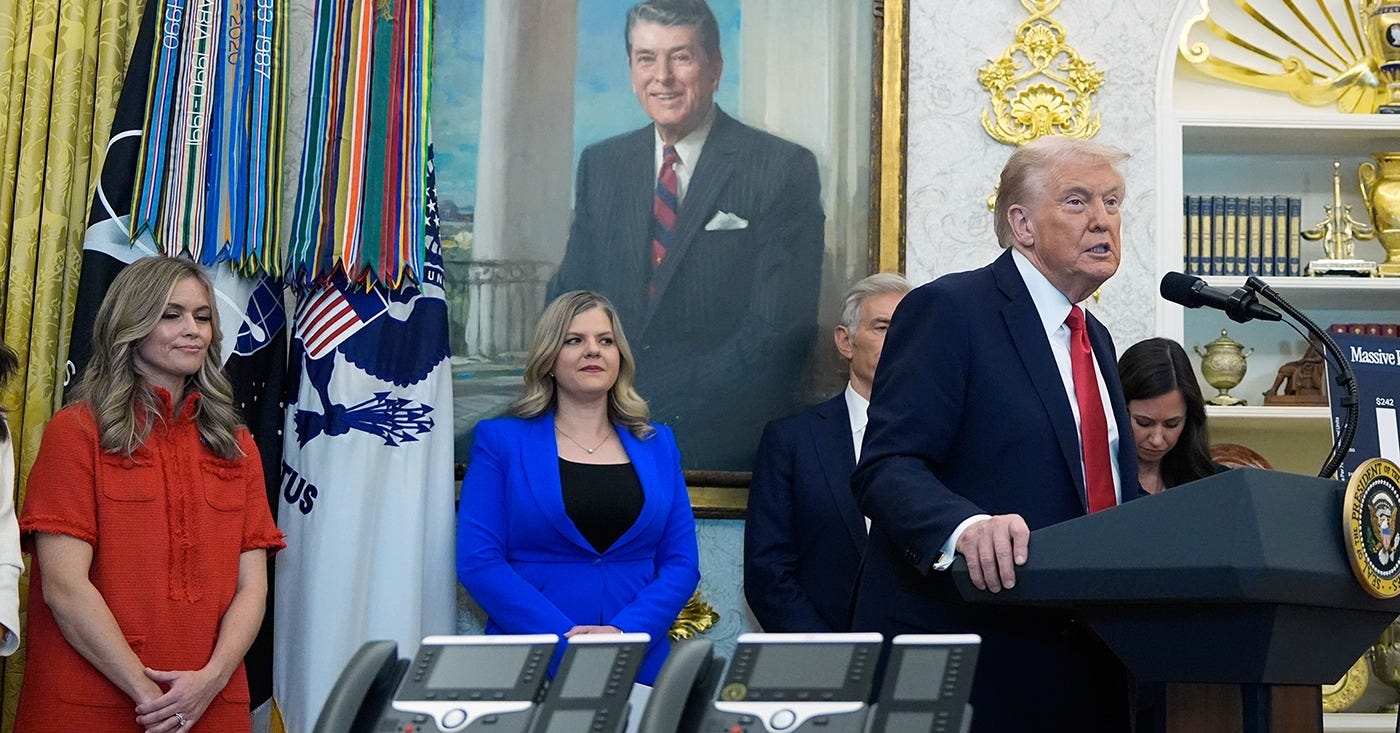
President Donald Trump’s new maternal-health push is drawing attention across politics, health care and social media because it connects two issues with major public stakes: fertility costs and the condition of maternal care in America.
The White House promoted the launch of Moms.gov, a federal website for new and expecting mothers, and highlighted a proposed Labor Department rule that would let certain employers offer stand-alone fertility benefits outside traditional health plans.
The proposed rule could cover infertility diagnosis and treatment, with benefits capped at up to $120,000. The rule is not final, and it would not require every employer to provide fertility coverage.
Supporters framed the announcement as a pro-family policy aimed at helping women, parents and couples trying to have children.
Critics responded by arguing that the administration’s maternal-health message conflicts with broader health-care cuts and reproductive-health restrictions. Protect Our Care accused Trump and Republicans of promoting the event while weakening health-care access for mothers and children. Spectrum News also noted Planned Parenthood’s criticism of pregnancy centers linked from Moms.gov.
Subscribe free for daily political analysis they won’t broadcast. Join 110K+ readers →
That reaction gives the rollout a sharper political edge, but the underlying maternal-health stakes are measurable.
CDC data show 649 women died of maternal causes in the United States in 2024. The national maternal mortality rate was 17.9 deaths per 100,000 live births, while Black women faced a rate of 44.8 deaths per 100,000.
Access is another major gap. March of Dimes reports that more than 35% of U.S. counties are maternity-care deserts, meaning they lack birthing hospitals, birth centers offering obstetric care, or obstetric providers.
The policy consequence is straightforward. The administration is trying to link maternal health, fertility access and family formation, but the biggest test is whether the new tools reach women in communities where pregnancy care is limited, expensive or unavailable.
Subscribe free for daily political analysis they won’t broadcast. Join 110K+ readers →