


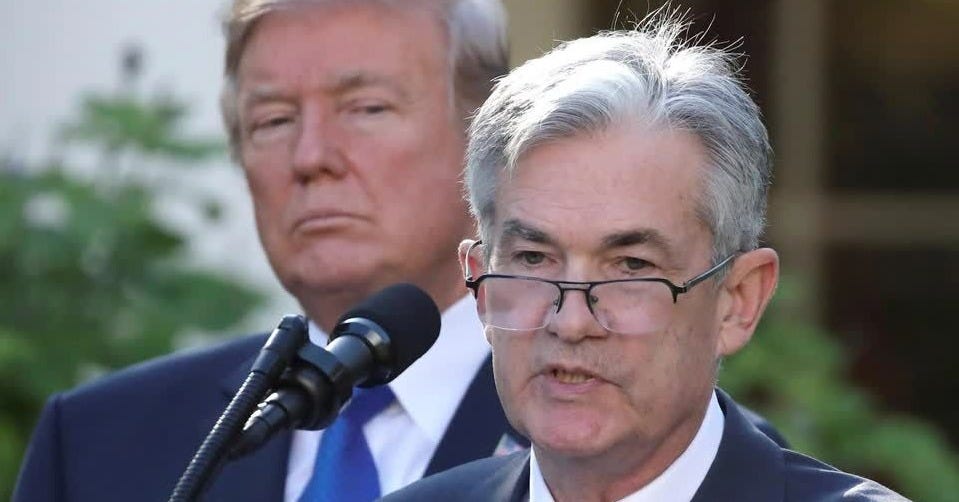
President Donald Trump is threatening to fire Federal Reserve Chair Jerome Powell if he refuses to leave when his term ends in May, escalating a high-stakes clash over control of U.S. monetary policy.
The conflict centers on Powell’s plan to remain on the Fed’s governing board during an ongoing Justice Department investigation, setting up a direct confrontation over both legal authority and central bank independence.
According to the Associated Press, the probe involves a $2.5 billion renovation of Fed headquarters, though prosecutors acknowledged in court they have not found evidence of a crime.
That investigation has now delayed Senate confirmation of Trump’s nominee, Kevin Warsh, with Sen. Thom Tillis saying he will block action until the probe is dropped.
“Well then I’ll have to fire him, OK?” Trump said in a Fox Business interview when asked about Powell staying beyond May.
Subscribe free for daily political analysis they won’t broadcast. Join 110K+ readers →
The standoff matters beyond personnel, as economists and lawmakers warn it could challenge the Federal Reserve’s independence, a cornerstone of U.S. financial stability.
Powell, first appointed by Trump in 2018, led aggressive interest rate hikes to curb post-pandemic inflation, drawing repeated criticism from Trump, who argues rates should be lower to boost growth.
At the same time, questions remain about whether a president can legally remove a Fed chair without cause, with analysts pointing to statutory protections and potential Supreme Court involvement.
Trump’s broader record includes firing or forcing out dozens of senior officials across both administrations, from Cabinet members to agency heads, though independent agencies like the Fed present a more complex legal test.
With Warsh’s confirmation stalled and the investigation unresolved, the next phase is likely to shift to the courts or Senate, keeping the Fed leadership fight in focus.
The outcome could reshape how much influence a president can exert over the central bank.
Download a FREE Pocket Constitution NOW →
