


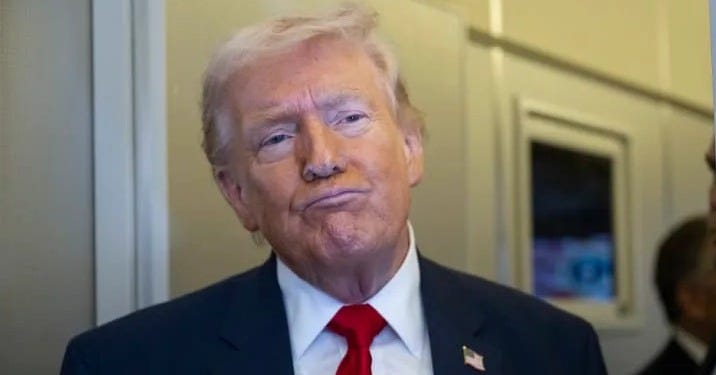
President Donald Trump is pressing NATO allies and China to send warships to protect oil shipments moving through the Strait of Hormuz as the conflict with Iran threatens one of the world’s most important energy routes.
The request comes as global oil markets react to the war, with crude prices climbing above $100 a barrel and governments warning that prolonged disruptions could push fuel costs sharply higher.
According to Reuters and the Financial Times, Trump has asked roughly seven countries — including Britain, France, Japan, South Korea, and China — to contribute naval forces capable of escorting commercial tankers through the strategic waterway.
The Strait of Hormuz carries about 20 percent of global oil shipments, making it a critical choke point for energy supplies moving from the Persian Gulf to the rest of the world.
Subscribe free for daily political analysis they won’t broadcast. Join 115K+ readers →
But the push for a multinational naval escort mission is already encountering resistance from several U.S. partners that are wary of being pulled deeper into the war.
“NATO faces a very bad future if allies fail to help,” Trump said in an interview cited by international outlets.
The pressure campaign highlights a growing dilemma for Washington as the war enters its third week and shipping disruptions ripple across global energy markets.
Iran has warned other countries not to intervene in the conflict and says the strait remains closed to its enemies while remaining open to others, further complicating efforts to organize a naval coalition.
Subscribe free for daily political analysis they won’t broadcast. Join 115K+ readers →
Several governments, including Japan and Australia, have signaled reluctance to deploy ships, while European leaders are demanding more clarity on U.S. military objectives before committing forces.
For now, the question facing world leaders is whether they will join a U.S.-led effort to secure the waterway — or risk escalating tensions in one of the most volatile regions in global energy supply.
The outcome could determine whether the conflict triggers a wider economic shock.
Subscribe free for daily political analysis they won’t broadcast. Join 115K+ readers →