


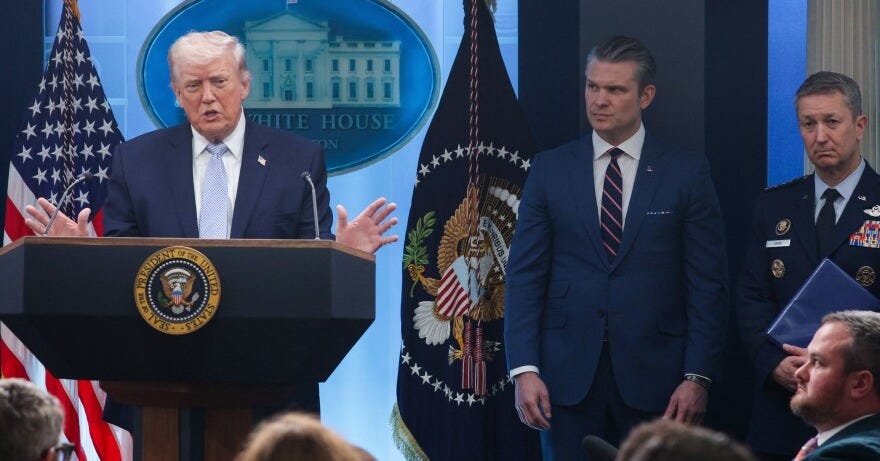
President Donald Trump’s second-term communication style is drawing renewed scrutiny after a Washington Post analysis found he is using more profanity, more personal insults and more digressions in public remarks.
The Independent, summarizing the analysis, reported that about 93% of Trump’s second-term speeches reviewed included at least one vulgar phrase. During a comparable stretch of his first term, the figure was about 40%.
The analysis also found that Trump’s insulting or vulgar social media posts have increased, while his public speeches include more tangents. The pattern points to a broader shift in how Trump communicates: less separation between official remarks, campaign-style attacks and off-the-cuff commentary.
The social reaction signal is also growing.
A Washington Post-ABC News-Ipsos poll found broad negative reaction to several provocative religion-related messages, including a Trump social media post depicting himself as Jesus. The poll found 87% of Americans reacted negatively to that post.
In another case, lawmakers from both parties condemned a deleted Trump social media post that was widely criticized as racist, according to WCNC.
Subscribe free for daily political analysis they won’t broadcast. Join 110K+ readers →
Trump’s unconventional habits now extend beyond profanity. The Financial Times reported that Trump has expanded his use of AI-generated imagery on Truth Social, including content that presents him in heroic, religious or militarized scenes and attacks political opponents.
Supporters have long argued that Trump’s style is part of his appeal because it sounds unscripted and direct. That remains a documented competing view around his public persona.
But the new analysis gives the debate a sharper frame. Trump’s communication style is not just controversial or unusual. It is becoming more profane, more online, more image-driven and more central to how his presidency projects power.
The practical consequence is that voters, officials and foreign audiences may have to interpret serious policy signals through the same channels that carry insults, memes, late-night posts and personal grievances.
Subscribe free for daily political analysis they won’t broadcast. Join 110K+ readers →