


Against all reasonable expectations, things have kept happening.
We had hoped reality might use the weekend to sit quietly, drink some water, and reconsider its recent choices. Instead, it returned with the energy of someone who has mistaken a restraining order for a challenge.
Welcome back to Truth or Satire, the game in which we present five claims from the current timeline and ask you to determine whether they actually happened, were invented by someone with a functioning sense of comedic restraint, or occupy that increasingly crowded third category: technically true, but what the heck.
Five claims. One point for each one you correctly identify. Keep track. We’ll judge your remaining relationship with reality at the end.
As always, “Oh, come on” is an entirely reasonable response, but not a source.
Score Yourself
0–1/5 — Blissfully Uninformed
Congratulations. Reality can no longer hurt you because you have apparently stopped accepting its calls. We envy you more than we can adequately express.
2–3/5 — Functionally Aware
You retain a working grasp of current events while maintaining just enough uncertainty to remain psychologically interesting. This may be the optimal setting.
4–5/5 — Chronically Online
You looked directly into the timeline and the timeline looked back. Please go outside. Touch grass. Verify that it has not been renamed, federally defunded, or turned into an app.
Let’s play Truth or Satire!
This Community Is Powered by You
We cover the chaos, the corruption, the propaganda, and the policies shaping the country, plus the occasional descent into the surreal.
Follow for sharp political commentary, brutal media analysis, and weekly reminders that reality is now competing directly with parody.
THE BIG LEBOWSKI BUDGET
The Viral Claim
The Trump administration is spending a quarter million dollars to fix the lighting in a two-lane bowling alley.
Background
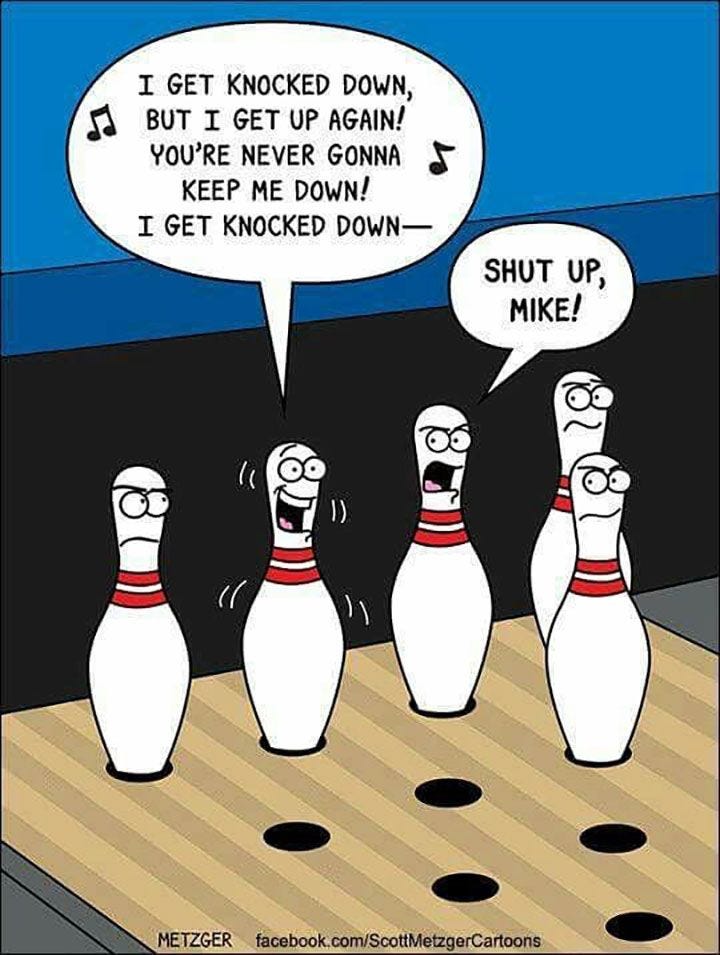
The White House has had a surprisingly long relationship with bowling. In 1947, a group of Missourians presented President Harry Truman with a two-lane bowling alley for his 63rd birthday. Truman himself wasn’t much of a bowler, but the lanes proved considerably more durable than his enthusiasm for the sport.
Those lanes were eventually moved to the Old Executive Office Building—now the Eisenhower Executive Office Building—next door to the White House. And because apparently one presidential bowling alley was insufficient, Richard Nixon later had a separate, single-lane alley installed beneath the White House’s North Portico.
The two have been confusing reporters ever since. The Nixon alley is the private Residence facility used by presidents and their families. The two-lane Harry S. Truman Bowling Alley in the EEOB is used by White House staff and guests and even has its own bowling league. The White House says it hosted nearly 10,000 outside guests in the past year alone.
Presidential recreation has always made excellent political fodder. Golf outings, basketball courts, vacations and bowling alleys have all periodically become evidence that whichever president currently occupies the building is personally fiddling while Rome burns, sometimes the criticism is justified. Sometimes a bowling alley is just a bowling alley, and sometimes federal procurement records enter the chat.
The Reality
On July 28th, the General Services Administration awarded a $252,876 federal contract to Charles Mann Enterprises for the wonderfully misspelled “EEOB BOWLLNG ALLEY LIGHTING PROJECT.” The White House says the project involves standard modifications and repairs, including broken light fixtures, and that President Trump was not involved in the decision. The publicly available contract information doesn’t provide enough detail to determine why the work costs nearly $253,000, so claims that taxpayers are buying a quarter-million dollars’ worth of lightbulbs go considerably beyond the evidence. However, in the absence of more transparency, that is what we are imagining.
There is also a separate $8,847.30 federal award for escort services associated with the Truman Bowling Alley lighting project. That is a lot less sexy than it sounds. The contract went to America’s Pride: Supporting Service-Connected Disabled Veterans, Inc., with work scheduled through October 15th. In other words, part of the cost of bringing outside workers into a secure White House complex is paying cleared personnel to accompany them.
And yes, this is the Truman alley, not the Nixon alley in the White House Residence. Melania Trump oversaw a complete renovation of the Nixon lane in 2019, bringing her well-known attention to White House interiors to a facility that still had its original wooden lane. That project included new mechanics, electrical work, and a refreshed interior, and was privately funded by the Bowling Proprietors’ Association of America, not taxpayers. We feel certain no lobbying power was exerted.
The Truman lanes have a much stranger history. In 2014, during the Obama administration, GSA proposed a major overhaul after declaring that 15 years without professional industry-standard maintenance had left the lanes “now irreparable.” The plan called for tearing out both lanes and approaches, inspecting and repairing the underlying structure, and installing synthetic lanes, gutters and other equipment. TIME broke the story on July 9th of that year. Roughly 90 minutes later, GSA canceled the solicitation due to GOP pushback. Republican criticism of the proposed spending followed almost immediately, and the GOP-led House subsequently went further, debating, and eventually adopting an amendment aimed at preventing federal money from being used to modify or rebuild the bowling alley.
That leaves us with a small problem. By 2017, professional PBA bowlers were bowling on the Truman lanes during a White House visit. The facility continued to appear in photographs and accounts in subsequent years and is plainly operational today. Somewhere between irreparable and bring in the pros, something happened. We have been unable to pin down a reliable public record establishing when or how the supposedly irreparable lanes were repaired or replaced.
Verdict:
Nostalgical and true, but spare us the lightbulb math.
Somewhere in the federal government, a file knows what happened between 2014 and 2017, but we couldn’t find it. Dammit, Bob. Where’s the work order? Until proven otherwise, we are forced to believe Truman’s wood has regenerated.
LIFE IN THE BIKE LANE
The Viral Claim
The Trump administration has ended $1.73 billion in Biden-era funding for “DEI bike lanes.”
Background
Federal transportation money does considerably more than fill potholes. Congress has created grant programs covering highways, bridges, freight, transit, pedestrian safety, bicycle infrastructure and projects that combine several of those things. A single street reconstruction might replace a bridge deck, improve drainage, add sidewalks, change intersections and—yes—install a bike lane.
Presidential administrations also get considerable influence over which projects receive competitive grants. Under the Biden administration, transportation programs frequently incorporated goals involving climate, safety, accessibility, and historically underserved communities alongside more traditional measures like congestion and freight movement.
Bike lanes themselves long predate the current culture wars. American cities experimented with dedicated bicycle infrastructure decades before anyone coined “DEI,” and support for cycling infrastructure has crossed party lines. The argument over them has traditionally been much more mundane: Who gets how much of a finite street?
That argument gets considerably less mundane once Washington discovers adjectives.
The Reality
Transportation Secretary Sean Duffy really did use the phrase “DEI bike lanes,” on July 7th, announcing $1.73 billion in BUILD grants the department had redirected away from Biden-era “DEI pet projects” and toward “ROADS, BRIDGES, AND SHIPPING PORTS.” Two weeks later, in a formal letter to Congress, his department put the underlying policy in considerably less meme-friendly language under the heading “Prioritize Motor Vehicle Travel Over Bicycle Lanes.”
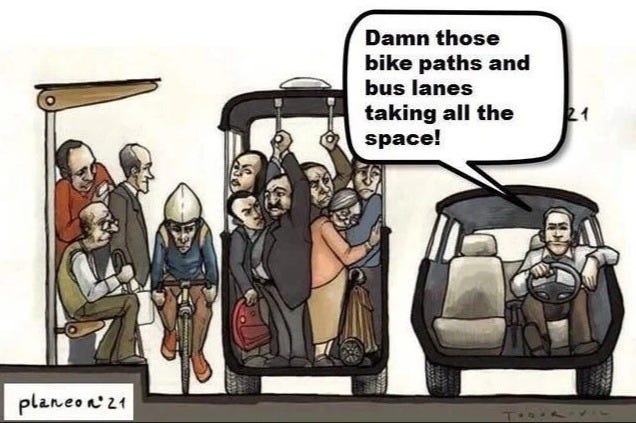
The administration’s objection is real. The letter argues that bike lanes and “road diets” can reduce vehicle capacity, increase congestion, slow emergency response, and give “preferential treatment of the few bicycle travelers over the many motor vehicles.” It asks Congress to restrict federal funding for bicycle infrastructure that reduces motor-vehicle throughput and to support removing existing lanes that contribute to congestion. The administration has also moved against individual bike and pedestrian projects and stripped references to some bicycle-safety measures from federal transportation websites.
However, $1.73 billion was not sitting in a federal account labeled DEI BIKE LANES. That was the total value of the new round of 127 BUILD grants, and the administration redirected priorities across a broad transportation program. The awards themselves include roads, bridges, ports, transit, rail, aviation, truck parking, an dyes, even projects that still contain bicycle and pedestrian improvements.
Additionally, “DEI bike lane” is not formally an actual category of federal infrastructure. It’s political shorthand for the previous administration’s use of equity, climate, and community-access criteria in transportation funding. Real canceled and threatened bicycle projects lie beneath the rhetoric, and a genuine policy reversal is underway. However, the viral version compresses all of that into the considerably more entertaining proposition that Washington discovered $1.73 billion worth of politically correct bicycle lanes and sent the money back to the cars. We blame Big Car.
Verdict:
True policy, creative accounting. DEI BIKE LANES SOLD SEPARATELY.
Somewhere, a perfectly ordinary strip of painted asphalt has just learned it has a political affiliation. It would like to go back to being yelled at by drivers.
IT’S A SMALL WORLD AFTER ALL
The Viral Claim
The United States was the sole vote against a United Nations effort to replace the traditional world map with one that shows countries at their correct relative sizes.
Background
No perfectly accurate flat map of Earth exists. You cannot flatten a globe without distorting something, so every map projection makes choices about what it preserves: area, shape, distance, direction, or some compromise among them. The right projection depends largely on what you’re trying to do with it.
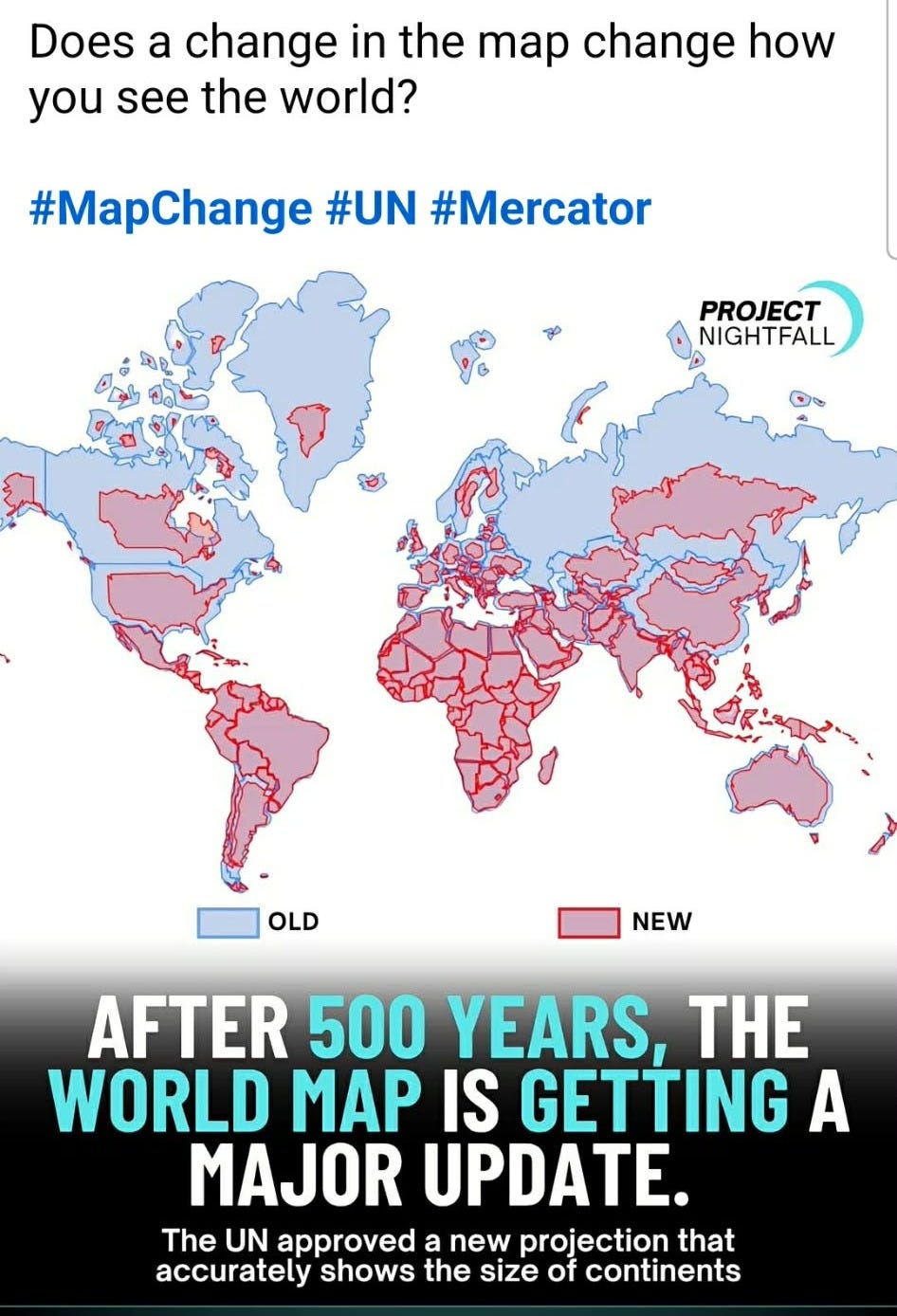
The familiar Mercator projection, created by Gerardus Mercator in 1569, was extraordinarily useful for navigation. It preserves local angles, and lines representing constant compass bearings can be drawn straight across it. The price is increasingly dramatic area distortion as you move toward the poles. That’s why Greenland can appear roughly comparable to Africa on a Mercator world map even though Africa is about fourteen times larger.
Cartographers have spent centuries devising alternatives. Mollweide arrived in 1805, Eckert IV in 1906, Robinson in 1963, and Equal Earth in 2018. Equal Earth, developed by Bojan Šavrič, Tom Patterson, and Bernhard Jenny, is an equal-area projection: countries and continents retain their correct sizes relative to one another, although their shapes necessarily take some punishment instead. Eckert IV—the orange projection in our accompanying overlay—is also equal-area.
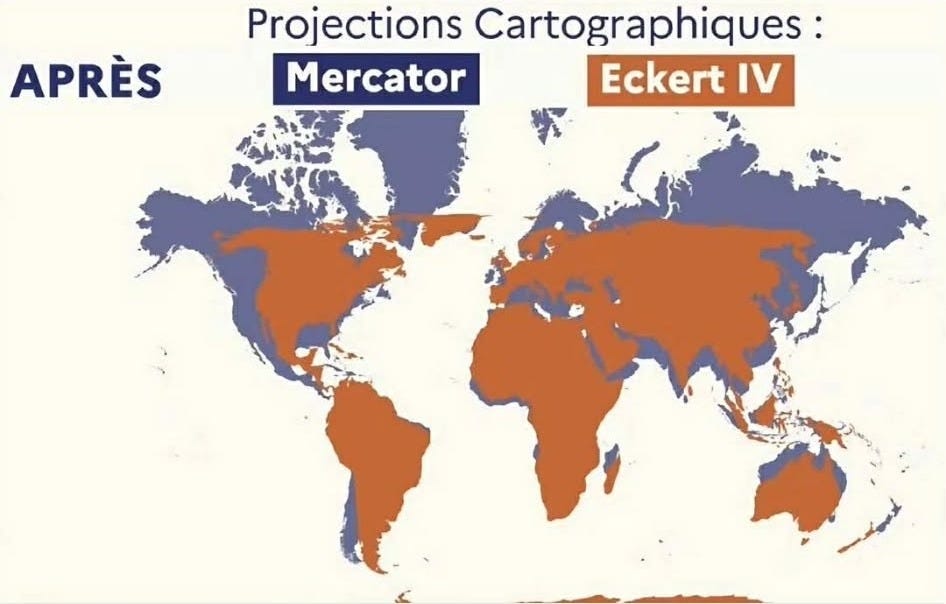
That means switching projections doesn’t suddenly make Africa and South America grow. Everyone else just takes off their platform shoes. Greenland, meanwhile, remains genuinely enormous at about 836,000 square miles. It is simply not Africa-enormous. Geographically speaking, it is three Texases in a trench coat.
The Reality
On September 4th, the UN General Assembly really did adopt a resolution titled “Correct the Map: Rebalancing global cartographic representation and promoting equitable representation of the world’s regions, particularly Africa.” The vote was 164 in favor, one against, and six abstentions. The sole “no” vote belonged to the United States.
However, the UN did not decree that everyone must throw away the Mercator map. The resolution is nonbinding and encourages wider use of equal-area projections, particularly Equal Earth, where accurately comparing the relative sizes of countries and continents matters. It explicitly leaves Mercator alone for maritime and aerial navigation, where the very properties that make it terrible for comparing acreage make it useful.
To be fair, the American objection wasn’t that the United States prefers Greenland extra-large. The African-led campaign presents distorted maps as part of a broader historical and colonial legacy and describes more representative cartography in terms including equity and “cognitive justice.” The U.S. representative argued that what looked like an innocuous map resolution was actually part of a larger “radical ideological project” and a distraction from more important UN business. Six countries—Estonia, Georgia, Lithuania, Moldova, Serbia and Ukraine—abstained rather than voting yes.
So, yes, three things are really happening here. The mathematics: Africa remains approximately fourteen Greenlands regardless of anyone’s politics. The cartography: Mercator and Equal Earth preserve different properties and serve different purposes. The politics: people can have a perfectly legitimate argument about what maps governments, schools, and international institutions should use, and about the ideological language attached to that choice.
The acreage, however, isn’t ideological.
Verdict:
Despite the science, ideological alignment took the vote for the US, because of course it did.
Somewhere, a Flat Earther’s eye is twitching. Experts suspect projection.
TAKE A HIKE, EH?
The Viral Claim
Canadians are trying to rename Trump Avenue in Ottawa.
Background
Street names have an awkward habit of outliving the circumstances that produced them. A perfectly unremarkable choice by a developer can become considerably more interesting twenty years later when the person, place, or institution on the sign acquires some additional historical baggage.
Ottawa’s Central Park neighborhood was developed with a decidedly New York theme. Its streets include names like Manhattan Crescent, Staten Way, Madison Park and Bloomingdale Street. When the developer added Trump Avenue in the late 1990s, Donald Trump wasn’t president, a candidate, or part of a political movement. He was the famous New York real-estate guy with his name plastered across buildings.
Changing a street name is also rather more complicated than replacing a sign. Addresses are embedded in driver’s licenses, insurance policies, bank accounts, utilities, deliveries, business records and countless databases. Ottawa’s current process sets a deliberately high bar for an ordinary street renaming, requiring substantial support from the people whose addresses will actually change, becuse sometimes those people decide that whatever is wrong with the name is still less irritating than spending six months telling everyone they live somewhere else.
The Reality
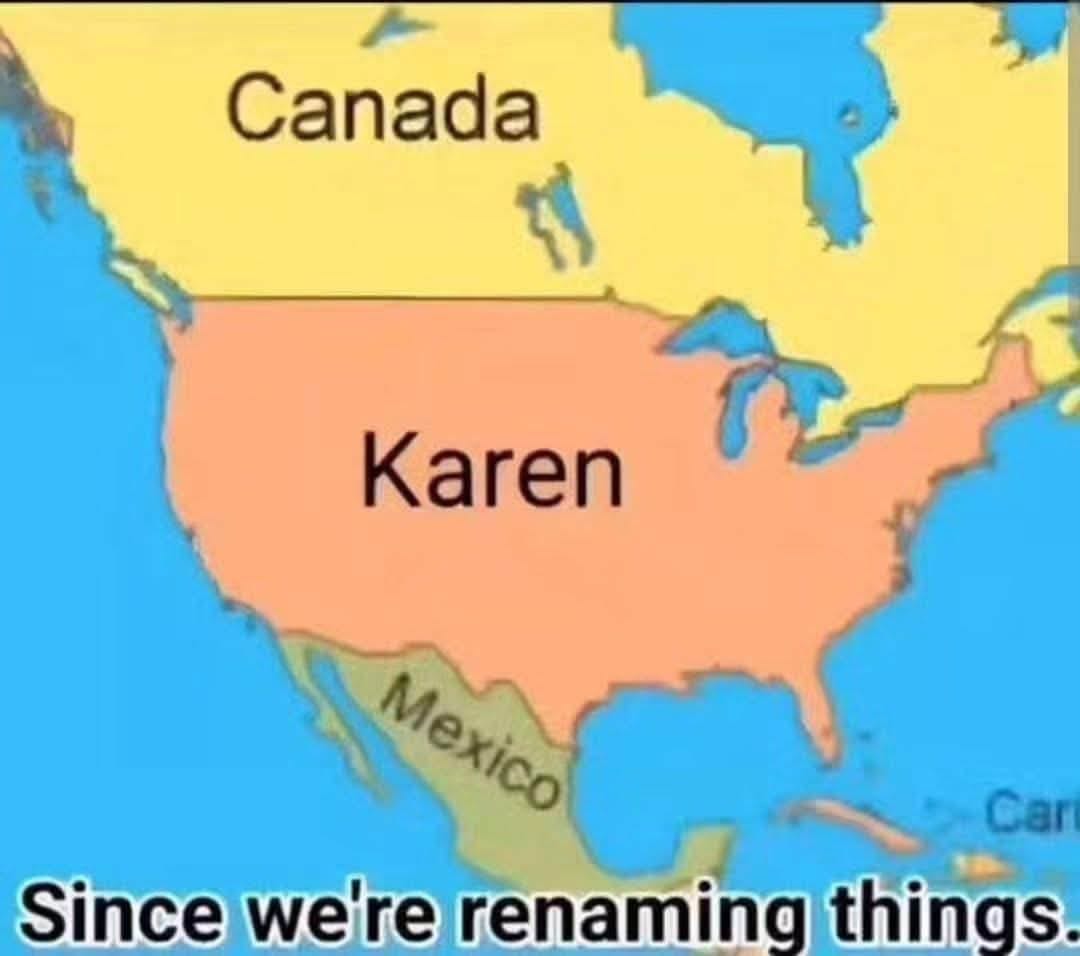
Yes, Trump Avenue is real, and Ottawa City Councillor Riley Brockington really is reviving an effort to rename it amid the rapidly deteriorating relationship between Canada and the United States. The latest push follows Trump’s trade measures and threats involving Canadian sovereignty, with the recent “Lake America” order adding an almost suspiciously well-timed flourish. Brockington has called the continued name an “embarrassment” and plans to pursue a community discussion after Ottawa’s municipal election.
This isn’t Canada’s first attempt to evict Trump from the neighborhood. In 2021, all 62 Trump Avenue households were asked whether they wanted to begin the renaming process. The result was magnificent: 21 yes, 21 no, and 20 who didn’t respond. The proposal needed support from at least 32 households, so Trump Avenue survived by a combination of opposition and Canadian apathy.
Even better, Brockington said the people voting no weren’t necessarily Trump supporters. The overwhelming concern among opponents who explained themselves was the colossal pain in the ass of changing their addresses on identification, bills, and everything else.
This time the hurdle is higher. Under Ottawa’s current standard process, renaming an existing street requires 75% plus one support from affected property owners, along with the city’s review process. So Canadians may indeed remove Trump from their capital’s street map, but democracy demands paperwork first.
Verdict:
True, but apathy may yet win out.
In 2021, the decisive voting bloc was apparently “I have forms to fill out.” Never underestimate the political power of not wanting to call the DMV.
READY PLAYER ONE
The Viral Claim
The White House has launched its own online arcade where you can build Trump’s border wall, patrol the Rio Grande, reject unhealthy school lunches and collect money for children’s Trump Accounts.
Background
Politicians embracing new entertainment technology is hardly new. Presidential campaigns have advertised inside video games, candidates have appeared on Twitch, and government agencies have experimented with games and simulations for everything from military recruiting to public education.
The White House has also become considerably more aggressive about producing its own digital content. Official government communications now compete for attention in the same online environment as memes, influencers and brands, meaning announcements increasingly arrive packaged as entertainment rather than the press releases and podium appearances of earlier administrations. Take a look at Truth Social on any given morning and you are likely to find some ahem creative imagining from the night before.
Retro gaming offers particularly fertile ground. Tetris, Snake, Tapper, and Flappy Bird all use mechanics simple enough to recognize almost instantly, even when somebody swaps out the graphics and gives the player an entirely different objective.
The Reality
On September 3rd, the White House launched Arcade, an official collection of five playable games on its website. There’s Flappy Bill, in which a bald eagle carries legislation down the National Mall; Supply Line, where players sort school lunches according to Make America Healthy Again priorities; and Trump Savings Tycoon, which asks players to collect money to fill children’s Trump Accounts. A sixth game is already marked “Coming Soon.”

Then things get considerably stranger. Rio Run turns border patrol into something resembling Snake, while Build the Wall uses falling-block gameplay to have players, in the White House’s own words, “Protect the border from the coming horde.” The administration promoted the arcade with parodies of familiar gaming startup screens, including transforming the old SEGA logo into MAGA.
Then Tetris noticed. The Tetris Company said it had not been involved in creating Build the Wall and had not authorized or licensed its brand or intellectual property for the game. It also pointed out a small philosophical problem with the adaptation: the objective of actual Tetris is to keep eliminating rows rather than successfully constructing a wall.
So yes, of course the White House has a largely pirated and completely alarming arcade. The games are playable, promote administration policies, and the official marketing really did boil the experience down to imperatives including building the wall, deporting people, and filling a Trump Account. To be honest, this feels completely in keeping with the manner in which the administration has used the official White House website, agency twitter accounts, and, of course, Trump’s Truth Social fever-dreams.
Verdict:
True. Insert coin to continue.
Somewhere, Pong is grateful it died before anyone could assign the paddles a political ideology.
GAME OVER.
And that’s another round of Truth or Satire, a game whose difficulty continues to be almost entirely outside our control. There was once a meaningful distance between that can’t possibly be real and here are three primary sources. We remember it fondly.
Until next time, remain skeptical, remain hydrated, and remember: if reality insists on behaving like satire, the least it could do is hire better writers.
If this game gets any harder, we’re going to need constitutional scholars, trauma counselors, and three Onion editors on retainer just to sort the headlines.
Follow for the next round of Truth or Satire, where every week America dares parody to catch up. Or tune in for our regularly scheduled analysis and commentary, when the meds kick in, and we can take the headlines seriously.
Sources:
“White House bowling alley gets a $250K glow-up,” Politico via Yahoo News, August 31, 2026.
“BPA Call 47PM1024A0002-47PH5426F0233,” GovTribe, August 12, 2026.
“The White House Is Renovating Its Bowling Alley,” TIME, July 9, 2014.
“White House Bowling Alley Renovation Abruptly Scrapped,” TIME, July 10, 2014.
“Press Release — First Lady Melania Trump Celebrates Completion of the Newly Renovated Bowling Alley in the White House Residence,” The American Presidency Project, May 1, 2019.
“PBA Stars Tackett, Rash, Malott Visit White House Lanes,” Professional Bowlers Association/BOWL.com, July 14, 2017.
“Trump’s Transportation Secretary Sean P. Duffy Invests $1.73 Billion in Infrastructure Across America Supporting Jobs and Big, Beautiful Projects,” U.S. Department of Transportation, July 7, 2026.
“What the Heck is a DEI Bike Lane?” League of American Bicyclists, July 14, 2026.
“DOT cranks up its campaign to strip bike lane references from federal websites,” NPR via Oregon Public Broadcasting, July 23, 2026.
“Do D.E.I. Bike Paths Exist? The Trump Administration Says Yes,” The New York Times, August 31, 2026; updated September 2, 2026.
“General Assembly Adopts Text to ‘Correct the Map’, among Others Proclaiming Decade of Culture for Sustainable Development, Child Marriage Elimination Day,” United Nations Meetings Coverage and Press Releases, September 4, 2026.
“UN General Assembly endorses a new world map that shows more accurately Africa’s size,” The Associated Press, September 4, 2026.
“UN approves resolution in support of map that shows Africa’s true size,” Reuters, September 4, 2026.
“From street names to supply chains, Canadians pull away from US as rift grows,” Reuters, September 2, 2026.
“River Ward’s Trump Avenue here to stay,” Ottawa CityNews, February 17, 2021.
“Commemorative naming policy,” City of Ottawa, revised November 10, 2025.
“Arcade,” The White House, accessed September 7, 2026.
“LIVE – PLAY NOW ARCADE.GOV,” The White House, September 3, 2026.
“White House website debuts 5 retro arcade video games that promote Trump’s agenda,” The Associated Press, September 3, 2026; updated September 4, 2026.
“White House launches Arcade.gov with computer game that lets players ‘deport’ migrants,” ABC News, September 4, 2026.