


If you are like most Americans, this Thursday afternoon is likely already part of the pre-party for Independence Day weekend. Whether you’re traveling, grilling, watching fireworks, or wondering if the Constitution has a warranty, welcome back to our favorite game: Truth or Satire?
The Founders gave us a republic. The internet gave us viral headlines. Your job is figuring out which ones belong in the history books and which belong in The Onion.
The rules are simple. Five headlines. Five guesses. One increasingly uncomfortable realization that reality has absolutely no interest in making this easy anymore.
Score Yourself
📜 5/5 – Primary Source
Reliable. Verifiable. Footnotes available upon request.
📰 2–4/5 – Secondary Source
Mostly accurate, but you might want to check the citations.
📱 0–1/5 – Facebook Screenshot
It had all the confidence of a primary source.
Ready? Let’s see how well your satire detector survived another newscycle.
This Community Is Powered by You
We cover the chaos, the corruption, the propaganda, and the policies shaping the country, plus the occasional descent into the surreal.
Follow for sharp political commentary, brutal media analysis, and weekly reminders that reality is now competing directly with parody.
Big Brother’s Big Buyout
The Viral Claim
Palantir Acquires Pentagon for $800 Billion.
The Political Backdrop
Artificial intelligence has become one of the Pentagon’s highest priorities. Over the past several years, the Department of Defense has dramatically expanded its use of AI for intelligence analysis, logistics, battlefield planning, and cybersecurity. Rather than developing every tool internally, the military increasingly relies on private technology companies to build and maintain these systems.
Few companies have benefited from that shift more than Palantir Technologies. Founded in 2003 with early backing from the CIA’s venture capital arm, the company built its reputation by helping intelligence agencies organize and analyze massive amounts of data. Today, Palantir’s software is used throughout the U.S. military, federal law enforcement, intelligence agencies, and dozens of allied governments worldwide.
Palantir has also become one of Wall Street’s hottest stocks. The company has announced a steady stream of new government contracts in recent years, particularly with the Department of Defense, while expanding into additional markets. Its market value has climbed rapidly as investors increasingly view the company as one of the biggest beneficiaries of the AI boom.
At the same time, privatization has been a common theme under Trump2.0. While no federal agency has been sold to the market so far, several proposals have been floated, including ones involving the United States Postal Service and Social Security.
So what happened? Has Trump sold the Pentagon to Theil and co?
The Reality
The headline originated with The Onion, America’s long-running satirical newspaper, which published the article under the deliberately absurd title “Palantir Acquires Pentagon for $800 Billion.” The piece imagines the defense contractor simply skipping the contracting process altogether and purchasing the Department of Defense outright, which, frankly, follows a familiar pattern of late.
However, because this is 2026 and satire has to work harder than ever before, reality delivered something absurd. After the headline spread across social media and reached Reddit’s front page, users noticed that Palantir’s stock price appeared to spike. Some observers speculated that automated trading algorithms may have reacted to the headline before recognizing it came from a satire publication.
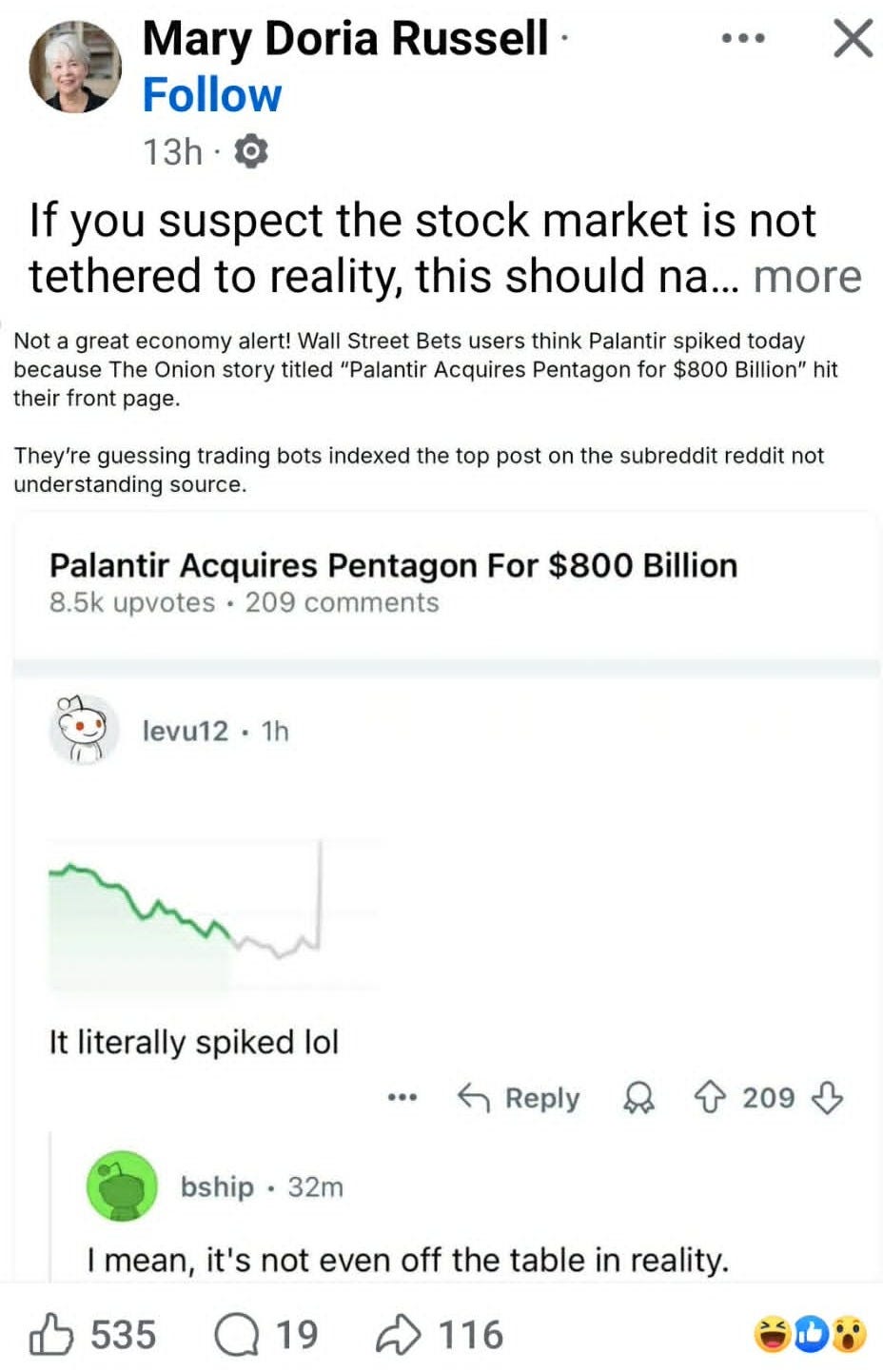
There is currently no evidence that the article itself caused the stock movement, and market prices can fluctuate for countless reasons throughout the trading day. Nevertheless, the episode sparked a broader conversation about AI-driven trading systems, algorithmic news scraping, and whether automated financial tools can consistently distinguish satire from legitimate reporting.
Ironically, while Palantir did not purchase the Pentagon, the fact that so many readers briefly wondered whether it could happen says something about the company’s rapidly expanding role within the national security apparatus. Sometimes the funniest satire isn’t the joke itself.
The Verdict
Pure Satire with a side of real consequences.
Satire may have just discovered prompt injection for Wall Street. What happens when even the algorithms have started doomscrolling?
Medal Behavior
The Viral Claim
Donald Trump wants to award himself and his sons the Medal of Honor.
The Political Backdrop
The Medal of Honor is the United States’ highest military decoration, awarded by the president in the name of Congress to members of the armed forces who distinguish themselves through extraordinary acts of valor in combat.
The medal is the nation’s highest military decoration, awarded by the President in the name of Congress to members of the U.S. Armed Forces who distinguish themselves through extraordinary acts of valor in combat. Unlike many civilian awards, recipients are not simply chosen by the President. Recommendations begin within the recipient’s military chain of command, undergo an extensive investigation and review, and are vetted by the Department of Defense before reaching the President for approval. Since its creation during the Civil War, fewer than 3,600 people have received the honor, most posthumously.
President Donald Trump has spoken publicly about military decorations on numerous occasions. During his first term, he awarded both the Medal of Honor to service members and the Presidential Medal of Freedom to civilian recipients. He has also drawn attention for comparing the two awards, at one point suggesting the civilian medal could be considered “better” because recipients were generally not wounded or killed in combat.
Trump has long pined (and demanded) various accolades and awards, most notably the Nobel Peace Prize. But does he really want to reward Don Jr. and (sigh) Eric??
The Reality
On July 1, President Trump spoke at the dedication of the Theodore Roosevelt Presidential Library in Medora, North Dakota. Roosevelt served as president from 1901 to 1909, but the modern federally administered presidential library system did not develop until decades later. The new Medora library, located near the Badlands that shaped Roosevelt’s public image and conservation legacy, is scheduled to open to the public on July 4.
During the ceremony, Trump discussed Roosevelt’s Medal of Honor. Roosevelt and his son, Theodore Roosevelt Jr., are one of only two father-son pairs in American history in which both men received the Medal of Honor. Fun fact: the other pair is Arthur MacArthur Jr. and Douglas MacArthur. Trump then riffed about wanting medals for himself and his sons.
As a reminder, the Medal of Honor is reserved for extraordinary acts of valor in combat. Neither President Trump nor his sons has served in the U.S. military.
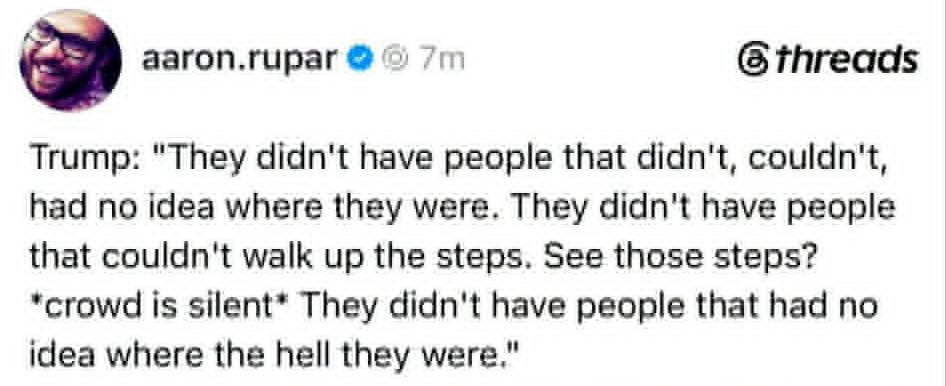
According to transcript reports, Trump said he had told his sons, “I’d love to give one of those to me. What have I done to deserve it?” and added that they “didn’t think of anything.” He went on to say, “As I see my two beautiful sons sitting there, I think, 'I'm going to give one to myself and one to them.' We'll have a threesome... I'll give them the Congressional Medal of Honor for something, for their genius at hunting... I'll get one for taking on Russia, Russia, Russia, or something... No, I'm only kidding."

The same speech also produced several other viral clips, including one in which Trump said he “had a conversation with Theodore Roosevelt” about the Panama Canal. Roosevelt died in 1919, but Trump was apparently referring to an interactive AI exhibit at the new library. So, no, he did not speak with a ghost. Technically.
Predictably, he also focused the majority of his speech on his own “accomplishments”, current headlines, candidates he is endorsing, and his usual greatest hits. So far, there is no reporting regarding how AI Roosevelt felt about his library dedication being redirected to Trumpland.
The Verdict
Pure Truth, and so much grosser.
The only thing more painful than listening to his speech is the mental image of a Don Jr./Eric/Don Sr. menage a trois.
Bonus! The other major viral quote was yet another example of the stable genius in action, in which he…. he…. You know what, leave us a comment with your best guess.
The Cutting Room Floor
The Viral Claim
The National Park Service removed references to slavery from a Thomas Jefferson exhibit at Independence Hall.
The Political Backdrop
As the United States prepares to celebrate the 250th anniversary of the Declaration of Independence in 2026, the way America’s founding is presented at federal historic sites has become the subject of renewed political debate.
In March 2025, President Trump signed the executive order “Restoring Truth and Sanity to American History.” The order directed the Department of the Interior to review exhibits, monuments, and interpretive materials at National Park Service sites, arguing that some federal institutions had shifted toward narratives that “inappropriately disparage Americans past or living” rather than presenting history in a way that is “uplifting” and unifying.
Those directives carried particular weight because the National Park Service is one of the nation’s largest public history organizations. In addition to managing national parks, it preserves hundreds of historic sites, museums, battlefields, and memorials visited by millions of Americans each year. How those stories are told shapes how many visitors understand the nation’s past.
Few historical figures embody those tensions more than Thomas Jefferson. He authored the Declaration of Independence’s famous assertion that “all men are created equal,” while also enslaving more than 600 people during his lifetime. For decades, historians and museums have wrestled with how to present both realities together rather than treating either as the whole story.
The Reality
The Philadelphia Inquirer reported on June 29 that National Park Service staff had removed nearly all references to slavery from an interpretive panel accompanying a portrait of Thomas Jefferson displayed at the Second Bank of the United States, part of Independence National Historical Park in Philadelphia. The newspaper based its reporting on photographs comparing the exhibit before and after the revisions.
According to the Inquirer, the previous panel described Jefferson as a man who “never solved the problem of slavery,” noting the contradiction between his writings on liberty and his ownership of enslaved people. The revised text instead focuses primarily on Jefferson’s contributions to republican government, religious freedom, education, and the Declaration of Independence, omitting the earlier discussion of slavery. The newspaper also documented changes to another interactive exhibit that replaced references to “accused fugitives from slavery” with the broader phrase “individuals accused of crimes of the period.”
The changes did not occur in isolation. Earlier this year, the National Park Service removed slavery-related exhibits from the nearby President’s House site, which interprets the lives of the nine people George Washington enslaved while Philadelphia served as the nation’s capital. That decision was challenged in federal court, and a judge later ordered the exhibits restored while litigation continues, finding the administration had likely exceeded its authority in implementing the executive order. Interestingly, the Jefferson panel changes only became public because a federal judge ordered the National Park Service to produce a list of all exhibit changes made under the executive order.
The broader viral claim—that slavery was erased from Independence Hall altogether—appears to go further than the reporting supports. What has been documented are changes to specific interpretive exhibits within Independence National Historical Park. Those changes, however, are very real, and they have become part of a larger national debate over how America’s founding should be presented in public spaces.
The Verdict
Mostly True. The full scope is the only question.
Signs fade. Archives are forever. You can spit-shine the signs, but we’ll always remember.
The Fine Print
The Viral Claim
The EPA says water utilities no longer have to test for microplastics.
The Political Backdrop
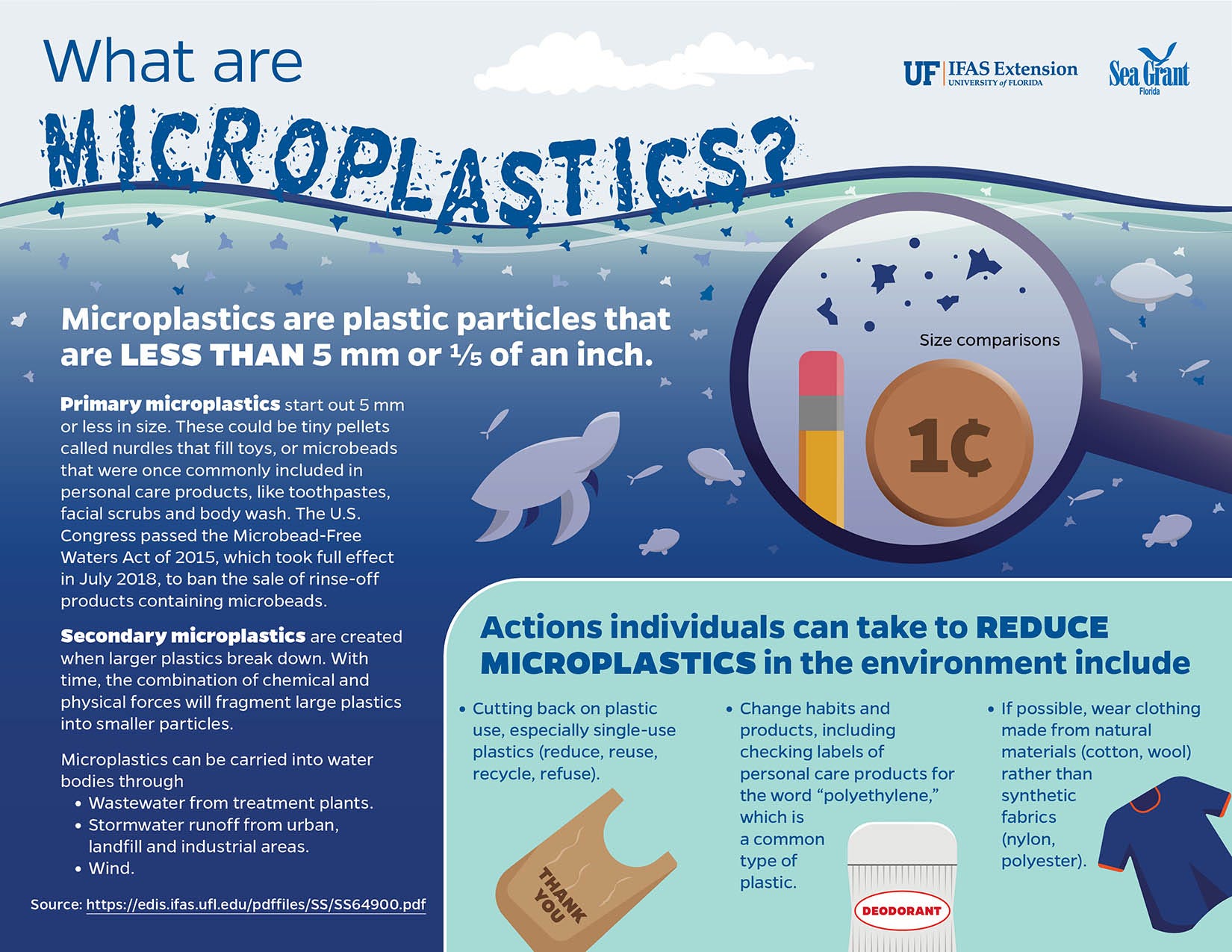
Microplastics have become one of the fastest-growing areas of environmental research. Scientists have found tiny plastic particles in drinking water, food, air, human blood, placentas, and even brain tissue. Researchers are still working to understand what those findings mean for long-term human health, but the contaminants have increasingly drawn the attention of regulators worldwide.
Protecting drinking water has also become an increasingly contentious political issue. In recent years, the Environmental Protection Agency has expanded regulation of contaminants such as PFAS, often called “forever chemicals,” while balancing scientific evidence, public health concerns, and the cost of compliance for thousands of public water systems.
Since returning to office, the Trump administration has proposed revisiting several environmental regulations at water treatment sites and reconsidering others affecting power plants, wastewater, and industrial emissions. Most relevantly, this includes keeping limits for two major PFAS chemicals while delaying compliance deadlines, and rescinding federal drinking-water limits for several others. Supporters argue these changes reduce unnecessary regulatory burdens. Critics contend they weaken environmental protections and threaten public health.
The Reality
In April, the Environmental Protection Agency and the Department of Health and Human Services announced what they described as a historic initiative to address microplastics and pharmaceuticals in drinking water. For the first time, both were formally added to EPA’s Contaminant Candidate List, beginning the scientific and regulatory process that could eventually lead to federal monitoring requirements or drinking water standards. The announcement was widely promoted as an important first step toward better understanding emerging contaminants.
Just a few months later, however, the Los Angeles Times reported that the EPA’s proposed monitoring rule would not require public water systems to test for either microplastics or pharmaceuticals during the next five-year monitoring cycle. That apparent reversal quickly fueled viral claims that EPA had abandoned microplastics testing altogether.
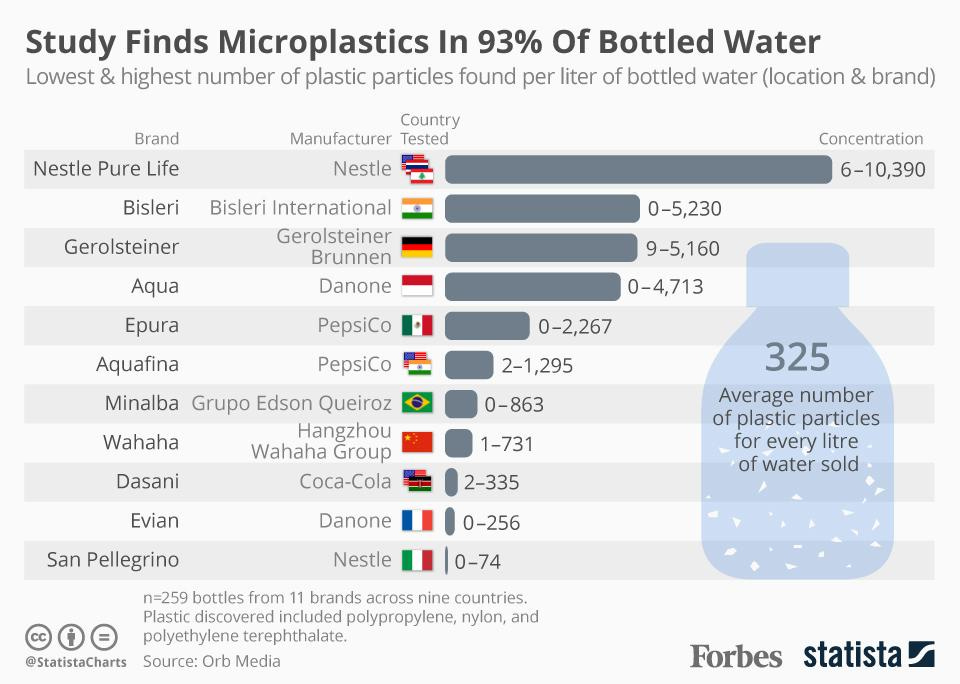
EPA’s explanation was more technical than the headlines. The agency said standardized national testing methods for microplastics are not yet sufficiently developed to support mandatory monitoring across thousands of public water systems. Rather than concluding the contaminants posed no concern, EPA argued the science and testing protocols were not yet ready for nationwide implementation.
The April announcement did not create a binding testing requirement, and the June proposal did not repeal one. Instead, the EPA first announced the start of a regulatory process, then proposed delaying what many observers expected to be its next major step.
The Verdict
Mostly True
The contaminants are microscopic. The headlines aren’t. Perhaps the pharmaceuticals are there to help us cope with the news cycle.
The Main Course
The Viral Claim
Congressman answers affordability question with lobster tails.
The Political Backdrop
Affordability has remained one of the top concerns for American voters. Although inflation has slowed from its post-pandemic peak, the cost of groceries, housing, insurance, utilities, and other everyday necessities remains well above where it was just a few years ago. Polls consistently show that the cost of living continues to rank among voters’ highest priorities.
Republicans have spent much of the past two years arguing that they are better positioned than Democrats to reduce the cost of living. Campaign messaging has focused heavily on inflation, energy prices, grocery bills, and household budgets, making affordability a central issue heading into the 2026 midterm election cycle.
Congress traditionally recesses around Independence Day, giving members an opportunity to return home, meet with constituents, and reinforce those messages in local media. Reporters often use the opportunity to ask lawmakers how they plan to explain Washington’s priorities to voters back in their districts.
The Reality
On June 30th, Rep. Troy Nehls (R-Texas), who has represented Texas’s 22nd Congressional District since 2021, was stopped by reporters outside the U.S. Capitol and asked a straightforward political question:
“How do Republicans make the case that you’re fighting for affordability?”
Nehls responded:
“Affordability? What you talking about? I’m gonna go there tomorrow, well over the Fourth. I’m gonna get me a couple of big lobster tails, I’m gonna get me some nice ribeyes. I’m gonna sit in my backyard with my family, my neighbors, and we’re going to be enjoying the Fourth, celebrating 250 years.”
The reporter then followed up by asking whether the roughly 60 percent of Americans living paycheck to paycheck could afford lobster tails and ribeye steaks.
Nehls answered:
“Maybe not. Maybe the 60% of Americans don’t work as hard as I do.”
Nehls represents Texas’s 22nd Congressional District, a fast-growing suburban and exurban district southwest of Houston, centered on Fort Bend County and including parts of Brazoria and Harris counties. It is not, on paper, a poor district. Census data show a median household income well above the national figure and a poverty rate below the national average. However, the district also sits inside the larger Houston region, where sharp income divides, housing costs, commuting expenses, and fast suburban growth make “affordability” a very real question for many households.
The Verdict
Pure Tonedeaf Truth
“Affordability” was not on the menu. Adacity and privilege definitely were.
And that’s it for this edition of Truth or Satire.
How did you do? To be honest, it’s been quite some time since we’ve seen any usable satire. The timeline has forced the genre to dig deep, and, honestly, many have sounded too tame in comparison to the headlines.
Until next time, protect your extremities from weyward fireworks, hydrate liberally, and remember reality has absolutely no obligation to be believable.
Oh, and if you are currently swamp-assing your way through a historically hot week, keep in mind that the Great America Fair has been canceled due to less.
If this game gets any harder, we’re going to need constitutional scholars, trauma counselors, and three Onion editors on retainer just to sort the headlines.
Follow for the next round of Truth or Satire, where every week America dares parody to catch up. Or tune in for our regularly scheduled analysis and commentary, when the meds kick in, and we can take the headlines seriously.
Sources:
“Palantir Acquires Pentagon For $800 Billion,” The Onion, June 30, 2026.
“Palantir Acquires Pentagon For $800 Billion,” r/wallstreetbets, July 1, 2026.
“Trump sees bond with ‘great he-man’ Theodore Roosevelt at lavish library opening,” The Guardian, July 1, 2026.
“Donald Trump Delivers an Address at the Teddy Roosevelt Presidential Library Opening,” Roll Call Factba.se, July 1, 2026.
“Trump administration quietly removed mentions of slavery from Independence Hall, Thomas Jefferson portrait,” The Philadelphia Inquirer, June 29, 2026.
“Restoring Truth and Sanity to American History,” The White House, March 31, 2025.
“President’s House site slavery exhibits have been removed,” The Philadelphia Inquirer, January 22, 2026.
“After bold pledge, EPA shelves microplastics testing in U.S. drinking water,” Los Angeles Times, June 30, 2026.
“EPA Takes Bold Action to Ensure Drinking Water is Safe from Microplastics, Pharmaceuticals, and Other Emerging Contaminants,” EPA, April 2, 2026.
“Microplastics In Water, Food, And Us,” Pursuit of Research, December 11, 2018.
“Congressman Tony Nehls Brags About Lobster Feast When Asked About Affordability,” The Daily Beast, July 1, 2026.
“Texas Congressman slammed for lobster, ribeye affordability remarks,” Chron, July 1, 2026.
“MAGA pol brags about going to eat steak and lobster,” The Independent, July 1, 2026.
„Congressman answers affordability question with lobster tails“
Why was he elected, anyway? And what kind of people are the ones who vote for him?
Yay! So glad you hit publish on this one 📜🔍🖋️