


Welcome back to Truth or Satire, the game where you attempt to determine whether a viral headline is real, misleading, missing several load-bearing pieces of context, or the product of someone discovering that the internet has no adult supervision.
Five headlines. Five chances to judge the claim as written before reading on. Score yourself accordingly:
4–5/5: Congratulations. Your internal bullshit detector has recently been serviced and remains under warranty.
2–3/5: Respectable. You can still distinguish reality from satire, provided reality stops actively trying to sabotage the test.
0–1/5: Honestly, just start clicking things. Statistical probability may now be your best available strategy.
Programming note: Reporting and verdicts in this edition are current as of 8 pm ET, Wednesday, August 26, 2026. Several of these stories are developing because reality continues to ignore our publication schedule.
Make your guesses, and no changing your answer after scrolling. That is between you, your conscience, and your browser history.
This Community Is Powered by You
We cover the chaos, the corruption, the propaganda, and the policies shaping the country, plus the occasional descent into the surreal.
Follow for sharp political commentary, brutal media analysis, and weekly reminders that reality is now competing directly with parody.
HORSE OF A DIFFERENT COLOR
The Viral Claim
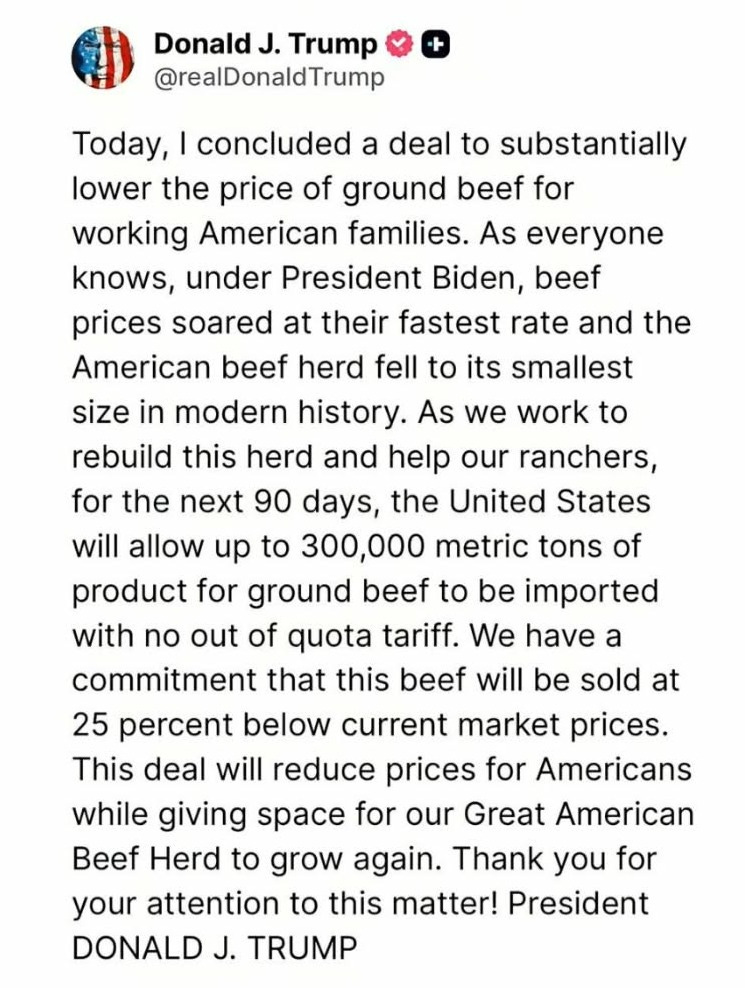
Trump’s mystery beef relief is horse.
The Background
America is short on cattle. The U.S. herd has fallen to about 86.2 million head, its lowest level in roughly 75 years, after years of drought, high costs and ranchers reducing herds. Rebuilding isn’t quick. Cattle biology stubbornly refuses to respond to executive orders, and producers have to retain breeding animals today to produce additional beef years from now. Ground beef prices, meanwhile, have risen nearly 57% over five years.
The shortage is reshaping the processing industry, too. On August 13th, Tyson Foods announced it would close its beef facility in Joslin, Illinois, close a case-ready operation in Eagle Mountain, Utah, and seek a buyer for its Pasco, Washington, beef plant. Tyson said it was consolidating around three central U.S. plants amid what it called one of the most historic cattle shortages the country has experienced. The company had already closed its large Lexington, Nebraska, beef plant earlier this year.
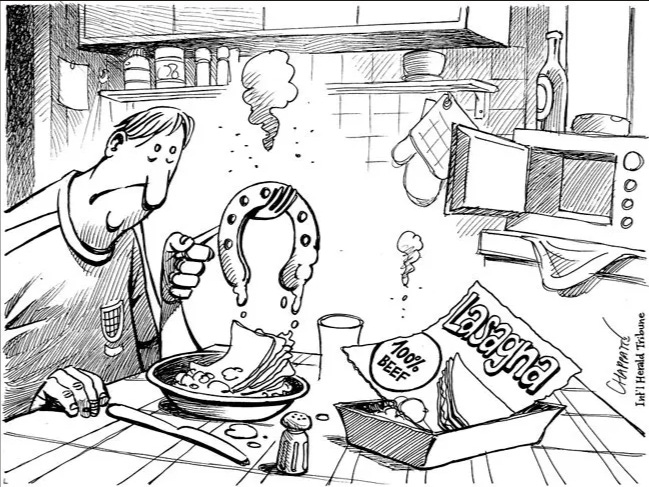
Elsewhere in American livestock management, the federal government has a very different numbers problem. About 73,000 wild horses roam federal lands in the West, while tens of thousands more removed from the range are kept in government-funded holding facilities. Under federal law, the Bureau of Land Management can adopt out horses and can also sell certain animals—generally older horses or those unsuccessfully offered for adoption multiple times—into private ownership. Unlike adoption, a sale transfers ownership immediately.
The United States does not currently operate commercial horse-slaughter plants for human consumption, but that doesn’t mean North American horse slaughter has become a thing of the past. American horses have been exported to slaughter facilities in Canada and Mexico, although disease restrictions have recently disrupted the Mexican route. While BLM has long required purchasers to agree not to knowingly transfer federally sold horses into the slaughter pipeline, livestock records reviewed by The New York Times found federally branded mustangs on trucks headed to Canadian slaughter plants. In 2025, BLM sold about 3,700 wild horses, more than double the previous pace, some for as little as $25.
The Reality
Here is where two very real stories had an exceptionally unfortunate 48 hours. On August 20th, The New York Times published its investigation documenting BLM mustangs entering the slaughter pipeline. On August 21st, Trump announced a plan to allow up to 300,000 metric tons of discounted imported product for ground beef into the United States. Reporters asked the obvious question: Where is it coming from? Trump declined to identify the countries or suppliers. By August 26th, Agriculture Secretary Brooke Rollins was still saying she didn’t know which countries would benefit.
The internet then did what the internet does when presented with the phrases “wild horses going to slaughter” and “300,000 metric tons of mystery meat” on consecutive days. Posts began connecting the two stories, including graphics purporting to teach consumers how to distinguish horse meat from beef. The rumor became widespread enough that Snopes investigated it separately. However, as weird as the timing may be, there is no evidence connecting BLM horses to Trump’s beef program, and the numbers alone should make the theory collapse. BLM sold 3,700 wild horses in all of 2025. Trump’s import plan involves 300,000 metric tons of beef trimmings. Thousands of horses cannot secretly become hundreds of millions of kilograms of beef.
On August 26th, while Rollins still denied knowledge of the source, Trump signed the formal proclamation. It specifies lean beef trimmings, divided into three 100,000-metric-ton quotas from September through November, and makes them available to eligible trading partners under a category labeled “other countries or areas.” It still does not identify the eventual exporters or suppliers, so, yes, the administration really has announced an enormous amount of additional imported beef without telling consumers exactly where it will come from. That information vacuum helps explain the speculation.
Incidentally, the vacuum produced another theory, that the mystery supply was Argentine beef China had rejected. Real stories underlie that claim as well. In March, China rejected a 22-ton shipment from one Argentine plant after detecting the banned antibiotic chloramphenicol. Argentina’s investigation has not established that Trump’s new 300,000-ton quota is that rejected meat. Separately, the USDA recalled 29,628 pounds of Argentine beef in August because it entered U.S. commerce without completing required import reinspection. Notably, the recall was not because inspectors found contamination, at least officially. Those are three different quantities, incidents, and regulatory issues that social media has increasingly blended into one ominous shipment.
Meanwhile, the horse story is disturbing without needing help from the beef conspiracy. After the Times investigation, BLM tightened its sales program. The standard sale price is now $125, and buyers must promise not to “knowingly, recklessly, or negligently” transfer animals toward slaughter or commercial processing, including through kill pens or intermediaries. BLM also says it will strengthen efforts to block violators from future purchases. Once a horse is sold, however, it becomes private property, and BLM does not routinely track it. So, no, there is no evidence Trump’s mystery beef is secretly mustang, but yes, federally sold American wild horses really have turned up in the North American slaughter pipeline. Somebody at White House communications really should have read the previous day’s newspaper before announcing 300,000 tons of unidentified meat.
The Verdict
Neigh. This isn’t exactly satire, but it is built from two extremely real stories that should never have been left alone together unsupervised.
At this point, “What kind of meat is this?” has joined “Is this a constitutional crisis?” among questions we would prefer not to ask before lunch. And yet….
THE CAMPAIGN TRAIL OF TEARS
The Viral Claim
Pete Hegseth, Secretary of Defense, has announced his 2028 Presidential bid.
The Background
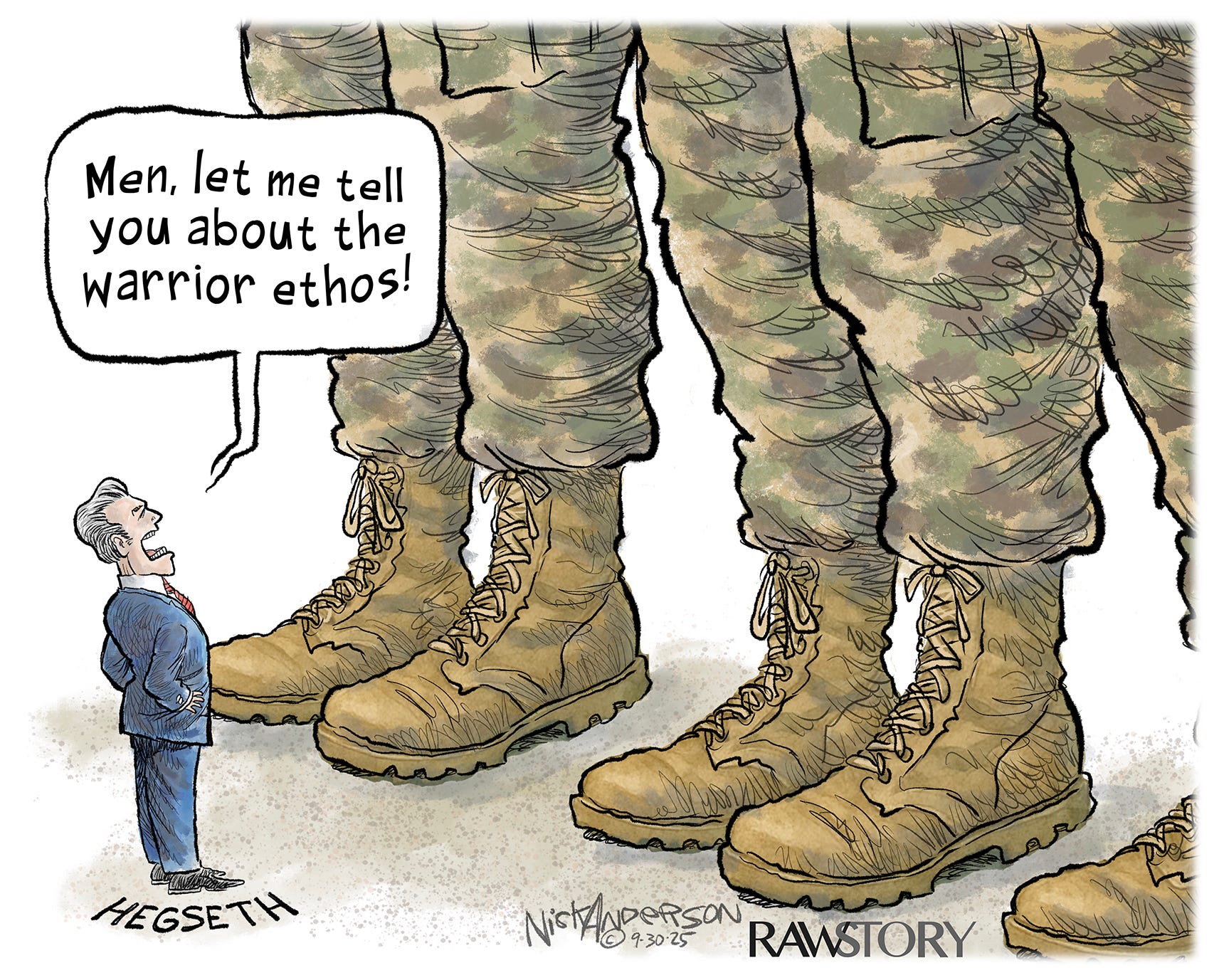
Pete Hegseth has had what might generously be called an eventful tenure running the Pentagon. The former Fox News host entered the job with an unusually large political profile for a defense secretary and has remained one of the administration’s most visible personalities, including speeches, television appearances, and highly publicized (and amusing) workouts with troops. The administration’s rebranding of the Defense Department as the Department of War has further put Hegseth at the center of its effort to project a more aggressive military identity.
That visibility comes while the United States is fighting an expensive war with Iran. By July 21st, Hegseth told Congress that the conflict had cost about $37.5 billion, with the administration seeking nearly $90 billion more in Iran-related funding. He warned that without additional money, military training and other operations could suffer. Lawmakers in both parties have pressed him about the war’s strategy, cost, civilian casualties, weapons supplies, and the administration’s removal of senior military officers.
All that spending lands atop an institution with a remarkable accounting problem. The Pentagon remains the only major federal agency that has never received a clean department-wide audit opinion. Currently, they are 0 for 8. GAO says Defense’s financial-management problems are serious enough to help prevent auditors from rendering an opinion on the federal government’s consolidated financial statements. At the same time, Trump’s FY2027 request calls for approximately $1.5 trillion for the Defense Department, a 44% increase from FY2026.
None of that necessarily makes political ambition implausible, of course. Cabinet positions have long served as launching pads for higher office, and Hegseth retains a constituency among Republican voters despite considerably weaker overall public ratings. 2028 speculation is not confined to him either. Politicians in both parties are already making the kinds of appearances that generate presidential chatter, even as they carefully decline to call themselves candidates. Two years before an open presidential election, Washington has decided that waiting is for people without newsletters.
The Reality
Hegseth has not announced a campaign for president in 2028. In fact, when speculation intensified this month, Pentagon spokesman Sean Parnell said explicitly that “Secretary Hegseth is not running for President” and called the speculation “foolish.” No campaign announcement, presidential committee, or declaration from Hegseth saying otherwise has emerged.
There is, however, considerably more underneath the rumor than somebody making up Hegseth 2028 merchandise. On August 17th, Hegseth traveled to Iowa, where he appeared at the Iowa State Fair campaigning for Republican Representative Zach Nunn. The Pentagon emphasized that Hegseth was traveling in his “personal capacity,” although as a “required use” traveler he still traveled aboard a government military aircraft. Iowa has spent decades functioning as a presidential proving ground, so sending a nationally prominent politician there tends to make political reporters twitch involuntarily.
More importantly, The Washington Post reported that officials familiar with Hegseth’s thinking believe he is considering running for president or another political office after his service in the Trump administration. One official specifically said the Iowa trip fit that pattern. Hegseth has also made political appearances in other states, including South Carolina and Kentucky, so there is legitimate reporting that he may have electoral ambitions, and legitimate reasons his recent behavior has generated 2028 speculation.

However, considering is not running, and running is not announcing. The viral claim simply climbed several rungs up the certainty ladder without bringing evidence along for the trip. Hegseth may eventually run for president, seek another office, be removed by Congress, or do nothing. What we know today is that people familiar with his thinking say he’s considering his options, he recently went campaigning in Iowa, and his own Pentagon says he is not currently running for president. It seems the 2028 primary has reached the stage where merely entering Iowa airspace requires a campaign-finance attorney. Guess everyone is eager for new leadership.
The Verdict
This claim isn't supported, but it's deeply alarming enough to be possible in this cursed timeline.
We’re still two years out, folks. Please conserve your yard signs and emotional reserves. There will be plenty of time to lose both.
BALLROOM BLITZ
RIP, Tim Curry.
The Viral Claim
The White House has secured foreign steel for the ballroom.
The Background
Donald Trump has made steel more than a construction material. His administration has used Section 232 tariffs to protect domestic steel production, arguing that the industry’s health is a matter of national security as well as jobs. Just last week, Vice President J.D. Vance stood inside Cleveland-Cliffs’ Middletown Works in Ohio—the plant where his grandfather worked for decades—to celebrate a $1 billion modernization project and promote the administration’s manufacturing agenda. Ohio Senator Jon Husted put it succinctly: every ton made at home is one less ton America needs to import.
“American-made,” however, gets complicated surprisingly quickly. Tariffs that protect a domestic steel producer can increase costs for American manufacturers that use imported metals, while modern supply chains routinely cross borders between raw material and finished product. Perhaps you recall our recent Truth or Satire about brass instruments. The ballroom itself offers a particularly literal example of this incomplete definition. Its Corinthian columns are being made from high-grade Indiana limestone, but the stone has been shipped to Italy to be carved before returning to Washington. The stone is American. The value-added craftsmanship is not. The administration has not publicly identified the Italian artisans or disclosed what that international detour costs.
Then there is the ballroom itself, a roughly $400 million, 90,000-square-foot project on the former site of the East Wing. Its demolition and construction have triggered preservation fights, litigation over whether congressional authorization was required, and an emergency Supreme Court battle over whether work can continue. The project is being financed largely through private contributions, while Congress has separately wrestled with proposed federal spending for security associated with the site. Normal sentences about federal construction tend to acquire several footnotes around here.
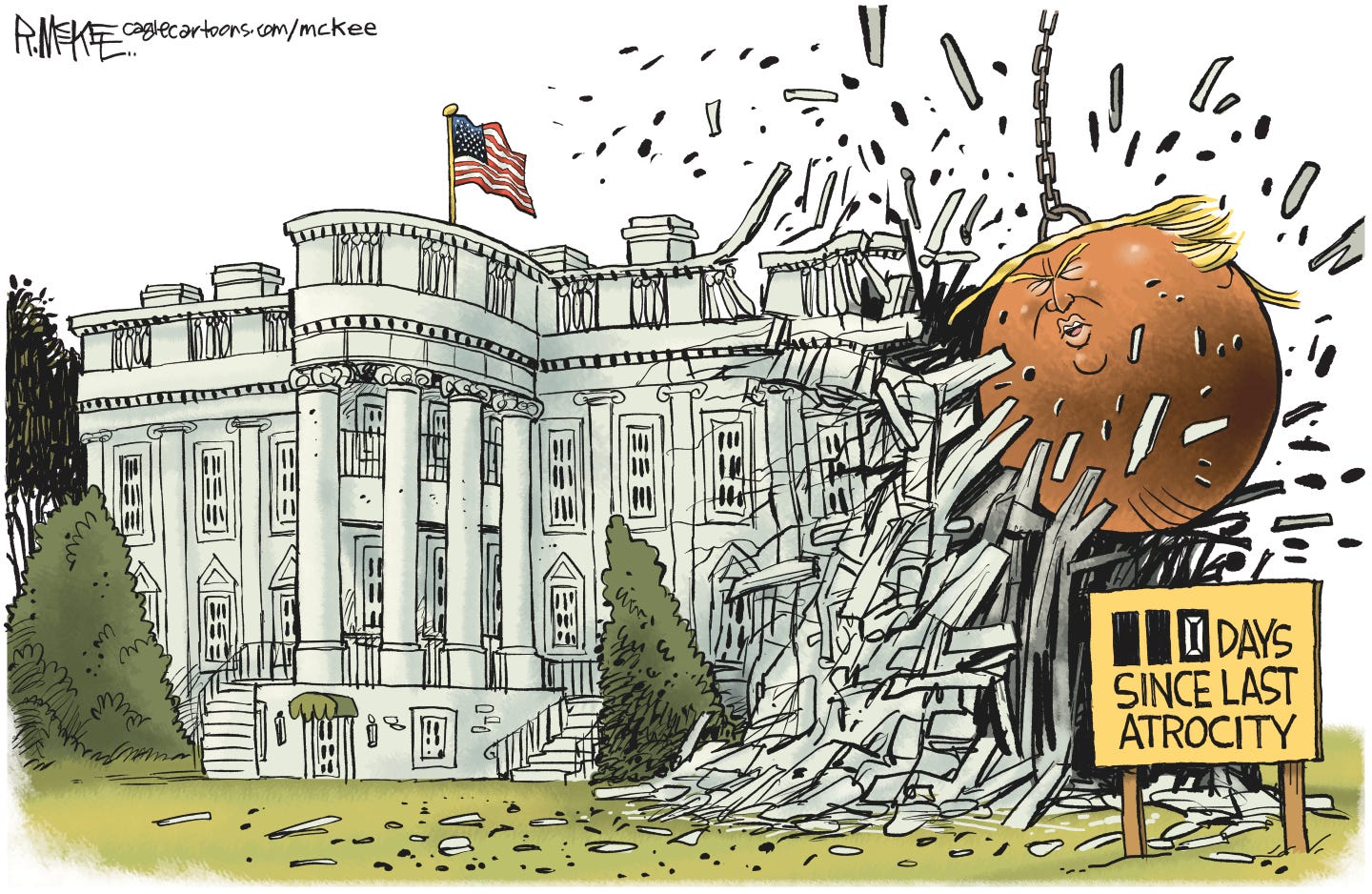
Federal procurement rules are similarly less simple than “government buildings must contain American stuff.” Domestic-content requirements depend on the particular law, funding, and acquisition mechanism involved, and this project has been structured unusually, including private financing and atypical contracting arrangements. “Buy American” can describe a political philosophy, a collection of specific legal requirements, or simply a label slapped on something with a much more international supply chain underneath it.
The Reality
The viral claim is true, and it’s not even new. On April 8th, The New York Times reported that the White House had secured tens of millions of dollars’ worth of steel produced in Europe for the ballroom’s structure. The supplier is ArcelorMittal, one of the world’s largest steelmakers, headquartered in Luxembourg. By April 30th, CEO Aditya Mittal said approximately 600 metric tons had already been delivered. This isn’t merely a foreign corporation with American factories supplying American steel. The steel at issue was reportedly made in Europe. The UAW, which had so much to say about brass instruments, has been conspicuously quiet so far as we can tell.
However, read the viral headline again. The important word is “secured.” It does not say purchased. ArcelorMittal donated the steel, and Trump revealed the existence of an unnamed donor back in October 2025, saying a “great steel company” had offered the material and that his contractor valued the contribution at about $37 million. The Times later identified ArcelorMittal.
“Free” does not necessarily end the questions, however. ArcelorMittal has substantial financial interests affected by U.S. steel policy, and Trump’s October disclosure of the contribution came just days before his administration adjusted tariffs in a way that could potentially benefit steel exported from the company’s Canadian operations. Senator Elizabeth Warren immediately raised pay-to-play concerns and called for the contribution to be rejected. The White House denied any connection, noted that the relevant tariff provision was not exclusive to ArcelorMittal, and said the company had received nothing in exchange. While there is no evidence establishing a quid pro quo, there is evidence of a very large corporate contribution from a company with significant business before the government, hence the scrutiny.

If this feels like breaking news, check the date. The foreign-steel story broke in April. It is enjoying an August revival while the ballroom is again dominating headlines—construction is racing ahead amid a Supreme Court fight, Vance is standing in an Ohio steel mill celebrating American manufacturing, and Indiana limestone is crossing the Atlantic for an Italian makeover. The foreign steel is real, the donation is real, the tariff questions are legitimate but unresolved, and somehow, on the lengthy list of controversies surrounding this project, European steel may not even make the medal round.
The Verdict
Of course Trump is immune to hypocrisy, particularly when it comes to his gilted interior decorating and building, but “secured” is carrying approximately 600 metric tons of linguistic weight.
The East Wing would like everyone to know that it is unavailable for comment, on account of no longer existing. sigh
STRIPES, INTERRUPTED
The Viral Claim
The Trump Administration, via the Pentagon, has fired the publisher and editor-in-chief of Stars and Stripes.
The Background
The Trump administration’s relationship with independent media has rarely been described as low-conflict. The always litigious Trump has repeatedly sued or threatened news organizations, while his second administration has moved aggressively against publicly supported media institutions. The Corporation for Public Broadcasting lost federal funding, Voice of America became the subject of an extraordinary fight over staffing and editorial control as well as funding peril, and the Pentagon under Pete Hegseth has imposed new restrictions on the reporters who cover it. The legal structures of those organizations differ considerably, but the recurring argument is similar. What independence should journalists retain when their funding, access, or employment intersects with the federal government?
Few institutions embody that question as strangely as Stars and Stripes. Its history stretches back to the Civil War, and today it serves American troops, veterans, and military families around the world. It receives Defense Department funding and many of its employees are federal workers, but it is not supposed to function as Pentagon public relations. Congress has repeatedly protected its editorial independence and even created an ombudsman position whose job includes reporting threats to the free flow of news to the armed forces. In other words, the military helps pay for a newspaper specifically designed to retain the ability to annoy the military.
That tension isn’t new. In 2020, the Pentagon moved to eliminate Stars and Stripes’ funding and ordered preparations to shut it down. The proposal drew bipartisan opposition in Congress before Trump publicly intervened, saying the paper would continue under his watch.
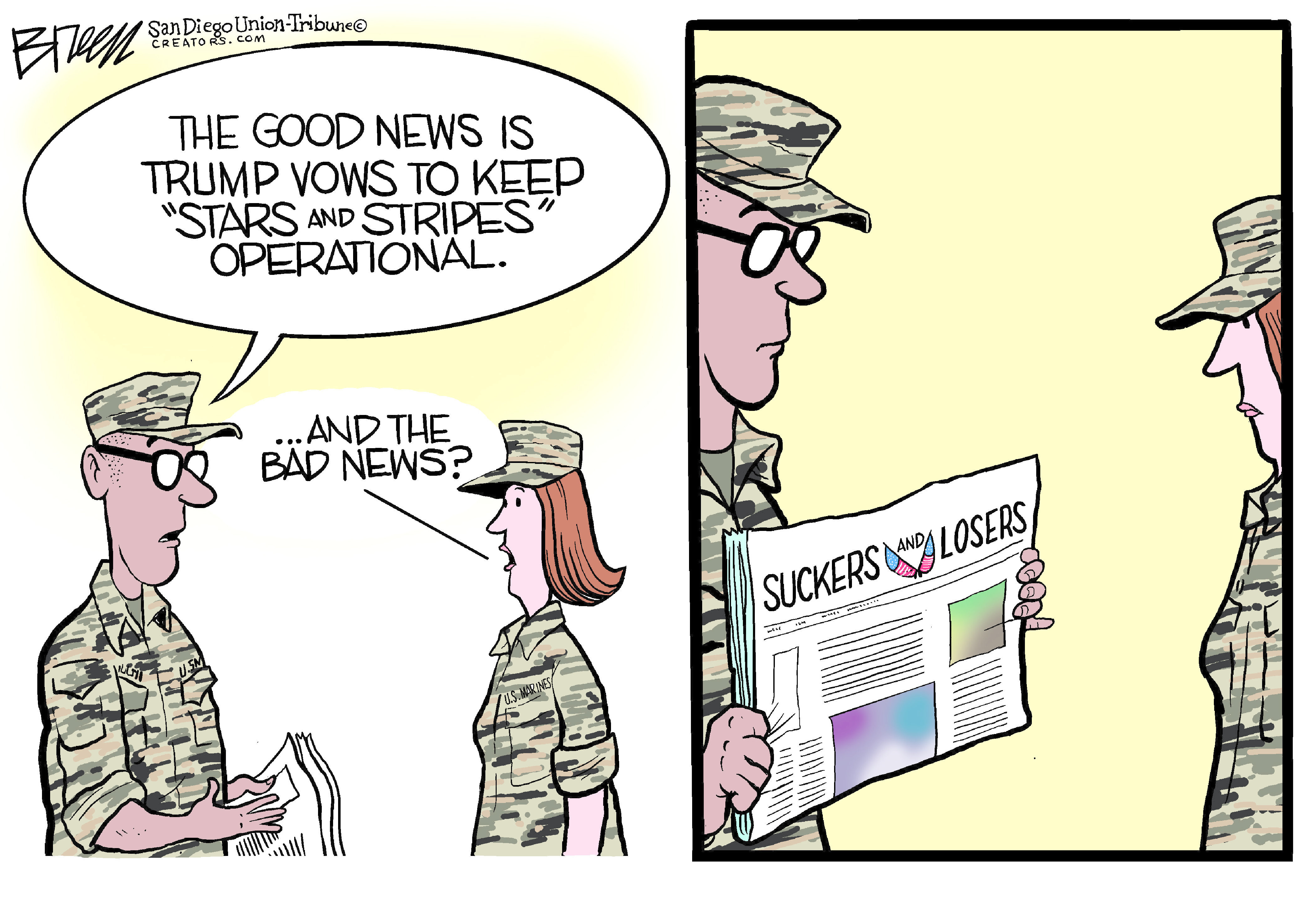
Six years later, the relationship is again under strain. Hegseth’s Pentagon has pushed a “modernization” effort that critics say threatens Stripes’ independence, including changes to its content and limits on its use of outside wire services.
Meanwhile, the newspaper has been covering a military under extraordinary pressure. The USS Abraham Lincoln, carrying roughly 5,000 sailors and Marines, spent more than 200 consecutive days at sea during its extended Iran deployment. Families and sailors raised concerns about mental health, food and water, mail and difficult living conditions. Lawmakers demanded answers. Stars and Stripes reported those concerns, while military leaders disputed parts of the coverage. Acting Navy Secretary Hung Cao called some reports “dishonest,” while acknowledging that the crew had been pushed to its limits. The carrier is now finally headed for a port call in Thailand.
The Reality
Come on. You already know the answer. The Pentagon fired Stars and Stripes publisher Max Lederer and editor-in-chief Erik Slavin on August 21st. It also moved against Middle East reporter Lara Korte. The notices cited insubordination and initially provided five days to appeal. Slavin said his notice specifically cited a CBS interview in which he said hypothetical Pentagon censorship of news for service members would constitute a personal “red line.” Korte had used the same interview to make her institutional allegiance rather plain. She worked for Stars and Stripes, she said, not the Pentagon, an administration, or a policymaker.
This confrontation didn’t begin with the Lincoln. Months earlier, the Pentagon fired Jacqueline Smith, the Stars and Stripes ombudsman, you know, the official Congress charged with watching for threats to the newspaper’s editorial independence. Smith had publicly warned that Pentagon changes threatened that independence and had written critically about restrictions imposed on the paper. On April 23rd, she announced her dismissal in a column titled, with admirable economy, “The Pentagon is trying to silence me.” She was given no reason and told the action was not grievable. Smith later sued, alleging that her dismissal was retaliation for doing precisely the watchdog work Congress created her position to perform. The administration, naturally, disputes her claims.
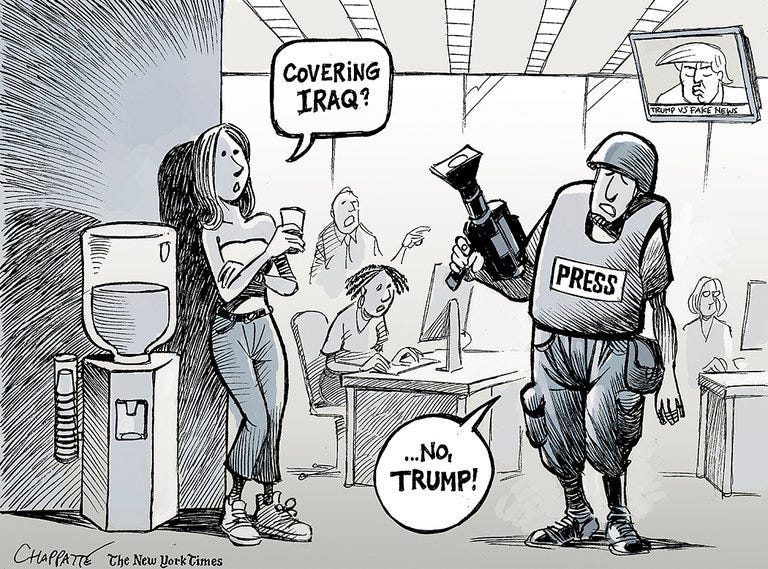
Then things escalated. According to The Washington Post, a Defense Department official emailed Lederer asking him to fire Slavin and Korte because of their CBS interview. Lederer did not. On August 18th, Lederer instead announced that he would retire September 30th after more than three decades with the publication, telling staff that his understanding of Stars and Stripes’ mission differed in “fundamental ways” from Pentagon leadership’s. Three days later, the Pentagon moved to fire Lederer, Slavin, and Korte. The Pentagon said Lederer was terminated for insubordination but has not publicly established that his failure to fire the other two was the reason.
And because this timeline apparently required a control group, another claim circulating amid the Lincoln controversy said sailors were being forbidden from leaving the carrier until they signed NDAs promising not to discuss embarrassing conditions aboard. That one actually was satire, though honestly, completely believable. No evidence of such an order emerged. The Stars and Stripes dismissals, unfortunately, are real. No evidence established that the Lincoln reporting caused them, especially considering that the editorial-independence fight predates that coverage substantially. What we do know is that the Pentagon has now removed the congressionally mandated watchdog who warned about interference, followed months later by the publisher, editor, and a reporter amid a continuing dispute over who gets to control the military newspaper’s journalism. Apparently “too ridiculous to be true” has once again failed peer review.
The Verdict
Predictably, but no less alarmingly, true. The Pentagon fired the people running its independent newspaper during a fight over how independent its independent newspaper should be. Are we surprised that no one in the administration appears to understand this concept?
At this point, even the redactions are requesting legal counsel.
CLAIM JUMPER
The Viral Claim
The US claims ownership of the Strait of Hormuz.
The Background
Few strips of water carry more geopolitical weight than the Strait of Hormuz, the narrow passage connecting the Persian Gulf with the Gulf of Oman and the Arabian Sea. Before the current war, more than 20 million barrels of oil moved through it each day—roughly one-fifth of global petroleum consumption—along with enormous quantities of liquefied natural gas. Since the U.S.-Iran conflict began, traffic has plunged, attacks and mines have disrupted shipping, energy prices have risen, and control of passage has become one of the central bargaining points between Washington and Tehran.
Geographically, however, Hormuz isn’t an ownerless canal in international waters. Iran borders the northern side and Oman the southern side, and the Strait is narrow enough that their territorial seas extend across it. Oman formally claims a territorial sea extending 12 nautical miles from its baselines, and Iran and Oman have had a bilateral maritime-boundary agreement since the 1970s. The fact that ships from around the world use the Strait does not make the waterway international property.
International law instead separates sovereignty from passage. Under the U.N. Convention on the Law of the Sea, coastal states exercise sovereignty over their territorial seas, generally extending up to 12 nautical miles. However, ships and aircraft have special transit-passage rights through straits used for international navigation, and that passage generally cannot simply be impeded. The United States has never ratified UNCLOS (because rules are for suckers) but has long treated many of its navigation provisions as customary international law. In plain English, you can have a right to drive through the neighborhood without owning the neighborhood.
That has become rather less academic lately, of course. Iran has claimed control over the Strait, while the United States has maintained naval forces, imposed a blockade around Iranian ports, and asserted its ability to keep shipping moving. Meanwhile, Iran and Oman are negotiating their own arrangement over passage through Hormuz, including how commercial vessels would transit their waters. As of August 26th, Iranian officials were claiming agreements had been reached over control and revenues, although reporting indicated significant details remained unsettled. Military power, commercial passage, territorial sovereignty, and practical control have all become entangled.
The Reality
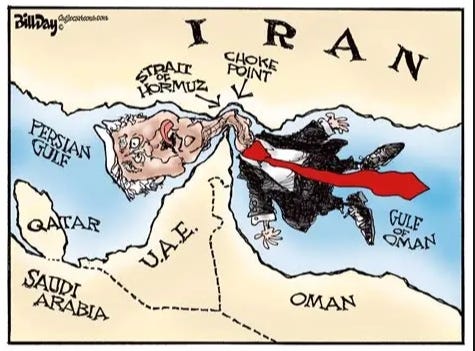
Donald Trump really did say it, because of course he did. On August 14th, Trump told an audience in New York that after defeating Iran he would soon declare the Strait of Hormuz “a territory of the United States.” Four days later, he escalated from words to cartography, posting a map on Truth Social with the Strait circled and labeled “NEW U.S. Territory.” The official White House social-media account subsequently reposted the image. Then on August 21st, Trump went further still, telling a South Carolina audience, “I view the Strait of Hormuz as an American territory right now. It’s an American territory.” Because that’s how it works, like unclassifying files, obviously.
The viral claim is not inventing Trump’s assertion. Where it gets slippery is the difference between the president claiming something and the United States acquiring it. No formal legal action transferring sovereignty over Hormuz to the United States exists, nor could a Truth Social post accomplish that. The Strait remains bounded by Iranian and Omani territorial waters, subject to international navigation rights. U.S. forces can clear mines, escort shipping, blockade ports, or exercise enormous military power in the region without any of those actions turning the water beneath them into American territory. Indeed, on August 25th Trump announced that U.S. forces had cleared mines from the Strait and threatened Iranian vessels attempting to lay more, an assertion of military power, not a maritime deed.
The diplomatic reality provides a particularly useful contrast. While Trump calls Hormuz American territory, Iran and Oman are negotiating over the actual management of passage through the Strait. Their proposals have included routing commercial vessels through Iranian and Omani waters, possible revenue arrangements, and restrictions on military vessels. Washington vehemently opposes parts of those plans, and Trump has even threatened Oman over its cooperation with Iran, but being powerful enough (or brash enough) to object to your neighbors’ arrangement does not make you one of the neighbors.
Iran, meanwhile, decided that international-law trolling was the appropriate diplomatic instrument, and honestly, no one is doing it better lately. After Trump’s map appeared, an official Iranian account posted its own map labeling California “NEW TERRITORY OF ISLAMIC REPUBLIC OF IRAN.” California remained stubbornly American, thereby providing an unexpectedly efficient demonstration that adding a territorial label to a social-media graphic does not convey sovereignty. So yes: the president of the United States has repeatedly claimed the Strait for America. No: America does not thereby own the Strait of Hormuz. And apparently we have reached the stage of the Iran war where competing governments are shitposting their preferred borders at one another.
The Verdict
Claimed, yes; took ownership? Well…. Unfortunately for Trump, the Strait of Hormuz has better supporters than the Gulf of Mexico.
Please update your atlases in pencil until the Grim Reaper captures the right octogenarian. Until then, we eagerly await the next LEGO music video.
That’s it for this edition of Truth or Satire. How’d you do?
Please return to your regularly scheduled doomscrolling with the comforting knowledge that you are now marginally harder to fool and considerably less fun at parties. Also, maybe consider alternative protein sources for the foreseeable future just in case.
We’ll be back when the visible tip of the deeply stupid iceberg inevitably breaks the surface again. So, Friday probably.
If this game gets any harder, we’re going to need constitutional scholars, trauma counselors, and three Onion editors on retainer just to sort the headlines.
Follow for the next round of Truth or Satire, where every week America dares parody to catch up. Or tune in for our regularly scheduled analysis and commentary, when the meds kick in, and we can take the headlines seriously.
Sources:
“Economists don’t expect reopening the US to Mexican cattle imports to reduce high beef prices,” Associated Press, August 24, 2026.
“Tyson Foods Announces Network Restructuring for Beef Business to Strengthen Long-Term Performance,” Tyson Foods, August 13, 2026.
“Wild Horse and Burro Sale Program,” Bureau of Land Management, updated August 2026.
“Under Trump, Protected Wild Horses Are Going to Slaughter,” The New York Times via GV Wire, August 20, 2026.
“Unproven claim links Trump’s imported beef to slaughtered wild horses,” Snopes, August 26, 2026.
“Further Ensuring Affordable Beef for the American Consumer,” The White House, August 26, 2026.
“Hegseth travels to Iowa in his ‘personal capacity’ amid 2028 speculation,” The Washington Post, August 17, 2026.
“Hegseth to go to Iowa to campaign for GOP candidates, sources say,” CBS News, August 17, 2026.
“Iran war drains U.S. blood and treasure,” Reuters, July 22, 2026.
“DOD Financial Management: Questions Associated with New Financial Audit Approach,” U.S. Government Accountability Office, May 13, 2026.
“Budget of the U.S. Government, Fiscal Year 2027,” The White House, April 2026.
“White House Secures Foreign Steel for Ballroom Project,” The New York Times, republished by The Spokesman-Review, April 8, 2026.
“ArcelorMittal donates steel for Trump ballroom,” Reuters, April 30, 2026.
“Warren Calls on Trump Administration to Reject Foreign Steel for Ballroom Project, Warns of Pay-to-Play Concerns Related to Tariff Relief,” Office of Sen. Elizabeth Warren, April 10, 2026.
“New details of plans for the Kennedy Center and White House ballroom include columns carved in Italy, plaza named for Trump,” CBS News, August 20, 2026.
“Vance campaigns at the Ohio steel plant where his grandfather worked,” Associated Press, August 21, 2026.
“Pentagon dismisses Stars and Stripes leadership after editor, reporter oppose military interference,” Associated Press, August 21, 2026.
“Pentagon moves to fire publisher and editor of Stars and Stripes,” CBS News, August 21, 2026.
“Ombudsman column: The Pentagon is trying to silence me,” Stars and Stripes, April 23, 2026.
“USS Abraham Lincoln families press Navy leaders over sailors’ mental health,” Stars and Stripes, August 11, 2026.
“Fact Check: NO Evidence Trump Ordered Sailors Aboard USS Abraham Lincoln To Sign NDAs Before Coming Ashore,” Lead Stories, August 17, 2026.
“Pentagon rescinding order to shutter Stars and Stripes paper,” The Washington Post / Associated Press, September 10, 2020.
“United Nations Convention on the Law of the Sea — Part III: Straits Used for International Navigation,” United Nations, December 10, 1982.
“Trump says Strait of Hormuz has been demined, warns Iran not to plant more,” Reuters, August 25, 2026.
“Iran defiant on strait as Trump tells Americans to accept high gasoline prices,” Reuters, August 14, 2026
“Iran and Oman reach agreements on share of Hormuz and revenues, Revolutionary Guards say,” Reuters, August 26, 2026.
“Iran labels California its ‘new territory’ after Trump’s Hormuz claim,” Anadolu Agency, August 19, 2026.
“Overview — Convention & Related Agreements,” United Nations Division for Ocean Affairs and the Law of the Sea, current reference page.
You can’t trust a word The Fapweasel (Trump) says. . “As everyone knows?” Who is everyone, and where did you get that information? He just makes stuff up under the mistaken belief that nobody will question him. Anyone with a brain that works should question his every word and ask for proof.
Right on!