


Truth or Satire? used to be a game about spotting fake news. Increasingly, it’s become an exercise in determining which branch of government, multinational corporation, or defense contractor managed to out-Onion the Onion this week. Somewhere along the way, reality stopped asking whether something sounded ridiculous and simply started filing the paperwork.
As always, we’ve collected five viral claims in all of their absurd glory making the rounds online. Your job is to separate fact from fiction before the reveal, a task that has become considerably more difficult now that every institution appears committed to producing headlines that sound like rejected sketch-comedy premises.
Score Yourself
4–5/5 — Bureaucracy Whisperer
Congratulations. You can still distinguish government policy from a Facebook meme. This is an increasingly niche skill.
2–3/5 — Civil Servant of Reality
Respectable. You spotted most of the traps, although a few official statements successfully disguised themselves as parody.
0–1/5 — Lost in Committee
Don’t feel bad. Somewhere, a federal agency is probably conducting a years-long study to determine whether this was avoidable.
Let’s play Truth or Satire!

This Community Is Powered by You
We cover the chaos, the corruption, the propaganda, and the policies shaping the country, plus the occasional descent into the surreal.
Follow for sharp political commentary, brutal media analysis, and weekly reminders that reality is now competing directly with parody.
Minimum Wage, Maximum Effort
The Viral Headline
A new bill forces supermarkets to give a 10% discount on every item at self-checkout.
Background
Not long ago, self-checkout lanes were marketed as a convenience for shoppers with just a handful of items. Today, they’re a cornerstone of the modern grocery store. According to the Food Industry Association (FMI), roughly one in three supermarket transactions now takes place at a self-checkout kiosk, and nearly every major grocery chain offers the technology in at least some of its stores. What began as an optional shortcut has quietly become part of the standard shopping experience.
The rise of self-checkout has coincided with years of elevated grocery prices. While food inflation has cooled significantly from its pandemic-era peak, shoppers continue to feel the cumulative impact of higher costs. According to the Bureau of Labor Statistics, food-at-home prices rose another 2.7% over the past year, adding to several years of unusually rapid price increases that fundamentally changed what Americans expect to pay at the checkout lane.
The technology has also become increasingly sophisticated. Modern self-checkout systems often incorporate weight sensors, computer vision, artificial intelligence, and overhead cameras designed to detect scanning errors and reduce theft. Retailers argue these systems improve efficiency and allow employees to focus on other tasks, while critics contend shoppers are performing work once handled by paid cashiers, all while being monitored more closely than ever before.
Reality
This one originated with a real bill. On May 28, New York Assemblywoman Nikki Lucas introduced Assembly Bill A11501, which would require food retail establishments offering self-service checkout to provide customers with a 10% discount on goods purchased through those kiosks. The legislation defines a self-service checkout as an automated system that allows shoppers to scan, bag, and pay for their purchases without a cashier, and would take effect 90 days after becoming law, if it ever does.
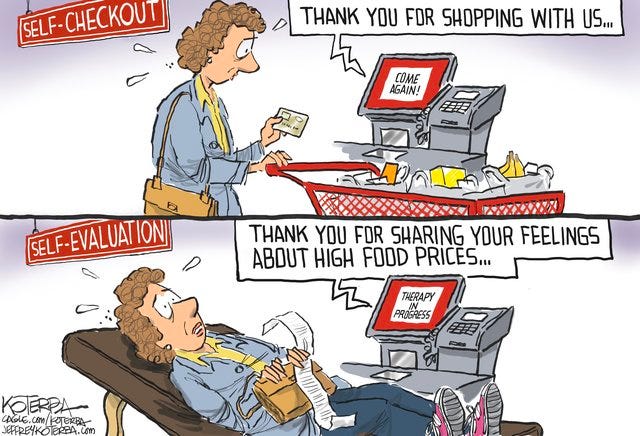
Lucas’ argument is straightforward: retailers save money by shifting part of the checkout process onto customers, so customers should share in those savings. In the bill’s legislative justification, she argues that shoppers are effectively performing work once handled by paid employees while receiving none of the financial benefit. Whether you see self-checkout as a convenience or unpaid labor, the proposal reflects a broader debate over who should benefit as automation replaces routine jobs.
The internet, however, left out the most important part. As of now, it’s only a proposal. The bill applies only in New York and has not been debated by the full Assembly, passed either chamber of the legislature, or been signed by the governor. Like thousands of bills introduced in state legislatures each year, it was referred to committee, where many proposals quietly remain without ever becoming law. A legislator introducing a bill is often the beginning of a conversation, not the end of one.
The proposal also illustrates how complicated even a seemingly simple discount can become. Supermarkets typically operate on narrow profit margins, often only a few cents on every dollar of sales, meaning a mandatory 10% discount would represent a significant cost unless retailers raised prices elsewhere. The bill also leaves practical questions unanswered, such as how it would apply to retailers that sell groceries alongside clothing, electronics, or other merchandise. Those are precisely the kinds of details committees are meant to scrutinize before a proposal ever reaches a floor vote.
Verdict
Missing Attachment. While the bill is real, the “passed into law” part is... conspicuously absent.
Congratulations. After years of unpaid cashier experience, you have finally been nominated for a bill that’s still sitting in committee. For now, all you get for your unpaid labor is not having to make polite chit-chat.
Rear Window
The Viral Headline
Police and other officials are being arrested for using Flock surveillance databases to stalk victims.
Background
Automatic license plate readers, or ALPRs, have become one of the fastest-growing surveillance tools in the United States. Companies like Flock Safety install internet-connected cameras along roads, at neighborhood entrances, near businesses, and throughout cities. Rather than continuously recording video, the cameras capture images of passing vehicles and use artificial intelligence to identify license plate numbers, vehicle make, model, color, and other distinguishing characteristics before storing that information in a searchable database.
Law enforcement agencies use these systems to locate stolen vehicles, identify suspects, track vehicles connected to Amber Alerts, and investigate crimes. Flock says its network now includes roughly 120,000 cameras operating across 49 states, with participating agencies able to share data under agreements that dramatically expand the reach of individual camera systems. Depending on agency policy, searches can reveal where and when a vehicle was seen, helping investigators reconstruct travel patterns in minutes rather than days.
Civil liberties groups have long warned that the same technology capable of solving crimes can also reveal intimate details about people’s lives. Repeated searches can expose where someone lives, works, worships, seeks medical care, or spends time socially. While Flock says its cameras do not use facial recognition and that vehicle data is generally retained for 30 days, privacy advocates argue that widespread deployment creates an unprecedented ability to monitor the movements of ordinary people who are not suspected of any crime.
Policing also carries well-documented psychological and relational pressures. Officers experience repeated exposure to trauma, irregular shifts, organizational stress, and a professional culture in which seeking mental-health treatment may still be viewed as weakness. Research has found elevated rates of depression, PTSD, hazardous drinking, and suicide risk among officers, while studies of officer-involved domestic violence have produced troubling—though methodologically inconsistent—estimates. None of those conditions inherently predicts abuse, but they make strong supervision, meaningful wellness support, and strict controls over powerful surveillance tools especially important.
Reality
Unfortunately, this one is substantially true. A recent Washington Post investigation identified at least 50 law enforcement officers nationwide who had been charged with or accused of improperly accessing automated license plate reader databases. Forty-six of those cases involved Flock Safety’s system. The incidents stretched across multiple states and involved patrol officers, supervisors, police chiefs, sheriffs, and other public officials, making it less a local scandal than a recurring pattern of abuse. The misconduct ranged from unauthorized curiosity to stalking, domestic disputes, and searches conducted for purely personal reasons.
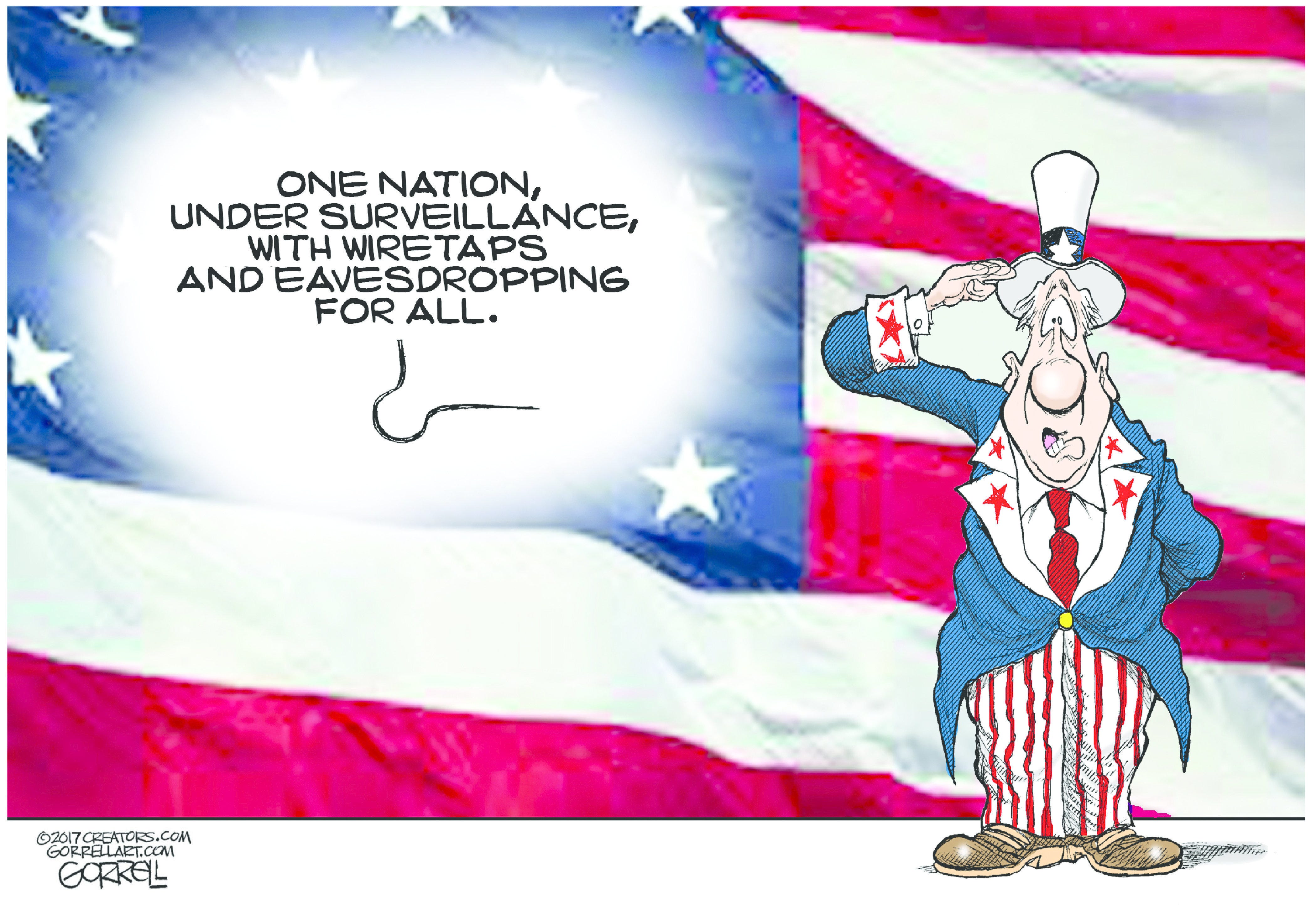
The cases are remarkably similar despite occurring hundreds of miles apart. Prosecutors allege a Milwaukee police officer searched a woman he was dating 179 times. In Kansas, a police chief resigned after investigators said he repeatedly searched for his former girlfriend and her new boyfriend more than 160 times. Georgia authorities have arrested numerous officers in recent months following internal audits, while other investigations have surfaced in Pennsylvania, Idaho, Texas, and elsewhere. Not every allegation resulted in criminal charges or convictions, but together they illustrate how frequently officers allegedly used investigative databases for reasons unrelated to law enforcement.
Perhaps the most troubling finding is who was being searched. According to the Post, at least 26 cases involved officers allegedly using the technology to monitor wives, girlfriends, former partners, romantic rivals, or women they hoped to meet. A license plate reader may not identify the driver, but once someone’s vehicle is associated with a name, a searchable network of cameras can reveal where they live, where they work, where they spend their evenings, and whether they’re visiting a particular home, doctor’s office, or place of worship. For victims of stalking or domestic abuse, that kind of access can become extraordinarily powerful.
Ironically, the same technology that made the searches possible also helped expose them. Every database query creates an audit trail showing who conducted the search and when. Many of these cases came to light through internal audits, victim complaints, or investigations that reviewed those digital records. In response, Flock Safety has expanded compliance measures, anomaly detection, and auditing tools while urging agencies to more aggressively monitor how their personnel use the system. The broader lesson isn’t simply that surveillance technology can be abused—it’s that powerful investigative tools require equally powerful oversight.
Verdict
Selective Quoting. The viral claim gets the broad picture right, but the reality is even larger. This is a nationwide pattern that has surfaced across dozens of agencies.
Every powerful database eventually teaches the same lesson: the hardest thing to patch is the user. There is no software update capable of fixing “poor life choices” or professional creep.
Up
The Viral Headline
The Pentagon is set to declassify files on blimps.
Background
Blimps never completely disappeared. They simply became less visible. While the iconic Goodyear Blimp remains the public face of lighter-than-air aviation, governments around the world have continued experimenting with aerostats, tethered balloons, and other lighter-than-air systems for decades. Modern military versions have been used for border surveillance, missile defense, communications, radar, and monitoring large areas from altitudes where they can remain aloft for days or even weeks.
The United States has repeatedly invested in these systems despite a mixed record. During the wars in Iraq and Afghanistan, tethered aerostats carrying radar and electro-optical sensors became common at military bases, providing persistent surveillance against rockets, mortars, and insurgent activity. Other projects, including the Army’s ambitious Joint Land Attack Cruise Missile Defense Elevated Netted Sensor (JLENS) program, promised wide-area radar coverage before suffering technical setbacks and, in one memorable 2015 incident, breaking free from its moorings and drifting across Pennsylvania and Maryland while dragging thousands of feet of cable behind it.
Blimps have also become an unexpected part of modern conspiracy culture. Since the 2023 Chinese surveillance balloon incident, public attention has increasingly focused on unidentified objects in the sky. Government agencies have received thousands of reports involving balloons, drones, aircraft, satellites, and other aerial objects that initially appeared mysterious before ultimately receiving far more ordinary explanations.
Reality
Over the past few years, the federal government has undertaken a series of high-profile declassification efforts that have conditioned Americans to expect almost anything. The Trump administration has ordered the release of additional files related to the assassinations of President John F. Kennedy and Robert F. Kennedy, directed agencies to review records connected to the death of Martin Luther King Jr., and supported renewed efforts to disclose historical material surrounding the disappearance of Amelia Earhart. Meanwhile, the Pentagon has continued releasing information related to unidentified anomalous phenomena (UAPs), better known as UFOs, through the All-domain Anomaly Resolution Office (AARO). After enough genuine declassifications, “secret blimp files” stopped sounding entirely ridiculous.

The Onion
That’s where the satire comes in. The viral claim originated with The Onion, which joked that the Pentagon was preparing to declassify decades of files on blimps. The United States has generated enough headlines that a cache of “secret blimp documents” almost sounds plausible, dare we say, inevitable.
The joke also borrows from another very real phenomenon. Not every unidentified object in the sky turns out to be exotic. Government reviews of UAP reports have repeatedly concluded that many sightings involve ordinary balloons, drones, birds, weather phenomena, or sensor anomalies rather than evidence of extraterrestrial technology. That has created a strange cultural moment in which Americans have become accustomed to seeing headlines about military investigations into mysterious aerial objects, even when the explanation is ultimately mundane.
In other words, the internet wasn’t fooled because people suddenly believed blimps were classified or up to nefarious deeds. It was fooled because reality has spent the last several years repeatedly announcing the declassification of records once thought untouchable. Between JFK, UFOs, and Cold War secrets, the nation’s collective “that can’t possibly be real” detector has become badly in need of maintenance. Somewhere in D.C., someone looking for something to distract from the real headlines is scribbling frantically, though we doubt they’ll credit the satirists.
Verdict
Rejected by Legal. The Pentagon isn’t declassifying secret blimp files. Reality simply became weird enough that satire no longer had to work very hard. The bar is so low, y’all.
The real classified program was convincing Americans that blimps aren’t inherently funny. Weather balloons throughout American airspace just sighed with relief knowing they can go back to being mistaken for a much cooler UFO.
No Country for Old Tweets
The Viral Headline
China is claiming the right to punish critics anywhere in the world.
Background
National laws typically stop at a country’s borders. A person in France is generally governed by French law, while someone in Canada is subject to Canadian law. But there are exceptions. Many nations, including the United States, claim the authority to prosecute certain crimes committed abroad, particularly terrorism, war crimes, child exploitation, piracy, or offenses committed against their own citizens. Lawyers refer to this as extraterritorial jurisdiction, and while it is not unusual, it has traditionally been reserved for relatively narrow categories of serious offenses.
Authoritarian governments have increasingly pushed those boundaries. Organizations including Freedom House have documented what they describe as transnational repression: efforts by governments to intimidate, surveil, threaten, or silence dissidents, journalists, activists, and ethnic minorities living overseas. Those efforts can include criminal charges, pressure on relatives still living in the home country, online harassment, extradition requests, or attempts to coerce foreign governments into returning critics.
China has become one of the most closely watched examples. Over the past decade, Beijing has expanded a number of national security laws governing Hong Kong, espionage, state secrets, counterespionage, cybersecurity, and foreign influence. Human rights organizations and several democratic governments have argued that some of those laws are written broadly enough to create uncertainty for journalists, researchers, businesses, and members of the Chinese diaspora living outside China.
Reality
Believe it or not, Chinese officials really did make this claim. The controversy centers on China’s new Ethnic Unity Law, which took effect in 2026. When asked whether the law applied to conduct occurring outside China, a senior official with the National Ethnic Affairs Commission responded that it did. He argued that anyone, regardless of nationality or location, who violated the law could face legal consequences under China’s existing legal framework. In other words, Beijing publicly asserted that the law has extraterritorial reach.

That alone isn’t unusual. As discussed above, many countries claim extraterritorial jurisdiction in limited circumstances. What makes China’s position different is the nature of the underlying offense. Rather than focusing on universally recognized crimes, the law concerns concepts such as ethnic unity, national cohesion, and conduct that Chinese authorities believe promotes ethnic hatred or separatism. Those terms are considerably broader and more subjective than offenses typically covered by international criminal jurisdiction. Comedians, take note.
That distinction has alarmed human rights organizations and members of the Chinese diaspora. Critics argue the law could create legal risk for activists, journalists, academics, ethnic minorities, or political dissidents living overseas whose speech is lawful in the countries where they reside but could be interpreted differently under Chinese law. Whether China could actually prosecute someone abroad without that country’s cooperation is another matter entirely. In most cases, foreign governments would have to arrest and extradite an individual, and many democratic countries are unlikely to honor requests involving protected political speech.
That doesn’t mean the law is meaningless beyond China’s borders. Even if a person is never extradited, they could face consequences if they later travel to China, Hong Kong, or another jurisdiction willing to cooperate with Chinese authorities. The broader concern is that laws like this can become another tool of transnational repression, extending pressure beyond a country’s borders even when direct enforcement remains legally or diplomatically difficult.
Verdict
Selective Quoting. China really is asserting that the law can apply beyond its borders. The internet skipped the equally important question of whether and where it can actually be enforced.
International law is complicated enough without every government trying to add a terms-of-service agreement nobody remembers accepting. George Orwell wrote 1984 as a warning, not a how-to guide.
Groundhog Day
The Viral Headline
The Administration is demolishing a $5 million White House helipad mid-project.
Background
Marine One isn’t a specific helicopter. It’s the radio callsign used whenever the President is aboard a U.S. Marine Corps aircraft. For decades, presidents have traveled aboard variants of the Sikorsky VH-3D Sea King and VH-60N WhiteHawk, but those aging aircraft are now being replaced by the larger and more technologically advanced VH-92A Patriot. The new helicopters offer upgraded communications, defensive systems, and presidential accommodations, but they also place greater demands on the infrastructure supporting them.
The South Lawn has become one of the nation’s most versatile event spaces. Beyond serving as the President’s primary helicopter landing zone, it regularly hosts state arrival ceremonies, Easter Egg Rolls, military events, concerts, and, in 2026, even a full-scale Ultimate Fighting Championship event complete with an Octagon and temporary grandstands. Every major event places different demands on one of the world’s most recognizable pieces of landscaping.
Contrary to popular perception, the White House does not have a permanent concrete helipad on the South Lawn. Presidents typically land directly on reinforced turf, with extensive preparations occurring before and after each flight. Repeated helicopter operations can compact soil, damage landscaping, and create maintenance challenges for one of the country’s most recognizable lawns. Because the White House is both a functioning executive office and a historic landmark, even routine construction projects require coordination among the White House, Secret Service, National Park Service, military planners, preservation officials, and contractors.
Reality
Believe it or not, not only is the project real, but portions of it are being removed before construction is complete. Workers began excavating the South Lawn in late June with little public explanation, and President Trump later confirmed that Sikorsky, the manufacturer of the new Marine One helicopters, was funding construction of an approximately $5 million permanent granite landing pad. Multiple reports later indicated that sections already installed were being removed and rebuilt after Trump objected to aspects of the design, including its appearance, slope, and alignment.

Kevin Carter/Getty Images
The project itself, however, arrived with remarkably little public fanfare. The operational justification is straightforward enough: the new VH-92A Marine One helicopters generate significantly greater downward exhaust and rotor wash than the aging aircraft they replace, damaging the White House lawn. What’s less clear is how the administration concluded that a permanent granite installation was the preferred solution. By the time the public learned the details, construction was already underway, and officials had released little information about alternative designs, preservation reviews, or how the new structure would affect one of the country’s most recognizable historic landscapes.
Ironically, the internet’s description may actually understate the oddity. The unusual part isn’t simply that portions of a multimillion-dollar project are being rebuilt before completion, and honestly, no one is particularly surprised that the Don has opinions on how it looks. It’s that one of the most visible changes to the White House grounds (RIP, East Wing) in decades appeared with relatively little public planning, limited explanation, and only later became the subject of redesign after construction had already begun. Are we even capable of surprise now, though? Are we?
Verdict
Selective Quoting. Yes, sections of the project are reportedly being rebuilt before completion, but the internet skipped the stranger part: how suddenly the project appeared in the first place.
Every home renovation eventually reaches the sentence, “Let’s just rip it out and start over.” Most of us just don’t do it on the National Mall’s most famous front yard. At least it is a seal and not a portrait? Granite rather than gilding? Seriously, will anything survive this administration?

Eric Lee/Reuters
Congratulations on surviving another round of Truth or Satire! Unlike our current timeline, this tomfoolery actually has an end.
If you scored well, enjoy the fleeting satisfaction of still recognizing reality. If you didn't, take comfort in knowing the internet, several governments, and at least one algorithm are actively working against you.
We'll be back soon with more headlines that absolutely should have been satire. Remember, it is only genuine satire if it comes from the Satiri region. Otherwise, it is just sparkling absurdity. Fear not, however. This timeline guarantees that the supply shall never wane.
If this game gets any harder, we’re going to need constitutional scholars, trauma counselors, and three Onion editors on retainer just to sort the headlines.
Follow for the next round of Truth or Satire, where every week America dares parody to catch up. Or tune in for our regularly scheduled analysis and commentary, when the meds kick in, and we can take the headlines seriously.
Sources:
“Requires food retail establishments provide a ten percent discount when a customer uses a self-service checkout kiosk,” New York State Senate, May 28, 2026.
“Why Self-Checkout Is Here to Stay,” FMI—The Food Industry Association, February 13, 2024.
“Food Industry Facts,” FMI—The Food Industry Association, updated 2026.
“Consumer prices up 3.5 percent over the year ended June 2026,” U.S. Bureau of Labor Statistics, July 17, 2026.
“Consumer Price Index Summary — 2026 M06 Results,” U.S. Bureau of Labor Statistics, July 2026.
“How rogue officers turned a nationwide camera network into a tool for stalking,” The Washington Post, August 2, 2026.
“Milwaukee police officer charged in Flock camera misuse case,” FOX6 Milwaukee, February 25, 2026.
“Police chief gets caught using license plate cameras to track his ex-girlfriend 228 times,” WKRC Local 12, August 18, 2024.
“All Charges Held for Court Against Former Schuylkill County Police Officer who used Law Enforcement Database to Stalk Ex-Wife, New Boyfriend,” Pennsylvania Office of Attorney General, June 17, 2026.
“Critics warned about Flock surveillance. Three Houston-area investigations are fueling those concerns,” Houston Chronicle, August 2, 2026.
“What Is Flock? Public Safety Technology,” Flock Safety, accessed August 4, 2026.
“Fight Creepy ALPR Cameras,” American Civil Liberties Union, accessed August 4, 2026.
“Pentagon Declassifies Files On Blimps,” The Onion, August 4, 2026.
“Department of War Releases Unidentified Anomalous Phenomena Files in Historic Transparency Effort,” U.S. Department of War, May 8, 2026.
“Presidential Unsealing and Reporting System for UAP Records,” U.S. Department of War, updated July 10, 2026.
“Pentagon releases more declassified UFO files, including intelligence officer’s account of seeing ‘orbs,’” ABC News, May 22, 2026.
“Declassification of Records Concerning the Assassinations of President John F. Kennedy, Senator Robert F. Kennedy, and the Reverend Dr. Martin Luther King Jr.,” The White House, January 23, 2025.
“Trump says he’s ordered the declassification and release of all government records on Amelia Earhart,” Associated Press, September 26, 2025.
“China says it has a right to target people overseas with new ethnic unity law,” Reuters, June 23, 2026.
“EU and US concerned by China’s new ethnic unity law which targets people overseas,” Reuters, July 2, 2026.
“China dismisses US, EU criticism of new ethnic law as ‘malicious smear,’” Reuters, July 3, 2026.
“China adopts an ethnic unity law that critics say will cement assimilation,” Associated Press, March 12, 2026.
“In Tibet, some embrace their native language even under China’s sweeping new ‘ethnic unity’ law,” Associated Press, August 4, 2026.
“China passes new ethnic minority law, prioritises use of Mandarin language,” Reuters, March 12, 2026.
“Trump says he’s building a White House helipad for a new, more powerful Marine One,” Associated Press, July 6, 2026.
“Trump says Sikorsky to fund White House helicopter landing pad,” Reuters, July 6, 2026.
“Trump building granite helipad on White House South Lawn,” ABC News, July 6, 2026.
“WATCH: Trump says Sikorsky is paying for a ‘beautiful’ granite helipad at the White House,” PBS NewsHour, July 6, 2026.
“Trump speeds up helipad project ahead of Xi visit, adding nearly $1 million to cost,” The Washington Post, July 6, 2026.
“See the $6 million Lockheed-funded helipad the White House is getting to protect its lawn from Marine One,” Business Insider, August 4, 2026.
“Trump Orders Workers to Re-Do White House Helipad,” The Daily Beast, August 4, 2026.
While the surveillance claims are under- or over-estimated, the results will be stored 4-ever in a data center near you!
Ok 4/5 ain’t bad. Regarding the FLOCK cameras they really pissed off a friend of mine whom has climbed up the pole from behind and spray painted them. They are really a way to monitor the movement of the people like would be done in any authoritarian government like China that now wants to go after dissidents world wide. We have a big fight coming up sp tell everyone especially young people to register and vote. Thanks for the satire.